
Believe_In_Me
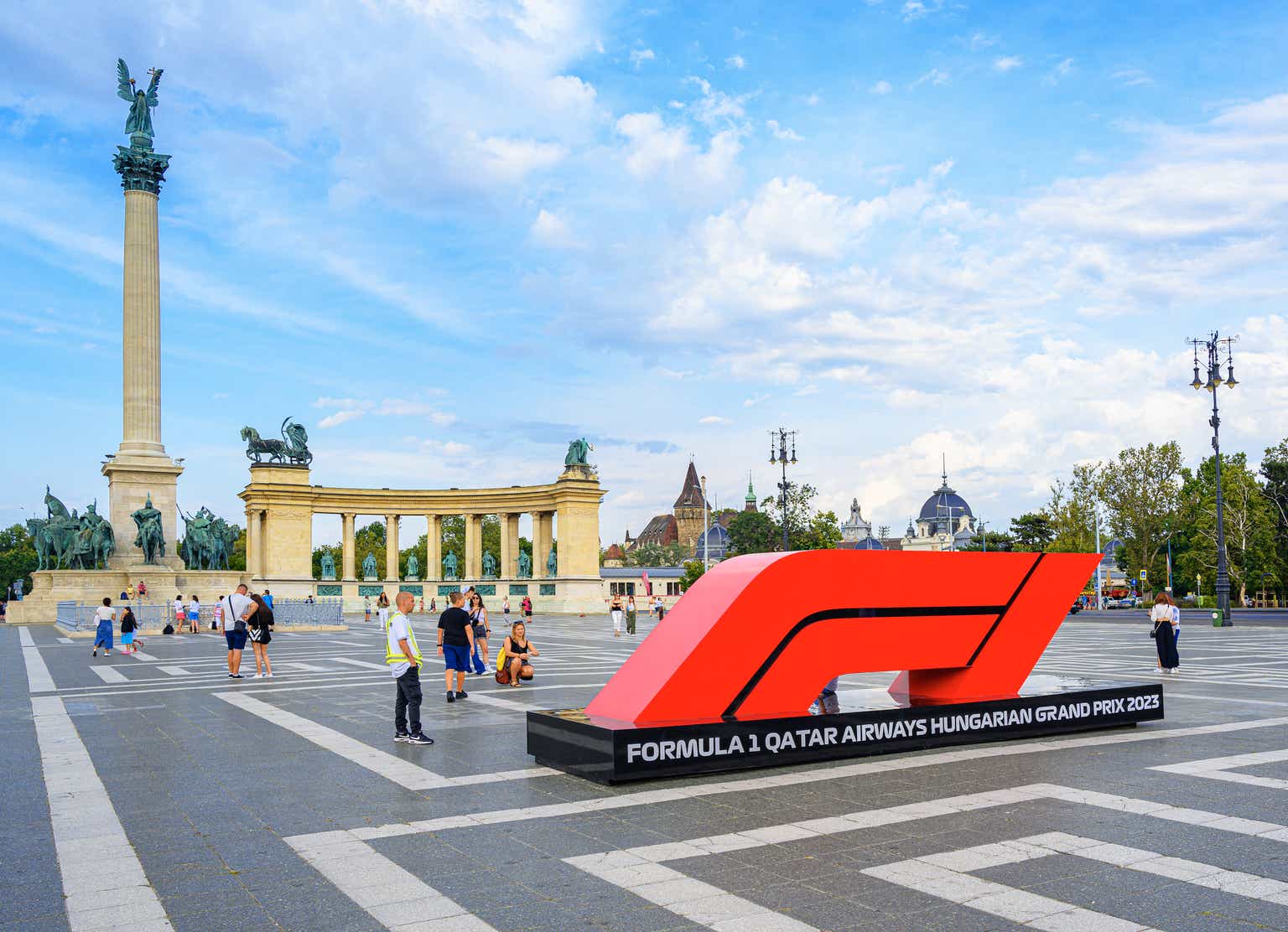
As I am writing, the first race of the 2024 F1 season, the Bahrain Grand Prix, is only days away (the race will be held on Saturday, March 2nd instead of the usual Sunday due to the start of the Islamic holy month of Ramadan on March 10th and the need to have no less than a week’s time between two races, the next race being held in Jeddah, Saudi Arabia). Needless to say that I am looking forward to the new season. Being both a motorsport enthusiast and an investor, that is not the only part of F1 news for me this week. On the business side, Formula One Group (NASDAQ:FWONA;OTCQB:FWONB;NASDAQ:FWONK) has just released its annual report. The results of the first quarter in particular provide some highly relevant insights. In this article, I will assess how Q4 results and recent developments impact my previously stated investment thesis.
Key Takeaways
Q4 revenue grew by an impressive 63 percent to $1.23 billion (Q4 2022: $754 million). It should, however, be noted that, during the 2023 season, nine races were held between September and December, compared to only eight the prior year. As I have previously explained, there is a limit to how many race weekends can be held in a season. It is my belief that at 24 races that limit is currently reached or very close to being reached. Therefore, I believe that the most interesting measure of growth is revenue per race. Still, the resulting growth rate of 45 (from $94.25 million to $136.66 million per race) was impressive. It might also be insightful to take a look at the development of core revenue (which the company defines as revenue from race promotion, media rights and sponsorships). This category grew to $838 million (Q4 2022: $568 million), representing a YoY growth rate of 47.5 percent.
As I stated back in November, the impact of the Vegas Grand Prix is especially interesting from an investor’s point of view. That is due to the fact that, unlike other races, Formula One Group itself acts as a promoter for this event.
Q3 revenue added up to $887 million. While that is, obviously, markedly below Q4s $1.23 billion, at only five races held during the quarter, the revenue per race was, in fact, a good deal higher at $177.4 million. That points to the importance of promoter fees for the group’s revenue. One line item that I find to be especially interesting in this context is what the company refers to as “other cost of Formula 1 revenue” (as in “other than payments to the teams)”. This figure grew exponentially to $589 million (+183 percent YoY; +222 percent QoQ). Sure, inflation may have played a role, especially given the travel involved with this kind of business and the increased number of races. However, inflation did not suddenly spike after August 31st. And even on a per race basis, the cost ex-team payments grew by close to 60 percent as compared to Q3. That leads me to the conclusion that promoting the Las Vegas grand Prix themselves led to not only lower revenue, but also to higher cost, as compared to an average third party promoted race. Profitability, consequently, shows a similar picture with operating income growing to $153 million from $107 million between Q3 and Q4, while shrinking to $17 million from $21.4 million on a per race basis.
I would caveat that at least to some extent there may have been additional cost due to the 2023 Las Vegas Grand Prix being the inaugural race on that circuit. But unless (which frankly I do not expect) either the cost will be materially lower (which, in fairness, may be the case due to lower advertisement cost; this year, the word is already out that the race is happening) or the revenue from the Las Vegas Grand Prix will be materially higher (less likely, in my opinion) – ideally both, of course – I do not see how I could consider the model of Formula One Group promoting races themselves can be considered anything other than a failure from a financial point of view.
That is somewhat of a disappointment, as it effectively means that in order to grow revenue from the events itself, the best option is still government supported races in places where promoters are not focused primarily on financial gain, but also on the prestige that holding an F1 Grand Prix affords the host country or city. Prime candidates for this are, for example, the oil rich monarchies of the Persian Gulf. Some people may call that “sportswashing”. Personally, I prefer to see it as diversifying their respective economies. That creates some major downsides: First, there are only so many places that fit this category. In 2024, there are already Grand Prixs scheduled in Saudi Arabia, Qatar, Bahrain and the UAE. That basically leaves Oman as the only suitable (at least I would assume that nobody realistically considers a Grand Prix in Yemen) country on the Arabian Peninsula without a race. There are, of course, economically well-endowed places outside the peninsula. But many of those, too, are already represented on the calendar (like Singapore, Azerbaijan). Additionally, the series must maintain a certain geographic balance in order not to alienate its traditional audiences in Europe. Tracks like Silverstone, Spa or Monza are somewhat integral to the series’ heritage and sporting DNA.
All that being said, at revenues of $3.2 billion (+25 percent YoY, despite the cancelled Emilia Romagna Grand Prix) and operating income of $392 million (+64 percent YoY) for FY2023 the company is on track to achieve my revenue target of $3.5 to $4 billion even without a massively increased global media rights deal. On a side note, the Las Vegas Grand Prix was held on a Saturday night (local time), which translated to the morning of Sunday in Europe. Having the main event on a Saturday may or may not make a difference revenue wise. In conjunction with the Saturday races at the beginning of this season, there may also be interesting takeaways regarding which day is better, once the Q1 numbers are released about three months from now.
No Andretti Entry
During Q1, Andretti Racing LLCs application to join the grid from 2025 was officially rejected. As I have explained previously, Andretti would have had the potential to contribute to the series in a positive (and ultimately revenue accretive) way, in my opinion. Back then, I also cautioned that Andretti’s entry should not be treated as a foregone conclusion, given the other teams’ unanimous opposition to a new entry. If a name like Andretti is not able to make the cut, I am inclined to believe that a new team is not a realistic thing to expect anytime soon. That may differ only, if a manufacturer were interested in a full entry (i.e. including its own engine assembly). Yet, I think that this is a highly unlikely scenario, at least until the next engine regulation changes. The new formula applying from 2026 is too close by now, as other engine manufacturers have a considerable head start. And even then, the acquisition of or a partnership with an existing outlet (my best guess would be Williams or Haas) would probably be the preferred option for such an undertaking.
Global Media Deal Less Likely
There is another – very – recent development that, I believe, to be of paramount importance for investors. On February 28th, Formula One Group announced a new media rights deal with beIN Sports, an offshoot of Qatar’s state-owned Al Jazeera, for exclusive broadcast rights across the MENA region and Turkey. The deal runs through 2033. While the news may not appear to be that important at first glance, its meaning cannot be overstated. Entering such a long-term contract precludes a global media rights deal with Apple Inc. (AAPL) – or any other party – for a decade. That does, mind you, not mean that there may not be revenue growth from media rights regardless. However, the option of a single game changer contract with just one partner is likely off the table for the foreseeable future.
Risk Factors
As with any investment, there are, of course, risks to be considered. There is an inherent conflict between exclusive media rights and sponsorship. A sponsor has a vested interest in maximizing exposure by capturing as many eyeballs as possible. Naturally, a paywall is detrimental to that goal. Thus, increasing revenue on the media side must be weighed against the attractiveness for sponsors. Furthermore, Formula One Group may face increasing demands by the teams during negations for a new Concorde agreement from 2026 onward. The teams have ample incentives to try to increase their piece of the cake. I did more of a deep-dive on this issue in a previous article.
Lastly, investors should be aware of the fact that Formula One Group is not an independent entity, but a division of Liberty Media Corp. listed through a tracking stock. There is the theoretical risk of Formula One Group being on the hook for liabilities incurred by other parts of Liberty Media, if these are unable to service them. To be perfectly clear, there is no indication of that becoming relevant anytime soon. Still, I believe it is something that should be taken note of.
Valuation and Conclusion
All in all, there have been both positive and negative developments since I last covered the stock. The most important of these is arguably that an exclusive global rights deal seems to be off the table. A major strategic pivot towards acting as a race promoter does not appear to be promising, either. However, given the strong growth in 2023, the company is on track to hit the lower end of my $3.5 to $4 billion revenue estimate with a $2 billion dollar rights agreement as early as next year, even without the media deal.
Previously, I have based my fair value assumption on a revenue multiple of around 6.5. I derive this from multiples implied in private equity deals entered into by other major sports leagues, Spain’s La Liga in particular, with a sizeable discount applied. I see no reason to deviate from that method. If you are interested in a more detailed discussion of my methodology, kindly refer to my previous coverage. At that multiple (and, of course, assuming revenue of $3.5 billion+ in 2024), a share price of around $88 per share on an undiluted basis would be justified. That represents around 35 percent upside from the current level. I therefore maintain my buy rating.
Editor’s Note: This article discusses one or more securities that do not trade on a major U.S. exchange. Please be aware of the risks associated with these stocks.
Credit: Source link