• bitcoinBitcoin(BTC)$77,137.00-2.98%
  • ethereumEthereum(ETH)$2,434.02-2.94%
  • tetherTether(USDT)$1.00-0.01%
  • binancecoinBNB(BNB)$711.56-5.16%
  • rippleXRP(XRP)$1.37-4.77%
  • usd-coinUSDC(USDC)$1.00-0.02%
  • solanaSolana(SOL)$99.89-4.47%
  • tronTRON(TRX)$0.3392540.15%
  • Figure HelocFigure Heloc(FIGR_HELOC)$1.03-0.83%
  • zcashZcash(ZEC)$1,214.55-3.87%
  • HyperliquidHyperliquid(HYPE)$81.75-6.03%
  • dogecoinDogecoin(DOGE)$0.084474-7.33%
  • RainRain(RAIN)$0.015964-2.55%
  • USDSUSDS(USDS)$1.00-0.02%
  • moneroMonero(XMR)$503.811.11%
  • whitebitWhiteBIT Coin(WBT)$79.70-3.01%
  • chainlinkChainlink(LINK)$11.71-4.01%
  • leo-tokenLEO Token(LEO)$9.230.25%
  • cardanoCardano(ADA)$0.210762-4.63%
  • stellarStellar(XLM)$0.178008-5.87%
  • bitcoin-cashBitcoin Cash(BCH)$242.21-6.65%
  • daiDai(DAI)$1.00-0.02%
  • Ethena USDeEthena USDe(USDE)$1.00-0.02%
  • USD1USD1(USD1)$1.000.00%
  • litecoinLitecoin(LTC)$52.10-3.62%
  • CantonCanton(CC)$0.100382-5.58%
  • the-open-networkGram (prev. Toncoin)(GRAM)$1.36-2.72%
  • uniswapUniswap(UNI)$5.97-11.14%
  • Global DollarGlobal Dollar(USDG)$1.000.01%
  • avalanche-2Avalanche(AVAX)$7.64-4.22%
  • hedera-hashgraphHedera(HBAR)$0.075262-4.31%
  • nearNEAR Protocol(NEAR)$2.40-7.53%
  • suiSui(SUI)$0.76-7.53%
  • shiba-inuShiba Inu(SHIB)$0.000005-6.41%
  • paypal-usdPayPal USD(PYUSD)$1.000.00%
  • BlackRock USD Institutional Digital Liquidity FundBlackRock USD Institutional Digital Liquidity Fund(BUIDL)$1.000.00%
  • crypto-com-chainCronos(CRO)$0.056299-6.54%
  • MemeCoreMemeCore(M)$1.200.85%
  • tether-goldTether Gold(XAUT)$4,329.93-1.35%
  • Circle USYCCircle USYC(USYC)$1.140.01%
  • Ripple USDRipple USD(RLUSD)$1.000.00%
  • BittensorBittensor(TAO)$247.17-7.41%
  • okbOKB(OKB)$111.13-3.01%
  • Ondo US Dollar YieldOndo US Dollar Yield(USDY)$1.14-0.12%
  • mantleMantle(MNT)$0.59-8.22%
  • AsterAster(ASTER)$0.70-6.44%
  • aaveAave(AAVE)$122.27-5.42%
  • pax-goldPAX Gold(PAXG)$4,330.22-1.42%
  • polkadotPolkadot(DOT)$1.09-7.34%
  • World Liberty FinancialWorld Liberty Financial(WLFI)$0.0559980.29%
TradePoint.io
  • Main
  • AI & Technology
  • Stock Charts
  • Market & News
  • Business
  • Finance Tips
  • Trade Tube
  • Blog
  • Shop
No Result
View All Result
TradePoint.io
No Result
View All Result

Artificial Intelligence and the Tetris Conundrum

May 28, 2023
in AI & Technology
Reading Time: 3 mins read
A A
Artificial Intelligence and the Tetris Conundrum
ShareShareShareShareShare

In a pioneering study led by Cornell University, researchers embarked on an exploratory journey into the realms of algorithmic fairness in a two-player version of the classic game Tetris. The experiment was founded on a simple yet profound premise: Players who received fewer turns during the game perceived their opponent as less likable, regardless of whether a human or an algorithm was responsible for allocating the turns.

This approach marked a significant shift away from the traditional focus of algorithmic fairness research, which predominantly zooms in on the algorithm or the decision itself. Instead, the Cornell University study decided to shed light on the relationships among the people affected by algorithmic decisions. This choice of focus was driven by the real-world implications of AI decision-making.

YOU MAY ALSO LIKE

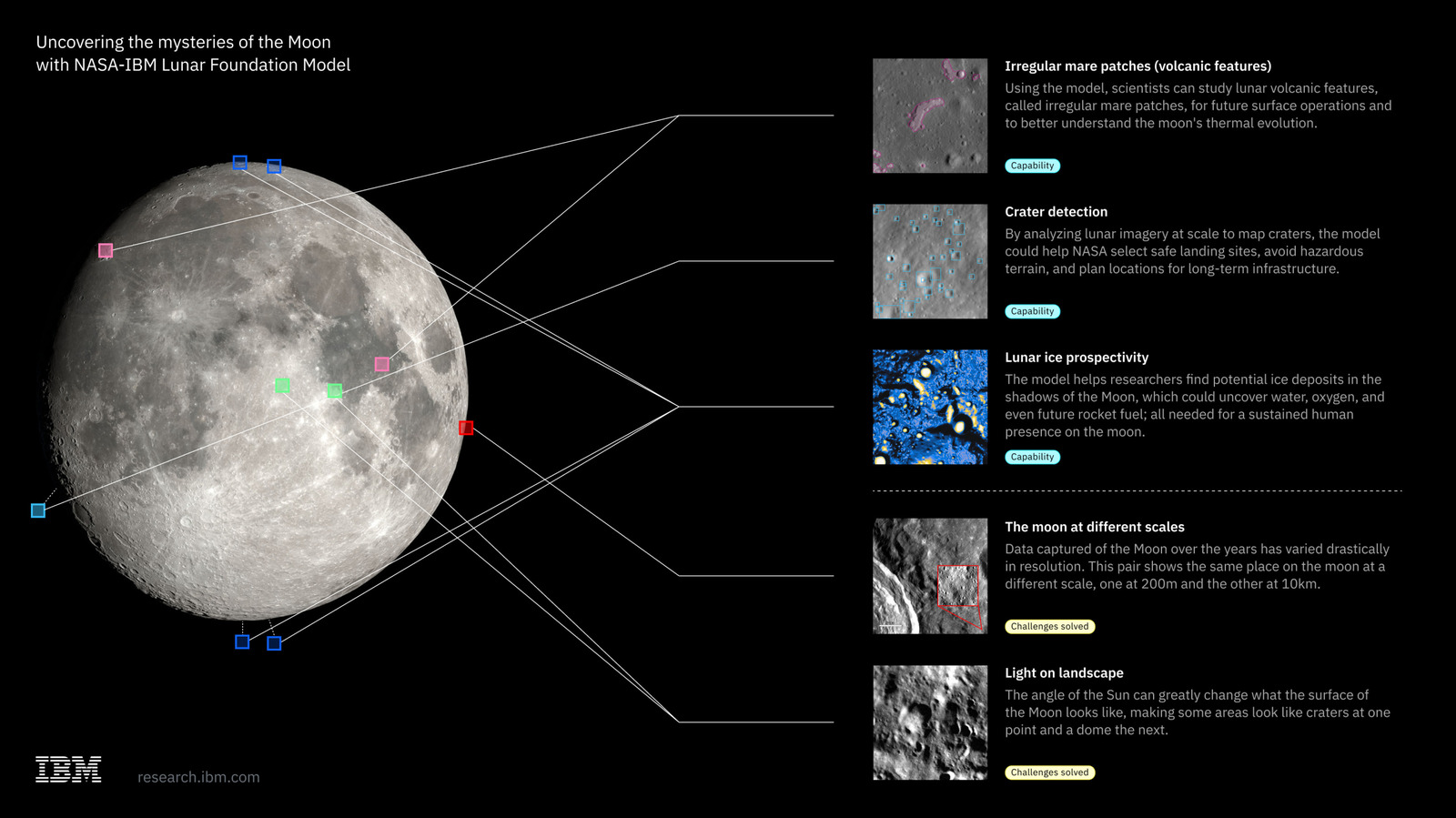
IBM and NASA Open-Source Lunar Foundation Model With SomBench Dataset – Unite.AI

NASA And IBM Made An AI Model For Exploring The Moon

“We are starting to see a lot of situations in which AI makes decisions on how resources should be distributed among people,” observed Malte Jung, associate professor of information science at Cornell University, who spearheaded the study. As AI becomes increasingly integrated into various aspects of life, Jung highlighted the need to understand how these machine-made decisions shape interpersonal interactions and perceptions. “We see more and more evidence that machines mess with the way we interact with each other,” he commented.

The Experiment: A Twist on Tetris

To conduct the study, Houston Claure, a postdoctoral researcher at Yale University, made use of open-source software to develop a modified version of Tetris. This new version, dubbed Co-Tetris, allowed two players to alternately work together. The players’ shared goal was to manipulate falling geometric blocks, neatly stacking them without leaving gaps and preventing the blocks from piling to the top of the screen.

In a twist on the traditional game, an “allocator”—either a human or an AI—determined which player would take each turn. The allocation of turns was distributed such that players received either 90%, 10%, or 50% of the turns.

The Concept of Machine Allocation Behavior

The researchers hypothesized that players receiving fewer turns would recognize the imbalance. However, what they didn’t anticipate was that players’ feelings towards their co-player would remain largely the same, regardless of whether a human or an AI was the allocator. This unexpected result led the researchers to coin the term “machine allocation behavior.”

This concept refers to the observable behavior exhibited by people based on allocation decisions made by machines. It is a parallel to the established phenomenon of “resource allocation behavior,” which describes how people react to decisions about resource distribution. The emergence of machine allocation behavior demonstrates how algorithmic decisions can shape social dynamics and interpersonal interactions.

Fairness and Performance: A Surprising Paradox

However, the study did not stop at exploring perceptions of fairness. It also delved into the relationship between allocation and gameplay performance. Here, the findings were somewhat paradoxical: fairness in turn allocation didn’t necessarily lead to better performance. In fact, equal allocation of turns often resulted in worse game scores compared to situations where the allocation was unequal.

Explaining this, Claure said, “If a strong player receives most of the blocks, the team is going to do better. And if one person gets 90%, eventually they’ll get better at it than if two average players split the blocks.”

In our evolving world, where AI is increasingly integrated into decision-making processes across various fields, this study offers valuable insights. It provides an intriguing exploration of how algorithmic decision-making can influence perceptions, relationships, and even game performance. By highlighting the complexities that arise when AI intersects with human behaviors and interactions, the study prompts us to ponder crucial questions about how we can better understand and navigate this dynamic, tech-driven landscape.

Credit: Source link

ShareTweetSendSharePin

Related Posts

IBM and NASA Open-Source Lunar Foundation Model With SomBench Dataset – Unite.AI
AI & Technology

IBM and NASA Open-Source Lunar Foundation Model With SomBench Dataset – Unite.AI

September 10, 2026
NASA And IBM Made An AI Model For Exploring The Moon
AI & Technology

NASA And IBM Made An AI Model For Exploring The Moon

September 10, 2026
Fujitsu Signs New Palantir AIP Agreement, Becomes Global FDE Partner – Unite.AI
AI & Technology

Fujitsu Signs New Palantir AIP Agreement, Becomes Global FDE Partner – Unite.AI

September 10, 2026
AppleCare One Now Has A  Tier Per Month For Families
AI & Technology

AppleCare One Now Has A $50 Tier Per Month For Families

September 10, 2026
Next Post
Golden State Warriors Part Owner: Nobody Cares About the Uyghurs

Golden State Warriors Part Owner: Nobody Cares About the Uyghurs

Leave a Reply Cancel reply

Your email address will not be published. Required fields are marked *

Search

No Result
View All Result
Trial date set for Nicolás Maduro and his wife

Trial date set for Nicolás Maduro and his wife

September 7, 2026
The battleground states that could flip Congress for Democrats

The battleground states that could flip Congress for Democrats

September 4, 2026
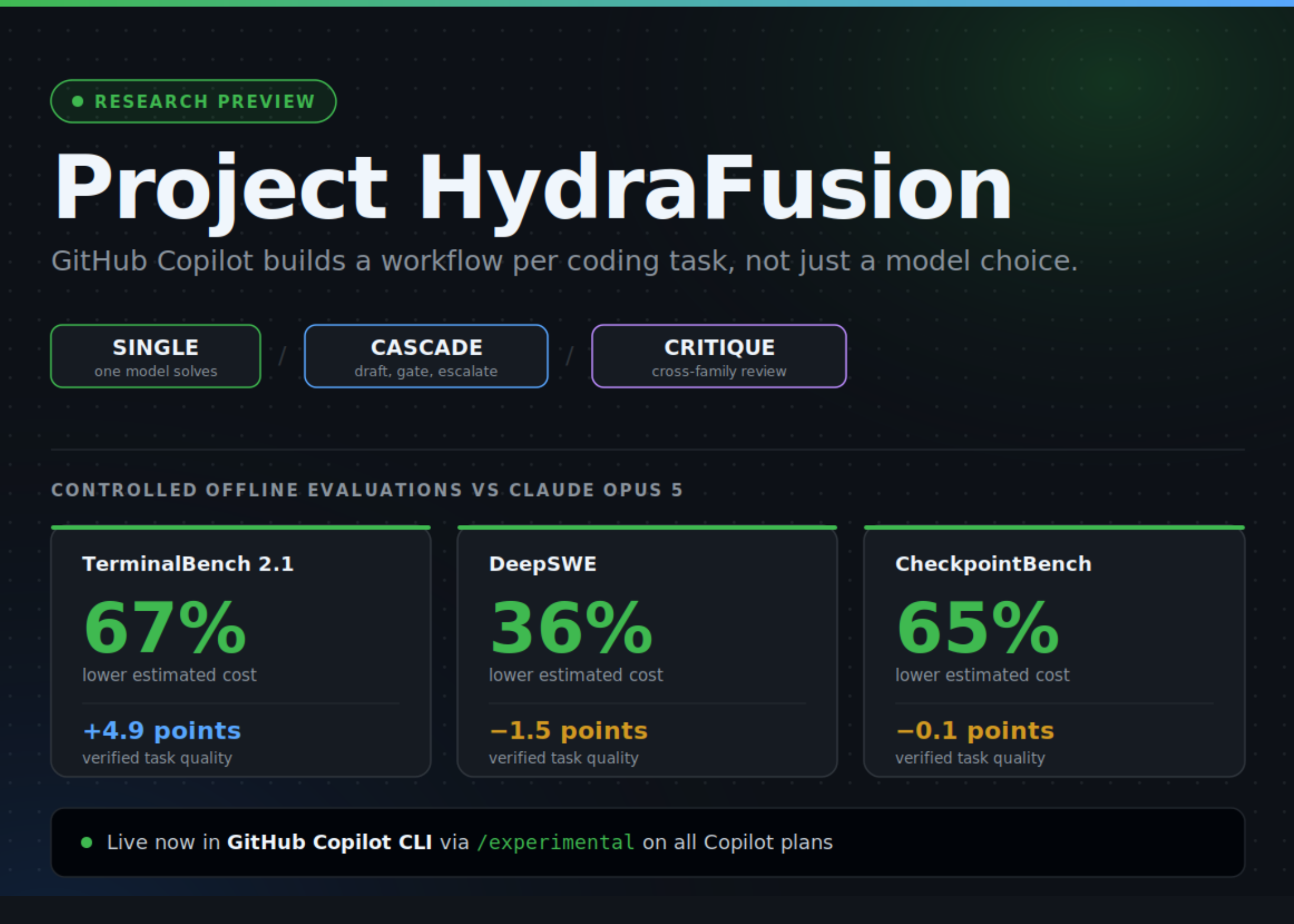
GitHub Introduces Project HydraFusion: Runtime Multi-Model Orchestration That Builds a Workflow Per Coding Task in Copilot CLI

GitHub Introduces Project HydraFusion: Runtime Multi-Model Orchestration That Builds a Workflow Per Coding Task in Copilot CLI

September 5, 2026

About

Learn more

Our Services

Legal

Privacy Policy

Terms of Use

Bloggers

Learn more

Article Links

Contact

Advertise

Ask us anything

©2020- TradePoint.io - All rights reserved!

Tradepoint.io, being just a publishing and technology platform, is not a registered broker-dealer or investment adviser. So we do not provide investment advice. Rather, brokerage services are provided to clients of Tradepoint.io by independent SEC-registered broker-dealers and members of FINRA/SIPC. Every form of investing carries some risk and past performance is not a guarantee of future results. “Tradepoint.io“, “Instant Investing” and “My Trading Tools” are registered trademarks of Apperbuild, LLC.

This website is operated by Apperbuild, LLC. We have no link to any brokerage firm and we do not provide investment advice. Every information and resource we provide is solely for the education of our readers. © 2020 Apperbuild, LLC. All rights reserved.

No Result
View All Result
  • Main
  • AI & Technology
  • Stock Charts
  • Market & News
  • Business
  • Finance Tips
  • Trade Tube
  • Blog
  • Shop

© 2023 - TradePoint.io - All Rights Reserved!