















Applied Intuition announced on October 5, 2026, that it is deploying its AI-powered software-development tools with Nissan Motor Co., Ltd. to support development of AI-defined vehicles (AIDVs), extending a relationship between the two companies that began in 2020.
Under the engagement, Applied Intuition will use its Vehicle OS software to support development of Nissan’s next-generation in-vehicle software platform, which the release describes as scalable and open. Applied Intuition software teams in Japan and Silicon Valley will work alongside Nissan’s engineering team in Japan. The release states the arrangement is intended to help shorten software-development timelines and accelerate AI-native vehicle development.
Engagement Scope and Platform Goals
Applied Intuition said its Vehicle OS software and AI-native development tooling are designed to support Nissan’s internal engineering teams by modernizing software workflows, reducing development complexity, and enabling a common software platform that spans multiple powertrains. According to the company, the tooling abstracts hardware complexity and unifies legacy and modern software-development practices, and it will help accelerate the development of Nissan’s future vehicle programs.
“Nissan is strengthening its software and AI-driven development capabilities as we advance toward the realization of AI-defined vehicles,” said Takashi Yoshizawa, corporate executive of Nissan’s SDV Engineering Division. Yoshizawa said Nissan highly values Applied Intuition’s technical expertise and track record in advanced vehicle-software development as the automaker pursues a more efficient and agile approach to vehicle development.
Applied Intuition said the work with Nissan is intended to establish a new industry standard for bringing AIDVs to market, and it described the engagement as strengthening its position as a software partner to global automakers, including those based in Japan.
Qasar Younis, co-founder and CEO of Applied Intuition, said Nissan is taking an ambitious approach to transforming how vehicles are developed. “By combining AI-native software development with Nissan’s vehicle engineering expertise, we aim to redefine how vehicles are developed, evolved and continuously updated over time, as well as the value customers expect from their vehicles,” he said.
A Partnership Dating to 2020
The collaboration builds on a relationship that began in 2020, when Nissan adopted Applied Intuition’s simulation technology. Since then, the two companies have jointly advanced AI-powered vehicle-development workflows, including a live demonstration of a Nissan LEAF–based test vehicle at AWS Summit Japan. The expanded engagement extends the partnership beyond simulation into in-vehicle operating systems and AI-native software development.
A June 30, 2026, blog post from Applied Intuition documents that demonstration: audience members selected a modification to a vehicle welcome sequence involving blinking lights, and engineers used the company’s tooling to update the software, validate the change, and deploy it over-the-air, with Nissan then showing the updated behavior live on stage. The post framed the exercise as evidence that a software change it said would traditionally require weeks or months of development and validation could instead be carried out in real time.
The post describes Vehicle OS as connecting requirements, code, simulation, validation, debugging, and deployment in a single AI-powered workflow with end-to-end traceability, and says work that once took months can now be measured in hours or minutes. Applied Intuition also says in the post that it is helping automakers halve vehicle development timelines and match or outpace the speed of startup OEMs. Will Lin, the company’s head of automotive, said Applied Intuition has spent years building tooling and infrastructure that allow its OEM partners to develop software faster.
Nissan’s AI-Defined Vehicle Direction
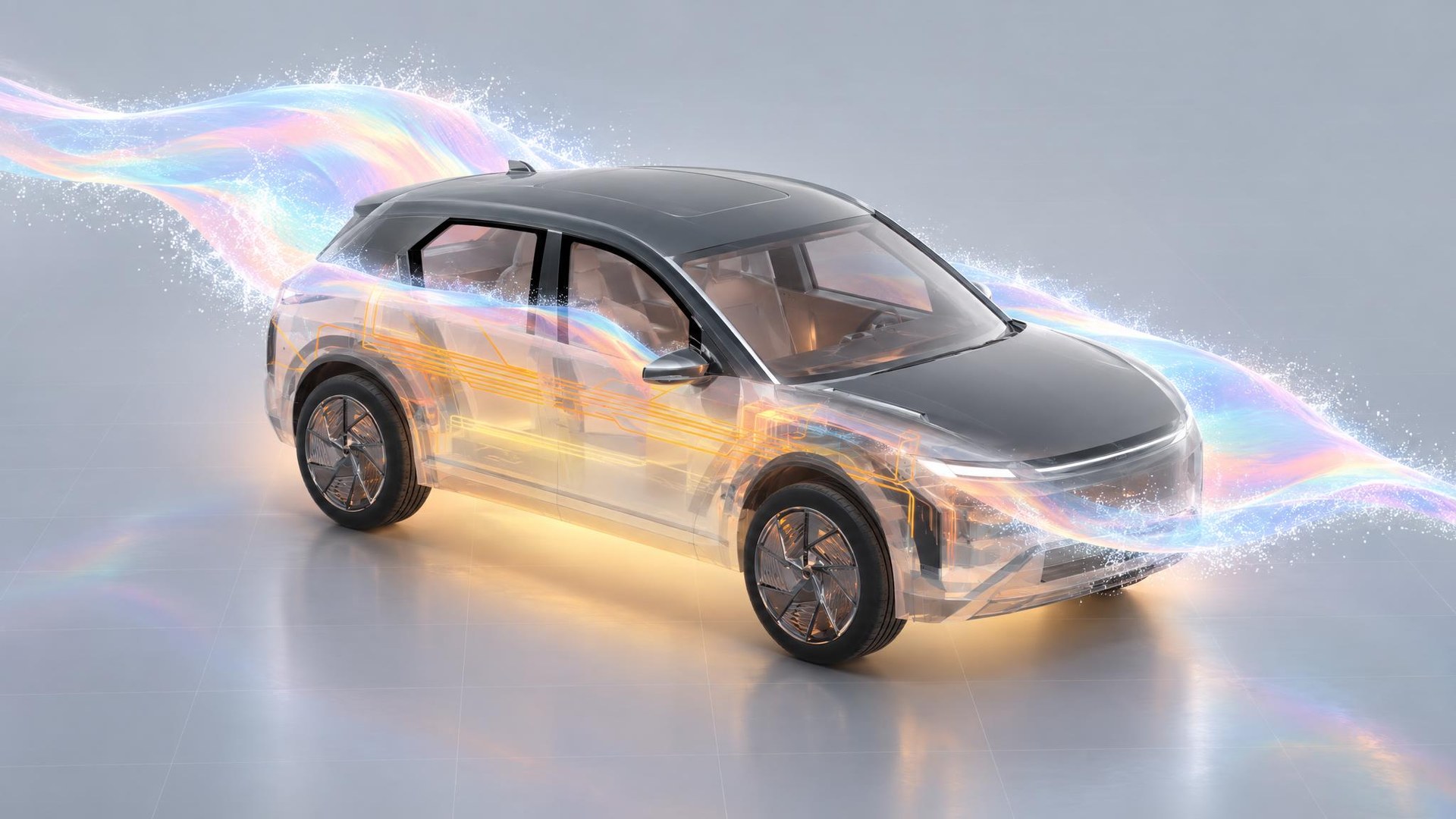
Nissan has outlined the AIDV concept in its own official materials. The automaker’s vision page describes the AI-defined vehicle as one in which AI perceives and interprets conditions both inside and outside the vehicle, built on a software-defined vehicle foundation that allows the car to keep evolving through software updates and data integration. According to the page, the approach combines AI-Drive technology, which handles perception of surroundings, prediction, decision-making and driving, with AI-Partner technology, which draws on the connected vehicle, the cloud and services to understand the intentions and circumstances of drivers and passengers.
On April 14, 2026, Nissan announced a long-term vision it calls “Mobility Intelligence for Everyday Life,” centered on AIDVs, and said it aims to deploy its Nissan AI Drive technology across 90 percent of its lineup over the long term. That release also describes a shift in Nissan’s industrial model from model-by-model optimization to architecture-led development built on shared vehicle platforms, powertrains and a software platform. Nissan states on its vision page that it will introduce the SDV Platform in fiscal year 2026 and continue to evolve it in stages, accelerating AIDV development.
Credit: Source link