• bitcoinBitcoin(BTC)$77,709.000.29%
  • ethereumEthereum(ETH)$2,258.600.31%
  • tetherTether(USDT)$1.00-0.04%
  • binancecoinBNB(BNB)$707.730.43%
  • rippleXRP(XRP)$1.25-0.04%
  • usd-coinUSDC(USDC)$1.00-0.03%
  • solanaSolana(SOL)$94.07-1.62%
  • tronTRON(TRX)$0.3125322.23%
  • Figure HelocFigure Heloc(FIGR_HELOC)$1.085.29%
  • HyperliquidHyperliquid(HYPE)$87.14-0.81%
  • zcashZcash(ZEC)$1,218.56-4.05%
  • dogecoinDogecoin(DOGE)$0.075191-0.67%
  • moneroMonero(XMR)$592.97-1.26%
  • USDSUSDS(USDS)$1.00-0.05%
  • whitebitWhiteBIT Coin(WBT)$74.650.32%
  • chainlinkChainlink(LINK)$11.37-4.16%
  • leo-tokenLEO Token(LEO)$9.370.60%
  • cardanoCardano(ADA)$0.191790-0.38%
  • stellarStellar(XLM)$0.167475-1.04%
  • bitcoin-cashBitcoin Cash(BCH)$280.05-2.08%
  • nearNEAR Protocol(NEAR)$4.26-3.43%
  • RainRain(RAIN)$0.00695410.73%
  • daiDai(DAI)$1.00-0.04%
  • Ethena USDeEthena USDe(USDE)$1.00-0.06%
  • uniswapUniswap(UNI)$7.140.70%
  • litecoinLitecoin(LTC)$55.23-0.85%
  • CantonCanton(CC)$0.0980041.23%
  • USD1USD1(USD1)$1.00-0.04%
  • avalanche-2Avalanche(AVAX)$8.671.17%
  • suiSui(SUI)$0.89-0.53%
  • the-open-networkGram (prev. Toncoin)(GRAM)$1.221.40%
  • hedera-hashgraphHedera(HBAR)$0.071557-0.95%
  • tether-goldTether Gold(XAUT)$3,868.44-0.14%
  • Global DollarGlobal Dollar(USDG)$1.00-0.01%
  • quant-networkQuant(QNT)$197.93-1.30%
  • paypal-usdPayPal USD(PYUSD)$1.00-0.05%
  • shiba-inuShiba Inu(SHIB)$0.0000050.11%
  • BittensorBittensor(TAO)$232.60-1.62%
  • crypto-com-chainCronos(CRO)$0.051015-1.06%
  • EthenaEthena(ENA)$0.181658-3.81%
  • Ripple USDRipple USD(RLUSD)$1.00-0.04%
  • Ondo US Dollar YieldOndo US Dollar Yield(USDY)$1.15-0.07%
  • okbOKB(OKB)$113.613.10%
  • Circle USYCCircle USYC(USYC)$1.140.00%
  • aaveAave(AAVE)$134.110.30%
  • pepePepe(PEPE)$0.000005-1.90%
  • BlackRock USD Institutional Digital Liquidity FundBlackRock USD Institutional Digital Liquidity Fund(BUIDL)$1.000.00%
  • OndoOndo(ONDO)$0.401884-1.50%
  • MemeCoreMemeCore(M)$0.84-7.76%
  • Pump.funPump.fun(PUMP)$0.004141-1.12%
TradePoint.io
  • Main
  • AI & Technology
  • Stock Charts
  • Market & News
  • Business
  • Finance Tips
  • Trade Tube
  • Blog
  • Shop
No Result
View All Result
TradePoint.io
No Result
View All Result

Researchers at Stanford Present A Novel Artificial Intelligence Method that can Effectively and Efficiently Decompose Shading into a Tree-Structured Representation

October 6, 2023
in AI & Technology
Reading Time: 4 mins read
A A
Researchers at Stanford Present A Novel Artificial Intelligence Method that can Effectively and Efficiently Decompose Shading into a Tree-Structured Representation
ShareShareShareShareShare

In computer vision, inferring detailed object shading from a single image has long been challenging. Prior approaches often rely on complex parametric or measured representations, making shading editing daunting. Researchers from Stanford University introduce a solution that utilizes shade tree representations, combining basic shading nodes and compositing methods to break down object surface shading into an interpretable and user-friendly format. Their approach empowers to edit object shading, bridging the gap between physical shading processes and digital manipulation. Their approach tackles the inherent challenge of inferring shade trees by employing a hybrid method that combines auto-regressive inference with optimization algorithms.

The shade tree representation, introduced in computer graphics, has seen limited exploration in the literature regarding its inversion and parameter prediction. This representation stands apart from intrinsic decomposition and inverse rendering techniques by modeling shading outcomes rather than reflectance properties. Additionally, inverse procedural graphics, which infers parameters or grammar for procedural models, have applications in diverse domains, including urban design, textures, forestry, and scene representation.

Researchers delve into the significance of shading in computer vision and graphics, emphasizing its impact on surface appearance. Their approach contrasts traditional methods, limited to Lambertian surfaces, with inverse rendering approaches, which can be complex and less user-friendly. Their approach introduces the shade tree model, known for its interpretability, and tackles the challenge of recovering it from single images, specifically object shading. The two-stage method involves auto-regressive modeling and parameter optimization, addressing structural ambiguity and offering non-deterministic inference. 

Their method incorporates a tree decomposition pipeline involving context-free grammar to represent shade trees, recursive amortized inference for initial tree structure generation, and optimization-based fine-tuning to decompose remaining nodes. Auto-regressive inference generates an initial tree structure and node parameter estimate, while optimization refines the inferred shade tree. For addressing structural ambiguity, multiple sampling strategies enable non-deterministic inference. Experimental results across various image types demonstrate the effectiveness of these methods.

The method was rigorously assessed using synthetic and real-captured datasets encompassing realistic and toon-style shading nodes. Comparative evaluations against baseline frameworks highlighted its superior ability to infer shade tree representations. Synthetic datasets covering photo-real and cartoon-style shading nodes demonstrated the method’s robustness and versatility. Real-world generalizability was evaluated on the “DRM” dataset, affirming the successful inference of shade tree structures and node parameters, facilitating efficient and intuitive object shading edits.

In conclusion, Researchers introduce an approach to infer the shade tree representation, facilitating efficient and user-friendly object shading editing. The method’s fusion of auto-regressive modeling and optimization algorithms effectively addresses the intricate task of inferring discrete tree structures and continuous node parameters. It outperforms baselines through rigorous evaluations of diverse datasets, underscoring its state-of-the-art performance. These highlight the method’s ability to decompose shading into an interpretable tree structure, empowering users with the means to comprehend and edit shading efficiently.


Check out the Paper and Project. All Credit For This Research Goes To the Researchers on This Project. Also, don’t forget to join our 31k+ ML SubReddit, 40k+ Facebook Community, Discord Channel, and Email Newsletter, where we share the latest AI research news, cool AI projects, and more.

If you like our work, you will love our newsletter..


YOU MAY ALSO LIKE

This Hidden Windows 11 Menu Can Save You Valuable Time When Troubleshooting

Which Is Better for Turning Videos Into Shorts? – Unite.AI

Hello, My name is Adnan Hassan. I am a consulting intern at Marktechpost and soon to be a management trainee at American Express. I am currently pursuing a dual degree at the Indian Institute of Technology, Kharagpur. I am passionate about technology and want to create new products that make a difference.


Credit: Source link

ShareTweetSendSharePin

Related Posts

This Hidden Windows 11 Menu Can Save You Valuable Time When Troubleshooting
AI & Technology

This Hidden Windows 11 Menu Can Save You Valuable Time When Troubleshooting

November 1, 2026
Which Is Better for Turning Videos Into Shorts? – Unite.AI
AI & Technology

Which Is Better for Turning Videos Into Shorts? – Unite.AI

November 1, 2026
Affle Signs Definitive Agreement to Acquire Ad Tech Company Perion – Unite.AI
AI & Technology

Affle Signs Definitive Agreement to Acquire Ad Tech Company Perion – Unite.AI

November 1, 2026
Here’s What Your Fitbit Heart Rate Variability Actually Tells You
AI & Technology

Here’s What Your Fitbit Heart Rate Variability Actually Tells You

November 1, 2026
Next Post
Why Alibaba May Suffer Under Trump’s Presidency

Why Alibaba May Suffer Under Trump's Presidency

Leave a Reply Cancel reply

Your email address will not be published. Required fields are marked *

Search

No Result
View All Result
Sapan Pandya, Senior Software Engineer and IEEE Senior Member – Interview Series – Unite.AI

Sapan Pandya, Senior Software Engineer and IEEE Senior Member – Interview Series – Unite.AI

October 30, 2026
GPT-6.1 Terra vs Claude 5.5: Same Prompt, Not Even Close

GPT-6.1 Terra vs Claude 5.5: Same Prompt, Not Even Close

October 26, 2026
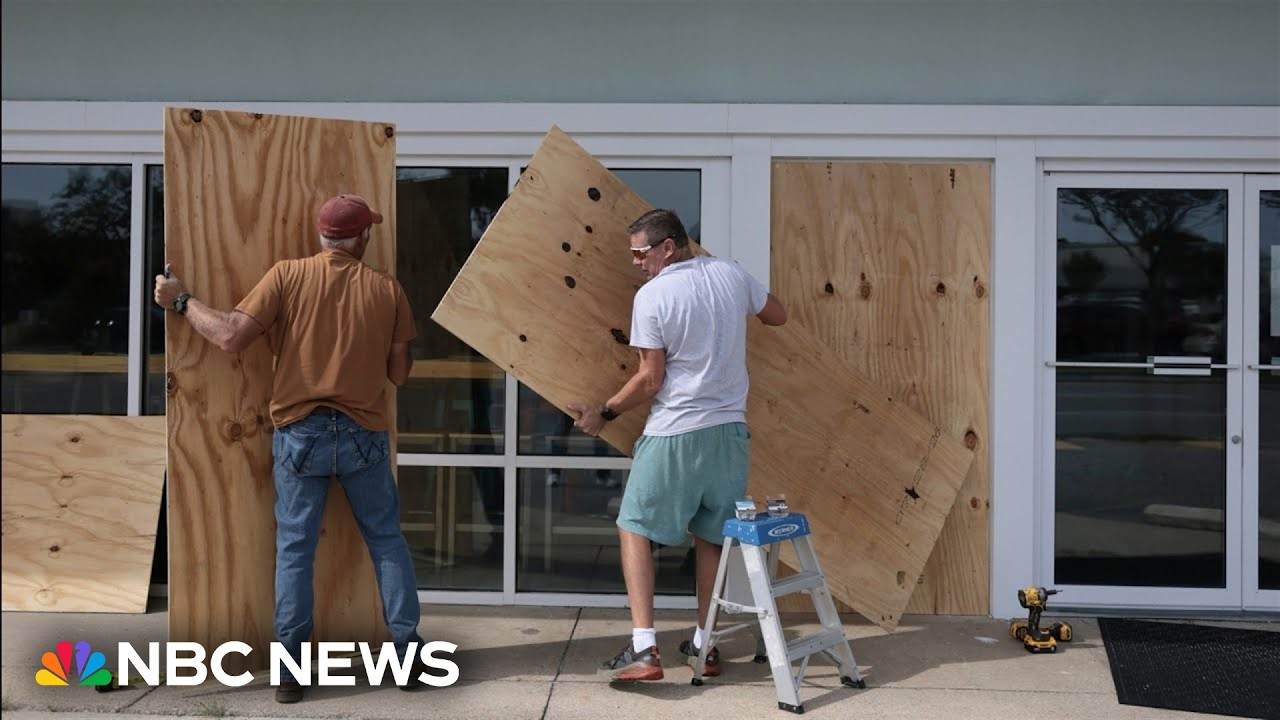
Residents stock up on essentials as Hurricane Isaias approaches Southeast

Residents stock up on essentials as Hurricane Isaias approaches Southeast

October 29, 2026

About

Learn more

Our Services

Legal

Privacy Policy

Terms of Use

Bloggers

Learn more

Article Links

Contact

Advertise

Ask us anything

©2020- TradePoint.io - All rights reserved!

Tradepoint.io, being just a publishing and technology platform, is not a registered broker-dealer or investment adviser. So we do not provide investment advice. Rather, brokerage services are provided to clients of Tradepoint.io by independent SEC-registered broker-dealers and members of FINRA/SIPC. Every form of investing carries some risk and past performance is not a guarantee of future results. “Tradepoint.io“, “Instant Investing” and “My Trading Tools” are registered trademarks of Apperbuild, LLC.

This website is operated by Apperbuild, LLC. We have no link to any brokerage firm and we do not provide investment advice. Every information and resource we provide is solely for the education of our readers. © 2020 Apperbuild, LLC. All rights reserved.

No Result
View All Result
  • Main
  • AI & Technology
  • Stock Charts
  • Market & News
  • Business
  • Finance Tips
  • Trade Tube
  • Blog
  • Shop

© 2023 - TradePoint.io - All Rights Reserved!