
Emir Memedovski
The Technology Select Sector SPDR ETF (NYSEARCA:XLK) tracks the performance of the tech stocks within the S&P 500 Index (SP500). Amid a broader market rally this year, XLK has outperformed through a resurgence of growth optimism, in large part based on new opportunities by companies leveraging artificial intelligence as a major sector theme.
Heading into the Q3 earnings season, expectations are that most companies are finding ways to support profitability despite lingering macro headwinds. That said, the recent market volatility raises the question if the trends are sustainable against potentially softer economic conditions going forward.
In our view, it will be important for tech leaders to report strong results and offer positive guidance to brush aside concerns of a deteriorating operating environment heading into 2024. Overall, we’re bullish on tech and see room for XLK to make a new high sooner rather than later.
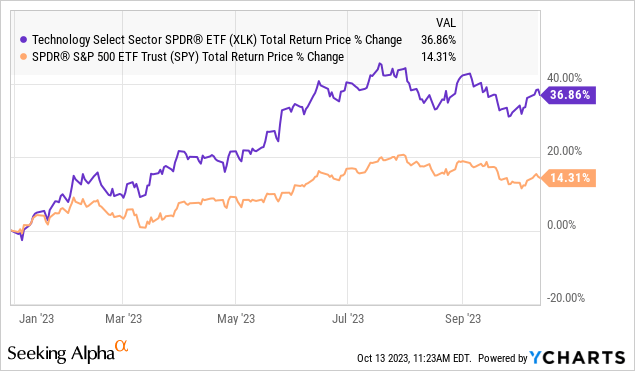
XLK is Dominated By Apple and Microsoft
We’ll preface our comments by saying we’re not necessarily big fans of the XLK ETF. The fund’s market cap weighting methodology means that Apple Inc. (AAPL) and Microsoft Corp (MSFT) together represent nearly half of the fund’s exposure with a 46.5% combined weighting.
As fundamentally sound and however strong the long-term outlook for both of these tech giants may be, we’d say the concentration here is a bit excessive and nearly defeats the purpose of the diversification aspect of what an ETF should be.
That said, XLF with 65 total holdings remains relevant because the tech sectors’ representation across the entire S&P 500 Index means that its performance has implications for the rest of the market.
XLK itself represents nearly 29% of the larger index, and bulls should want to see tech stocks leading higher. Specifically, we don’t quite see a scenario where AAPL and MSFT diverge significantly from the S&P 500, in terms of performance.
source: SSGA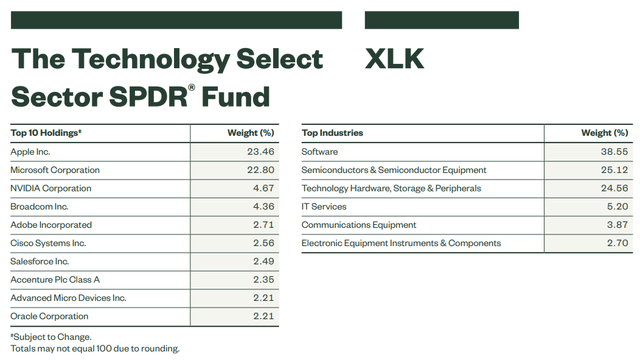
Q3 Earnings Season Preview For Tech Stocks
The good news here is that among the top holdings of XLK, earnings are moving in the right direction. The current consensus for AAPL and MSFT shows EPS expected to climb 8% and 13% year-over-year this quarter, respectively. The ability of companies to keep driving earnings higher should be positive for stocks.
For big tech, Microsoft will be an early bellwether when it reports on October 24, ahead of most other XLK holdings announcing results into November. Keep in mind that for some of these companies, the earnings season may refer to a different fiscal quarter.
A general theme in the sector this year has been an effort at cost controls and generating financial efficiencies. Compared to the inflationary cost pressures that defined 2022, companies have moved forward with price increases while headline-making layoffs have also worked to support margins.
This explains some of the trend of EPS climbing a bit faster than revenues for the sector on average. The data we’re looking at suggests an average Q3 sector EPS growth for tech at 4.6% compared to a narrower 1.4% revenue increase. This average balances strengths and weaknesses across sub-industries based on company-specific factors.
The big story in tech is likely Nvidia Corp (NVDA) where EPS is seen surging by 478% compared to Q3 2022 alongside a 168% top-line increase. In this case, the company is capturing what has been a bonanza of demand with its market-leading platform of specialized AI chips.
We covered NVDA earlier this year, suggesting “shares looked cheap” following its blowout Q1 report. An exceptional Q2 result back in June with updated forward guidance by management has helped brush aside any suggestion by some that accelerated computing and generative AI are just “hype”. Nevertheless, it will be critical for the company’s Q3 report to confirm the continued sales momentum.
Seeking Alpha, table compiled by author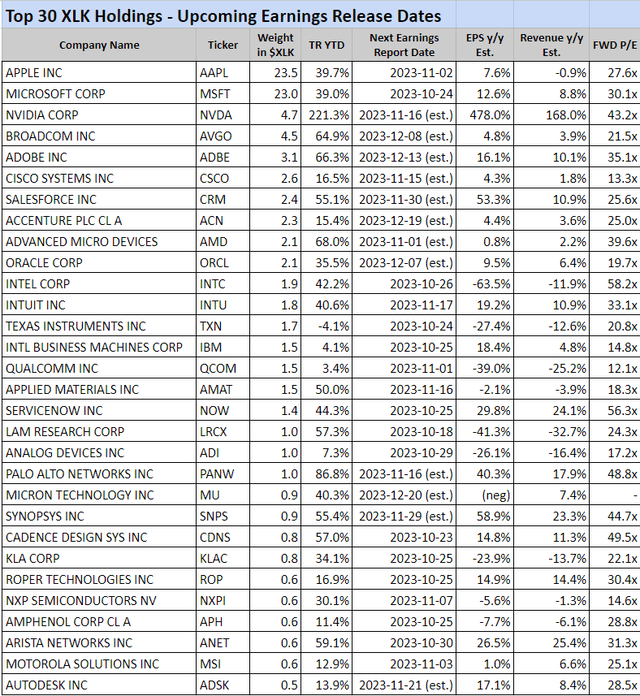
Indeed, NVDA is far from the only AI benefactor. Down the list of holdings, Adobe Inc. (ADBE) and Salesforce, Inc. (CRM) are two names that have both embraced AI and are already seeing a positive market response to new product launches driving a re-acceleration of growth.
Overall, most software application names are integrating AI tools across their ecosystem in one form or another. The idea here is to both add value on the customer side to maintain engagement and drive growth, but also the ability to command higher average pricing.
Elsewhere, the sense is that other chip stocks are rushing to at least catch up to Nvidia’s early AI leadership. Lam Research Corp (LRCX) and Applied Materials, Inc. (AMAT), for example, are facing some earnings pressure considering lingering weakness in more traditional data computing markets, but are well positioned to benefit from a new cycle of wafer fabrication spending in the industry.
Beyond the headline numbers, management comments projecting confidence into 2024 will be the key in regards to a potential bullish market response this quarter.
What’s Next for Tech Stocks and XLK?
The elephant in the room right now when looking at tech stocks and the market, in general, is the more volatile macro situation. We can bring up interest rates at a near two-decade high, or the uncertainties related to Fed policy and still elevated inflation. There is also the escalation of geopolitical tensions given the latest Middle East headlines.
Any of these factors have the potential to reset growth expectations and open the door for a larger market selloff. By this measure, 2023 was defined by a sense of otherwise economic resiliency, but the understanding now is that risks are higher with new uncertainties that could derail a stronger recovery.
According to consensus estimates, Tech is expected to lead growth with a 9.3% revenue increase for the calendar year 2024 compared to an average of 5.5% estimates across other S&P 500 sectors. The forecasted 16.8% earnings momentum from tech next year is also expected to drive S&P 500 bottoms-up EPS overall.
The bearish case for XLF is that companies will be missing estimates left and right into the Q3 earnings season forcing revisions lower to the outlook in 2024
source: FactSet 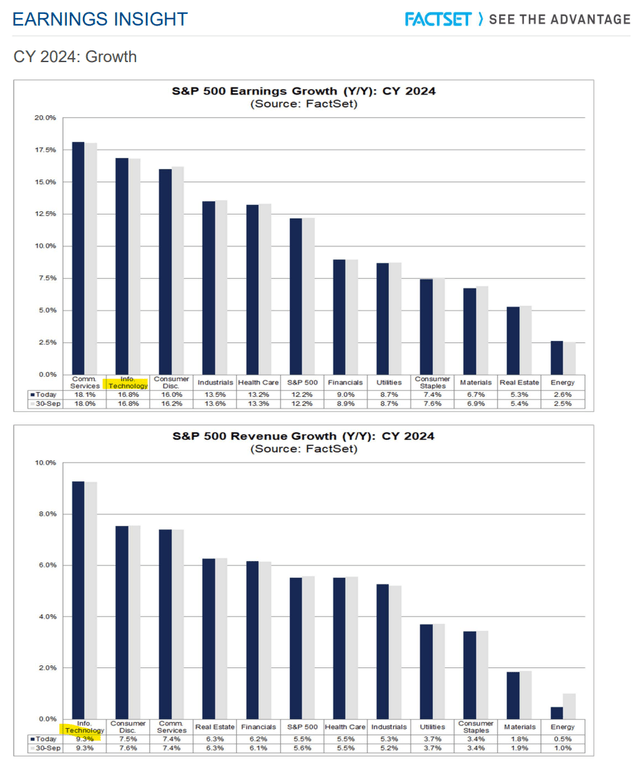
Still, we’re taking a more optimistic approach and ultimately see room for volatility to settle leading to a stronger rally in stocks by year-end. The way we see it playing out will start with greater clarity in the Middle East situation. Evidence that the conflict is relatively contained and not spreading into a broader regional conflict should not necessarily impact the earnings and operating environment of U.S. companies and tech names in particular.
Second, the bullish case for stocks from here recognizes that the Fed likely is done hiking rates which can allow for some stability in financial conditions and bond yields. Favorably, the latest September CPI report showed a continued decline in the core CPI, which excludes food and energy prices, down to a 2-year low. This should give the market some confidence that monetary policy is working to contain inflation supportive to a new credit growth cycle ahead.
Finally, that aspect of a resilient economy despite high-interest rates continuing into 2024 should benefit large-cap tech stocks as they consolidate market share and generate new growth opportunities.
In terms of valuations, look for earnings estimates into next year and beyond being revised even higher, especially in an environment where interest rates have room to decline, could make stocks appear compelling at the current level.
Seeking Alpha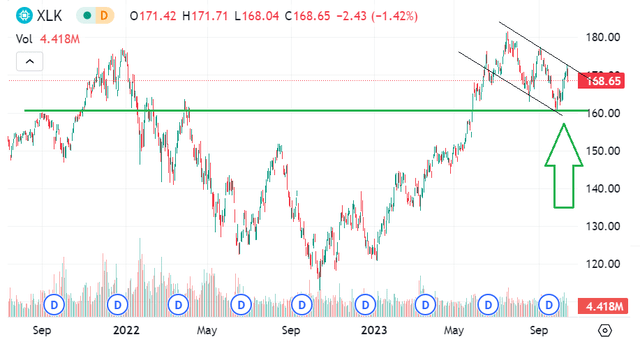
Final Thoughts
Ultimately, we see XLK trading higher by this time next year based on the strength of market leaders like AAPL, MSFT, and NVDA. Stocks have climbed a wall of worry all year, and we believe investors should stick with the trend and expect more upside going forward.
Credit: Source link