



• bitcoinBitcoin(BTC)$86,430.001.12%
  • ethereumEthereum(ETH)$2,756.330.84%
  • tetherTether(USDT)$1.000.01%
  • binancecoinBNB(BNB)$791.170.41%
  • rippleXRP(XRP)$1.626.62%
  • usd-coinUSDC(USDC)$1.000.00%
  • solanaSolana(SOL)$118.781.64%
  • tronTRON(TRX)$0.344159-1.36%
  • zcashZcash(ZEC)$1,613.388.61%
  • Figure HelocFigure Heloc(FIGR_HELOC)$1.031.77%
  • HyperliquidHyperliquid(HYPE)$97.423.16%
  • dogecoinDogecoin(DOGE)$0.1019211.80%
  • moneroMonero(XMR)$572.34-0.44%
  • whitebitWhiteBIT Coin(WBT)$86.921.14%
  • chainlinkChainlink(LINK)$13.060.88%
  • cardanoCardano(ADA)$0.2578885.19%
  • USDSUSDS(USDS)$1.000.01%
  • RainRain(RAIN)$0.013109-4.15%
  • leo-tokenLEO Token(LEO)$8.980.26%
  • stellarStellar(XLM)$0.2205113.66%
  • bitcoin-cashBitcoin Cash(BCH)$359.2334.86%
  • uniswapUniswap(UNI)$10.4016.15%
  • nearNEAR Protocol(NEAR)$4.512.06%
  • litecoinLitecoin(LTC)$64.235.28%
  • avalanche-2Avalanche(AVAX)$11.214.01%
  • Ethena USDeEthena USDe(USDE)$1.000.03%
  • CantonCanton(CC)$0.116050-1.87%
  • daiDai(DAI)$1.00-0.01%
  • USD1USD1(USD1)$1.000.02%
  • hedera-hashgraphHedera(HBAR)$0.0993877.05%
  • suiSui(SUI)$1.031.14%
  • the-open-networkGram (prev. Toncoin)(GRAM)$1.472.26%
  • shiba-inuShiba Inu(SHIB)$0.0000062.36%
  • BittensorBittensor(TAO)$315.47-2.21%
  • crypto-com-chainCronos(CRO)$0.0679683.14%
  • Global DollarGlobal Dollar(USDG)$1.000.00%
  • MemeCoreMemeCore(M)$1.30-4.98%
  • paypal-usdPayPal USD(PYUSD)$1.000.00%
  • tether-goldTether Gold(XAUT)$4,331.920.27%
  • okbOKB(OKB)$125.203.19%
  • BitwayBitway(BTW)$0.9317.40%
  • Circle USYCCircle USYC(USYC)$1.140.01%
  • Ripple USDRipple USD(RLUSD)$1.000.01%
  • aaveAave(AAVE)$152.196.57%
  • mantleMantle(MNT)$0.697.93%
  • BlackRock USD Institutional Digital Liquidity FundBlackRock USD Institutional Digital Liquidity Fund(BUIDL)$1.000.00%
  • Ondo US Dollar YieldOndo US Dollar Yield(USDY)$1.15-0.10%
  • EthenaEthena(ENA)$0.2172941.93%
  • OndoOndo(ONDO)$0.4404051.62%
  • pepePepe(PEPE)$0.000005-1.90%
TradePoint.io
  • Main
  • AI & Technology
  • Stock Charts
  • Market & News
  • Business
  • Finance Tips
  • Trade Tube
  • Blog
  • Shop
No Result
View All Result
TradePoint.io
No Result
View All Result

Why LinkedIn says prompting was a non-starter — and small models was the breakthrough

January 21, 2026
in AI & Technology
Reading Time: 3 mins read
A A
Why LinkedIn says prompting was a non-starter — and small models was the breakthrough
ShareShareShareShareShare

LinkedIn is a leader in AI recommender systems, having developed them over the last 15-plus years. But getting to a next-gen recommendation stack for the job-seekers of tomorrow required a whole new technique. The company had to look beyond off-the-shelf models to achieve next-level accuracy, latency, and efficiency.

YOU MAY ALSO LIKE

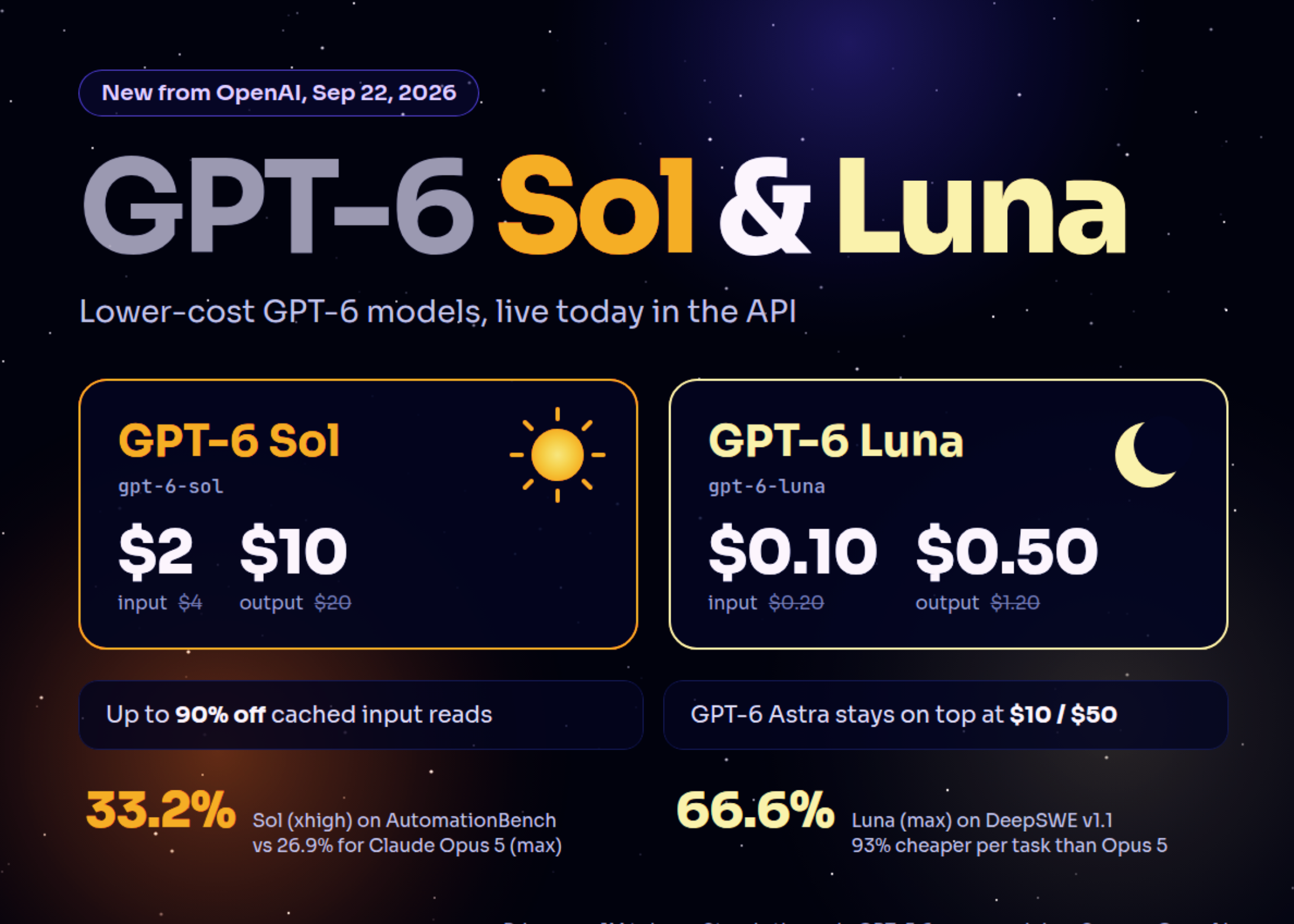
OpenAI Releases GPT-6 Sol and Luna: 50% Cheaper API Pricing and Benchmarks

The Pros And Cons Of Using A Password Manager Over An Authenticator App

“There was just no way we were gonna be able to do that through prompting,” Erran Berger, VP of product engineering at LinkedIn, says in a new Beyond the Pilot podcast. “We didn’t even try that for next-gen recommender systems because we realized it was a non-starter.”

Instead, his team set to develop a highly detailed product policy document to fine-tune an initially massive 7-billion-parameter model; that was then further distilled into additional teacher and student models optimized to hundreds of millions of parameters. 

The technique has created a repeatable cookbook now reused across LinkedIn’s AI products. 

“Adopting this eval process end to end will drive substantial quality improvement of the likes we probably haven’t seen in years here at LinkedIn,” Berger says. 

Why multi-teacher distillation was a ‘breakthrough’ for LinkedIn 

Berger and his team set out to build an LLM that could interpret individual job queries, candidate profiles and job descriptions in real time, and in a way that mirrored LinkedIn’s product policy as accurately as possible. 

Working with the company’s product management team, engineers eventually built out a 20-to-30-page document scoring job description and profile pairs “across many dimensions.” 

“We did many, many iterations on this,” Berger says. That product policy document was then paired with a “golden dataset” comprising thousands of pairs of queries and profiles; the team fed this into ChatGPT during data generation and experimentation, prompting the model over time to learn scoring pairs and eventually generate a much larger synthetic data set to train a 7-billion-parameter teacher model.

However, Berger says, it’s not enough to have an LLM running in production just on product policy. “At the end of the day, it’s a recommender system, and we need to do some amount of click prediction and personalization.” 

So, his team used that initial product policy-focused teacher model to develop a second teacher model oriented toward click prediction. Using the two, they further distilled a 1.7 billion parameter model for training purposes. That eventual student model was run through “many, many training runs,” and was optimized “at every point” to minimize quality loss, Berger says. 

This multi-teacher distillation technique allowed the team to “achieve a lot of affinity” to the original product policy and “land” click prediction, he says. They were also able to “modularize and componentize” the training process for the student.

Consider it in the context of a chat agent with two different teacher models: One is training the agent on accuracy in responses, the other on tone and how it should communicate. Those two things are very different, yet critical, objectives, Berger notes. 

“By now mixing them, you get better outcomes, but also iterate on them independently,” he says. “That was a breakthrough for us.” 

Changing how teams work together

Berger says he can’t understate the importance of anchoring on a product policy and an iterative eval process. 

Getting a “really, really good product policy” requires translating product manager domain expertise into a unified document. Historically, Berger notes, the product management team was laser focused on strategy and user experience, leaving modeling iteration approaches to ML engineers. Now, though, the two teams work together to “dial in” and create an aligned teacher model. 

“How product managers work with machine learning engineers now is very different from anything we’ve done previously,” he says. “It’s now a blueprint for basically any AI products we do at LinkedIn.”

Watch the full podcast to hear more about: 

  • How LinkedIn optimized every step of the R&D process to support velocity, leading to real results with days or hours rather than weeks; 

  • Why teams should develop pipelines for plugability and experimentation and try out different models to support flexibility; 

  • The continued importance of traditional engineering debugging.

You can also listen and subscribe to Beyond the Pilot on Spotify, Apple or wherever you get your podcasts.

Credit: Source link

ShareTweetSendSharePin

Related Posts

OpenAI Releases GPT-6 Sol and Luna: 50% Cheaper API Pricing and Benchmarks
AI & Technology

OpenAI Releases GPT-6 Sol and Luna: 50% Cheaper API Pricing and Benchmarks

September 23, 2026
The Pros And Cons Of Using A Password Manager Over An Authenticator App
AI & Technology

The Pros And Cons Of Using A Password Manager Over An Authenticator App

September 23, 2026
How To Hide Or Replace The Audio Button In iMessages
AI & Technology

How To Hide Or Replace The Audio Button In iMessages

September 22, 2026
Improve Your Apple CarPlay Experience By Doing These Simple Things
AI & Technology

Improve Your Apple CarPlay Experience By Doing These Simple Things

September 22, 2026
Next Post
Judge blocks government from searching data seized from Post reporter – The Washington Post

Judge blocks government from searching data seized from Post reporter - The Washington Post

Leave a Reply Cancel reply

Your email address will not be published. Required fields are marked *

Search

No Result
View All Result
Financial Winter Ahead? Stocks to Buy and Trim Now

Financial Winter Ahead? Stocks to Buy and Trim Now

September 17, 2026
Driver speeds by school bus as children start to cross

Driver speeds by school bus as children start to cross

September 20, 2026
Democrats mobilize an ‘unprecedented’ defense to combat potential election disruption

Democrats mobilize an ‘unprecedented’ defense to combat potential election disruption

September 17, 2026

About

Learn more

Our Services

Legal

Privacy Policy

Terms of Use

Bloggers

Learn more

Article Links

Contact

Advertise

Ask us anything

©2020- TradePoint.io - All rights reserved!

Tradepoint.io, being just a publishing and technology platform, is not a registered broker-dealer or investment adviser. So we do not provide investment advice. Rather, brokerage services are provided to clients of Tradepoint.io by independent SEC-registered broker-dealers and members of FINRA/SIPC. Every form of investing carries some risk and past performance is not a guarantee of future results. “Tradepoint.io“, “Instant Investing” and “My Trading Tools” are registered trademarks of Apperbuild, LLC.

This website is operated by Apperbuild, LLC. We have no link to any brokerage firm and we do not provide investment advice. Every information and resource we provide is solely for the education of our readers. © 2020 Apperbuild, LLC. All rights reserved.

No Result
View All Result
  • Main
  • AI & Technology
  • Stock Charts
  • Market & News
  • Business
  • Finance Tips
  • Trade Tube
  • Blog
  • Shop

© 2023 - TradePoint.io - All Rights Reserved!