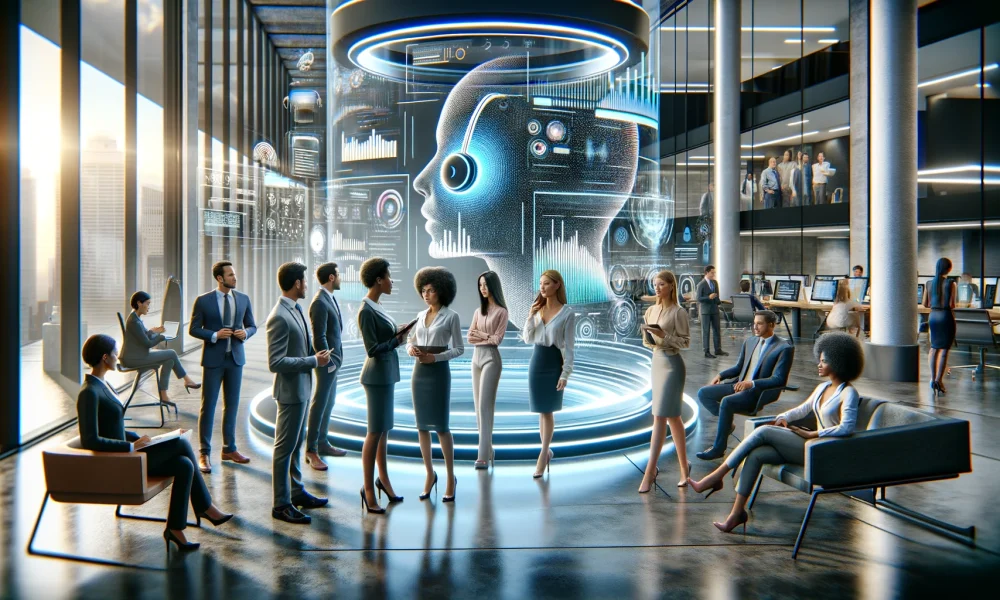

We live in a world where the diversity of human culture and language converges, yet, a fundamental human challenge persists: the struggle to communicate across the mosaic of global accents.
In our society, people from every corner of the globe, speaking a kaleidoscope of languages, molded by distinct cultures and regions, find themselves in a melting pot of accents. These accents, rich and full of heritage, sometimes become barriers to clear communication, leading to misunderstandings and frustration in both personal and professional contexts.
According to studies, comprehension of accented speech is lower when reading the same sentences. Even worse, statements are perceived as less credible when delivered by accented individuals. Non-native accents are often associated with lower levels of intelligence, competence, and education; are deemed less pleasant to the ear, and can lead to categorizing speakers into in vs outgroups.
Enter the realm of AI-enabled accent softening—a technology not of erasure but of understanding and choice. Imagine an AI technology that is capable of gently softening one’s speech towards a common linguistic middle ground without stripping away the identity embedded in one’s accent. This is not about homogenization but about enhancing mutual intelligibility, ensuring that the essence of one’s heritage is preserved while fostering clearer communication.
What is Accent Softening and How It Works
AI-enabled accent softening is a real-time speech-to-speech solution that uses deep learning technology to modify one’s speech audio dynamically so as to soften the accent to make it easier to communicate while keeping the speaker’s identity.
This is an emerging technology that only became possible with the recent advancement in generative AI for speech. To fully implement an AI-enabled accent softening solution, one needs to overcome a number of challenges:
- Latency. In order to have the technology improve the communication without impeding the natural flow of conversation, the solution must be able to soften the accent in real-time with minimum latency. Any delays are easily noticeable in a conversation and will negate any improvements in user experience gained from accent softening.
- Naturalness. One common complaint about generated speech is that it often sounds robotic. Think of C-3PO in Star Wars who is fluent in millions of languages, yet still carries a certain mechanical cadence and precision in articulation, making it unmistakably robotic. This becomes a much worse problem if the AI modification to one’s accented speech makes it sound less natural and lose all the emotions conveyed in the original speech.
- Complexity of accent. An accent is not simply pronouncing words differently, it also involves different prosody (ie. the melody of the speech). If the accent-softening solution replaces both the pronunciation and the prosody, then the generated speech may sound very different from the original speaker.
- Lack of training data. Typically, supervised machine learning produces the best results, but when it comes to the accent softening problem, it’s difficult to obtain labeled data or parallel data for supervised machine learning approaches. It’s nearly impossible to find both accented speech and non-accented speech from the same speaker.
Given these challenges, AI-enabled accent-softening solution is still in its early stages. With the help of the latest developments in generative AI technology, accent softening has shown very promising results.
Impact of Accent Softening
The implications of AI-enabled accent softening for the future of work are profound and multifaceted. Here are a few key areas where this technology could have a significant impact.
Enhanced Global Communication
In an increasingly globalized economy, effective communication across linguistic and cultural boundaries is crucial. AI-driven accent modification can help bridge these divides, enabling clearer communication and reducing misunderstandings in international teams and business interactions.
Inclusivity and Diversity
Accent softening tools can also promote inclusivity in the workplace by helping to reduce bias associated with accents. By empowering individuals to adapt their accents when desired, these technologies can help ensure that judgements are based on content rather than speech patterns, fostering a more inclusive and diverse work environment.
Enhanced Customer Service
For roles that involve significant customer interaction, accent softening can improve service delivery by making communication clearer and more effective. This can be particularly valuable in industries like hospitality, retail, and call centers, where clear communication is essential for customer satisfaction.
Ethical Considerations
While the benefits of AI-enabled accent softening are clear, it’s also important to navigate this space with sensitivity and respect for cultural and linguistic diversity. The goal of such technologies should not be to erase accents but to empower individuals with the choice to adapt their speech as they see fit, ensuring that the use of these tools is driven by personal goals and not by external pressures to conform to a particular linguistic norm.
As we look to the future, the role of AI in accent modification is poised to grow, offering exciting possibilities for personal and professional development. However, as with any technology, it’s crucial to approach its development and implementation with ethical considerations in mind, ensuring that it serves to enhance human capabilities and foster understanding and inclusivity in the global workplace.
AI-enabled accent softening represents a significant leap forward in how we approach language and communication in the professional world. By breaking down barriers, enhancing mutual understanding, and promoting inclusivity, this technology holds the promise of reshaping the future of work in ways that are more connected, inclusive, and effective. As we continue to navigate this evolving landscape, the potential of AI to transform our communicative practices offers a glimpse into a future where the diversity of speech is celebrated and where communication barriers are increasingly surmountable.
Credit: Source link