• bitcoinBitcoin(BTC)$65,451.00-1.89%
  • ethereumEthereum(ETH)$1,831.34-3.13%
  • tetherTether(USDT)$1.000.02%
  • binancecoinBNB(BNB)$595.99-2.27%
  • usd-coinUSDC(USDC)$1.000.01%
  • rippleXRP(XRP)$0.97-1.76%
  • solanaSolana(SOL)$72.85-3.39%
  • tronTRON(TRX)$0.306853-1.72%
  • Figure HelocFigure Heloc(FIGR_HELOC)$1.071.89%
  • HyperliquidHyperliquid(HYPE)$68.190.34%
  • zcashZcash(ZEC)$911.553.73%
  • moneroMonero(XMR)$503.32-5.19%
  • dogecoinDogecoin(DOGE)$0.059425-4.89%
  • USDSUSDS(USDS)$1.000.07%
  • leo-tokenLEO Token(LEO)$9.15-1.69%
  • whitebitWhiteBIT Coin(WBT)$63.32-2.72%
  • chainlinkChainlink(LINK)$9.34-2.09%
  • cardanoCardano(ADA)$0.155955-3.22%
  • stellarStellar(XLM)$0.140640-1.15%
  • Ethena USDeEthena USDe(USDE)$1.000.02%
  • daiDai(DAI)$1.00-0.02%
  • bitcoin-cashBitcoin Cash(BCH)$210.53-2.67%
  • nearNEAR Protocol(NEAR)$3.18-4.38%
  • litecoinLitecoin(LTC)$45.35-4.67%
  • CantonCanton(CC)$0.081847-2.70%
  • avalanche-2Avalanche(AVAX)$7.32-7.95%
  • uniswapUniswap(UNI)$5.19-3.92%
  • tether-goldTether Gold(XAUT)$3,822.28-0.99%
  • USD1USD1(USD1)$1.000.01%
  • suiSui(SUI)$0.73-3.74%
  • the-open-networkGram (prev. Toncoin)(GRAM)$1.05-3.49%
  • Ripple USDRipple USD(RLUSD)$1.000.00%
  • Global DollarGlobal Dollar(USDG)$1.00-0.01%
  • paypal-usdPayPal USD(PYUSD)$1.000.06%
  • hedera-hashgraphHedera(HBAR)$0.059121-1.81%
  • RainRain(RAIN)$0.003663-0.81%
  • Ondo US Dollar YieldOndo US Dollar Yield(USDY)$1.15-0.07%
  • shiba-inuShiba Inu(SHIB)$0.000004-4.19%
  • BittensorBittensor(TAO)$193.94-5.50%
  • quant-networkQuant(QNT)$155.36-1.44%
  • crypto-com-chainCronos(CRO)$0.044194-4.31%
  • Circle USYCCircle USYC(USYC)$1.140.00%
  • Spiko Amundi Overnight Swap Fund (EUR)Spiko Amundi Overnight Swap Fund (EUR)(EURSAFO)$1.120.00%
  • MemeCoreMemeCore(M)$0.84-1.17%
  • okbOKB(OKB)$88.22-2.34%
  • pax-goldPAX Gold(PAXG)$3,823.85-0.97%
  • pepePepe(PEPE)$0.000004-6.17%
  • aaveAave(AAVE)$107.821.78%
  • Falcon USDFalcon USD(USDF)$1.000.01%
  • BlackRock USD Institutional Digital Liquidity FundBlackRock USD Institutional Digital Liquidity Fund(BUIDL)$1.000.00%
TradePoint.io
  • Main
  • AI & Technology
  • Stock Charts
  • Market & News
  • Business
  • Finance Tips
  • Trade Tube
  • Blog
  • Shop
No Result
View All Result
TradePoint.io
No Result
View All Result

Unmasking the Covert Prejudice in AI: A Dive into Dialect Discrimination

March 14, 2024
in AI & Technology
Reading Time: 5 mins read
A A
Unmasking the Covert Prejudice in AI: A Dive into Dialect Discrimination
ShareShareShareShareShare

In the age where artificial intelligence (AI) pervades every aspect of our lives, from aiding in educational endeavors to informing crucial decisions in healthcare and justice, the mirroring and amplification of human biases by language models pose a significant threat to equity and fairness. This concern escalates as AI’s decisions begin to reflect the biases inherent in the data they’re trained on, perpetuating discrimination against marginalized communities. Amidst this landscape, a recent study spearheaded by researchers from the Allen Institute for AI, Stanford University, and the University of Chicago, sheds light on an insidious form of bias: Dialect Prejudice against African American English (AAE) Speakers.

Despite the widespread use of AI in various domains, the phenomenon of dialect prejudice has remained relatively unexplored until now. The study unveils how language models, integral components of AI, exhibit a covert racism by associating negative stereotypes with AAE, independent of explicit racial identifiers. This form of bias is particularly pernicious because it operates under the guise of linguistic preference, sidestepping overt racial categorizations.

To uncover this covert racism, researchers employed a novel technique named Matched Guise Probing (illustrated in Figure 1). This method involves presenting language models with texts in both African American English (AAE) and Standard American English (SAE), without any explicit mention of race, and then comparing the models’ responses to these inputs. By analyzing the language models’ predictions and associations based solely on the dialectal features of the texts, the researchers could isolate and measure the implicit biases held against AAE speakers. This approach allowed for a direct comparison of the models’ attitudes towards AAE and SAE, revealing a marked preference for SAE that mirrors societal biases against African Americans, all without making race an overt topic of inquiry.

The study also reveals that language models hold covert negative stereotypes about AAE speakers—stereotypes that echo the most negative human prejudices recorded before the civil rights movement. These stereotypes were not only more severe than any previously documented human bias but also showed a stark contrast to the models’ overtly positive associations with African Americans. This discrepancy highlights a fundamental issue: while language models have been trained to mask overt racism, the underlying covert prejudice remains untouched and, in some cases, is exacerbated by techniques like human feedback training.

The study’s findings extend beyond the theoretical, demonstrating real-world implications of dialect prejudice. For instance, language models were found more likely to assign less prestigious jobs and harsher criminal judgments to AAE speakers, thus amplifying historical discrimination against African Americans. This bias is not merely a reflection of the models’ training data but indicates a deep-rooted linguistic prejudice that current bias-mitigation strategies fail to address.

What makes this research particularly alarming is the revelation that neither increasing the size of the language models nor incorporating human feedback effectively mitigates the covert racism present. This suggests that current approaches to reducing AI bias are insufficient for addressing the nuanced and deeply embedded prejudices against dialects associated with racialized groups.

In conclusion, this study not only exposes the hidden biases of AI against AAE speakers but also calls into question the effectiveness of existing bias-mitigation strategies. The researchers emphasize the urgent need for novel approaches that directly tackle the subtleties of linguistic prejudice, ensuring AI technologies serve all communities equitably. The discovery of dialect prejudice in AI challenges us to reconsider our understanding of bias in technology and pushes for an inclusive path forward that acknowledges and addresses the covert mechanisms of discrimination.


Check out the Paper and Github. All credit for this research goes to the researchers of this project. Also, don’t forget to follow us on Twitter. Join our Telegram Channel, Discord Channel, and LinkedIn Group.

If you like our work, you will love our newsletter..

Don’t Forget to join our 38k+ ML SubReddit

Want to get in front of 1.5 Million AI enthusiasts? Work with us here


YOU MAY ALSO LIKE

Jensen Huang Ousted By Nvidia Board As CEO

Nvidia’s AI Chip Share Set to Shrink: Akarca

Vineet Kumar is a consulting intern at MarktechPost. He is currently pursuing his BS from the Indian Institute of Technology(IIT), Kanpur. He is a Machine Learning enthusiast. He is passionate about research and the latest advancements in Deep Learning, Computer Vision, and related fields.


🐝 Join the Fastest Growing AI Research Newsletter Read by Researchers from Google + NVIDIA + Meta + Stanford + MIT + Microsoft and many others…


Credit: Source link

ShareTweetSendSharePin

Related Posts

Jensen Huang Ousted By Nvidia Board As CEO
AI & Technology

Jensen Huang Ousted By Nvidia Board As CEO

November 15, 2026
Nvidia’s AI Chip Share Set to Shrink: Akarca
AI & Technology

Nvidia’s AI Chip Share Set to Shrink: Akarca

November 15, 2026
Nvidia’s France Pledges Remain Intact: Varza
AI & Technology

Nvidia’s France Pledges Remain Intact: Varza

November 15, 2026
Nvidia in Crisis: What Next? | Bloomberg Tech: Europe
AI & Technology

Nvidia in Crisis: What Next? | Bloomberg Tech: Europe

November 15, 2026
Next Post
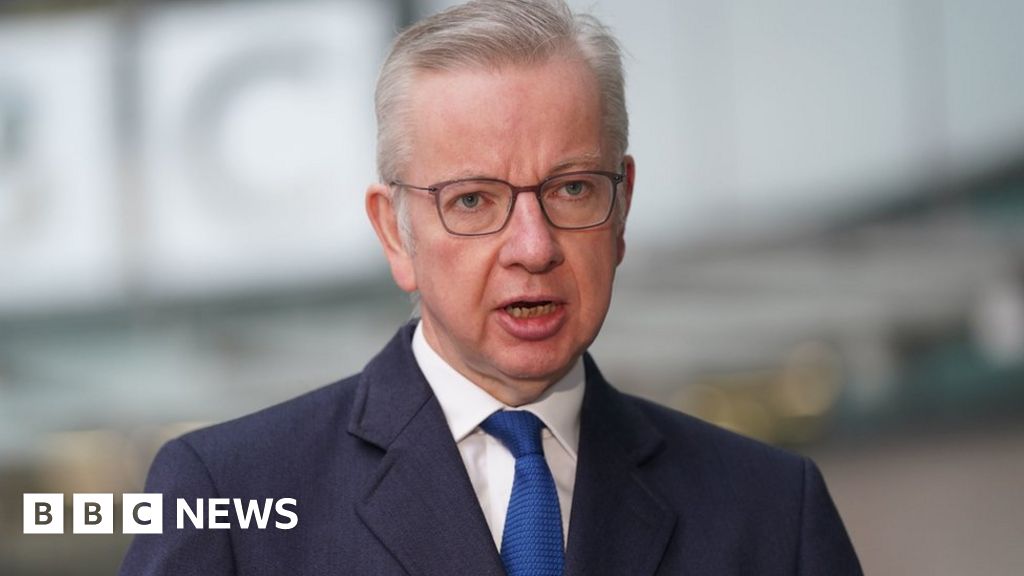
New extremism definition unveiled by government

New extremism definition unveiled by government

Leave a Reply Cancel reply

Your email address will not be published. Required fields are marked *

Search

No Result
View All Result
Peltola says she is ‘deeply offended’ by accusations

Peltola says she is ‘deeply offended’ by accusations

November 13, 2026
Inflation hotter than expected in October as energy, food prices surge

Inflation hotter than expected in October as energy, food prices surge

November 10, 2026
Jensen Huang Said to Have Had Relationship With Nvidia Executive Who Reports to Him – The New York Times

Jensen Huang Said to Have Had Relationship With Nvidia Executive Who Reports to Him – The New York Times

November 12, 2026

About

Learn more

Our Services

Legal

Privacy Policy

Terms of Use

Bloggers

Learn more

Article Links

Contact

Advertise

Ask us anything

©2020- TradePoint.io - All rights reserved!

Tradepoint.io, being just a publishing and technology platform, is not a registered broker-dealer or investment adviser. So we do not provide investment advice. Rather, brokerage services are provided to clients of Tradepoint.io by independent SEC-registered broker-dealers and members of FINRA/SIPC. Every form of investing carries some risk and past performance is not a guarantee of future results. “Tradepoint.io“, “Instant Investing” and “My Trading Tools” are registered trademarks of Apperbuild, LLC.

This website is operated by Apperbuild, LLC. We have no link to any brokerage firm and we do not provide investment advice. Every information and resource we provide is solely for the education of our readers. © 2020 Apperbuild, LLC. All rights reserved.

No Result
View All Result
  • Main
  • AI & Technology
  • Stock Charts
  • Market & News
  • Business
  • Finance Tips
  • Trade Tube
  • Blog
  • Shop

© 2023 - TradePoint.io - All Rights Reserved!