
Caner CIFTCI
In November, I upgraded my rating on Turkcell (NYSE:TKC) to a buy, as the company had proven its ability to effectively manage its business in the face of Turkey’s high inflation rate. Since my upgrade, Turkcell’s stock price has performed extremely well, returning over 25% (Figure 1).
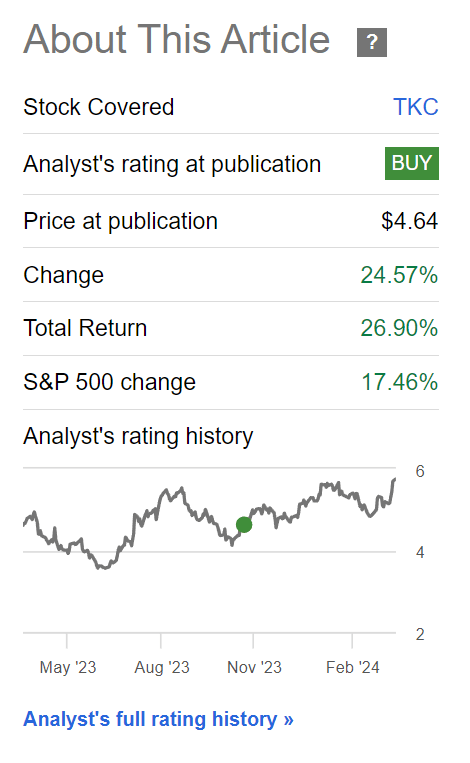
Figure 1 – Turkcell has returned over 25% since November (Seeking Alpha)
With the company recently reporting full year 2023 results, is Turkcell still a buy after the strong rally it experienced in the past few months?
Brief Company Overview
First, for readers who are new to the company, Turkcell Iletisim Hizmetleri A.S. (“Turkcell”) is one of the largest telecommunication providers in Turkey, with a leadership position in mobile services with 37.6 million subscribers effectively covering the whole country (99% coverage). Turkcell also has a nascent broadband service with over 3 million fibre and cable subscribers.
Turkcell Shot The Lights Out In 2023
In terms of operations, Turkcell shot the lights out in 2023, delivering +75.9% YoY revenue growth and +65.1% net income growth (Figure 2). Net subscribers grew by 800k, bringing total net adds to 5.8 million in the past 3 years.
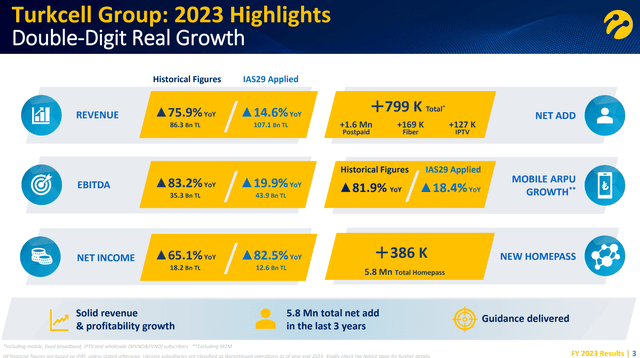
Figure 2 – Turkcell 2023 operating highlights (TKC investor presentation)
In my prior article, I commented that Turkcell was delivering a Masterclass in how to properly manage service pricing in a hyperinflationary environment, and the company continued to execute well in the fourth quarter, with mobile average revenue per user (“ARPU”) growing by 85.2% YoY compared to CPI inflation of 62.7% YoY (Figure 3) in Q4/23.
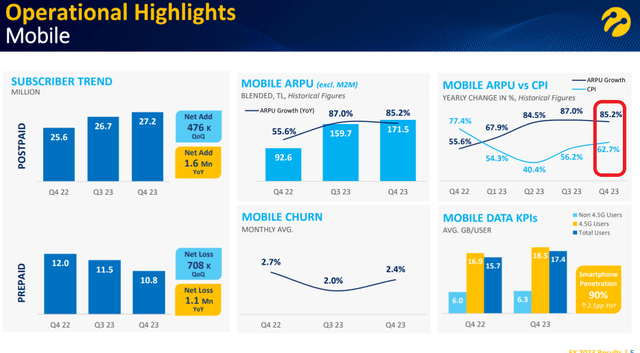
Figure 3 – Mobile ARPU continues to grow faster than CPI (TKC investor presentation)
Similarly, broadband ARPU grew 76.2% YoY compared to 62.7% YoY for CPI inflation (Figure 4).
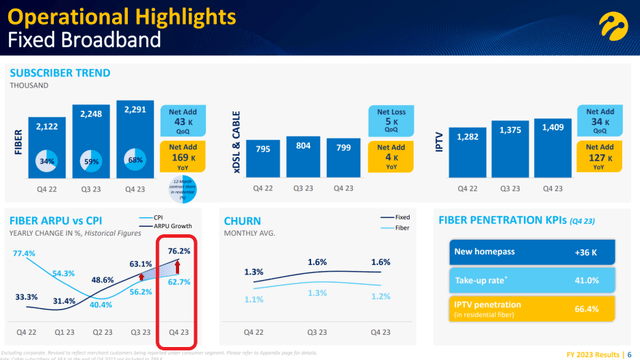
Figure 4 – Broadband ARPU is also inflecting higher (TKC investor presentation)
Revenues growing faster than inflation means that Turkcell is able to effectively pass on its wage and input cost inflation to its customers, so I was not surprised to see that the company’s EBITDA margins expanded in 2023, from 39.2% in 2022 to 41.0% (Figure 5).
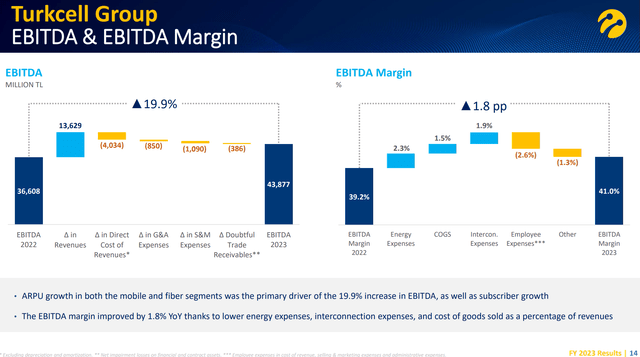
Figure 5 – TKC EBITDA margins expanded to 41% in 2023 (TKC investor presentation)
Resilient Turkish Economy Supports Consumer Spending
In the past few years, Turkey’s economy has proved surprisingly resilient despite persistently high inflation, defying many economists who had predicted an economic collapse for the country. Real GDP grew by 1.1% in the latest quarter and 4.5% overall in 2023, supporting services consumption like mobile and telecommunication services.
Looking forward, the IMF recently raised its real GDP growth forecasts for Turkey to 3.1% for 2024, suggesting continued momentum for the Turkish economy and consumer spending (Figure 6).
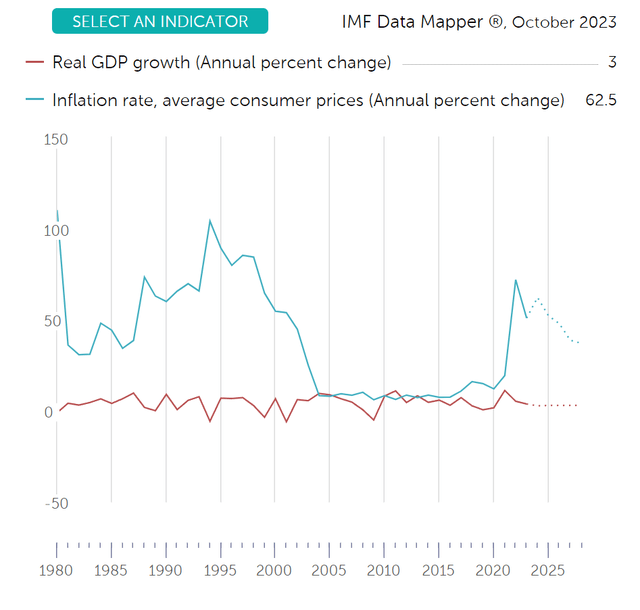
Figure 6 – IMF expects Turkish economy to continue to expand in 2024 (IMF)
Initial 2024 Guidance Looks Conservative
For Turkcell, the company’s initial 2024 guidance looks conservative, as the company is forecasting high-single-digit (“HSD”) revenue growth and ~42% EBITDA margins (Figure 7).
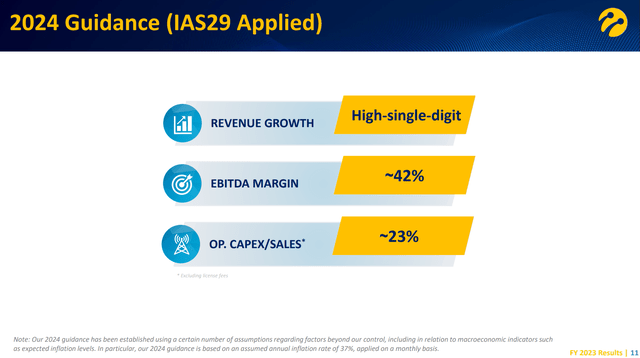
Figure 7 – TKC initial 2024 guidance (TKC investor presentation)
These forecasts are based on an assumed 37% annual inflation rate, applied on a monthly basis. However, as we have seen with Turkey’s inflation data, Turkey’s CPI inflation rate has recently reaccelerated beyond 60% in the last few months (Figure 8).
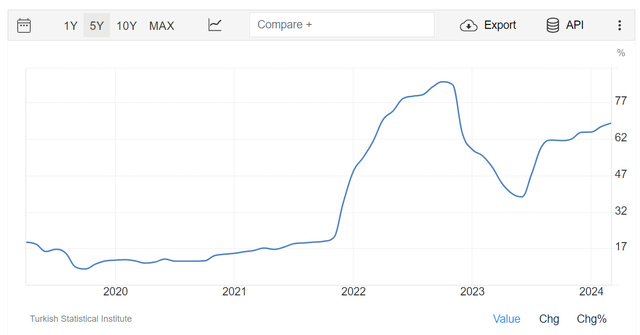
Figure 8 – Turkey CPI inflation (tradingeconomics.com)
Assuming Turkcell can continue to reprice its services inline or ahead of inflation, it is therefore conceivable that the company’s revenue growth and EBITDA margin forecasts may prove conservative.
Valuation Remains Attractive
Furthermore, Turkcell’s valuation continues to screen attractive, trading at just 4.9x Fwd P/E based on consensus estimates for 2024 earnings of $1.18 (Figure 9). In fact, due to the rapid growth in revenues and earnings, TKC has gotten ‘cheaper’ compared to November, when it was trading at 7.7x Fwd P/E (based on 2023 earnings) even after the stock rallied over 25%!
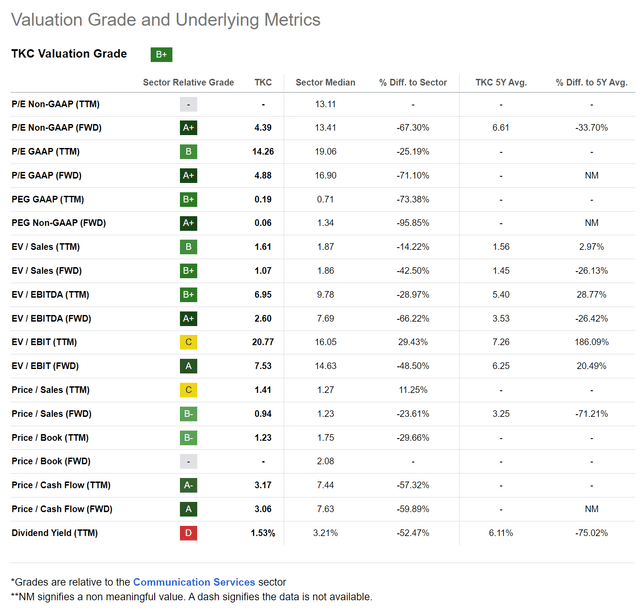
Figure 9 – TKC valuation screens cheap (Seeking Alpha)
Compared to the poorly performing U.S. telecom companies as represented by the iShares U.S. Telecommunications ETF (IYZ), Turkcell may be a speculative investment worth considering (Figure 10).
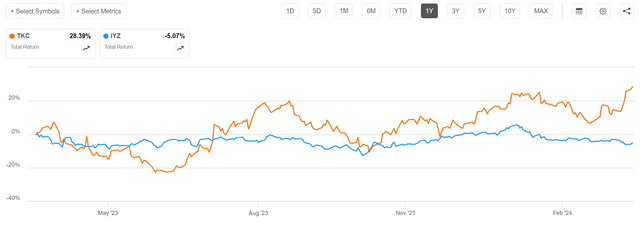
Figure 10 – TKC has outperformed IYZ in the past year (Seeking Alpha)
Risks To Turkcell
In my opinion, the key risk to Turkcell remains the company’s ability to reprice services inline or ahead of inflation. As long as the company is able to do this, high inflation rates actually act as an accelerant to Turkcell’s business, allowing the company to rapidly scale revenues and earnings.
For example, as I noted above, despite a 25%+ rally in shares since November, TKC’s valuation actually got ‘cheaper’ because revenues and earnings grew so rapidly in 2023.
However, this is a double-edged sword. In 2021 when inflation initially began to surge, Turkcell was caught behind the curve and its shares collapsed by over 50% as it was not able to reprice its services fast enough (Figure 11).
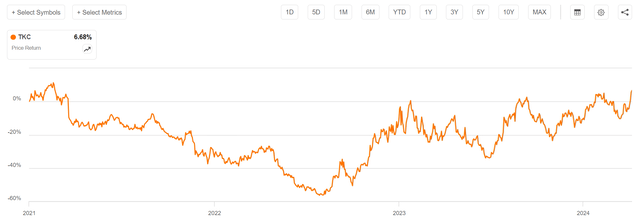
Figure 11 – TKC share price collapsed in 2021 when inflation initially surged (Seeking Alpha)
Investors in Turkcell should closely monitor the company’s quarterly results to ensure its repricing strategy continues to outpace inflation.
Conclusion
Turkcell continues to execute well in its rapid repricing strategy with YoY growth rates in both mobile and broadband services rising faster than inflation, leading to margin expansion and surging earnings.
Looking ahead, inflation is reaccelerating in Turkey. If Turkcell is able to maintain its pricing power (i.e. reprice its services faster than inflation), then current analyst estimates for 2024 could prove to be conservative. I continue to believe Turkcell deserves a speculative buy rating.
Credit: Source link