• bitcoinBitcoin(BTC)$63,800.00-0.89%
  • ethereumEthereum(ETH)$1,805.460.02%
  • tetherTether(USDT)$1.000.03%
  • binancecoinBNB(BNB)$590.060.06%
  • usd-coinUSDC(USDC)$1.000.01%
  • rippleXRP(XRP)$0.98-1.56%
  • solanaSolana(SOL)$74.50-0.37%
  • tronTRON(TRX)$0.3123041.28%
  • Figure HelocFigure Heloc(FIGR_HELOC)$1.020.00%
  • HyperliquidHyperliquid(HYPE)$68.39-0.38%
  • zcashZcash(ZEC)$946.690.85%
  • moneroMonero(XMR)$500.18-1.10%
  • dogecoinDogecoin(DOGE)$0.059337-0.15%
  • leo-tokenLEO Token(LEO)$9.340.01%
  • USDSUSDS(USDS)$1.000.00%
  • whitebitWhiteBIT Coin(WBT)$61.85-0.53%
  • chainlinkChainlink(LINK)$9.190.13%
  • cardanoCardano(ADA)$0.1539490.14%
  • stellarStellar(XLM)$0.137998-2.21%
  • Ethena USDeEthena USDe(USDE)$1.000.04%
  • nearNEAR Protocol(NEAR)$3.402.44%
  • daiDai(DAI)$1.00-0.01%
  • bitcoin-cashBitcoin Cash(BCH)$208.43-0.23%
  • litecoinLitecoin(LTC)$44.520.33%
  • CantonCanton(CC)$0.083011-1.11%
  • uniswapUniswap(UNI)$5.21-0.48%
  • avalanche-2Avalanche(AVAX)$7.06-0.70%
  • RainRain(RAIN)$0.0044031.62%
  • suiSui(SUI)$0.730.10%
  • tether-goldTether Gold(XAUT)$3,722.28-1.03%
  • the-open-networkGram (prev. Toncoin)(GRAM)$1.03-2.38%
  • USD1USD1(USD1)$1.000.04%
  • Ripple USDRipple USD(RLUSD)$1.000.01%
  • Global DollarGlobal Dollar(USDG)$1.000.01%
  • hedera-hashgraphHedera(HBAR)$0.055618-3.45%
  • paypal-usdPayPal USD(PYUSD)$1.000.01%
  • Ondo US Dollar YieldOndo US Dollar Yield(USDY)$1.150.04%
  • BittensorBittensor(TAO)$196.600.50%
  • shiba-inuShiba Inu(SHIB)$0.0000040.23%
  • quant-networkQuant(QNT)$151.82-3.48%
  • crypto-com-chainCronos(CRO)$0.041513-4.83%
  • Circle USYCCircle USYC(USYC)$1.140.01%
  • MemeCoreMemeCore(M)$0.88-0.16%
  • Spiko Amundi Overnight Swap Fund (EUR)Spiko Amundi Overnight Swap Fund (EUR)(EURSAFO)$1.120.24%
  • okbOKB(OKB)$87.560.71%
  • Falcon USDFalcon USD(USDF)$1.000.05%
  • aaveAave(AAVE)$109.89-1.25%
  • pax-goldPAX Gold(PAXG)$3,721.82-1.08%
  • United StablesUnited Stables(U)$1.000.04%
  • pepePepe(PEPE)$0.0000041.89%
TradePoint.io
  • Main
  • AI & Technology
  • Stock Charts
  • Market & News
  • Business
  • Finance Tips
  • Trade Tube
  • Blog
  • Shop
No Result
View All Result
TradePoint.io
No Result
View All Result

This AI Research from DeepMind Aims at Reducing Sycophancy in Large Language Models (LLMs) Using Simple Synthetic Data

August 13, 2023
in AI & Technology
Reading Time: 4 mins read
A A
This AI Research from DeepMind Aims at Reducing Sycophancy in Large Language Models (LLMs) Using Simple Synthetic Data
ShareShareShareShareShare

Large Language Models (LLMs) have developed significantly in recent years and are now capable of handling challenging tasks that call for reasoning. A number of researches, including those by OpenAI and Google, have emphasized a lot on these developments. LLMs have revolutionized the way humans interact with machines and is one of the greatest advancements in the field of Artificial Intelligence (AI). Researchers have been putting in efforts to research the phenomena of sycophancy, which is the term for an unfavorable behavior shown by language models in which these models modify their responses to coincide with the viewpoint of a human user, even when that viewpoint is not objectively right.

The behavior can involve a model adopting liberal beliefs just because a user self-identifies as liberal. Research has been done on emphasizing and examining the frequency of sycophancy inside language models and suggesting a reasonably simple synthetic-data-based strategy to curtail this behavior. To address that, a team of researchers from Google DeepMind has examined three different sycophancy tasks to examine the sycophancy phenomenon. These assignments entail asking models for their thoughts on topics for which there isn’t a single, undeniable right or wrong response, including those pertaining to politics.

The analysis has revealed an interesting pattern: in PaLM models, which can have up to 540 billion parameters, both the model’s size and the practice of instruction adjusting significantly boost sycophantic behavior. By analyzing the same behavior in the setting of simple addition statements, the research has gone beyond the basic scope of sycophancy tasks and has added a new dimension. Despite the fact that these added claims are intentionally inaccurate, language models have shown a propensity to agree with them when users signal their agreement. This finding highlights how persistent sycophancy may be, even when models are aware of their own shortcomings.

The research has presented a relatively straightforward but successful technique centered on synthetic data intervention to address the problem of sycophancy. This intervention makes use of Natural Language Processing (NLP) activities in these tasks to strengthen the model’s resistance to user opinions that are freely accessible to the public. A notable decrease in sycophantic behavior has been accomplished by incorporating this synthetic data through a quick fine-tuning procedure, especially when tested on novel cues.

The findings have been summarized as follows –

Build your personal brand with Taplio! 🚀 The 1st AI-powered tool to grow on LinkedIn (Sponsored)
  1. Model size and instruction tuning increase sycophancy – Models that were instruction-tuned or had more parameters were more likely to replicate a simulated user’s perspective when asked for opinions on topics without definitive answers, including politics.
  1. Models may be complacent about incorrect responses – When there is no user opinion, models accurately disagree with wildly incorrect claims, such as 1 + 1 = 956446. Models also switch their previously accurate responses to follow the user if they agree with the user incorrectly.
  1. Sycophancy can be decreased with a straightforward synthetic-data intervention, which can improve models on prompts where a claim’s truthfulness is unrelated to the user’s perception of it.

In conclusion, this approach addressed the issue of a language model repeating a user’s opinion, even when that opinion is wrong. Fine-tuning using simple synthetic data has been shown to reduce this trait.


Check out the Paper and Github. All Credit For This Research Goes To the Researchers on This Project. Also, don’t forget to join our 28k+ ML SubReddit, 40k+ Facebook Community, Discord Channel, and Email Newsletter, where we share the latest AI research news, cool AI projects, and more.


YOU MAY ALSO LIKE

Wilgot Raises $3 Million Seed Round to Improve Product Visibility in AI Shopping – Unite.AI

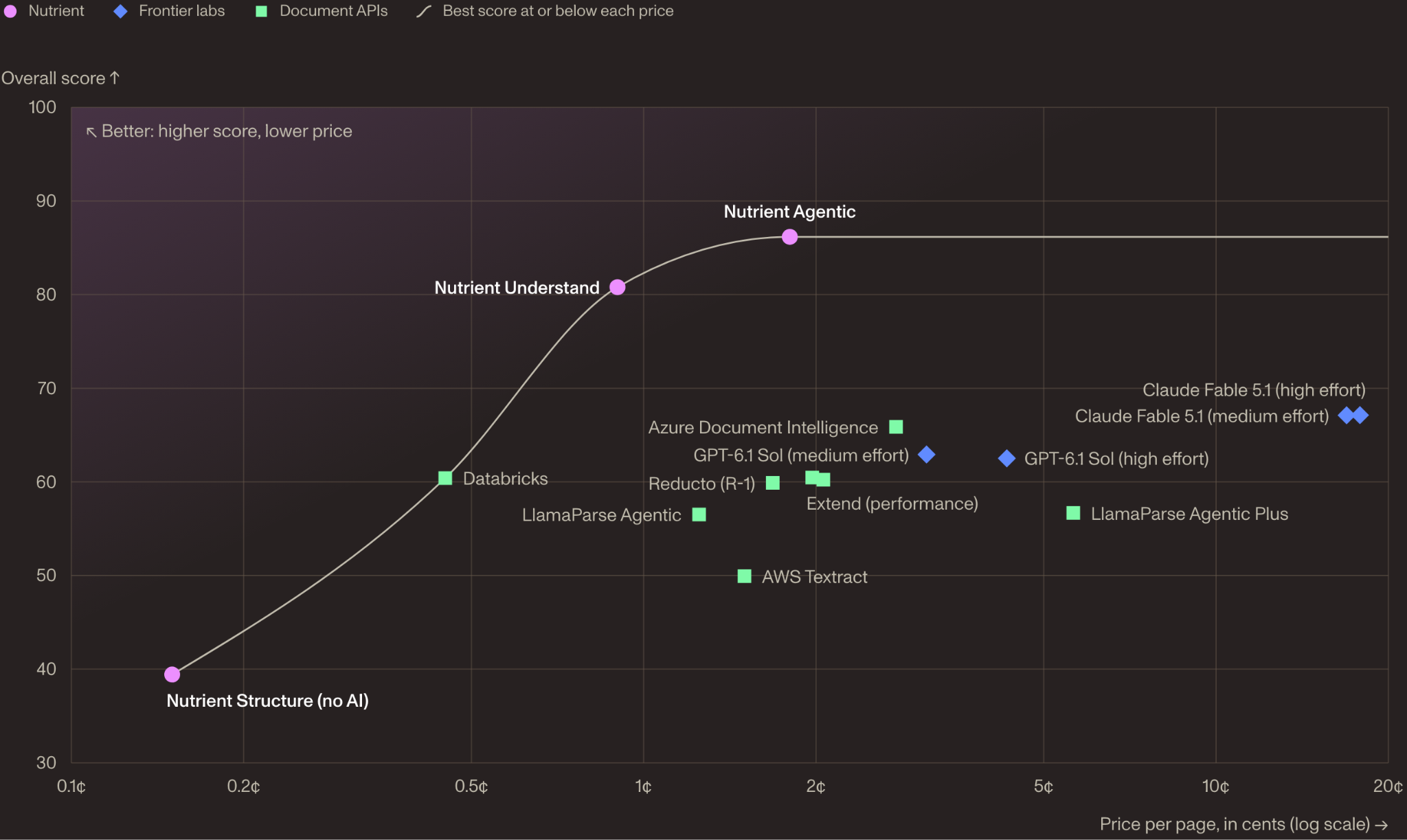
Nutrient Data Extraction API: JSON Matching Your Schema With Per-Field Citations and Confidence

Tanya Malhotra is a final year undergrad from the University of Petroleum & Energy Studies, Dehradun, pursuing BTech in Computer Science Engineering with a specialization in Artificial Intelligence and Machine Learning.
She is a Data Science enthusiast with good analytical and critical thinking, along with an ardent interest in acquiring new skills, leading groups, and managing work in an organized manner.


🔥 Use SQL to predict the future (Sponsored)

Credit: Source link

ShareTweetSendSharePin

Related Posts

Wilgot Raises  Million Seed Round to Improve Product Visibility in AI Shopping – Unite.AI
AI & Technology

Wilgot Raises $3 Million Seed Round to Improve Product Visibility in AI Shopping – Unite.AI

November 19, 2026
Nutrient Data Extraction API: JSON Matching Your Schema With Per-Field Citations and Confidence
AI & Technology

Nutrient Data Extraction API: JSON Matching Your Schema With Per-Field Citations and Confidence

November 19, 2026
Fathom Urges Rapid Implementation of California’s AI Oversight Plan – Unite.AI
AI & Technology

Fathom Urges Rapid Implementation of California’s AI Oversight Plan – Unite.AI

November 19, 2026
Google’s AI Controls Have Major Districts Rethinking Search – Unite.AI
AI & Technology

Google’s AI Controls Have Major Districts Rethinking Search – Unite.AI

November 19, 2026
Next Post
Huawei, 5G and Wearables Take Center Stage at MWC Barcelona

Huawei, 5G and Wearables Take Center Stage at MWC Barcelona

Leave a Reply Cancel reply

Your email address will not be published. Required fields are marked *

Search

No Result
View All Result
Key ballot measures on voters minds as midterm elections near

Key ballot measures on voters minds as midterm elections near

November 15, 2026
An atheist who met the pope, a punk-rock fan and an ‘awkward’ dating-app entrepreneur

An atheist who met the pope, a punk-rock fan and an ‘awkward’ dating-app entrepreneur

November 18, 2026
Election exit polls in Israel show no clear winner

Election exit polls in Israel show no clear winner

November 15, 2026

About

Learn more

Our Services

Legal

Privacy Policy

Terms of Use

Bloggers

Learn more

Article Links

Contact

Advertise

Ask us anything

©2020- TradePoint.io - All rights reserved!

Tradepoint.io, being just a publishing and technology platform, is not a registered broker-dealer or investment adviser. So we do not provide investment advice. Rather, brokerage services are provided to clients of Tradepoint.io by independent SEC-registered broker-dealers and members of FINRA/SIPC. Every form of investing carries some risk and past performance is not a guarantee of future results. “Tradepoint.io“, “Instant Investing” and “My Trading Tools” are registered trademarks of Apperbuild, LLC.

This website is operated by Apperbuild, LLC. We have no link to any brokerage firm and we do not provide investment advice. Every information and resource we provide is solely for the education of our readers. © 2020 Apperbuild, LLC. All rights reserved.

No Result
View All Result
  • Main
  • AI & Technology
  • Stock Charts
  • Market & News
  • Business
  • Finance Tips
  • Trade Tube
  • Blog
  • Shop

© 2023 - TradePoint.io - All Rights Reserved!