















• bitcoinBitcoin(BTC)$83,272.000.14%
  • ethereumEthereum(ETH)$2,669.930.14%
  • tetherTether(USDT)$1.00-0.01%
  • binancecoinBNB(BNB)$759.01-0.04%
  • rippleXRP(XRP)$1.490.32%
  • usd-coinUSDC(USDC)$1.00-0.01%
  • solanaSolana(SOL)$119.341.35%
  • tronTRON(TRX)$0.3353680.30%
  • Figure HelocFigure Heloc(FIGR_HELOC)$1.032.76%
  • zcashZcash(ZEC)$1,405.451.97%
  • HyperliquidHyperliquid(HYPE)$85.91-0.81%
  • dogecoinDogecoin(DOGE)$0.0933120.11%
  • chainlinkChainlink(LINK)$14.35-3.74%
  • moneroMonero(XMR)$539.18-0.32%
  • USDSUSDS(USDS)$1.00-0.01%
  • whitebitWhiteBIT Coin(WBT)$83.250.23%
  • cardanoCardano(ADA)$0.2439760.50%
  • RainRain(RAIN)$0.0125911.42%
  • leo-tokenLEO Token(LEO)$9.030.00%
  • stellarStellar(XLM)$0.220509-2.53%
  • nearNEAR Protocol(NEAR)$4.935.56%
  • bitcoin-cashBitcoin Cash(BCH)$305.63-0.30%
  • uniswapUniswap(UNI)$8.761.69%
  • litecoinLitecoin(LTC)$66.95-1.46%
  • CantonCanton(CC)$0.126793-4.66%
  • avalanche-2Avalanche(AVAX)$11.257.79%
  • Ethena USDeEthena USDe(USDE)$1.00-0.01%
  • suiSui(SUI)$1.152.37%
  • daiDai(DAI)$1.00-0.01%
  • hedera-hashgraphHedera(HBAR)$0.103376-12.85%
  • USD1USD1(USD1)$1.00-0.01%
  • quant-networkQuant(QNT)$294.7927.45%
  • the-open-networkGram (prev. Toncoin)(GRAM)$1.49-4.75%
  • BitwayBitway(BTW)$1.4024.57%
  • BittensorBittensor(TAO)$300.79-0.62%
  • shiba-inuShiba Inu(SHIB)$0.0000062.57%
  • tether-goldTether Gold(XAUT)$4,180.090.87%
  • crypto-com-chainCronos(CRO)$0.067260-0.83%
  • Global DollarGlobal Dollar(USDG)$1.000.00%
  • paypal-usdPayPal USD(PYUSD)$1.00-0.02%
  • Pump.funPump.fun(PUMP)$0.00576420.88%
  • okbOKB(OKB)$121.002.51%
  • Ripple USDRipple USD(RLUSD)$1.000.00%
  • EthenaEthena(ENA)$0.245003-2.08%
  • aaveAave(AAVE)$159.887.47%
  • OndoOndo(ONDO)$0.498548-2.19%
  • Circle USYCCircle USYC(USYC)$1.140.01%
  • MemeCoreMemeCore(M)$1.04-5.85%
  • Ondo US Dollar YieldOndo US Dollar Yield(USDY)$1.15-0.05%
  • BlackRock USD Institutional Digital Liquidity FundBlackRock USD Institutional Digital Liquidity Fund(BUIDL)$1.000.00%
TradePoint.io
  • Main
  • AI & Technology
  • Stock Charts
  • Market & News
  • Business
  • Finance Tips
  • Trade Tube
  • Blog
  • Shop
No Result
View All Result
TradePoint.io
No Result
View All Result

This AI Paper Shows How Diffusion Models Memorize Individual Images From Their Training Data And Emit Them At Generation Time

May 23, 2023
in AI & Technology
Reading Time: 4 mins read
A A
This AI Paper Shows How Diffusion Models Memorize Individual Images From Their Training Data And Emit Them At Generation Time
ShareShareShareShareShare

In recent years, image diffusion models such as DALL-E 2, Imagen, and Stable Diffusion have gained considerable attention for their remarkable ability to generate highly realistic synthetic images. However, alongside their growing popularity, concerns have arisen regarding the behavior of these models. One significant challenge is their tendency to memorize and reproduce specific images from the training data during generation. This characteristic raises important privacy implications that extend beyond individual instances, necessitating a comprehensive exploration of the potential consequences associated with the utilization of diffusion models for image generation.

Understanding diffusion models’ privacy risks and generalization capabilities is crucial for their responsible deployment, especially considering their potential use with sensitive and private data. In this context, a research team of researchers from Google and American universities proposed a recent article addressing these concerns.

Concretely, the article explores how diffusion models memorize and reproduce individual training examples during the generation process, raising privacy and copyright issues. The research also examines the risks associated with data extraction attacks, data reconstruction attacks, and membership inference attacks on diffusion models. In addition, it highlights the need for improved privacy-preserving techniques and broader definitions of overfitting in generative models.

🚀 JOIN the fastest ML Subreddit Community

The experiment conducted in this article involves comparing diffusion models to Generative Adversarial Networks (GANs) to assess their relative privacy levels. The authors investigate membership inference attacks and data extraction attacks to evaluate the vulnerability of both types of models.

The authors propose a privacy attack methodology for the membership inference attacks and perform the attacks on GANs. Utilizing the discriminator’s loss as the metric, they measure the leakage of membership inference. The results show that diffusion models exhibit higher membership inference leakage than GANs, suggesting that diffusion models are less private for membership inference attacks.

In the data extraction experiments, the authors generate images from different model architectures and identify near copies of the training data. They evaluate both self-trained models and off-the-shelf pre-trained models. The findings reveal that diffusion models memorize more data than GANs, even when the performance is similar. Additionally, they observe that as the quality of generative models improves, both GANs and diffusion models tend to memorize more data.

Surprisingly, the authors discover that diffusion models and GANs memorize many of the same images. They identify many common memorized images, indicating that certain images are inherently less private than others. Understanding the reasons behind this phenomenon becomes an area of interest for future research.

During this investigation, the research team also performed an experimental study to check the efficiency of various defenses and practical strategies that may help to reduce and audit model memorization, including deduplicating training datasets, assessing privacy risks through auditing techniques, adopting privacy-preserving strategies when available, and managing expectations regarding privacy in synthetic data. The work contributes to the ongoing discussion about the legal, ethical, and privacy issues related to training on publicly available data.

To conclude, This study demonstrates that state-of-the-art diffusion models can memorize and reproduce individual training images, making them susceptible to attacks to extract training data. Through their experimentation with model training, the authors discover that prioritizing utility can compromise privacy, and conventional defense mechanisms like deduplication are inadequate in fully mitigating the issue of memorization. Notably, the authors observe that state-of-the-art diffusion models exhibit twice the level of memorization compared to comparable Generative Adversarial Networks (GANs). Furthermore, they find that stronger diffusion models, designed for enhanced utility, tend to display greater levels of memorization than weaker models. These findings raise questions regarding the long-term vulnerability of generative image models. Consequently, this research underscores the need for further investigation into diffusion models’ memorization and generalization capabilities.


Check out the Paper. Don’t forget to join our 21k+ ML SubReddit, Discord Channel, and Email Newsletter, where we share the latest AI research news, cool AI projects, and more. If you have any questions regarding the above article or if we missed anything, feel free to email us at [email protected]

🚀 Check Out 100’s AI Tools in AI Tools Club


YOU MAY ALSO LIKE

One Bad Prompt Took Down a Company’s Salesforce: RSA’s Jim Taylor on Agent ID and Taming the 4,000 Shadow AI Agents Hiding in Your Enterprise

Don’t Throw Away Your Old Router — Do This Instead

Mahmoud is a PhD researcher in machine learning. He also holds a
bachelor’s degree in physical science and a master’s degree in
telecommunications and networking systems. His current areas of
research concern computer vision, stock market prediction and deep
learning. He produced several scientific articles about person re-
identification and the study of the robustness and stability of deep
networks.


➡️ Meet Bright Data: The World’s #1 Web Data Platform

Credit: Source link

ShareTweetSendSharePin

Related Posts

One Bad Prompt Took Down a Company’s Salesforce: RSA’s Jim Taylor on Agent ID and Taming the 4,000 Shadow AI Agents Hiding in Your Enterprise
AI & Technology

One Bad Prompt Took Down a Company’s Salesforce: RSA’s Jim Taylor on Agent ID and Taming the 4,000 Shadow AI Agents Hiding in Your Enterprise

September 30, 2026
Don’t Throw Away Your Old Router — Do This Instead
AI & Technology

Don’t Throw Away Your Old Router — Do This Instead

September 30, 2026
The AI Industry Wants Models To Assist In Legal Battles, But Will They Help?
AI & Technology

The AI Industry Wants Models To Assist In Legal Battles, But Will They Help?

September 29, 2026
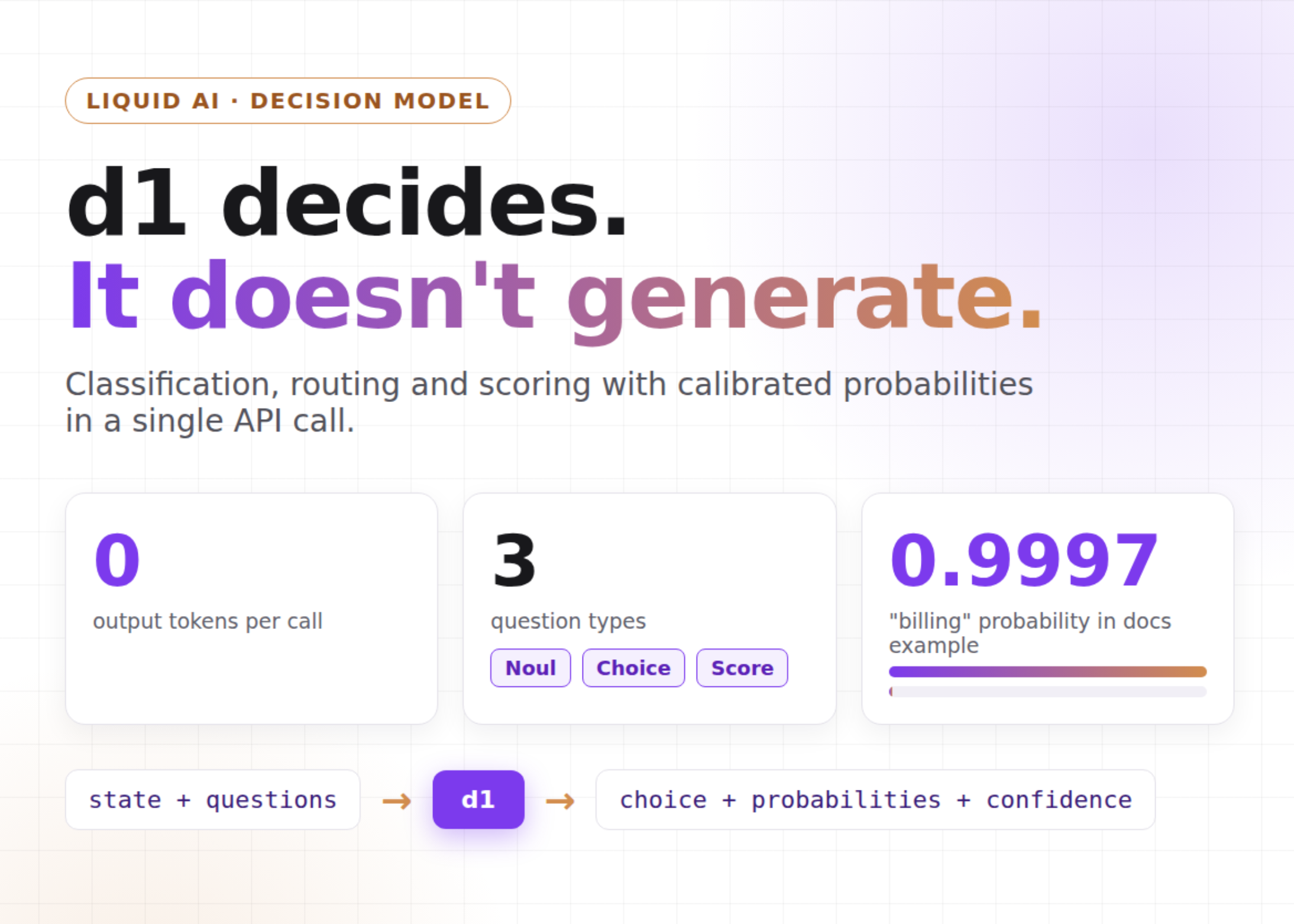
Liquid AI Releases d1: A Decision Model That Returns Calibrated Probabilities With Zero Output Tokens
AI & Technology

Liquid AI Releases d1: A Decision Model That Returns Calibrated Probabilities With Zero Output Tokens

September 29, 2026
Next Post
Crypto Report: Musk, Twitter and Decentralized Platforms

Crypto Report: Musk, Twitter and Decentralized Platforms

Leave a Reply Cancel reply

Your email address will not be published. Required fields are marked *

Search

No Result
View All Result
5 Prompts For Every ChatGPT New Feature

5 Prompts For Every ChatGPT New Feature

September 25, 2026
JEPQ: Hedging AI Infrastructure Growth With Monthly Cash Flow (NASDAQ:JEPQ)

JEPQ: Hedging AI Infrastructure Growth With Monthly Cash Flow (NASDAQ:JEPQ)

September 23, 2026
How To Improve Your Router’s Security In 10 Minutes

How To Improve Your Router’s Security In 10 Minutes

September 27, 2026

About

Learn more

Our Services

Legal

Privacy Policy

Terms of Use

Bloggers

Learn more

Article Links

Contact

Advertise

Ask us anything

©2020- TradePoint.io - All rights reserved!

Tradepoint.io, being just a publishing and technology platform, is not a registered broker-dealer or investment adviser. So we do not provide investment advice. Rather, brokerage services are provided to clients of Tradepoint.io by independent SEC-registered broker-dealers and members of FINRA/SIPC. Every form of investing carries some risk and past performance is not a guarantee of future results. “Tradepoint.io“, “Instant Investing” and “My Trading Tools” are registered trademarks of Apperbuild, LLC.

This website is operated by Apperbuild, LLC. We have no link to any brokerage firm and we do not provide investment advice. Every information and resource we provide is solely for the education of our readers. © 2020 Apperbuild, LLC. All rights reserved.

No Result
View All Result
  • Main
  • AI & Technology
  • Stock Charts
  • Market & News
  • Business
  • Finance Tips
  • Trade Tube
  • Blog
  • Shop

© 2023 - TradePoint.io - All Rights Reserved!