• bitcoinBitcoin(BTC)$81,330.000.82%
  • Midas Fasanara Global EuroMidas Fasanara Global Euro(MGLOEURO)$111,813.00-0.36%
  • ethereumEthereum(ETH)$2,362.050.88%
  • tetherTether(USDT)$1.000.05%
  • binancecoinBNB(BNB)$755.981.25%
  • rippleXRP(XRP)$1.330.85%
  • usd-coinUSDC(USDC)$1.000.03%
  • solanaSolana(SOL)$102.561.57%
  • tronTRON(TRX)$0.329418-0.58%
  • Figure HelocFigure Heloc(FIGR_HELOC)$1.041.62%
  • zcashZcash(ZEC)$1,302.120.39%
  • HyperliquidHyperliquid(HYPE)$81.130.01%
  • dogecoinDogecoin(DOGE)$0.0803032.54%
  • moneroMonero(XMR)$599.34-0.63%
  • USDSUSDS(USDS)$1.00-0.02%
  • whitebitWhiteBIT Coin(WBT)$78.090.77%
  • chainlinkChainlink(LINK)$11.853.43%
  • leo-tokenLEO Token(LEO)$9.424.19%
  • cardanoCardano(ADA)$0.2068621.01%
  • nearNEAR Protocol(NEAR)$4.752.68%
  • stellarStellar(XLM)$0.1738012.34%
  • bitcoin-cashBitcoin Cash(BCH)$289.520.35%
  • RainRain(RAIN)$0.006918-3.74%
  • litecoinLitecoin(LTC)$59.004.07%
  • Ethena USDeEthena USDe(USDE)$1.000.06%
  • uniswapUniswap(UNI)$7.252.80%
  • daiDai(DAI)$1.000.00%
  • CantonCanton(CC)$0.1003372.36%
  • avalanche-2Avalanche(AVAX)$9.031.85%
  • suiSui(SUI)$0.952.88%
  • USD1USD1(USD1)$1.000.05%
  • the-open-networkGram (prev. Toncoin)(GRAM)$1.252.93%
  • hedera-hashgraphHedera(HBAR)$0.0759700.03%
  • tether-goldTether Gold(XAUT)$4,058.420.15%
  • Global DollarGlobal Dollar(USDG)$1.000.02%
  • BittensorBittensor(TAO)$259.822.65%
  • paypal-usdPayPal USD(PYUSD)$1.00-0.02%
  • shiba-inuShiba Inu(SHIB)$0.0000052.82%
  • quant-networkQuant(QNT)$200.960.73%
  • EthenaEthena(ENA)$0.2126101.64%
  • crypto-com-chainCronos(CRO)$0.0539271.41%
  • Ripple USDRipple USD(RLUSD)$1.000.00%
  • BitwayBitway(BTW)$1.735.58%
  • MemeCoreMemeCore(M)$1.05-2.41%
  • Ondo US Dollar YieldOndo US Dollar Yield(USDY)$1.15-0.04%
  • Circle USYCCircle USYC(USYC)$1.140.01%
  • okbOKB(OKB)$111.131.69%
  • BlackRock USD Institutional Digital Liquidity FundBlackRock USD Institutional Digital Liquidity Fund(BUIDL)$1.000.00%
  • pepePepe(PEPE)$0.00000514.50%
  • aaveAave(AAVE)$136.483.04%
TradePoint.io
  • Main
  • AI & Technology
  • Stock Charts
  • Market & News
  • Business
  • Finance Tips
  • Trade Tube
  • Blog
  • Shop
No Result
View All Result
TradePoint.io
No Result
View All Result

This AI Paper from Google DeepMind Explores the Effect of Communication Connectivity in Multi-Agent Systems

June 27, 2024
in AI & Technology
Reading Time: 6 mins read
A A
This AI Paper from Google DeepMind Explores the Effect of Communication Connectivity in Multi-Agent Systems
ShareShareShareShareShare

A significant challenge in the realm of large language models (LLMs) is the high computational cost associated with multi-agent debates (MAD). These debates, where multiple agents communicate to enhance reasoning and factual accuracy, often involve a fully connected communication topology. This means each agent references the solutions generated by all other agents, leading to expanded input contexts and increased computational demands. Addressing this challenge is crucial for improving the scalability and efficiency of AI systems, making them more viable for real-time applications and environments with limited computational resources.

Current methods for multi-agent debate involve fully connected topologies where each agent can access and reference the solutions generated by all other agents. While this approach has shown improvements in reasoning tasks, it is computationally expensive. Techniques such as Chain-of-Thought (CoT) prompting and self-consistency have been employed to enhance LLM performance by structuring their reasoning processes. However, these methods also suffer from limitations, including increased complexity and the need for extensive computational resources to handle the expanded input context generated by multiple agents communicating extensively.

YOU MAY ALSO LIKE

Meta Weighs Delaying ‘Alarming’ New Business Terms As Backlash Grows

Google DeepMind Introduces Gemini 4 Carbon, Its Top Model for Cyber Defense and Coding

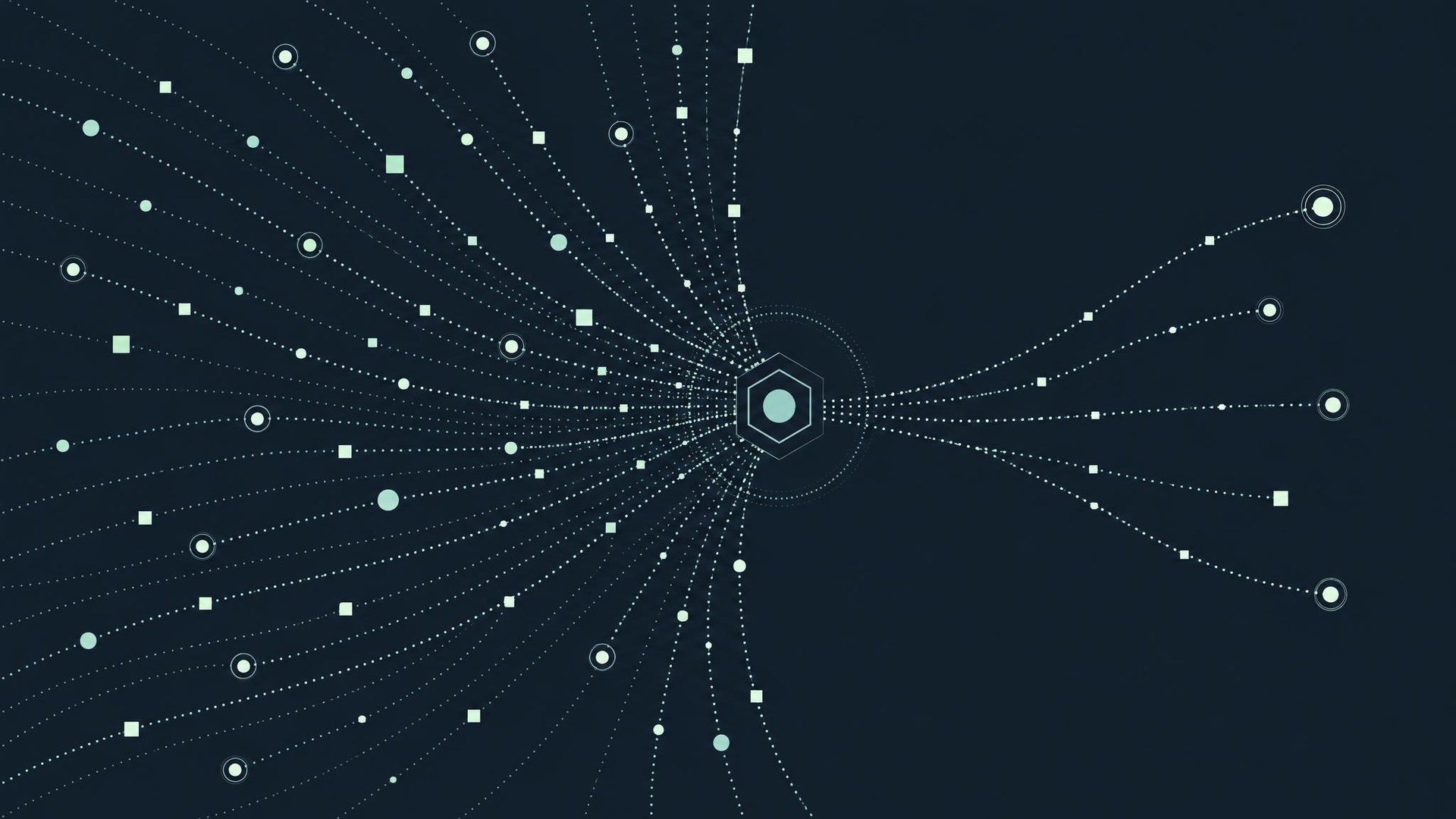
The researchers from Google DeepMind introduce a novel approach using sparse communication topology in multi-agent debates. By limiting the number of reference solutions visible to each agent, they aim to maintain or even improve the performance of MAD while significantly reducing computational costs. This approach involves systematic investigation and implementation of neighbor-connected communication strategies, where agents communicate with a limited set of peers rather than all agents. This innovation addresses the computational inefficiencies of existing methods by reducing the input context size, making the debate process more scalable and resource-efficient.

This innovative method utilizes static graphs to represent communication topologies among agents, quantified by a sparsity ratio. In experiments, the focus is on configurations with six agents, examining various degrees of sparsity. The agents, instantiated with models like GPT-3.5 and Mistral 7B, engage in multiple rounds of debate, incorporating responses from their connected peers to refine their answers. For reasoning tasks, datasets such as MATH and GSM8K are used, while alignment labeling tasks employ the Anthropic-HH dataset. The experimental setup includes performance metrics like accuracy and cost savings, and variance reduction techniques are applied to ensure robust results.

The approach using sparse communication topology in MAD achieved notable improvements in both performance and computational efficiency. On the MATH dataset, a neighbor-connected topology improved accuracy by 2% over fully connected MAD while reducing the average input token cost by over 40%. For alignment labeling tasks using the Anthropic-HH dataset, sparse MAD configurations showed improvements in helpfulness and harmlessness metrics by 0.5% and 1.0%, respectively, while halving the computational costs. These results demonstrate that sparse communication topologies can deliver comparable or superior performance to fully connected topologies with significantly reduced computational overhead.

In conclusion, this research presents a significant advancement in the field of AI by introducing sparse communication topology in multi-agent debates. This approach effectively addresses the computational inefficiencies of existing methods, offering a scalable and resource-efficient solution. The experimental results highlight the potential impact of this innovation on AI research, showcasing its ability to enhance performance while reducing costs, thereby advancing the practical applicability of multi-agent systems.


Check out the Paper. All credit for this research goes to the researchers of this project. Also, don’t forget to follow us on Twitter. 

Join our Telegram Channel and LinkedIn Group.

If you like our work, you will love our newsletter..

Don’t Forget to join our 45k+ ML SubReddit


🚀 Create, edit, and augment tabular data with the first compound AI system, Gretel Navigator, now generally available! [Advertisement]


Aswin AK is a consulting intern at MarkTechPost. He is pursuing his Dual Degree at the Indian Institute of Technology, Kharagpur. He is passionate about data science and machine learning, bringing a strong academic background and hands-on experience in solving real-life cross-domain challenges.

[Announcing Gretel Navigator] Create, edit, and augment tabular data with the first compound AI system trusted by EY, Databricks, Google, and Microsoft


Credit: Source link

ShareTweetSendSharePin

Related Posts

Meta Weighs Delaying ‘Alarming’ New Business Terms As Backlash Grows
AI & Technology

Meta Weighs Delaying ‘Alarming’ New Business Terms As Backlash Grows

October 28, 2026
Google DeepMind Introduces Gemini 4 Carbon, Its Top Model for Cyber Defense and Coding
AI & Technology

Google DeepMind Introduces Gemini 4 Carbon, Its Top Model for Cyber Defense and Coding

October 28, 2026
Apple’s First Touchscreen MacBook Pro Feels Both Familiar And Radically Improved
AI & Technology

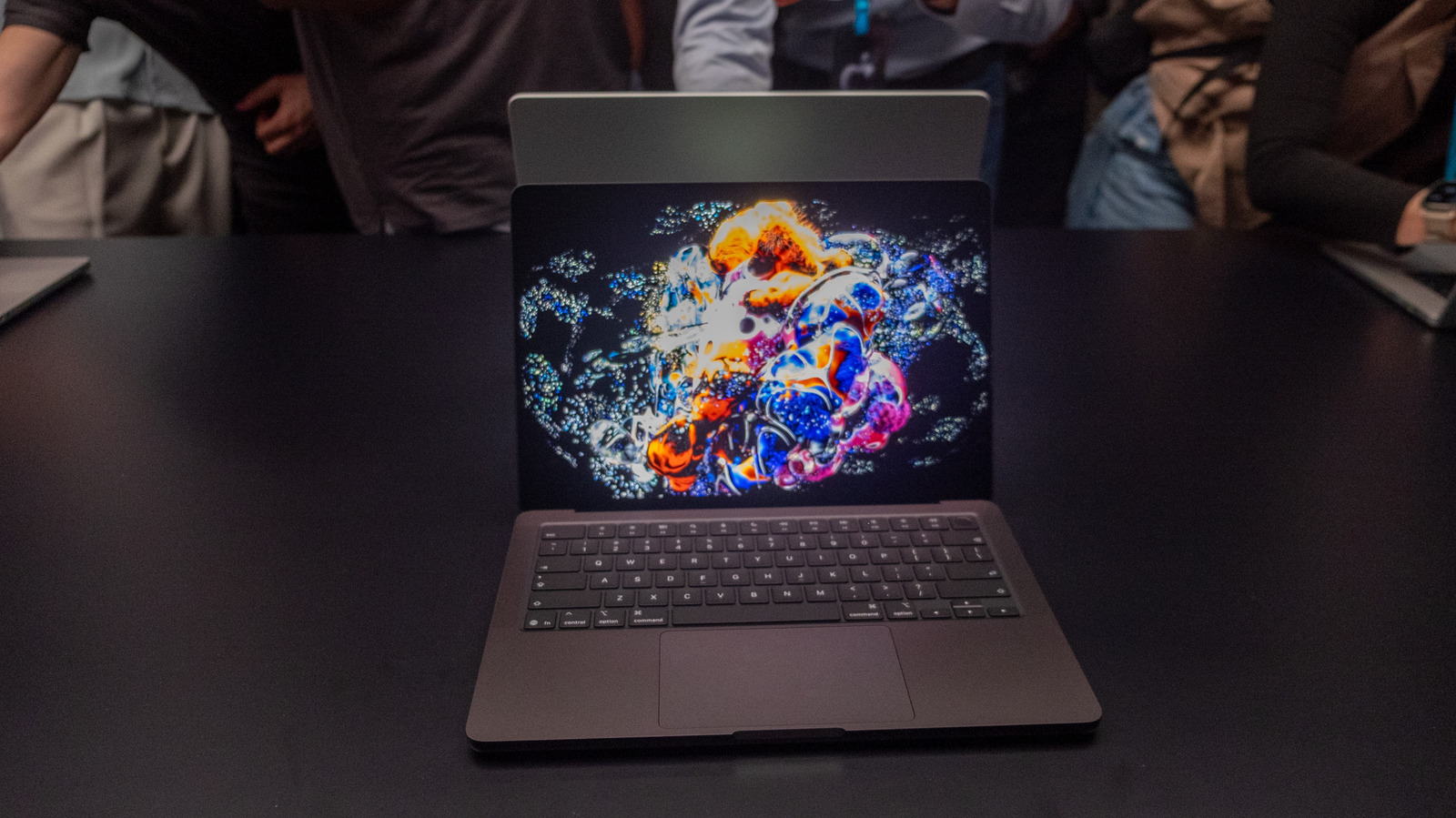
Apple’s First Touchscreen MacBook Pro Feels Both Familiar And Radically Improved

October 28, 2026
Microsoft Makes Copilot Harness Available Through Foundry – Unite.AI
AI & Technology

Microsoft Makes Copilot Harness Available Through Foundry – Unite.AI

October 28, 2026
Next Post
Club Q survivors face challenges and trauma one year after shooting

Club Q survivors face challenges and trauma one year after shooting

Leave a Reply Cancel reply

Your email address will not be published. Required fields are marked *

Search

No Result
View All Result
Inside Ukraine’s ‘Kill Zone,’ soldiers face swarming drones

Inside Ukraine’s ‘Kill Zone,’ soldiers face swarming drones

October 23, 2026
Betterware: Tupperware Looks Better, But Jafra Looks Worse

Betterware: Tupperware Looks Better, But Jafra Looks Worse

October 24, 2026
Tesla: Don't Fall For The SpaceX Merger Hype

Tesla: Don't Fall For The SpaceX Merger Hype

October 21, 2026

About

Learn more

Our Services

Legal

Privacy Policy

Terms of Use

Bloggers

Learn more

Article Links

Contact

Advertise

Ask us anything

©2020- TradePoint.io - All rights reserved!

Tradepoint.io, being just a publishing and technology platform, is not a registered broker-dealer or investment adviser. So we do not provide investment advice. Rather, brokerage services are provided to clients of Tradepoint.io by independent SEC-registered broker-dealers and members of FINRA/SIPC. Every form of investing carries some risk and past performance is not a guarantee of future results. “Tradepoint.io“, “Instant Investing” and “My Trading Tools” are registered trademarks of Apperbuild, LLC.

This website is operated by Apperbuild, LLC. We have no link to any brokerage firm and we do not provide investment advice. Every information and resource we provide is solely for the education of our readers. © 2020 Apperbuild, LLC. All rights reserved.

No Result
View All Result
  • Main
  • AI & Technology
  • Stock Charts
  • Market & News
  • Business
  • Finance Tips
  • Trade Tube
  • Blog
  • Shop

© 2023 - TradePoint.io - All Rights Reserved!