• bitcoinBitcoin(BTC)$83,997.00-0.03%
  • ethereumEthereum(ETH)$2,689.640.41%
  • tetherTether(USDT)$1.000.00%
  • binancecoinBNB(BNB)$773.03-0.08%
  • rippleXRP(XRP)$1.550.92%
  • usd-coinUSDC(USDC)$1.000.00%
  • solanaSolana(SOL)$120.513.45%
  • tronTRON(TRX)$0.337141-0.43%
  • zcashZcash(ZEC)$1,533.91-1.31%
  • Figure HelocFigure Heloc(FIGR_HELOC)$1.02-0.30%
  • HyperliquidHyperliquid(HYPE)$91.58-1.06%
  • dogecoinDogecoin(DOGE)$0.0976232.42%
  • chainlinkChainlink(LINK)$14.094.60%
  • moneroMonero(XMR)$555.14-3.22%
  • whitebitWhiteBIT Coin(WBT)$83.860.08%
  • USDSUSDS(USDS)$1.00-0.02%
  • cardanoCardano(ADA)$0.2552302.77%
  • RainRain(RAIN)$0.011918-0.16%
  • leo-tokenLEO Token(LEO)$8.941.49%
  • stellarStellar(XLM)$0.217760-0.35%
  • bitcoin-cashBitcoin Cash(BCH)$338.381.58%
  • nearNEAR Protocol(NEAR)$4.919.12%
  • uniswapUniswap(UNI)$9.757.28%
  • litecoinLitecoin(LTC)$73.272.52%
  • CantonCanton(CC)$0.13861818.09%
  • Ethena USDeEthena USDe(USDE)$1.00-0.01%
  • suiSui(SUI)$1.1614.04%
  • avalanche-2Avalanche(AVAX)$10.705.06%
  • daiDai(DAI)$1.000.00%
  • USD1USD1(USD1)$1.000.01%
  • hedera-hashgraphHedera(HBAR)$0.0940641.91%
  • the-open-networkGram (prev. Toncoin)(GRAM)$1.452.61%
  • BittensorBittensor(TAO)$311.954.71%
  • shiba-inuShiba Inu(SHIB)$0.0000062.47%
  • crypto-com-chainCronos(CRO)$0.0653171.38%
  • Global DollarGlobal Dollar(USDG)$1.000.01%
  • MemeCoreMemeCore(M)$1.243.00%
  • paypal-usdPayPal USD(PYUSD)$1.000.00%
  • EthenaEthena(ENA)$0.26953421.88%
  • OndoOndo(ONDO)$0.55-1.39%
  • tether-goldTether Gold(XAUT)$4,282.330.24%
  • okbOKB(OKB)$121.351.68%
  • Ripple USDRipple USD(RLUSD)$1.00-0.01%
  • Circle USYCCircle USYC(USYC)$1.140.03%
  • BitwayBitway(BTW)$0.88-10.01%
  • aaveAave(AAVE)$154.337.00%
  • BlackRock USD Institutional Digital Liquidity FundBlackRock USD Institutional Digital Liquidity Fund(BUIDL)$1.000.00%
  • Ondo US Dollar YieldOndo US Dollar Yield(USDY)$1.150.02%
  • mantleMantle(MNT)$0.691.98%
  • Pump.funPump.fun(PUMP)$0.00460818.88%
TradePoint.io
  • Main
  • AI & Technology
  • Stock Charts
  • Market & News
  • Business
  • Finance Tips
  • Trade Tube
  • Blog
  • Shop
No Result
View All Result
TradePoint.io
No Result
View All Result

This AI Paper from Apple Introduces a Distillation Scaling Law: A Compute-Optimal Approach for Training Efficient Language Models

February 16, 2025
in AI & Technology
Reading Time: 4 mins read
A A
This AI Paper from Apple Introduces a Distillation Scaling Law: A Compute-Optimal Approach for Training Efficient Language Models
ShareShareShareShareShare

Language models have become increasingly expensive to train and deploy. This has led researchers to explore techniques such as model distillation, where a smaller student model is trained to replicate the performance of a larger teacher model. The idea is to enable efficient deployment without compromising performance. Understanding the principles behind distillation and how computational resources can be optimally allocated between student and teacher models is crucial to improving efficiency.

The increasing size of machine learning models has resulted in high costs and sustainability challenges. Training these models requires substantial computational resources, and inference demands even more computation. The associated costs can surpass pretraining expenses, with inference volumes reaching billions of daily tokens. Moreover, large models present logistical challenges such as increased energy consumption and difficulty in deployment. The necessity to reduce inference costs without sacrificing model capabilities has motivated researchers to seek solutions that balance computational efficiency and effectiveness.

YOU MAY ALSO LIKE

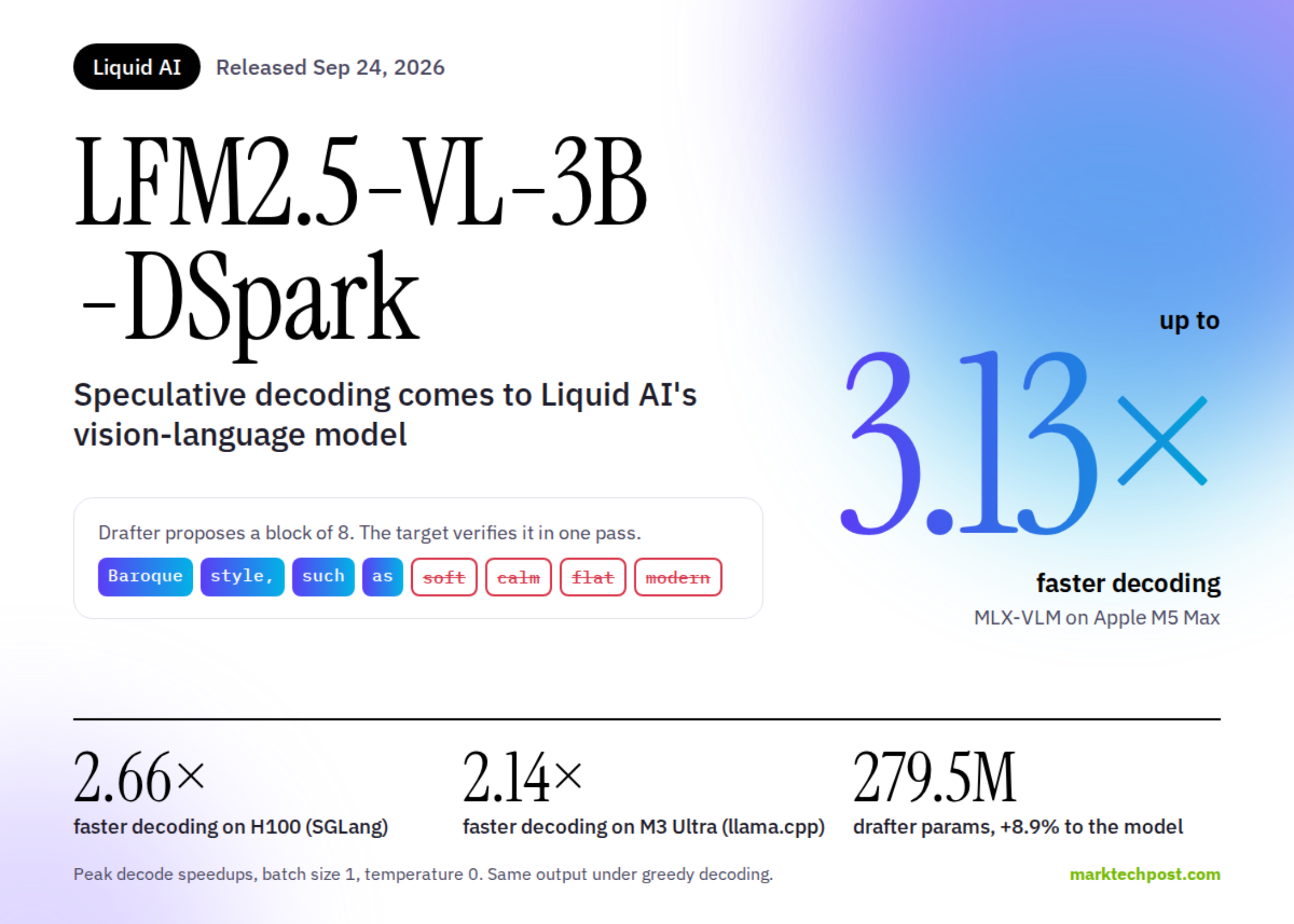
Liquid AI Releases LFM2.5-VL-3B-DSpark: Speculative Decoding for Vision-Language Models With Up to 3.13x Faster Decoding

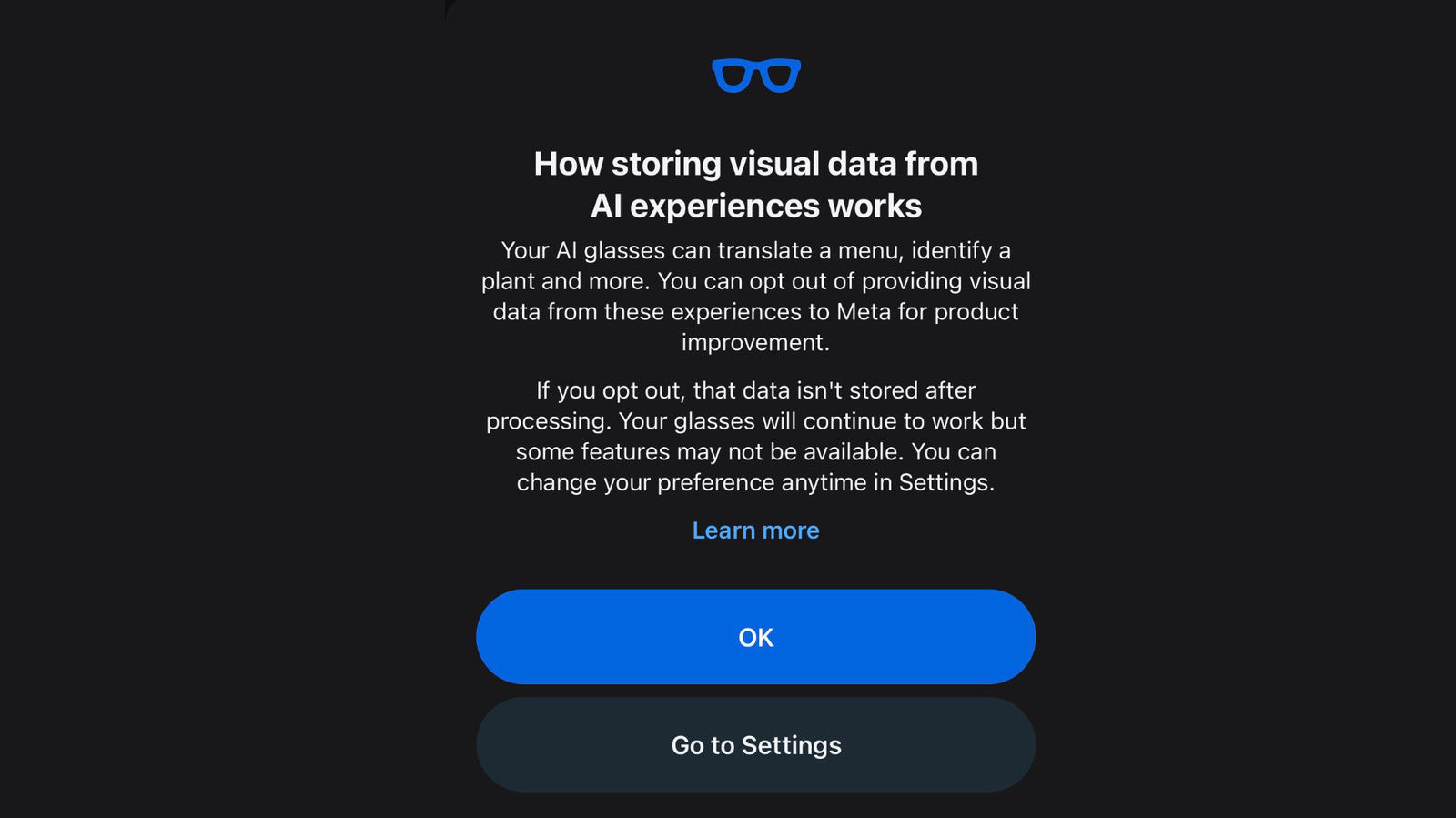
How To Stop Meta Training Its AI Models On Your Smart Glasses’ Visual Data

Earlier approaches to address computational constraints in large model training include compute-optimal training and overtraining. Compute-optimal training determines the best-performing model size and dataset combination within a given compute budget. Overtraining extends training data usage beyond compute-optimal parameters, yielding compact, effective models. However, both techniques have trade-offs, such as increased training duration and diminishing performance improvements. While compression and pruning methods have been tested, they often lead to a decline in model effectiveness. Therefore, a more structured approach, such as distillation, is needed to enhance efficiency.

Researchers from Apple and the University of Oxford introduce a distillation scaling law that predicts the performance of a distilled model based on compute budget distribution. This framework enables the strategic allocation of computational resources between teacher and student models, ensuring optimal efficiency. The research provides practical guidelines for compute-optimal distillation and highlights scenarios where distillation is preferable over supervised learning. The study establishes a clear relationship between training parameters, model size, and performance by analyzing large-scale distillation experiments.
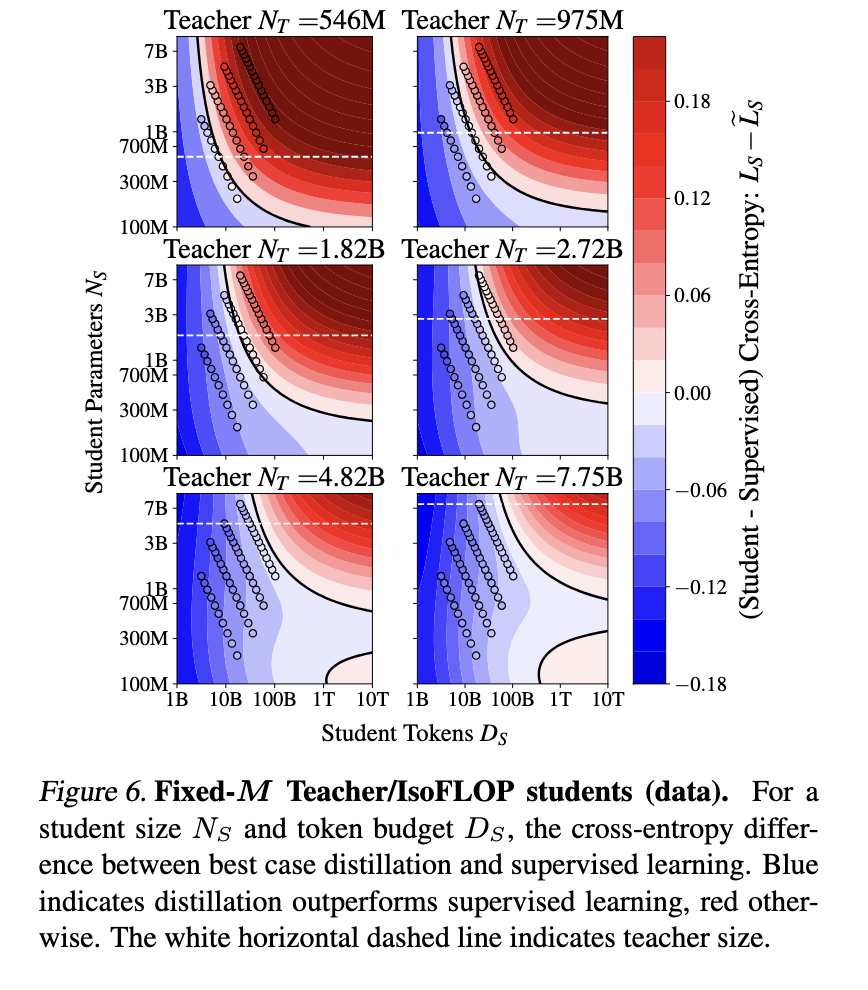
The proposed distillation scaling law defines how student performance depends on the teacher’s cross-entropy loss, dataset size, and model parameters. The research identifies a transition between two power-law behaviors, where a student’s ability to learn depends on the relative capabilities of the teacher. The study also addresses the capacity gap phenomenon, which suggests that stronger teachers sometimes produce weaker students. The analysis reveals that this gap is due to differences in learning capacity rather than model size alone. Researchers demonstrate that when compute is appropriately allocated, distillation can match or surpass traditional supervised learning methods in terms of efficiency.

Empirical results validate the scaling law’s effectiveness in optimizing model performance. The study conducted controlled experiments on student models ranging from 143 million to 12.6 billion parameters, trained using up to 512 billion tokens. Findings indicate that distillation is most beneficial when a teacher model exists and the compute or training tokens allocated to the student do not exceed a threshold dependent on model size. Supervised learning remains the more effective choice if a teacher needs to be trained. The results show that student models trained using compute-optimal distillation can achieve lower cross-entropy loss than those trained using supervised learning when compute is limited. Specifically, experiments demonstrate that student cross-entropy loss decreases as a function of teacher cross-entropy, following a predictable pattern that optimizes efficiency.

The research on distillation scaling laws provides an analytical foundation for improving efficiency in model training. Establishing a methodology for compute allocation it offers valuable insights into reducing inference costs while preserving model performance. The findings contribute to the broader objective of making AI models more practical for real-world applications. By refining training and deployment strategies, this work enables the development of smaller yet powerful models that maintain high performance at a reduced computational cost.


Check out the Paper. All credit for this research goes to the researchers of this project. Also, feel free to follow us on Twitter and don’t forget to join our 75k+ ML SubReddit.

🚨 Recommended Open-Source AI Platform: ‘IntellAgent is a An Open-Source Multi-Agent Framework to Evaluate Complex Conversational AI System’ (Promoted)


Nikhil is an intern consultant at Marktechpost. He is pursuing an integrated dual degree in Materials at the Indian Institute of Technology, Kharagpur. Nikhil is an AI/ML enthusiast who is always researching applications in fields like biomaterials and biomedical science. With a strong background in Material Science, he is exploring new advancements and creating opportunities to contribute.

✅ [Recommended] Join Our Telegram Channel

Credit: Source link

ShareTweetSendSharePin

Related Posts

Liquid AI Releases LFM2.5-VL-3B-DSpark: Speculative Decoding for Vision-Language Models With Up to 3.13x Faster Decoding
AI & Technology

Liquid AI Releases LFM2.5-VL-3B-DSpark: Speculative Decoding for Vision-Language Models With Up to 3.13x Faster Decoding

September 25, 2026
How To Stop Meta Training Its AI Models On Your Smart Glasses’ Visual Data
AI & Technology

How To Stop Meta Training Its AI Models On Your Smart Glasses’ Visual Data

September 25, 2026
New Mexico Jury Rules Meta Misled State Residents About Data Privacy
AI & Technology

New Mexico Jury Rules Meta Misled State Residents About Data Privacy

September 25, 2026
Cricut’s New DIY Machines Let You Print And Cut Your Own Stickers
AI & Technology

Cricut’s New DIY Machines Let You Print And Cut Your Own Stickers

September 25, 2026
Next Post
Amazon ‘relieved’ after Hamas releases employee, Sasha Troufanov, taken hostage on Oct. 7

Amazon 'relieved' after Hamas releases employee, Sasha Troufanov, taken hostage on Oct. 7

Leave a Reply Cancel reply

Your email address will not be published. Required fields are marked *

Search

No Result
View All Result
2 dead, 1 missing after Grand Canyon floods

2 dead, 1 missing after Grand Canyon floods

September 20, 2026
Escalating Israeli strikes kill several people across Gaza

Escalating Israeli strikes kill several people across Gaza

September 23, 2026
Bain Capital Ventures Bets .6 Billion on AI’s Next Act

Bain Capital Ventures Bets $1.6 Billion on AI’s Next Act

September 20, 2026

About

Learn more

Our Services

Legal

Privacy Policy

Terms of Use

Bloggers

Learn more

Article Links

Contact

Advertise

Ask us anything

©2020- TradePoint.io - All rights reserved!

Tradepoint.io, being just a publishing and technology platform, is not a registered broker-dealer or investment adviser. So we do not provide investment advice. Rather, brokerage services are provided to clients of Tradepoint.io by independent SEC-registered broker-dealers and members of FINRA/SIPC. Every form of investing carries some risk and past performance is not a guarantee of future results. “Tradepoint.io“, “Instant Investing” and “My Trading Tools” are registered trademarks of Apperbuild, LLC.

This website is operated by Apperbuild, LLC. We have no link to any brokerage firm and we do not provide investment advice. Every information and resource we provide is solely for the education of our readers. © 2020 Apperbuild, LLC. All rights reserved.

No Result
View All Result
  • Main
  • AI & Technology
  • Stock Charts
  • Market & News
  • Business
  • Finance Tips
  • Trade Tube
  • Blog
  • Shop

© 2023 - TradePoint.io - All Rights Reserved!