












Keep an eye out for red flags that your iPhone battery isn’t what it used to be.
While Apple’s iPhone battery tech is well-integrated with iOS to offer maximum life while reporting health metrics and other important info, even the best engineering can’t overcome chemical limitations. Battery cells gradually degrade over every charge cycle, with temperature, age and daily use all playing a role.
Apple’s battery info page states: “When you know a little about how they work, they can work that much better for you.” This also applies to recognizing when a battery starts breaking down on you. Several telltale signs suggest it’s time for a battery replacement, and you should watch for them to avoid any day-to-day issues, sluggish performance or sudden shutdowns.
Luckily, pinpointing your iPhone battery’s health is much easier than it was a decade ago. Apple has added more battery performance info directly into the iPhone’s Settings app. Beyond that, learning about other warning signs of a depleted battery will make it clear when it’s time to head to the Genius Bar.
iPhone battery warning signs you should look out for
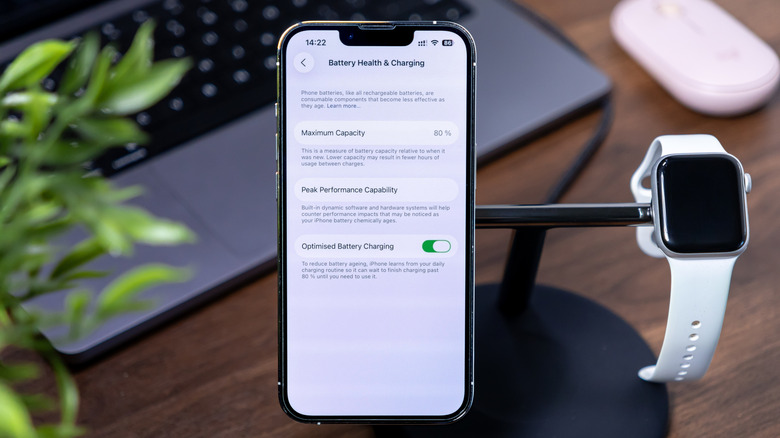
The easiest way to determine how your battery is doing is by navigating to Settings > Battery > Battery Health. There, you’ll find the overall state of your Battery Health, which may be either Normal or Significantly Degraded. The latter will be accompanied by a disclaimer at the top, suggesting you replace the battery to restore full performance.
Below that, on an iPhone 15 or newer, you’ll see the total cycle count. The iPhone 14 and earlier are designed to reach 80 percent battery capacity at 500 cycles; newer models up this to 1,000 cycles.
Any iPhone should show the maximum battery capacity, which indicates the current capacity of your battery compared to when it was new. Once this drops below 80 percent, Apple deems it as worn out and suggests it’s time to replace it; you’ll notice worse daily battery life at this point.
When your battery health is bad enough, odds are that you won’t need to check the menu to realize it, though. If you always need to carry a power bank to keep your phone running throughout the day (and have checked for excessive app battery drain), it’s time for a replacement. Other major signs include seeing your battery percentage drop rapidly, and unexpected shutdowns even when the battery percentage is well above single digits.
Sluggish performance, especially during heavier tasks like gaming, exporting large videos or streaming 4K video, can be a sign that your phone is throttling itself to avoid shutting down. Another red flag is if your device heats up too quickly when it’s unplugged or barely in use; that means your iPhone battery is working overtime and likely needs servicing. And of course, if you see the battery bulge out of the case, you should immediately stop using your phone and contact Apple Support, as this is a safety hazard.
When buying a new iPhone, you might have found it difficult to decide whether you wanted to include AppleCare. Your average battery usage might help you make the call. With an active subscription, you won’t pay a service fee for replacing a battery that’s dropped below 80 percent. For Apple service outside an AppleCare plan, prices range from $69 for a new iPhone 6s battery to $129 to replace an iPhone 18 Pro Max battery.
Credit: Source link