











• bitcoinBitcoin(BTC)$84,057.000.40%
  • ethereumEthereum(ETH)$2,688.330.24%
  • tetherTether(USDT)$1.000.00%
  • binancecoinBNB(BNB)$772.980.12%
  • rippleXRP(XRP)$1.54-1.29%
  • usd-coinUSDC(USDC)$1.000.00%
  • solanaSolana(SOL)$121.260.45%
  • tronTRON(TRX)$0.336132-0.20%
  • zcashZcash(ZEC)$1,561.602.51%
  • Figure HelocFigure Heloc(FIGR_HELOC)$1.03-0.12%
  • HyperliquidHyperliquid(HYPE)$92.260.97%
  • dogecoinDogecoin(DOGE)$0.0979160.94%
  • chainlinkChainlink(LINK)$14.304.08%
  • moneroMonero(XMR)$555.970.92%
  • whitebitWhiteBIT Coin(WBT)$83.890.34%
  • USDSUSDS(USDS)$1.000.01%
  • cardanoCardano(ADA)$0.2566621.06%
  • RainRain(RAIN)$0.01329212.35%
  • leo-tokenLEO Token(LEO)$8.961.41%
  • stellarStellar(XLM)$0.2187821.38%
  • bitcoin-cashBitcoin Cash(BCH)$337.86-0.08%
  • nearNEAR Protocol(NEAR)$4.89-1.61%
  • uniswapUniswap(UNI)$9.600.32%
  • litecoinLitecoin(LTC)$72.394.28%
  • CantonCanton(CC)$0.13782510.69%
  • Ethena USDeEthena USDe(USDE)$1.00-0.02%
  • suiSui(SUI)$1.185.58%
  • avalanche-2Avalanche(AVAX)$10.905.36%
  • daiDai(DAI)$1.000.02%
  • USD1USD1(USD1)$1.000.00%
  • the-open-networkGram (prev. Toncoin)(GRAM)$1.537.41%
  • hedera-hashgraphHedera(HBAR)$0.0943571.54%
  • BittensorBittensor(TAO)$331.879.82%
  • shiba-inuShiba Inu(SHIB)$0.0000063.05%
  • crypto-com-chainCronos(CRO)$0.0658100.76%
  • Global DollarGlobal Dollar(USDG)$1.000.00%
  • BitwayBitway(BTW)$1.06-12.89%
  • paypal-usdPayPal USD(PYUSD)$1.00-0.01%
  • MemeCoreMemeCore(M)$1.212.18%
  • EthenaEthena(ENA)$0.2705702.82%
  • tether-goldTether Gold(XAUT)$4,278.39-0.13%
  • OndoOndo(ONDO)$0.54-0.62%
  • okbOKB(OKB)$121.340.98%
  • Ripple USDRipple USD(RLUSD)$1.000.00%
  • Circle USYCCircle USYC(USYC)$1.140.00%
  • aaveAave(AAVE)$155.311.75%
  • BlackRock USD Institutional Digital Liquidity FundBlackRock USD Institutional Digital Liquidity Fund(BUIDL)$1.000.00%
  • mantleMantle(MNT)$0.694.50%
  • Ondo US Dollar YieldOndo US Dollar Yield(USDY)$1.150.01%
  • polkadotPolkadot(DOT)$1.289.11%
TradePoint.io
  • Main
  • AI & Technology
  • Stock Charts
  • Market & News
  • Business
  • Finance Tips
  • Trade Tube
  • Blog
  • Shop
No Result
View All Result
TradePoint.io
No Result
View All Result

The Reasons Rugged Laptops Are Rarely Bought By Consumers

September 5, 2026
in AI & Technology
Reading Time: 4 mins read
A A
The Reasons Rugged Laptops Are Rarely Bought By Consumers
ShareShareShareShareShare

Rugged laptops solve problems most consumers don’t have, and they charge a premium for doing it.


Tzahiv/Getty Images

Most laptops are designed to handle little more than the occasional bump or an overstuffed backpack. But rugged laptops are designed for much worse.

YOU MAY ALSO LIKE

TikTok Will Pay Alabama $100 Million To Settle Social Media Addiction Lawsuit

This App Lets You Use An Apple Watch With An Android Phone

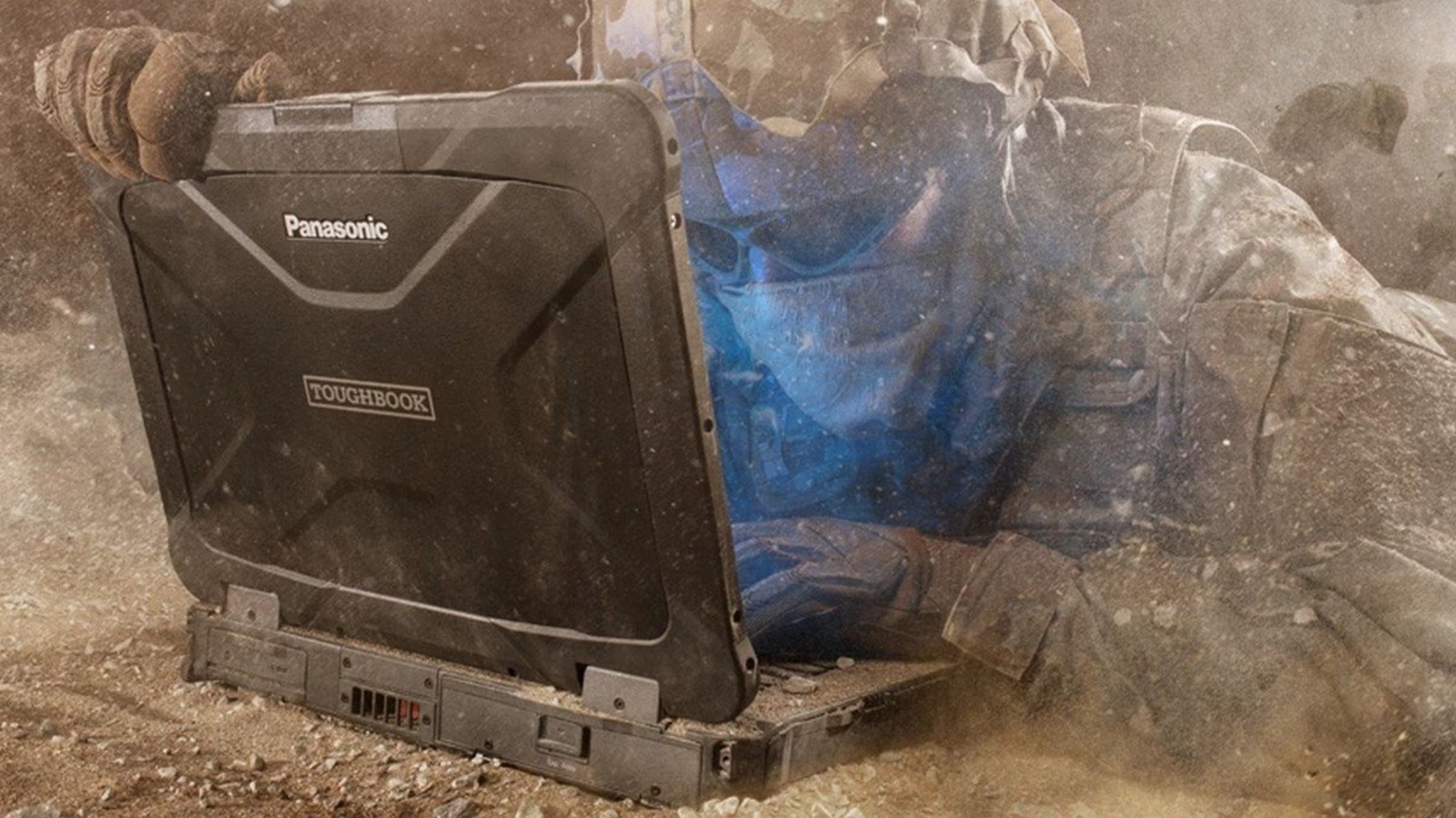
For instance, Panasonic’s Toughbook 40 is rated for 6-foot drops, is dust- and water-resistant (IP66) and has been tested to MIL-STD-810H standards. Its touchscreen is compatible with gloves, batteries are replaceable and multiple sections can be configured with different ports or hardware. Panasonic markets the Toughbook to field service and public safety users, along with military personnel, who may work around rain, dirt, vibration and heavy machinery.

All of that comes at a price, of course. The Toughbook 40 weighs 7.5 pounds, and while the original model was priced at $4,899 back in 2022, Panasonic doesn’t list a current starting price for the Toughbook 40. Instead, the company directs buyers to its sales team. This is why you don’t see many of them being pulled out at Starbucks.

Rugged laptops are heavy for a reason
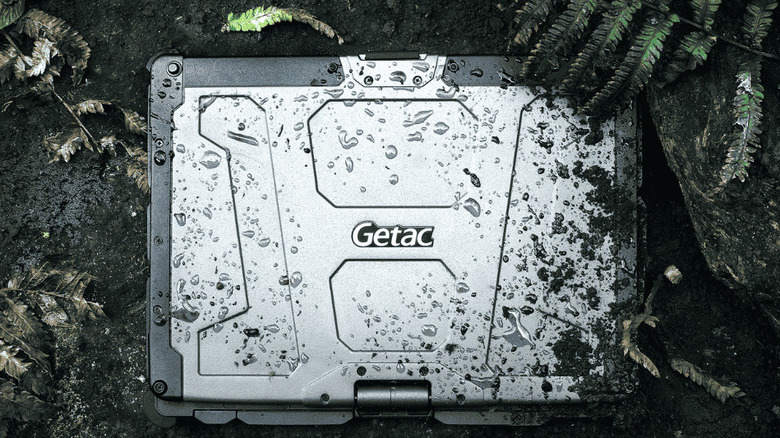

Getac B360 Pro fully rugged laptop with its reinforced chassis.
Getac

Panasonic isn’t the only heavyweight here. The B360 Pro from Getac is rated for 6-foot drops, has IP66 protection and starts at 6.79 pounds, while the fully rugged Dell Pro Rugged 13 starts at 5.29 pounds. The Z14I from Durabook tips the scales at almost 8 pounds. Just compare a few manufacturers and the trend will become apparent.

It’s not just because rugged-laptop designers have declared war on shoulders. These laptops use reinforced frames and corners to protect against impacts. Sealed openings help prevent water and dust from reaching the electronics. Displays are frequently designed for outdoor use, and ports require protective covers.

What may appear to be odd priorities on a consumer laptop can be quite sensible here. The Toughbook 40 has a 14-inch 1080p display, but it can reach 1,200 nits. It can also be equipped with a serial port, additional Ethernet ports and even an optical drive. Those priorities differ from those of a consumer laptop, since the customer might need to connect to industrial equipment, work outdoors or keep the machine running through a full shift.

Performance isn’t as much of a sacrifice as it used to be. The current Toughbook 40 models offer Intel Core Ultra 5 and Ultra 7 processors, with the option of discrete graphics, and modern Getac machines feature similar hardware. Nonetheless, a consumer who is spending several thousand dollars on a conventional laptop can typically put much more of that budget toward performance and display quality, or simply toward portability instead of environmental protection.

Most consumers don’t require such protection


An emergency services officer using a rugged laptop.
Suney munintrangkul/Shutterstock

That’s the issue with purchasing a rugged laptop for daily use: Much of what you’re paying for may never benefit you.

A technician working around equipment may actually require sealed ports and a display that works with gloves. Emergency personnel may be more concerned with the computer surviving a fall than with it being half an inch thinner.

Companies with computers installed in vehicles may also value replaceable batteries, special docking stations and years of compatibility with existing equipment. Someone carrying a laptop from home to an office has very different problems, and durability isn’t the only way to make a laptop last. Here’s where devices like the Framework Laptop 13 Pro take the repairability route, letting owners replace or upgrade individual parts instead of building a machine that can shrug off a 6-foot drop.

There is also a middle ground on ruggedness. Panasonic’s newer Toughbook 56 sits below its fully rugged models, starting at 4.66 pounds with IP53 protection and a 3-foot drop rating. Dell and Getac also offer semi-rugged machines that sacrifice some protection for reduced size.

For the people these laptops are meant for, a damaged machine can mean lost work or equipment sitting idle. For the rest of us, extreme durability translates to paying a lot more for a lot more laptop than we probably need. Even the semi-rugged Toughbook 56 starts at $3,325.

Credit: Source link

ShareTweetSendSharePin

Related Posts

TikTok Will Pay Alabama 0 Million To Settle Social Media Addiction Lawsuit
AI & Technology

TikTok Will Pay Alabama $100 Million To Settle Social Media Addiction Lawsuit

September 26, 2026
This App Lets You Use An Apple Watch With An Android Phone
AI & Technology

This App Lets You Use An Apple Watch With An Android Phone

September 26, 2026
These Xbox Players Got GTA 6 For Free The Hard Way
AI & Technology

These Xbox Players Got GTA 6 For Free The Hard Way

September 26, 2026
Exa Launches Agent Ultra: A Subagent Swarm Deep Research API Built for Exhaustive List Building
AI & Technology

Exa Launches Agent Ultra: A Subagent Swarm Deep Research API Built for Exhaustive List Building

September 26, 2026
Next Post
Wildberries says warehouses struck in drone attack

Wildberries says warehouses struck in drone attack

Leave a Reply Cancel reply

Your email address will not be published. Required fields are marked *

Search

No Result
View All Result
Grand Canyon Rescue Operations; How to Quell Settler Violence in the West Bank | Sept. 1

Grand Canyon Rescue Operations; How to Quell Settler Violence in the West Bank | Sept. 1

September 19, 2026
The Disclosure Dilemma: Oversharing (With Leslie John)

The Disclosure Dilemma: Oversharing (With Leslie John)

September 21, 2026
Why JPMorgan has given up predicting what the oil markets will do next

Why JPMorgan has given up predicting what the oil markets will do next

September 25, 2026

About

Learn more

Our Services

Legal

Privacy Policy

Terms of Use

Bloggers

Learn more

Article Links

Contact

Advertise

Ask us anything

©2020- TradePoint.io - All rights reserved!

Tradepoint.io, being just a publishing and technology platform, is not a registered broker-dealer or investment adviser. So we do not provide investment advice. Rather, brokerage services are provided to clients of Tradepoint.io by independent SEC-registered broker-dealers and members of FINRA/SIPC. Every form of investing carries some risk and past performance is not a guarantee of future results. “Tradepoint.io“, “Instant Investing” and “My Trading Tools” are registered trademarks of Apperbuild, LLC.

This website is operated by Apperbuild, LLC. We have no link to any brokerage firm and we do not provide investment advice. Every information and resource we provide is solely for the education of our readers. © 2020 Apperbuild, LLC. All rights reserved.

No Result
View All Result
  • Main
  • AI & Technology
  • Stock Charts
  • Market & News
  • Business
  • Finance Tips
  • Trade Tube
  • Blog
  • Shop

© 2023 - TradePoint.io - All Rights Reserved!