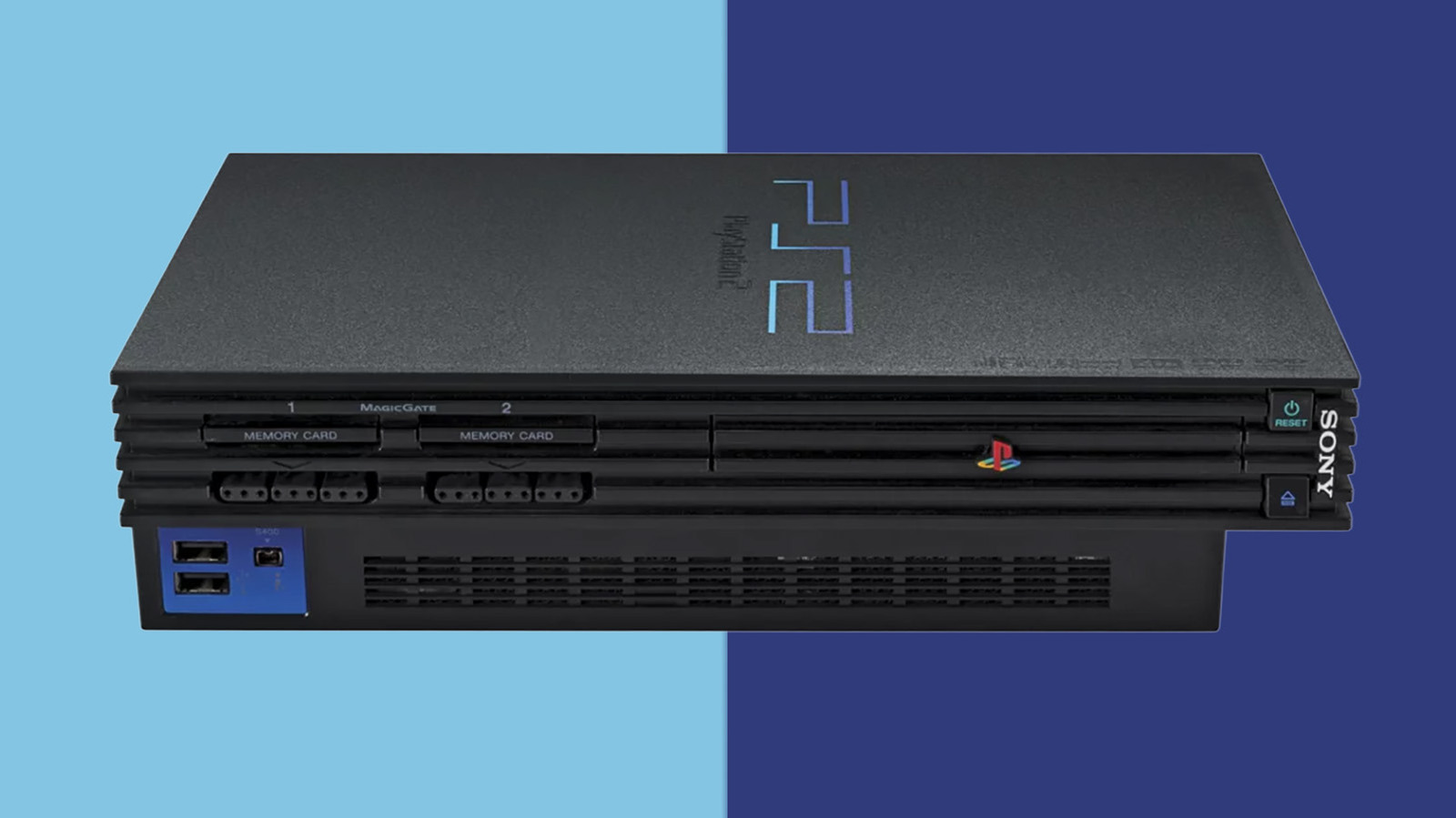

Sony shipped over 160 million PlayStation 2 units over its 13-year run.
You might expect newer consoles to dominate lifetime sales lists. After all, the industry is several times bigger than it was two decades ago. But all-time console sales are a blend of old and new, with Sony’s second home console, the PlayStation 2, hanging onto the top spot.
However, the PS2’s lead is shrinking. Based on the latest figures, Nintendo’s original Switch is only a few million units behind. And unlike the PS2, it’s still being sold.
A note on the figures: Sony and Nintendo report their totals as consoles shipped to retailers, which is a little different from consumer sales. Also, Microsoft doesn’t publish official totals, so those numbers are analyst estimates.
1. PlayStation 2
Sony says the PS2 sold over 160 million units, more than any other console. How did it take the crown? For starters, it launched with a built-in DVD player, right when that market was taking off. As wild as that sounds today, this was back when physical media ruled. Come for Austin Powers, stay for Kratos.
Timing also worked in the PS2’s favor. When it launched, Sega’s Dreamcast was the only other new home console on the market. By the time the Dreamcast hit the US in 1999, Sony was already hyping the PS2, leading many a gamer to hold off on Sega’s new console. (The fact that Sega bailed quickly on the Sega CD, 32X and Saturn didn’t help with consumer confidence.) And the GameCube and original Xbox didn’t launch until late 2001, after the PS2 had already gained a foothold.
To top it off, the PS2 stayed on the market for ages. Sony didn’t stop making it until 2013, the same year its “grandchild,” the PS4, launched. The PS2 also benefited from price cuts, dropping from $299 at its US launch to $199 in 2002, and eventually to $99 in 2009. By then, it was an attractive option for people who wanted a still-capable gaming system on the cheap.
All those hardware sales led to staggering software numbers: more than 1.5 billion PS2 games sold. Its best-selling titles were Grand Theft Auto: San Andreas at 17.3 million units, Gran Turismo 3: A-Spec at 14.9 million, and Grand Theft Auto: Vice City at 14.2 million.
2. Nintendo Switch
Kicking off the era of the hybrid console, the Switch launched in 2017 with a novel concept: a mobile gaming device that you could also connect to a TV. It didn’t take long to see Nintendo had a winner on its hands after the Wii U’s disappointment. Helping out was the fact that its flagship launch game was an open-world classic, with The Legend of Zelda: Breath of the Wild making the Switch’s proposition instantly clear.
The result? Nintendo has shipped over 156 million Switch consoles as of June 2026, including all variants. The original model was followed by the cheaper and portable-only Switch Lite and the higher-end Switch OLED, which added a bigger and better screen.
The Switch has already beaten the PS2 in game sales, at nearly 1.6 billion units. Its top-selling titles are Mario Kart 8 Deluxe at 71.5 million units, Animal Crossing: New Horizons at 50.3 million and Super Smash Bros. Ultimate at 38.1 million.
Nintendo has said it expects to ship around 2 million original Switch consoles in the current fiscal year, which ends in March 2027. If that rate holds, the Switch could pass the PS2 in 2028 at the earliest.
3. Nintendo DS
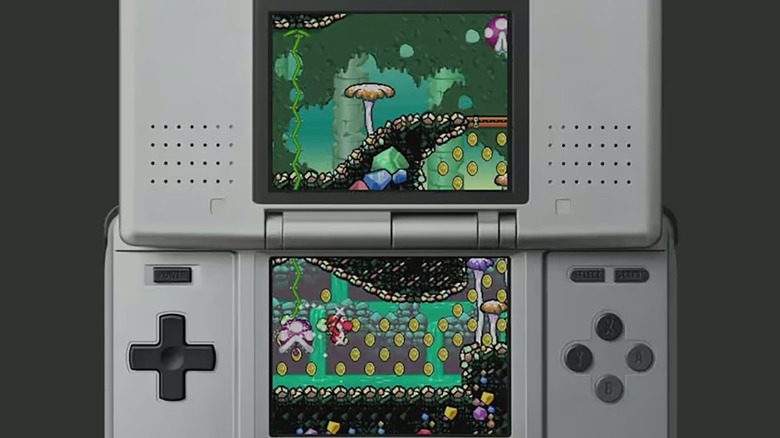
The best-selling fully portable console was the Nintendo DS, which arrived in 2004. The system had a series of features that were novel at the time: two screens, a stylus, a built-in microphone and wireless play. Nintendo ended up shipping over 154 million units across all DS models.
The first versions were backward compatible with the Game Boy Advance’s library, which likely helped with early sales. Later hardware iterations included the slimmer and lighter DS Lite, the DSi (which added two cameras, an SD card slot and a digital shop) and the larger-screened DSi XL.
The DS, which sold about 949 million games, was known as much for quirky titles — like Nintendogs and Brain Age which took advantage of the unique hardware — as it was for its tentpole franchises. The platform’s best-selling games were New Super Mario Bros. at 30.8 million units, Nintendogs at 24 million and Mario Kart DS at 23.6 million.
4. Game Boy and Game Boy Color
The original Game Boy was an exercise in restraint. Rivals like the Atari Lynx and Sega Game Gear had color screens, but they cost more and ate up batteries at a faster clip. The Game Boy had a greenish screen, was relatively cheap and durable and ran for hours on four AA batteries. In North America and Europe, it also came with the ultimate pick-up-and-play game, Tetris.
Like most Nintendo consoles, the Game Boy had several iterations. The Game Boy Pocket arrived in 1996, with a smaller, lighter build and a sharper black-and-white screen. The Japan-only Game Boy Light added a backlight to the Pocket.
But the most notable hardware update was the Game Boy Color, which Nintendo lumps together with the original model in lifetime totals. It arrived nearly a decade after the original in 1998, soon after Pokémon took off, adding a full-color screen and compatibility with most older Game Boy games. Together, the Game Boy family sold over 118 million consoles.
The Game Boy family’s top-selling games illustrate the console’s pocketable appeal. On top was Pokémon Red, Green and Blue at 31.4 million units, followed by Tetris at 30.3 million and Pokémon Gold and Silver at 23.1 million.
5. PlayStation 4
The PS4’s early success arguably marked the beginning of the end of the PlayStation-Xbox rivalry. Microsoft’s initial Xbox One pitch, which included a mandatory daily online check-in and a mandatory Kinect camera, drew near-universal scorn. Although Microsoft reversed most of its plans before launch, the damage was done — and Sony was all too happy to reap the benefits, to the tune of 117 million PS4s shipped.
Sony learned from its mistakes with the PS3. The PS4 was much easier on developers, with a PC-esque architecture from AMD. Sony also continued to build on its growing reputation for first-party exclusives, including The Last of Us Part II and Uncharted 4: A Thief’s End. The console got two hardware revisions: a slimmer model (known unofficially as the PS4 Slim) and the PS4 Pro, which added 4K support.
The system’s best-selling games were Grand Theft Auto V at an estimated 24.7 million units, Marvel’s Spider-Man at 22.7 million and God of War (2018) at 21 million.
The rest
Rounding out the top 10 are the original PlayStation at 102.4 million units shipped, the Nintendo Wii at 101.6 million, the PS5 at over 95 million (and counting) the PS3 at 87.4 million and the Xbox 360 (Microsoft’s only entry on the list) at an estimated 84 million.
One of the reasons the PS2’s record has held up is that the industry changed. The gaming business is much bigger today, but mobile gaming, PCs and subscription services now fight for a piece of the pie. That makes it harder for any single system to rack up PS2-like numbers. And current-gen hardware tends to get more expensive, not cheaper — especially in the age of RAMageddon. Good luck finding a current console for the PS2’s final $99 price, or even the roughly $150 that works out to today, adjusting for inflation.
The OG Switch could take the crown within the next two or three years, assuming Nintendo doesn’t discontinue it before it crosses the line. But until then, the 26-year-old console that made its bones spinning The Matrix DVDs stays on its perch.
Credit: Source link