• bitcoinBitcoin(BTC)$80,576.005.27%
  • ethereumEthereum(ETH)$2,429.097.87%
  • tetherTether(USDT)$1.000.05%
  • binancecoinBNB(BNB)$716.293.89%
  • rippleXRP(XRP)$1.314.28%
  • usd-coinUSDC(USDC)$1.000.02%
  • solanaSolana(SOL)$96.355.54%
  • tronTRON(TRX)$0.319728-0.77%
  • Figure HelocFigure Heloc(FIGR_HELOC)$1.051.53%
  • zcashZcash(ZEC)$1,318.2511.22%
  • HyperliquidHyperliquid(HYPE)$84.412.99%
  • dogecoinDogecoin(DOGE)$0.0771664.92%
  • moneroMonero(XMR)$636.801.05%
  • USDSUSDS(USDS)$1.000.00%
  • whitebitWhiteBIT Coin(WBT)$77.995.99%
  • chainlinkChainlink(LINK)$11.476.51%
  • leo-tokenLEO Token(LEO)$9.350.54%
  • cardanoCardano(ADA)$0.1983126.53%
  • stellarStellar(XLM)$0.1686615.83%
  • bitcoin-cashBitcoin Cash(BCH)$281.424.58%
  • nearNEAR Protocol(NEAR)$4.058.44%
  • uniswapUniswap(UNI)$7.668.47%
  • daiDai(DAI)$1.00-0.01%
  • Ethena USDeEthena USDe(USDE)$1.000.05%
  • litecoinLitecoin(LTC)$56.246.07%
  • RainRain(RAIN)$0.005992-7.20%
  • CantonCanton(CC)$0.1005134.49%
  • avalanche-2Avalanche(AVAX)$8.804.76%
  • suiSui(SUI)$0.936.53%
  • USD1USD1(USD1)$1.000.05%
  • the-open-networkGram (prev. Toncoin)(GRAM)$1.171.82%
  • tether-goldTether Gold(XAUT)$4,110.074.56%
  • hedera-hashgraphHedera(HBAR)$0.0730416.94%
  • quant-networkQuant(QNT)$204.058.62%
  • Global DollarGlobal Dollar(USDG)$1.000.02%
  • shiba-inuShiba Inu(SHIB)$0.0000054.76%
  • BittensorBittensor(TAO)$236.236.90%
  • paypal-usdPayPal USD(PYUSD)$1.000.00%
  • crypto-com-chainCronos(CRO)$0.0521505.24%
  • Ripple USDRipple USD(RLUSD)$1.000.02%
  • EthenaEthena(ENA)$0.1829507.59%
  • Ondo US Dollar YieldOndo US Dollar Yield(USDY)$1.150.12%
  • okbOKB(OKB)$112.595.52%
  • Circle USYCCircle USYC(USYC)$1.140.01%
  • pepePepe(PEPE)$0.0000055.65%
  • aaveAave(AAVE)$132.716.21%
  • Pump.funPump.fun(PUMP)$0.0043684.93%
  • OndoOndo(ONDO)$0.4119437.66%
  • MemeCoreMemeCore(M)$0.84-0.39%
  • BlackRock USD Institutional Digital Liquidity FundBlackRock USD Institutional Digital Liquidity Fund(BUIDL)$1.000.00%
TradePoint.io
  • Main
  • AI & Technology
  • Stock Charts
  • Market & News
  • Business
  • Finance Tips
  • Trade Tube
  • Blog
  • Shop
No Result
View All Result
TradePoint.io
No Result
View All Result

The AI-Powered Code Revolution: Bridging Traditional and Neurosymbolic Programming

May 21, 2024
in AI & Technology
Reading Time: 4 mins read
A A
The AI-Powered Code Revolution: Bridging Traditional and Neurosymbolic Programming
ShareShareShareShareShare

Generative AI models, particularly Large Language Models (LLMs), have seen a surge in adoption across various industries, transforming the software development landscape. As enterprises and startups increasingly integrate LLMs into their workflows, the future of programming is set to undergo significant changes.

Historically, symbolic programming has dominated, where developers use symbolic code to express logic for tasks or problem-solving. However, the rapid adoption of LLMs has sparked interest in a new paradigm, Neurosymbolic programming, which combines neural networks and traditional symbolic code to create sophisticated algorithms and applications.

LLMs operate by processing text inputs and generating text outputs, with prompt engineering currently being the primary programming method with these models. This approach relies heavily on constructing the right input prompts, a task that can be complex and tedious. The intricacies of generating appropriate prompts from existing code constructs can reduce code readability and maintainability. To address these challenges, several open-source libraries and research efforts, such as LangChain, Guidance, LMQL, and SGLang, have emerged. These tools aim to simplify prompt construction and facilitate LLM programming, but they still require developers to manually decide the type of prompts and the information to include.

The complexity of LLM programming largely stems from the need for more abstraction when interfacing with these models. In conventional symbolic programming, operations are conducted directly on variables or typed values. However, LLMs operate on text strings, necessitating the conversion of variables to prompts and the parsing of LLM outputs back into variables. This process introduces additional logic and complexity, highlighting a fundamental mismatch between LLM abstractions and conventional symbolic programming.

To address this, a new approach proposes treating LLMs as native code constructs and providing syntax support at the programming language level. This approach introduces a new type of “meaning” to serve as the abstraction for LLM interactions. “Meaning” refers to the semantic purpose behind the symbolic data (strings) used as LLM inputs and outputs. The language runtime should automate the process of translating conventional code constructs and meanings, termed Meaning-type Transformations (MTT), to reduce developer complexity.

A novel language feature, Semantic Strings (semstrings), is introduced to enable developers to annotate existing code constructs with additional context. Semstrings allow for the seamless integration of LLMs by providing necessary context and information, facilitating the Automatic Meaning-type Transformation (A-MTT). This automation abstracts the complexity of prompt generation and response parsing, making it easier for developers to leverage LLMs in their code.

Through real code examples, the concept of A-MTT is demonstrated to streamline common symbolic code operations, such as instantiating custom type objects, standalone function calls, and class member methods. Introducing these new abstractions and language features represents a significant contribution to the programming paradigm, enabling more efficient and maintainable integration of LLMs into conventional symbolic programming. This advancement promises to transform the future of programming, making it more accessible and less cumbersome for developers working with generative AI models.


Check out the Paper. All credit for this research goes to the researchers of this project. Also, don’t forget to follow us on Twitter. Join our Telegram Channel, Discord Channel, and LinkedIn Group.

If you like our work, you will love our newsletter..

Don’t Forget to join our 42k+ ML SubReddit


YOU MAY ALSO LIKE

Cat Wu to Lead Product Management for OpenAI’s Core Products – Unite.AI

Snap Has More Than 30 Million Paid Subscribers Across Snapchat+ And Other Plans

Arshad is an intern at MarktechPost. He is currently pursuing his Int. MSc Physics from the Indian Institute of Technology Kharagpur. Understanding things to the fundamental level leads to new discoveries which lead to advancement in technology. He is passionate about understanding the nature fundamentally with the help of tools like mathematical models, ML models and AI.


🐝 Join the Fastest Growing AI Research Newsletter Read by Researchers from Google + NVIDIA + Meta + Stanford + MIT + Microsoft and many others…


Credit: Source link

ShareTweetSendSharePin

Related Posts

Cat Wu to Lead Product Management for OpenAI’s Core Products – Unite.AI
AI & Technology

Cat Wu to Lead Product Management for OpenAI’s Core Products – Unite.AI

November 5, 2026
Snap Has More Than 30 Million Paid Subscribers Across Snapchat+ And Other Plans
AI & Technology

Snap Has More Than 30 Million Paid Subscribers Across Snapchat+ And Other Plans

November 4, 2026
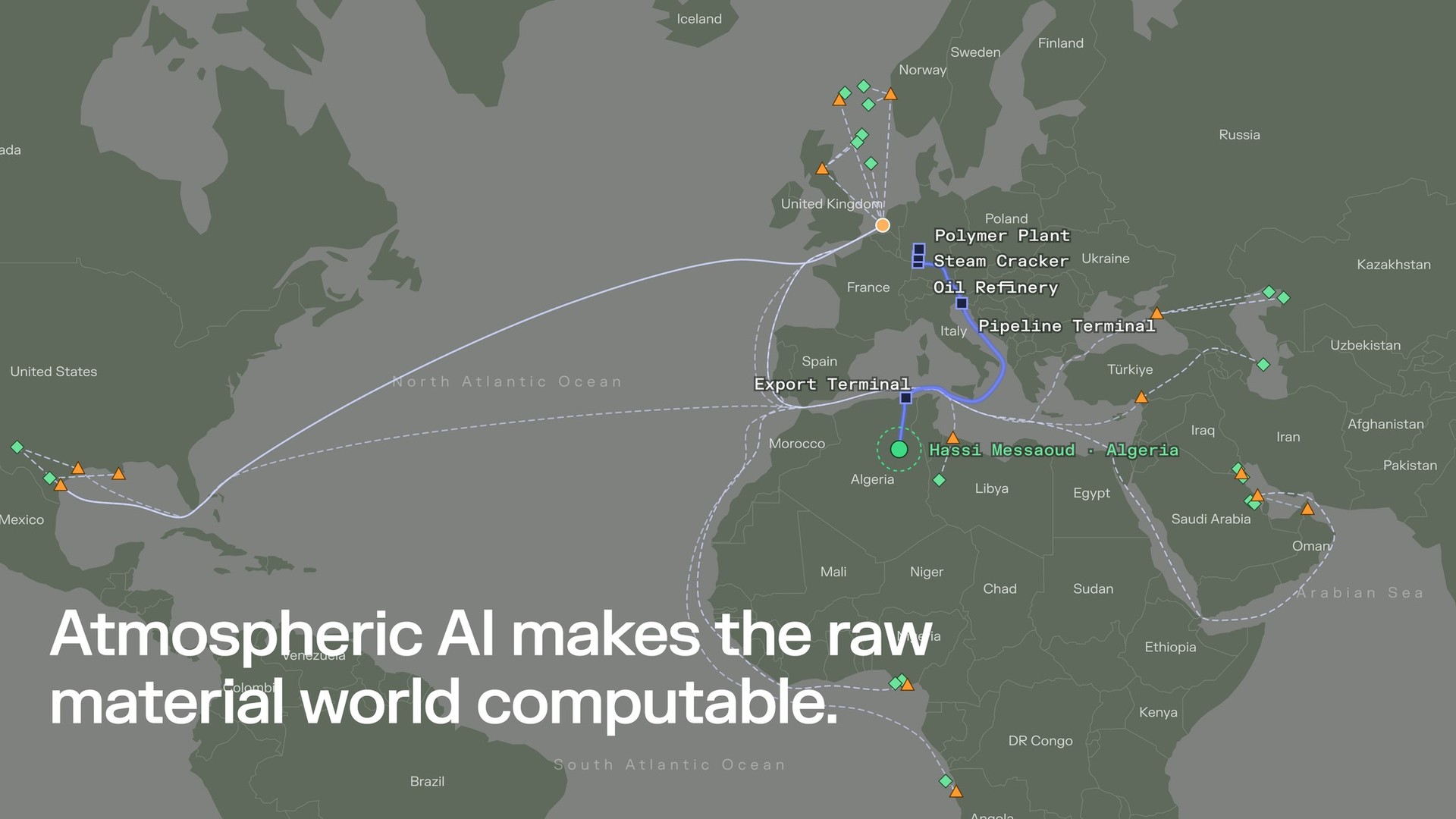
Atmospheric AI Secures M Seed for Procurement Modeling Push – Unite.AI
AI & Technology

Atmospheric AI Secures $10M Seed for Procurement Modeling Push – Unite.AI

November 4, 2026
Perplexity Adds Live Web Grounding to Its Decisions API – Unite.AI
AI & Technology

Perplexity Adds Live Web Grounding to Its Decisions API – Unite.AI

November 4, 2026
Next Post
Cowboy rescues calf from frozen pond

Cowboy rescues calf from frozen pond

Leave a Reply Cancel reply

Your email address will not be published. Required fields are marked *

Search

No Result
View All Result
Is The Market Crash About To Get Worse?!

Is The Market Crash About To Get Worse?!

October 30, 2026
Health officials confirm mumps outbreak in San Diego

Health officials confirm mumps outbreak in San Diego

November 2, 2026
Post Game: History doesn’t repeat itself but ‘it feels awfully a lot like 2006’

Post Game: History doesn’t repeat itself but ‘it feels awfully a lot like 2006’

November 1, 2026

About

Learn more

Our Services

Legal

Privacy Policy

Terms of Use

Bloggers

Learn more

Article Links

Contact

Advertise

Ask us anything

©2020- TradePoint.io - All rights reserved!

Tradepoint.io, being just a publishing and technology platform, is not a registered broker-dealer or investment adviser. So we do not provide investment advice. Rather, brokerage services are provided to clients of Tradepoint.io by independent SEC-registered broker-dealers and members of FINRA/SIPC. Every form of investing carries some risk and past performance is not a guarantee of future results. “Tradepoint.io“, “Instant Investing” and “My Trading Tools” are registered trademarks of Apperbuild, LLC.

This website is operated by Apperbuild, LLC. We have no link to any brokerage firm and we do not provide investment advice. Every information and resource we provide is solely for the education of our readers. © 2020 Apperbuild, LLC. All rights reserved.

No Result
View All Result
  • Main
  • AI & Technology
  • Stock Charts
  • Market & News
  • Business
  • Finance Tips
  • Trade Tube
  • Blog
  • Shop

© 2023 - TradePoint.io - All Rights Reserved!