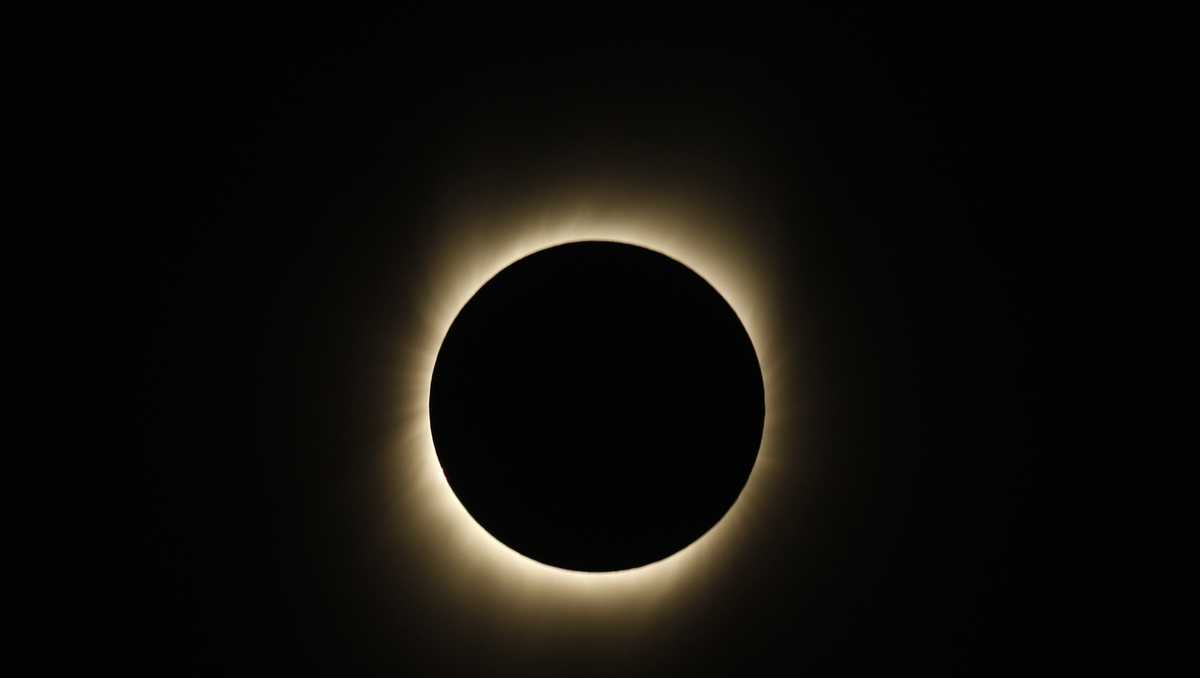

Annular solar eclipse set to cast shadow on South Carolina, North Carolina, Georgia next week
Grab your solar viewers–the first of two solar eclipses visible over the next seven months is next week, and the Upstate will experience part of it.The annular solar eclipse path of totality begins in the U.S. on Saturday, Oct. 14 in Oregon at 9:13 a.m. PDT and ends in Texas at 12:03 p.m. CDT. “If you could design an eclipse path that maximizes the number of national parks in its path, this is it,” according to the Great American Eclipse website. A total shadow will be the case “over Crater Lake National Park, Great Basin National Park, and others in the Four Corners region,” the website says.A partial solar eclipse will be visible across much of the rest of the U.S., including the Carolinas and Georgia.More news (story continues after links.)Upstate student charged with voyeurism, criminal conspiracy, chief saysSC man gets trapped underneath 16,000-pound piece of equipment, rescuers sayLarge fire at Greenville County construction site under investigation: Here’s what we knowIn the Upstate, the eclipse will bring about 45% obstruction of the sun.The celestial phenomenon will begin at 11:47 a.m., with the eclipse at a maximum of 1:14 p.m., ending at 2:44 p.m.Here’s what the last total eclipse looked like from Clemson’s Bowman Field on Aug. 21, 2017.Viewing times will vary by only a few seconds to about a minute across our entire viewing area.Remember you must wear solar eclipse glasses or protective eyewear if you plan on viewing the eclipse. Read more about what eyeglasses to wear here.The next total solar eclipse will occur on April 8, 2024 for parts of the U.S. The path of totality next year will run from Texas to Indiana, along the Mississippi River, to New York and exit the U.S. after crossing Maine. The Upstate is not in the path of totality but will still see a partial eclipse of around 85% on April 8. That eclipse shadow begins at 1:50 p.m. with a maximum eclipse shadow of 70% at 3:09 p.m., ending at 4:24 p.m.By the way, the Upstate’s next total eclipse sky show won’t happen until March 30, 2052.Here’s another look at what the last total eclipse in 2017 looked like.
Grab your solar viewers–the first of two solar eclipses visible over the next seven months is next week, and the Upstate will experience part of it.
The annular solar eclipse path of totality begins in the U.S. on Saturday, Oct. 14 in Oregon at 9:13 a.m. PDT and ends in Texas at 12:03 p.m. CDT.
“If you could design an eclipse path that maximizes the number of national parks in its path, this is it,” according to the Great American Eclipse website. A total shadow will be the case “over Crater Lake National Park, Great Basin National Park, and others in the Four Corners region,” the website says.
A partial solar eclipse will be visible across much of the rest of the U.S., including the Carolinas and Georgia.
More news (story continues after links.)
In the Upstate, the eclipse will bring about 45% obstruction of the sun.
The celestial phenomenon will begin at 11:47 a.m., with the eclipse at a maximum of 1:14 p.m., ending at 2:44 p.m.
Here’s what the last total eclipse looked like from Clemson’s Bowman Field on Aug. 21, 2017.
Viewing times will vary by only a few seconds to about a minute across our entire viewing area.
Remember you must wear solar eclipse glasses or protective eyewear if you plan on viewing the eclipse. Read more about what eyeglasses to wear here.
The next total solar eclipse will occur on April 8, 2024 for parts of the U.S.
The path of totality next year will run from Texas to Indiana, along the Mississippi River, to New York and exit the U.S. after crossing Maine.
The Upstate is not in the path of totality but will still see a partial eclipse of around 85% on April 8.
That eclipse shadow begins at 1:50 p.m. with a maximum eclipse shadow of 70% at 3:09 p.m., ending at 4:24 p.m.
By the way, the Upstate’s next total eclipse sky show won’t happen until March 30, 2052.
Here’s another look at what the last total eclipse in 2017 looked like.
Credit: Source link