• bitcoinBitcoin(BTC)$76,876.00-1.57%
  • ethereumEthereum(ETH)$2,456.28-0.30%
  • tetherTether(USDT)$1.000.00%
  • binancecoinBNB(BNB)$712.81-1.17%
  • rippleXRP(XRP)$1.34-3.30%
  • usd-coinUSDC(USDC)$1.000.01%
  • solanaSolana(SOL)$99.10-1.85%
  • tronTRON(TRX)$0.3408530.54%
  • Figure HelocFigure Heloc(FIGR_HELOC)$1.040.98%
  • zcashZcash(ZEC)$1,086.75-11.67%
  • HyperliquidHyperliquid(HYPE)$79.14-4.47%
  • dogecoinDogecoin(DOGE)$0.083383-2.60%
  • RainRain(RAIN)$0.015767-2.05%
  • USDSUSDS(USDS)$1.00-0.01%
  • moneroMonero(XMR)$510.730.39%
  • whitebitWhiteBIT Coin(WBT)$79.64-1.23%
  • chainlinkChainlink(LINK)$11.51-1.78%
  • leo-tokenLEO Token(LEO)$9.190.04%
  • cardanoCardano(ADA)$0.206375-2.09%
  • stellarStellar(XLM)$0.175627-2.23%
  • daiDai(DAI)$1.00-0.02%
  • bitcoin-cashBitcoin Cash(BCH)$225.89-9.70%
  • Ethena USDeEthena USDe(USDE)$1.00-0.01%
  • USD1USD1(USD1)$1.00-0.01%
  • litecoinLitecoin(LTC)$52.60-0.67%
  • CantonCanton(CC)$0.098288-4.96%
  • the-open-networkGram (prev. Toncoin)(GRAM)$1.36-0.06%
  • uniswapUniswap(UNI)$6.04-1.25%
  • Global DollarGlobal Dollar(USDG)$1.000.00%
  • hedera-hashgraphHedera(HBAR)$0.075158-1.58%
  • nearNEAR Protocol(NEAR)$2.501.84%
  • avalanche-2Avalanche(AVAX)$7.47-3.68%
  • suiSui(SUI)$0.73-4.17%
  • shiba-inuShiba Inu(SHIB)$0.000005-2.73%
  • paypal-usdPayPal USD(PYUSD)$1.000.00%
  • BlackRock USD Institutional Digital Liquidity FundBlackRock USD Institutional Digital Liquidity Fund(BUIDL)$1.000.00%
  • crypto-com-chainCronos(CRO)$0.056462-2.75%
  • tether-goldTether Gold(XAUT)$4,333.09-1.49%
  • Circle USYCCircle USYC(USYC)$1.140.01%
  • MemeCoreMemeCore(M)$1.14-5.34%
  • Ripple USDRipple USD(RLUSD)$1.00-0.01%
  • okbOKB(OKB)$109.54-3.93%
  • BittensorBittensor(TAO)$235.45-6.20%
  • Ondo US Dollar YieldOndo US Dollar Yield(USDY)$1.150.01%
  • polkadotPolkadot(DOT)$1.131.42%
  • AsterAster(ASTER)$0.70-3.56%
  • aaveAave(AAVE)$121.90-1.68%
  • mantleMantle(MNT)$0.57-4.89%
  • pax-goldPAX Gold(PAXG)$4,338.91-1.43%
  • World Liberty FinancialWorld Liberty Financial(WLFI)$0.0563440.77%
TradePoint.io
  • Main
  • AI & Technology
  • Stock Charts
  • Market & News
  • Business
  • Finance Tips
  • Trade Tube
  • Blog
  • Shop
No Result
View All Result
TradePoint.io
No Result
View All Result

Rising Impact of Small Language Models

December 29, 2023
in AI & Technology
Reading Time: 3 mins read
A A
Rising Impact of Small Language Models
ShareShareShareShareShare

Motivations for Adopting Small Language Models

The growing interest in small language models (SLMs) is driven by several key factors, primarily efficiency, cost, and customizability. These aspects position SLMs as attractive alternatives to their larger counterparts in various applications.

Efficiency: A Key Driver

SLMs, due to their fewer parameters, offer significant computational efficiencies compared to massive models. These efficiencies include faster inference speed, reduced memory and storage requirements, and lesser data needs for training. Consequently, these models are not just faster but also more resource-efficient, which is especially beneficial in applications where speed and resource utilization are critical.

YOU MAY ALSO LIKE

How These XL Phones Compete

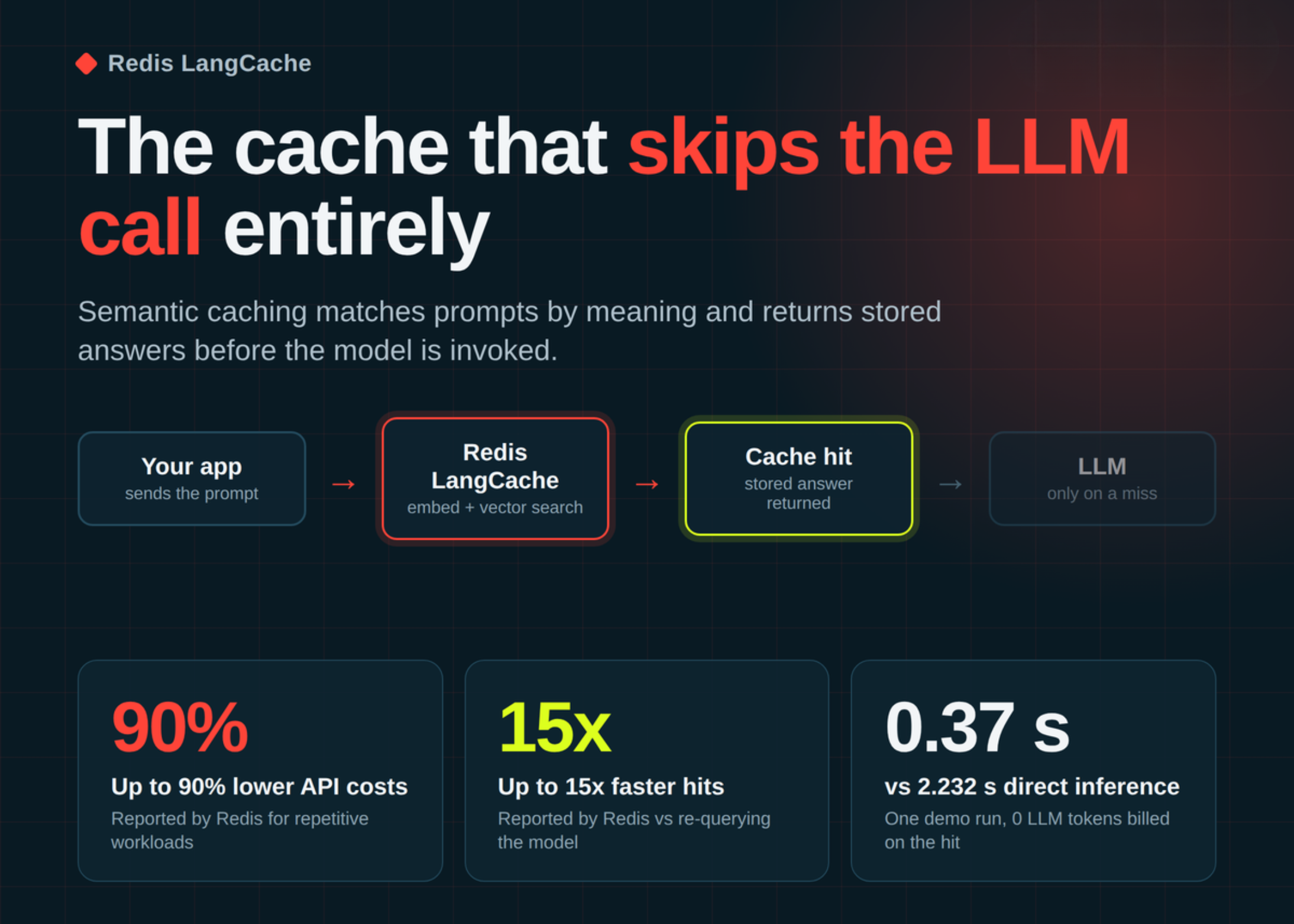
Meet Redis LangCache: A Managed Semantic Cache That Cuts LLM API Costs by Up to 90% and Returns Cache Hits Up to 15x Faster

Cost-Effectiveness

The high computational resources required to train and deploy large language models (LLMs) like GPT-4 translate into substantial costs. In contrast, SLMs can be trained and run on more widely available hardware, making them more accessible and financially feasible for a broader range of businesses. Their reduced resource requirements also open up possibilities in edge computing, where models need to operate efficiently on lower-powered devices.

Customizability: A Strategic Advantage

One of the most significant advantages of SLMs over LLMs is their customizability. Unlike LLMs, which offer broad but generalized capabilities, SLMs can be tailored for specific domains and applications. This adaptability is facilitated by quicker iteration cycles and the ability to fine-tune models for specialized tasks. This flexibility makes SLMs particularly useful for niche applications where specific, targeted performance is more valuable than general capabilities.

Scaling Down Language Models Without Compromising Capabilities

The quest to minimize language model size without sacrificing capabilities is a central theme in current AI research. The question is, how small can language models be while still maintaining their effectiveness?

Establishing the Lower Bounds of Model Scale

Recent studies have shown that models with as few as 1–10 million parameters can acquire basic language competencies. For example, a model with only 8 million parameters achieved around 59% accuracy on the GLUE benchmark in 2023. These findings suggest that even relatively small models can be effective in certain language processing tasks.

Performance appears to plateau after reaching a certain scale, around 200–300 million parameters, indicating that further increases in size yield diminishing returns. This plateau represents a sweet spot for commercially deployable SLMs, balancing capability with efficiency.

Training Efficient Small Language Models

Several training methods have been pivotal in developing proficient SLMs. Transfer learning allows models to acquire broad competencies during pretraining, which can then be refined for specific applications. Self-supervised learning, particularly effective for small models, forces them to deeply generalize from each data example, engaging fuller model capacity during training.

Architecture choices also play a crucial role. Efficient Transformers, for example, achieve comparable performance to baseline models with significantly fewer parameters. These techniques collectively enable the creation of small yet capable language models suitable for various applications.

A recent breakthrough in this field is the introduction of the “Distilling step-by-step” mechanism. This new approach offers enhanced performance with reduced data requirements.

The Distilling step-by-step method utilize LLMs not just as sources of noisy labels but as agents capable of reasoning. This method leverages the natural language rationales generated by LLMs to justify their predictions, using them as additional supervision for training small models. By incorporating these rationales, small models can learn relevant task knowledge more efficiently, reducing the need for extensive training data.

Developer Frameworks and Domain-Specific Models

Frameworks like Hugging Face Hub, Anthropic Claude, Cohere for AI, and Assembler are making it easier for developers to create customized SLMs. These platforms offer tools for training, deploying, and monitoring SLMs, making language AI accessible to a broader range of industries.

Domain-specific SLMs are particularly advantageous in industries like finance, where accuracy, confidentiality, and responsiveness are paramount. These models can be tailored to specific tasks and are often more efficient and secure than their larger counterparts.

Looking Forward

The exploration of SLMs is not just a technical endeavor but also a strategic move towards more sustainable, efficient, and customizable AI solutions. As AI continues to evolve, the focus on smaller, more specialized models will likely grow, offering new opportunities and challenges in the development and application of AI technologies.

Credit: Source link

ShareTweetSendSharePin

Related Posts

How These XL Phones Compete
AI & Technology

How These XL Phones Compete

September 10, 2026
Meet Redis LangCache: A Managed Semantic Cache That Cuts LLM API Costs by Up to 90% and Returns Cache Hits Up to 15x Faster
AI & Technology

Meet Redis LangCache: A Managed Semantic Cache That Cuts LLM API Costs by Up to 90% and Returns Cache Hits Up to 15x Faster

September 10, 2026
Meta Is Testing Community Notes In Latin America. Fact Checkers Are Worried.
AI & Technology

Meta Is Testing Community Notes In Latin America. Fact Checkers Are Worried.

September 10, 2026
IDScan Is Offering Free Credit Monitoring And ID Protection After Leaking Driver’s Licenses
AI & Technology

IDScan Is Offering Free Credit Monitoring And ID Protection After Leaking Driver’s Licenses

September 10, 2026
Next Post
Are hybrid work models here to stay?

Are hybrid work models here to stay?

Leave a Reply Cancel reply

Your email address will not be published. Required fields are marked *

Search

No Result
View All Result
Hunter Biden launches crypto meme coin making light of laptop scandal

Hunter Biden launches crypto meme coin making light of laptop scandal

September 7, 2026
Anthropic Builds Its War Chest Ahead of IPO | Bloomberg Tech 9/04/2026

Anthropic Builds Its War Chest Ahead of IPO | Bloomberg Tech 9/04/2026

September 7, 2026
I’m Struggling With Scaling Into Trades

I’m Struggling With Scaling Into Trades

September 7, 2026

About

Learn more

Our Services

Legal

Privacy Policy

Terms of Use

Bloggers

Learn more

Article Links

Contact

Advertise

Ask us anything

©2020- TradePoint.io - All rights reserved!

Tradepoint.io, being just a publishing and technology platform, is not a registered broker-dealer or investment adviser. So we do not provide investment advice. Rather, brokerage services are provided to clients of Tradepoint.io by independent SEC-registered broker-dealers and members of FINRA/SIPC. Every form of investing carries some risk and past performance is not a guarantee of future results. “Tradepoint.io“, “Instant Investing” and “My Trading Tools” are registered trademarks of Apperbuild, LLC.

This website is operated by Apperbuild, LLC. We have no link to any brokerage firm and we do not provide investment advice. Every information and resource we provide is solely for the education of our readers. © 2020 Apperbuild, LLC. All rights reserved.

No Result
View All Result
  • Main
  • AI & Technology
  • Stock Charts
  • Market & News
  • Business
  • Finance Tips
  • Trade Tube
  • Blog
  • Shop

© 2023 - TradePoint.io - All Rights Reserved!