
Shidlovski/iStock via Getty Images
Thesis overview
RAPT Therapeutics (NASDAQ:RAPT) is developing oral small molecule therapies for inflammation (atopic dermatitis and asthma) and oncology indications. The most advanced candidate is zelnecirnon (ZEL) currently in ph2 stage for the indications of atopic dermatitis (AD) and asthma, with promising phase 1 safety and efficacy results in AD.
RAPT was trading at a market cap close to $900M up until recently, when RAPT announced an FDA clinical hold due to hepatic failure in one patient, resulting in a 70% dip. Before that there was no indication that ZEL may be associated with severe hepatotoxicity. Furthermore, the patient had a complex medical history and was also receiving herbal supplement known to cause hepatoxicity. The clinical hold resulted in halting both further patient enrolment as well as further dosing of patients already enrolled. Stock price subsequently dipped further by 50% when RAPT announced closing and unblinding both ongoing ZEL trials. As will be explained below, halting the trials was the only reasonable option for RAPT following the clinical hold. Furthermore, I agree with RAPT’s opinion that the prematurely halted phase 2 study in AD should provide “sufficient data, even if not statistically significant, to inform our path forward and support our discussions with the FDA”.
Short/medium term RAPT stock performance will depend on the upcoming phase 2 readouts (expected in Q3 2024) and lifting of the FDA clinical hold. Therefore, in this article I will focus on ZEL with little discussion of the rest of the pipeline, which is still at a very early stage of clinical development. As will be explained, there are good reasons to expect a positive readout and resolution of the FDA clinical hold. However, a suboptimal readout from the phase 2 (either in terms of efficacy or safety) will be detrimental to RAPT stock price and is a big risk to consider.
Overview of zelnecirnon
ZEL is a potent, highly selective, oral CCR4 antagonist aiming to reduce Th2-mediated inflammation, a key driver of inflammation in various diseases including atopic dermatitis, asthma, and other disorders. ZEL has completed a ph1 trial in atopic dermatitis (discussed later below) and was being evaluated in two phase 2 studies (one in atopic dermatitis and one in asthma) both of which have been stopped following the FDA clinical hold.
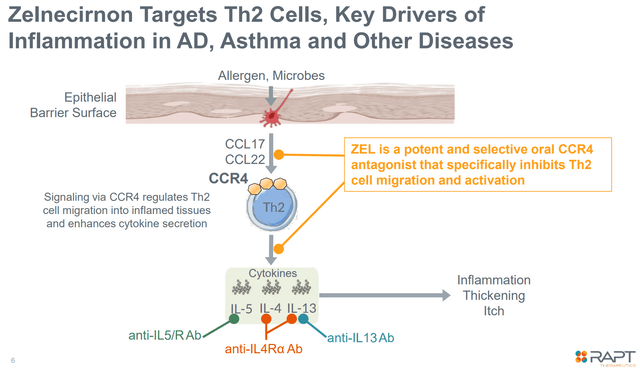
Zelnecirnon’s mechanism of action (Company presentation)
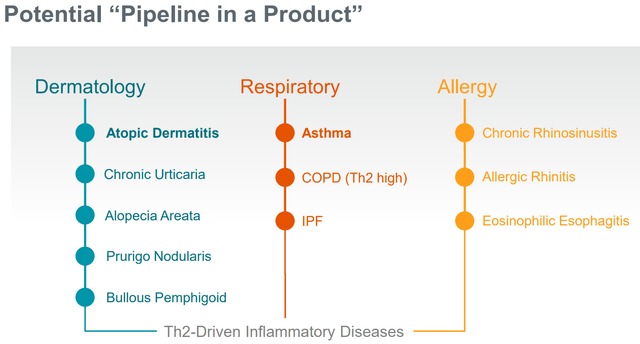
Potential indications for ZEL (Company presentation)
Overview of the clinical hold and implications
In February 2024, RAPT announced a clinical hold of both ongoing ZEL phase 2 trial due to a serious adverse event (hepatic failure, necessitating liver transplantation) in one patient on ZEL.
In my opinion, the probability that zelnecirnon was the actual cause of the hepatic failure is low for the following reasons:
- According to RAPT, there is no prior evidence of liver toxicity potential in preclinical studies with ZEL exposures much higher compared to ZEL exposure by the 400mg dose (the highest dosing cohort in the phase 2).
- Furthermore, there is so far no indication of liver toxicity in other trial participants (total approximately 350 patients including patients enrolled in the ph1 study, as well as blinded data from the phase 2 studies), beyond transient and isolated elevations of liver function tests in a small subset (blinded data).
- Affected patient had a complex medical history including dupilumab allergy, Hashimoto’s thyroiditis, active COVID-19 disease, and treatment with herbal supplement, including Ashwagandha. Notably, both Hashimoto’s thyroiditis and COVID-19 have been associated with autoimmune hepatitis. Case reports have also shown a potential association of Ashwagandha with hepatotoxicity and even liver failure.
Discussion of RAPT’s decision to stop both phase 2 trials
Additional important details (e.g. biopsy results, ZEL dose, duration of ZEL treatment before liver failure, other treatments the patients were receiving) have not yet been shared by RAPT. However, a definite confirmation of the cause of the liver failure seems unlikely. Assume for example that liver biopsy is suggestive of drug-induced liver failure. There is no way to know which of the drugs the patient has been taking is responsible. Unblinding of the phase 2 studies will give more evidence to resolve the issue, assuming there is still no evidence of hepatotoxicity in the ZEL arm compared to placebo.
Another important point is that the clinical hold resulted in halting of further dosing of patients already enrolled. Even if the FDA hold was resolvable without unblinding the phase 2 studies, I don’t see how continuation of the trial would be possible after an extended cessation of treatment in patients that hadn’t completed the 16-week treatment course by the time of the clinical hold. RAPT would either have to restart treatment from the beginning in these patients (i.e. repeat a 16-week course after a washout period) or enroll new patients to replace these patients.
In other words, I believe RAPT’s decision to stop both phase 2 trials was the only reasonable decision. Resolving the clinical hold would likely not be possible without further data. Furthermore, resumption of the trial after several months’ disruption wouldn’t make sense, considering the halting of ongoing dosing. Finally, the purpose of phase 2 studies was to assess safety and get efficacy signals to guide further clinical development. With approximately 110 patients (of 229 enrolled patients) having completed the 16-week dosing period in the atopic dermatitis trial, there should be enough data to both inform the path forward and to support discussions with the FDA to lift the clinical hold.
Proof-of-concept clinical data in AD from the phase 1 study
ZEL has demonstrated promising and convincing benefit in multiple endpoints in a small (n=10 placebo, n=21 zelnecirnon) placebo-controlled ph1b study in patients with moderate-severe atopic dermatitis and history of “inadequate response to treatment with topical medications” (“or patients for whom topical treatments are otherwise medically inadvisable”). Enrolment criteria, study design, endpoints and results are summarized in the figures below. For readers interested in more details, the phase 1 study has recently been published.
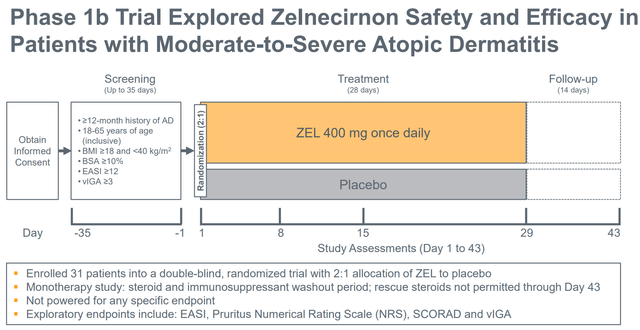
Phase 1b design (Company presentation)
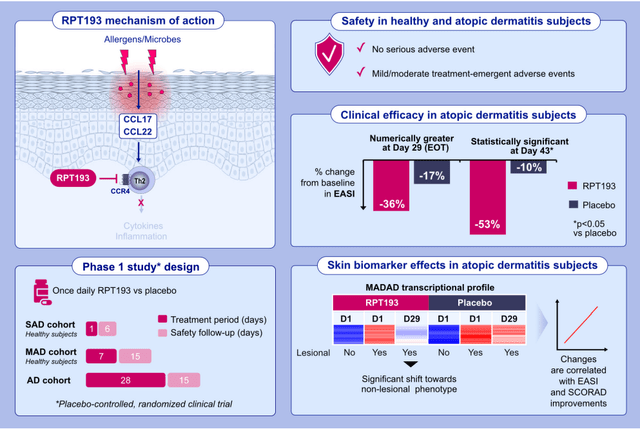
Graphical abstract of the phase 1 study (Allergy publication)
Notably, despite the small study size, zelnecirnon has shown a clear and statistically significant (at day 43, i.e. 2 weeks after the end of treatment) differentiation from placebo in EASI improvement (the primary outcome of the phase 2 study) as well as in sleep, meaning there is still a chance for statistical significance in the prematurely halted phase 2 study. Furthermore, ZEL efficacy was at least as good, and probably even better, in the EASI≥16 subgroup. This is important because the phase 2 is enrolling patients with EASI ≥ 16 (vs EASI ≥ 13 in the ph1b).
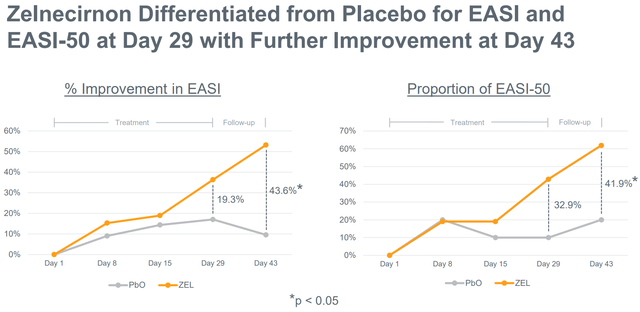
Clear differentiation of zelnecirnon vs placebo in EASI improvement (Company presentation)
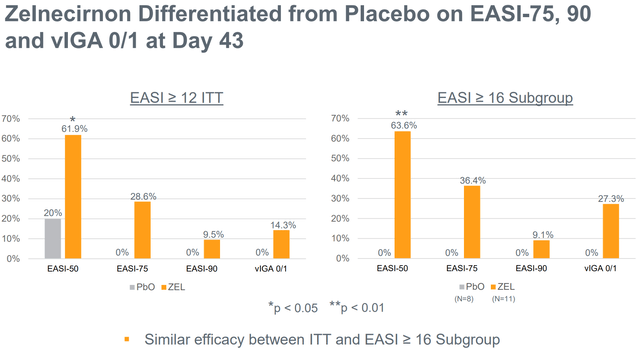
EASI-75, 90 and vIGA 0/1 endpoints comparing zelnecirnon to placebo. EASI≥16 is an inclusion criterion for the phase 2 trial (Company presentation)
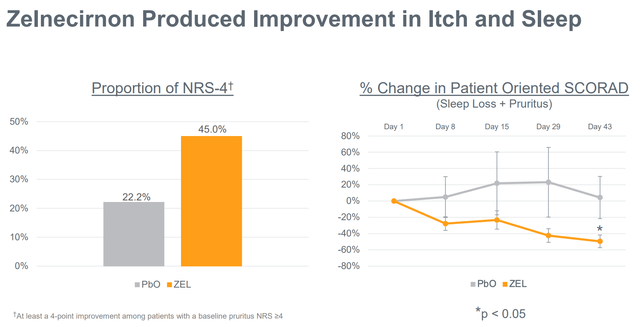
Notable improvement in itch and sleep by zelnecirnon vs placebo (Company presentation)
As far as safety is concerned, all adverse events were mild/moderate. There were no serious adverse events and no clinically significant laboratory abnormalities (meaning no need for laboratory safety monitoring). Nausea was the most common adverse event, and “all treatment-related TEAEs were resolved by the end of the study”. Furthermore, “no SAEs or TEAEs leading to study discontinuation were reported in the AD cohort after Day 1. One subject receiving RPT193 in the AD cohort had the study drug withdrawn for a TEAE (generalized rash of moderate severity, considered possibly treatment-related)”. However, the study size was too small to detect potentially less common side effects.
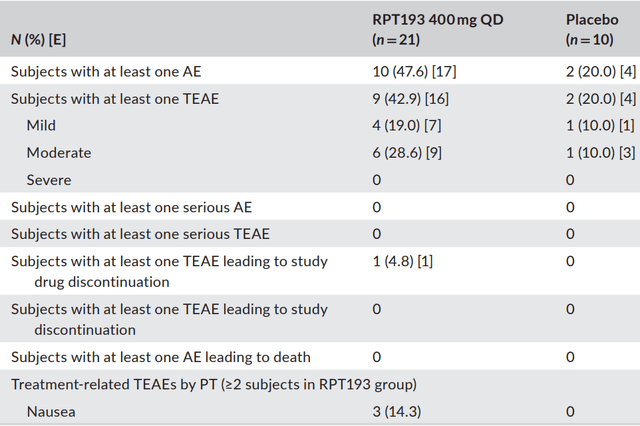
Adverse events (AE) profile in the ph1b study. (Allergy publication)
Design of the ph2b and what to look for in the upcoming readout
As seen in the image below (compare to image above) inclusion criteria for the phase 2 study are similar to the inclusion criteria of the phase 1b study, the main differences being a higher upper age limit (75 vs 65 years), no upper BMI limit and a baseline EASI score ≥16 (vs ≥13 in the phase 1). Therefore, baseline characteristics of patients enrolled in the phase 2 should be similar to those enrolled in the phase 1. Therefore, it is reasonable to expect similar efficacy as in the phase 1 study. Notably, in the ph1b trial, ZEL performed even better (vs placebo) in the subgroup of patients with EASI score ≥16.
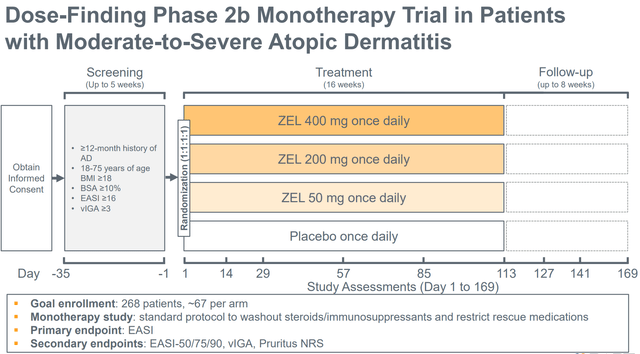
Phase 2b design (Company presentation)
An important difference between the 2 study designs is that the treatment duration is 16 weeks in the phase 2 (vs just 4 weeks in the phase 1). Notably, an increasing benefit can be seen in the phase 1 with longer treatment duration (benefit becoming evident at 4 weeks), as well as further improvement 2 weeks following the end of treatment (see figures in above section). Therefore, there is good reason to expect even better efficacy in the phase 2 study.
Another important difference between the two studies is that the phase 2 is a dose-finding study and includes 4 arms (ZEL 400mg, 200mg, 50mg and placebo, at 1:1:1:1 randomization) vs 2 arms in the phase 1b (ZEL 400mg vs placebo). Only the highest dose (400mg) has been evaluated in the phase 1b. Therefore, there is a chance that lower doses may be less effective, which could affect the statistical power of the study. Nevertheless, according to pharmacokinetic/pharmacodynamic ((Pk/Pd)) data from the phase 1 study, there is a high probability that even the lowest dosing cohort will be similarly effective.
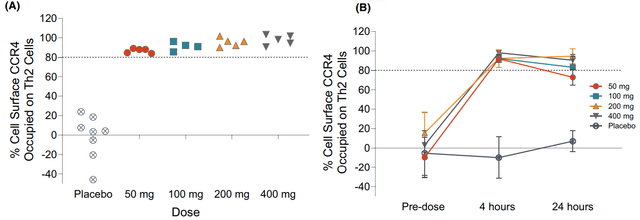
Pk/Pd data from the ph1a study showing that even 50mg may be sufficient (Allergy publication)
A total of 229 patients had been enrolled up to the clinical hold (i.e. about 57 patients per arm) of which 110 (i.e. about 27 per arm) had completed the 16-week dosing period. This doesn’t mean that RAPT cannot use the data from the rest of the patients even if they haven’t completed the full treatment duration. These patients can still contribute to the efficacy and safety data. Notably, in the phase 1 study benefit was evident from the 4th week of treatment and there appears to be a residual beneficial effect even after cessation of treatment (further improvement at 2-week follow-up after the end of treatment).
Based on the above, and taking into account that the study may be underpowered, I would consider the readout positive if both of the following are true:
- ZEL continues to appear safe, with no evidence of hepatotoxicity (or other clinically important toxicity). This is very important for the ZEL commercial thesis.
- There is convincing enough (not necessarily statistically significant) differentiation over placebo in the primary endpoint. Furthermore, the differentiation over placebo will have to be large enough to give ZEL a competitive commercial advantage. RAPT has guided any of the following as successful outcomes: (a) >24% decrease of EASI (43.6% in the phase 1), (b) >23% EASI-75 percentage (28.6% in the phase 1, 36.4% in the EASI≥16 subgroup), (c) vIGA 0/1 >19% (14.3% in the phase 1, 27.3% in the EASI≥16 subgroup).
Despite prematurely halting the trial, I expect a positive readout based on the following:
- As discussed in an above section there are good reasons to believe that ZEL was not the cause of hepatotoxicity in the affected patients because (a) there are alternative explanations, (b) “No evidence of liver toxicity has been observed with any other trial participant” over “a total of approximately 350 patients”.
- If efficacy in the phase 1b trial is replicated, ZEL should be able to easily surpass above described efficacy goals, especially considering longer treatment duration (16 weeks vs 4 weeks) and potentially better efficacy of ZEL in the EASI≥16 subgroup.
Current treatment landscape for AD
First-line pharmaceutical treatment for patients with moderate/severe AD consists of topical therapies (mainly topical corticosteroids). For patients with inadequate response to topical therapies, the next preferred option is injectable biologics, e.g., dupilumab (monoclonal antibody against IL4, also targeting Th2-mediated inflammation) or Sc tralokinumab (monoclonal antibody against Il13, also targeting Th-mediated inflammation), which are typically administered subcutaneously every other week.
The next option is oral JAK inhibitors. “However, because of the potential risk of associated serious adverse events, benefits and risks should be carefully evaluated in the individual patient prior to initiating treatment with oral JAK inhibitors”. In other words, despite strong efficacy and oral route of administration, oral JAK inhibitors are not preferred over injectable biologics due to adverse effects necessitating “close clinical surveillance and diligent laboratory monitoring”.
Future commercial potential thesis for Zelnecirnon
As shown in the figure below, zelnecirnon is not necessarily the best treatment available in terms of efficacy.
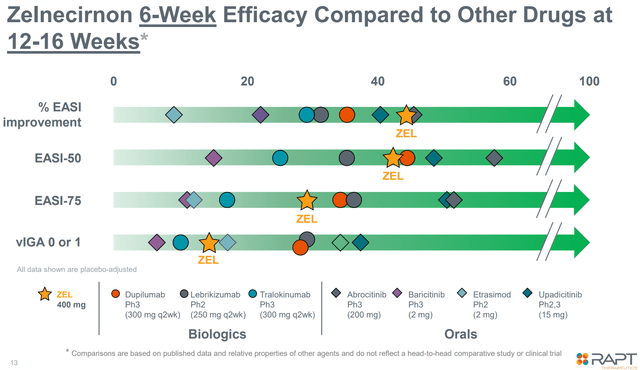
Promising efficacy compared to competition (Company presentation)
However, zelnecirnon does not have to beat competition in efficacy to be commercially competitive, considering disadvantages of currently approved alternative options (see above section). RAPT expects ZEL to be the preferred treatment option following topical corticosteroids considering: (a) good efficacy, (b) oral route of administration (vs injectable biologics), (c) good safety profile with no need for lab monitoring (vs oral JAK inhibitors). As discussed in a section above, and based on phase 1b efficacy results, ZEL should be able to reach the target range of efficacy (figure below).
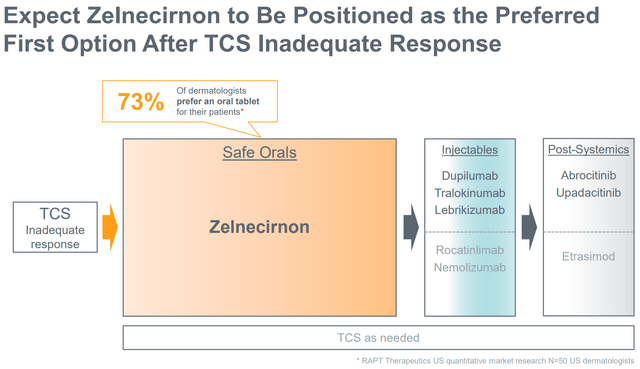
ZEL’s place in therapy vs currently approved therapies (Company presentation)
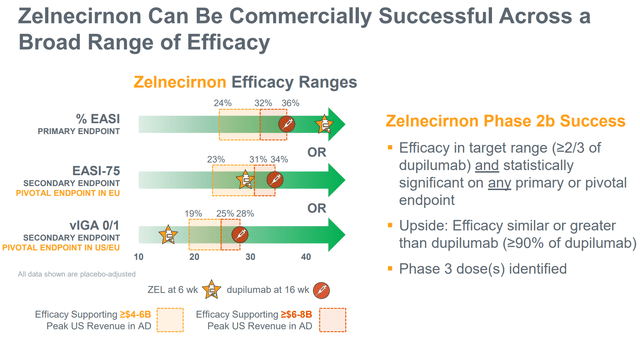
Target efficacy ranges for ZEL to be commercially competitive (Company presentation)
RAPT’s thesis on commercial potential of ZEL even with lower efficacy vs competition is validated by the example of Otezla which has been acquired by Amgen for $13B (figure below).
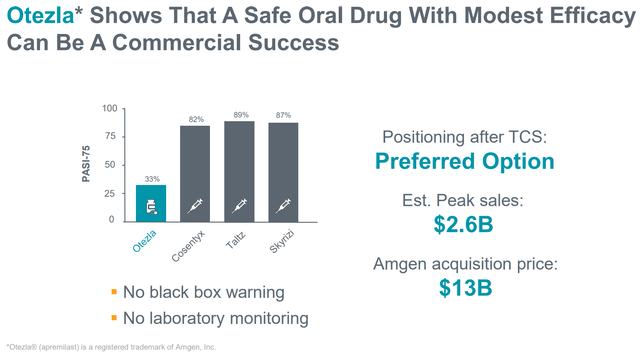
Otezla example validates ZEL commercial potential even with lower efficacy (Company presentation)
Future competition
Atopic dermatitis is a very competitive field, with numerous therapies under clinical development. At the time of writing of this article, according to ClinicalTrials.gov, there are n=39 recruiting/not yet recruiting interventional phase 3 trials, n=53 phase 2 trials and n=24 phase 1 trials. Nevertheless, most candidates under clinical development are injectable biologics. Although some have improved dosing schedules (e.g., Sc every 4 weeks, or IV every 8-12 weeks) ZEL would still have the advantage of oral route of administration. Various topical therapies are also being developed, but these are mostly destined to be used for patients with mild/moderate AD.
Oral competition in clinical development includes:
- RBN-3143 (Ribon Therapeutics) currently in ph1 stage.
- LNK01001 (Lynk Pharmaceuticals) currently in ph3 stage (administered twice daily vs once daily administration of ZEL).
- SAR444656 (being developed by KYMR and SNY) showing 37% EASI improvement at week 4 in a ph1 study (n=7), currently in the ph2 stage (1st patient dosed Dec 2023).
- MHLJDD (investigator-sponsored) a Chinese medicine administered twice daily, currently in ph1/2 stage.
- QY201 (E-nitiate Biopharmaceuticals) a dual Jak1/Tyk2 inhibitor (aiming to improve on the safety of currently available JAK inhibitors) in ph1/2 stage (no clinical data available yet to my knowledge).
- Soquelitinib (CRVS) an oral, small molecular drug that selectively inhibits ITK (interleukin-2-inducible T cell kinase) currently in ph1 stage (first clinical data expected in late 2024).
- SCD-044 (being developed by Sun Pharmaceutical and SPARK) a 2nd generation S1P1 receptor-1 agonist currently in ph2 stage (no clinical data in AD yet).
- ICP-332 (InnoCare) an oral selective TYK2 inhibitor (aiming to improve on the safety of approved JAK inhibitors) administered once daily with recently announced positive ph2 topline (78% EASI improvement).
- VC005 (Jiangsu Vcare PharmaTech Co.) currently in ph2 stage.
Overall, assuming positive ph2 readout and lifting of the clinical hold, ZEL seems more advanced than most of the competition and has the advantage of once daily dosing (vs twice daily for LNK01001 which is in phase 3). However, novel selective inhibitors of JAK kinase family may prove to be significant competition by improving on the safety of available JAK inhibitors while preserving high efficacy. Other novel molecules may also prove to be more effective/safer.
Rest of the pipeline
Beyond ZEL, RAPT is also developing tivumecirnon, an oral CCR4 antagonist, for oncology indications. A detailed discussion of tivumecirnon is beyond the scopes of this article, which focuses on ZEL. Nevertheless, it is worth mentioning that tivumecirnon selectively (vs alternative approaches) inhibits tumor Treg trafficking and has shown promising early phase (uncontrolled) efficacy, both as monotherapy, as well as in combination with pembrolizumab.
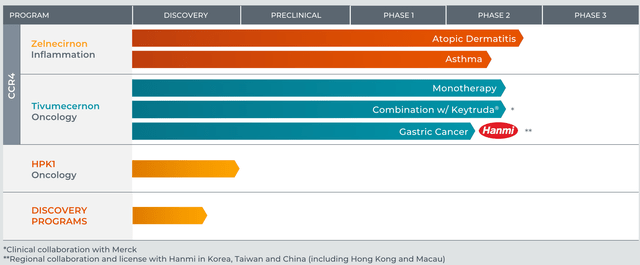
RAPT’s pipeline (RAPT’s website)
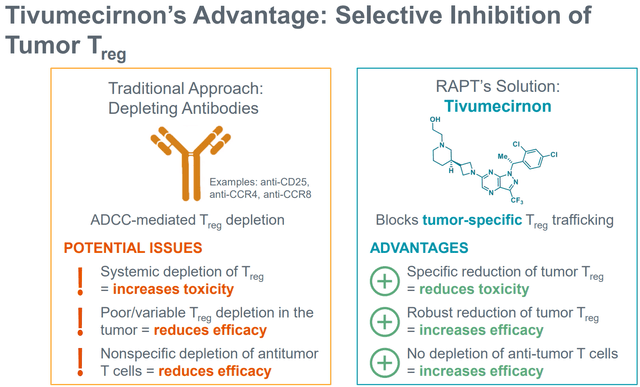
Selective tumor Treg inhibition by tivumecirnon (Company presentation)
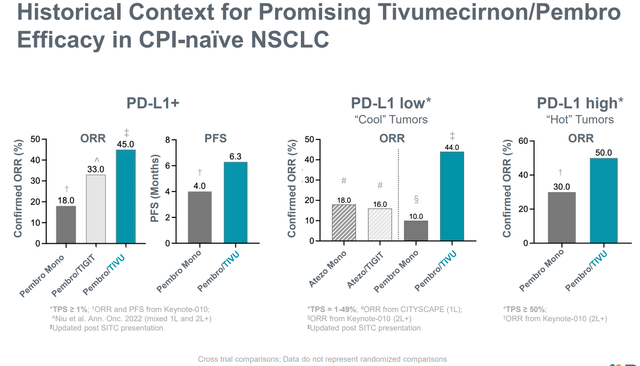
Promising efficacy in combination with pembro in CPI-naive NSCLC (Company presentation)
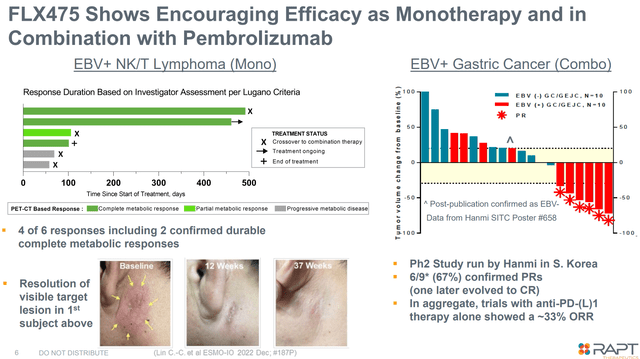
Results in EBV+ NK/T lymphoma and EBV+ gastric cancer (Company presentation)
Financials
RAPT announced “cash and cash equivalents and marketable securities of $141.6 million” as of March 31, 2024. Total operating expenses in Q1 2024 were $32.5M (R&D $24.8M, G&A $7.7M). At this rate of cash burn, RAPT should have a cash runway of about 13 months, although this will depend on further clinical development plans and timing of further trials. According to the latest 10Q, RAPT “believes that its current cash and cash equivalents and marketable securities will provide sufficient funds to enable it to meet its obligations for at least 12 months from the filing date of this Quarterly Report on Form 10-Q”. However, for further clinical development of ZEL in pivotal trial, RAPT will need to raise more cash.
Short-term catalysts
Short/medium-term the bullish thesis on RAPT is based on the 2 following catalysts:
- Positive readout from the halted ph2 trials in atopic dermatitis and asthma (expected in Q3 2024). By “positive” I mean: (a) Clear evidence of efficacy, and (b) Safety, especially lack of liver toxicity. These are explained in more detail in a section above.
- Resolution of the FDA clinical hold. Most likely, unblinded data from the halted phase 2 trials will be necessary for this. So I expect the lifting of the clinical hold sometime in late 2024, assuming there is no evidence of hepatotoxicity in the phase 2 studies.
Risk factors
The following are the main risks to the thesis:
- The most important risk is RAPT finding evidence of hepatotoxicity (or other clinically important toxicity) in the phase 2 studies. This would probably result in abandoning further development of ZEL as it would considerably and negatively impact the above-explained commercial thesis.
- Even if ZEL is safe, it may fail to reach pre-defined efficacy measures to allow competitive commercialization. This would also probably result in halting further clinical development.
- Even if ZEL proves to be both safe and effective, future therapies may prove to be more effective and/or safer.
- RAPT will still need to conduct pivotal trials. Therefore, RAPT will need much more cash to do so. This may result in considerable dilution of current shareholders.
Conclusion
The dip following the FDA clinical hold and halting of the ongoing trials has resulted in an asymmetric risk/reward investing opportunity. There is a good chance that the clinical hold will be lifted (which I expect to happen by the end of 2024 or early 2025) and that so far available data from halted phase 2 trials (expected in Q3 2024) will be sufficiently positive (even if not statistically significant) to allow further clinical development in pivotal trials. However, any potential investor should be aware of the above-discussed risks, which should not be ignored. There are several ways to play this: (a) buy now for a potential run-up getting closer to the phase 2 readouts and sell before the readout (downside risk should be relatively limited short-term unless there are more unexpected bad news), (b) buy and hold through the readout (higher risk but also much higher reward potential), (c) combination of the above (e.g. take some profits, assuming a rebound in stock price, before the readouts).
Your feedback is appreciated
Please comment below if you have any feedback (positive or negative), if you spot any mistakes, or if you believe I missed something important in my analysis.
Credit: Source link