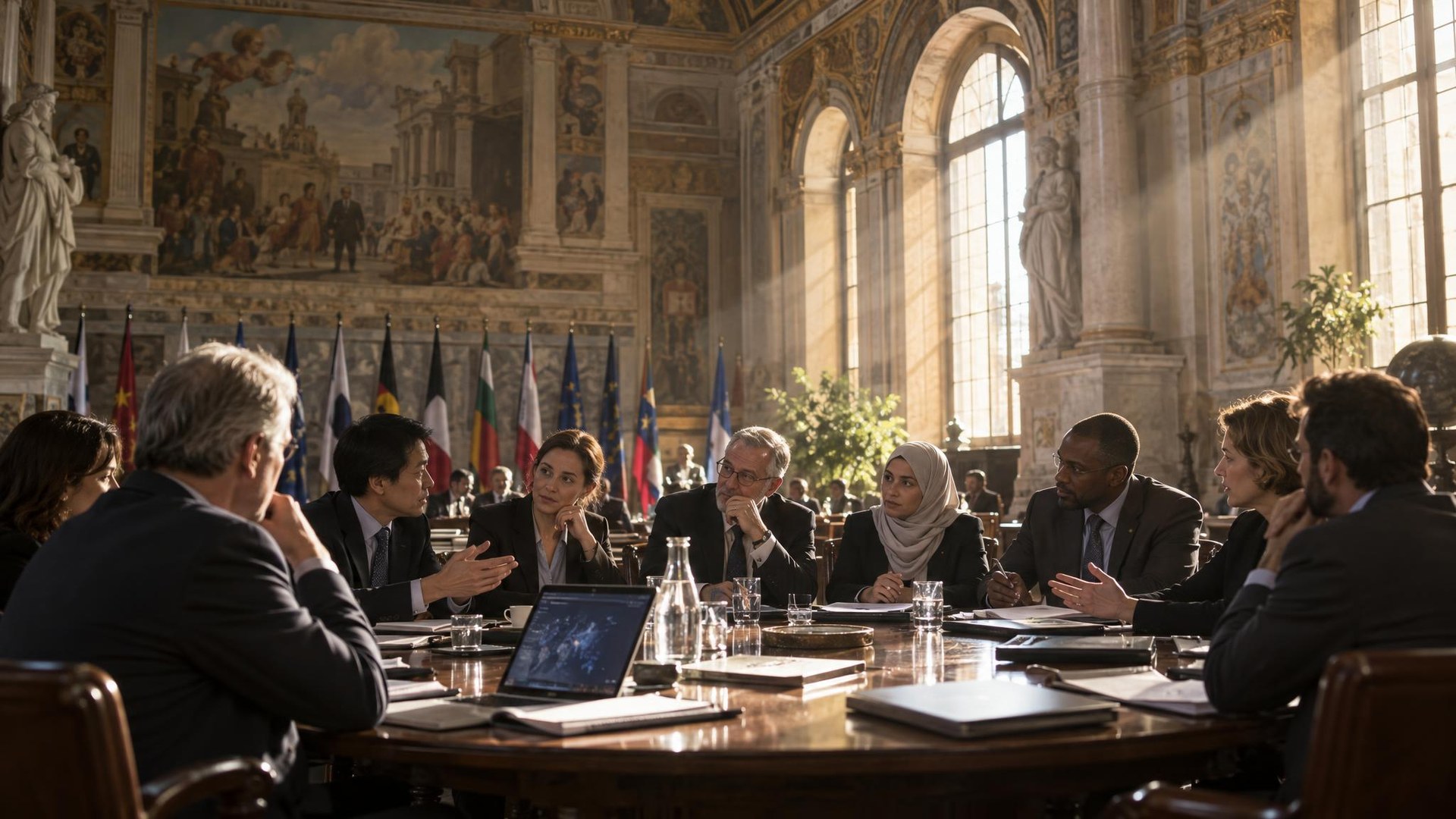

Pope Leo XIV called for artificial intelligence to be “disarmed” and encouraged the states meeting in Geneva in November to take concrete steps toward banning lethal autonomous weapons, in an address delivered in the Hall of Popes on October 30, 2026.
The audience gathered participants in “The Future of AI: A Dialogue Between the Vatican and the Scientific World on the Developments and Applications of Intelligent Technologies,” a meeting organized jointly by the Pontifical Academy for Life and the Future of Life Institute.
Welcoming attendees from many countries, the Pope said he believes they share a sense of unease about the development of artificial intelligence: the direction that should be taken is recognized, he said, yet not enough is being done to move along it. He thanked participants for their concerns and for their ideas and proposals for the future, describing them as early results of a transdisciplinary approach that he said is increasingly necessary if the complexity of the great challenges of the time is to be addressed.
The Pope recalled Pope Francis’s June 14, 2024 address to the G7 session on artificial intelligence, in which Francis described AI as a tool that inspires both excitement and fear and affirmed that the decision to take a human life must never be entrusted to a machine. Those words remain as relevant as ever, Leo XIV said, adding that he had sought to treat the questions in greater depth in his encyclical before setting out five considerations.
The Five Considerations
First, the Pope said, the future of artificial intelligence is not pre-determined: because human beings develop the technology, its future depends on the choices people make, and people therefore carry the responsibility to guide and change its applications and, when necessary, to reject them. The decisive question, he said, is what purpose AI should serve rather than simply what it can do. Those who treat its development merely as a race to be won, he warned, risk fixating on the finish line and forgetting those left behind, and a reliable system that serves the human person is of greater value than an exceptionally powerful one whose consequences cannot be adequately foreseen or controlled.
Second, he said, “machines are tools, not persons.” AI systems do not undergo experiences or possess a body; they do not feel joy or pain, do not mature through relationships, and do not know from within what love, work, friendship, or responsibility mean. Some propose granting such systems rights or even legal personhood, an approach he warned risks obscuring human responsibility and forcing people who suffer harm to seek redress from an entity with no human face.
Human Oversight, the Common Good, and Institutions
Third, the Pope said certain decisions must never be delegated. A person placed on a target list or entered into a border control database, he said, risks being reduced to little more than a data point, and decisions affecting human life, freedom, and the use of force must always remain subject to effective, informed, and responsible human oversight. For that reason, he said, artificial intelligence must be disarmed, and he encouraged the states meeting in Geneva in November to take concrete steps toward banning lethal autonomous weapons.
Fourth, he said intelligent technologies must be directed toward the common good and must never become ends in themselves or serve merely the interests of a privileged few. Citing his encyclical’s teaching that justice requires access to the benefits of innovation, including care, knowledge, tools, and opportunities, he said the development of these technologies should encourage solidarity and participation at various levels of the global community, ensuring that the benefits of progress are shared equitably, especially with those most in need.
His fifth consideration, which he called perhaps the most urgent, turned to institutions. Many of the ethical principles that should guide the development of artificial intelligence are already known, he said; what is needed now are institutions capable of putting them into practice, particularly effective international institutions that can safeguard the global common good. That calls for shared standards, independent oversight, and clear mechanisms of accountability, he said, so that decisions concerning the development and use of AI can be examined, challenged when necessary, and accompanied by appropriate remedies for harm caused. The Pope closed by thanking participants for their contributions, urging them to persevere in a spirit of dialogue and shared responsibility for the common good, and imparting his blessing.
The Encyclical Behind the Address
The address grounds each of its five considerations in numbered passages of Magnifica Humanitas, the encyclical Leo XIV issued on May 15, 2026, whose full title is On Safeguarding the Human Person in the Time of Artificial Intelligence. In that document, the Pope notes that Leo XIII published his encyclical Rerum Novarum in 1891 and that the Church celebrates the document’s 135th anniversary in 2026.
The encyclical observes that, where the state once largely guided and directed innovation, the main drivers of technological development today are private, often transnational parties endowed with resources and a capacity to intervene that surpass those of many governments. That shift, the document states, gives technological power an unprecedented and predominantly private character that is harder to discern, govern, and direct toward the common good. Its chapters include dedicated treatments of responsibility, transparency, and the governance of AI, and of weapons and artificial intelligence.
Credit: Source link