
• bitcoinBitcoin(BTC)$79,139.000.61%
  • ethereumEthereum(ETH)$2,492.400.38%
  • tetherTether(USDT)$1.000.03%
  • binancecoinBNB(BNB)$750.44-0.71%
  • rippleXRP(XRP)$1.421.81%
  • usd-coinUSDC(USDC)$1.000.01%
  • solanaSolana(SOL)$103.990.55%
  • tronTRON(TRX)$0.3388910.27%
  • Figure HelocFigure Heloc(FIGR_HELOC)$1.040.00%
  • zcashZcash(ZEC)$1,247.718.97%
  • HyperliquidHyperliquid(HYPE)$86.052.52%
  • dogecoinDogecoin(DOGE)$0.0907330.33%
  • RainRain(RAIN)$0.015977-5.86%
  • USDSUSDS(USDS)$1.000.02%
  • whitebitWhiteBIT Coin(WBT)$81.804.05%
  • moneroMonero(XMR)$497.05-2.93%
  • chainlinkChainlink(LINK)$12.06-4.78%
  • leo-tokenLEO Token(LEO)$9.18-0.05%
  • cardanoCardano(ADA)$0.218864-0.38%
  • stellarStellar(XLM)$0.188497-1.16%
  • bitcoin-cashBitcoin Cash(BCH)$258.130.38%
  • daiDai(DAI)$1.000.01%
  • Ethena USDeEthena USDe(USDE)$1.000.01%
  • USD1USD1(USD1)$1.00-0.01%
  • CantonCanton(CC)$0.1070691.99%
  • litecoinLitecoin(LTC)$54.01-2.77%
  • uniswapUniswap(UNI)$6.66-5.12%
  • the-open-networkGram (prev. Toncoin)(GRAM)$1.400.09%
  • hedera-hashgraphHedera(HBAR)$0.078530-2.33%
  • avalanche-2Avalanche(AVAX)$7.93-2.27%
  • suiSui(SUI)$0.81-1.34%
  • Global DollarGlobal Dollar(USDG)$1.000.00%
  • nearNEAR Protocol(NEAR)$2.549.44%
  • shiba-inuShiba Inu(SHIB)$0.000005-1.02%
  • crypto-com-chainCronos(CRO)$0.0603562.95%
  • paypal-usdPayPal USD(PYUSD)$1.000.02%
  • BlackRock USD Institutional Digital Liquidity FundBlackRock USD Institutional Digital Liquidity Fund(BUIDL)$1.000.00%
  • MemeCoreMemeCore(M)$1.190.64%
  • tether-goldTether Gold(XAUT)$4,395.090.09%
  • Circle USYCCircle USYC(USYC)$1.140.01%
  • BittensorBittensor(TAO)$260.741.98%
  • Ripple USDRipple USD(RLUSD)$1.000.02%
  • okbOKB(OKB)$114.32-1.21%
  • Ondo US Dollar YieldOndo US Dollar Yield(USDY)$1.14-0.10%
  • mantleMantle(MNT)$0.642.29%
  • AsterAster(ASTER)$0.76-1.06%
  • polkadotPolkadot(DOT)$1.187.93%
  • aaveAave(AAVE)$129.13-1.44%
  • pax-goldPAX Gold(PAXG)$4,399.800.09%
  • Pump.funPump.fun(PUMP)$0.0044852.61%
TradePoint.io
  • Main
  • AI & Technology
  • Stock Charts
  • Market & News
  • Business
  • Finance Tips
  • Trade Tube
  • Blog
  • Shop
No Result
View All Result
TradePoint.io
No Result
View All Result

Pinterest cut AI costs 90% by gutting a frontier model’s vision layer

May 29, 2026
in AI & Technology
Reading Time: 3 mins read
A A
Pinterest cut AI costs 90% by gutting a frontier model’s vision layer
ShareShareShareShareShare

At 620 million monthly users, calling a frontier model for every image recommendation isn’t a strategy — it’s a bill. Pinterest CTO Matt Madrigal solved it by gutting Qwen3-VL’s vision layer and rebuilding it with proprietary embeddings, cutting costs 90% and boosting accuracy 30%.

YOU MAY ALSO LIKE

Will We See The Foldable iPhone Ultra At The ‘Surprise And Shine’ Keynote Today?

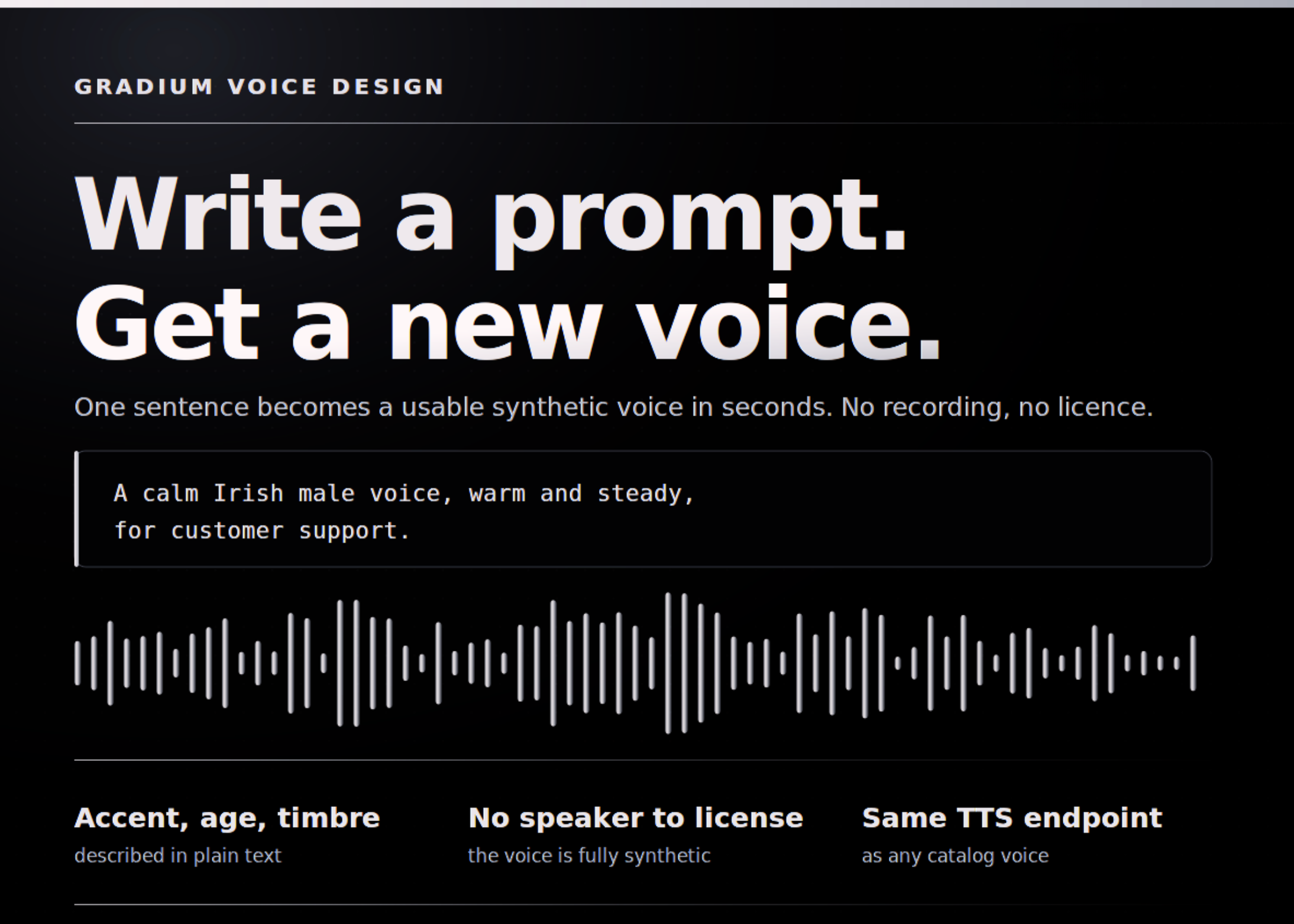
Gradium Launches Voice Design: Write a Prompt, Get a Brand New Synthetic Voice in Seconds

Madrigal’s team has been heavily investing in customizing open-source models “foundationally in-house.”

“If you’ve got really unique data that you can then fine-tune an open source model with, data quality will, frankly, outweigh or overcome model size,” Madrigal explained in a recent VB Beyond the Pilot podcast. 

How Pinterest customized Qwen for visual discovery

Pinterest, which has around 620 million monthly active users, has long applied open source models for visual search and discovery, going back to Google’s BERT and OpenAI’s CLIP. The company fine-tuned its own Pin CLIP on the latter, incorporating proprietary visual embeddings and image metadata. 

Pinterest’s conversational shopping assistant, Navigator 1, was built on Qwen3-VL and customized in “pretty significant” ways. Madrigal’s team essentially “ripped out” Qwen’s vision encoder layer and fine-tuned the model on proprietary multimodal embeddings. This has allowed them to capture metadata around pins and images that can then be precomputed offline and regularly retrained on new information to deliver personalized experiences. 

“Open-source models, especially with open Apache licenses where you can truly tweak a lot of open weights and customize for unique use cases — that’s where we’ve found open source to be so powerful for us,” Madrigal said. 

Bringing their own embeddings allows his team to gain context around metadata, pins, and images; also, notably, the model performs better at runtime and inference. Without these embeddings, devs would have to call and encode each image returned at runtime, one at a time. That results in a latency “20 times worse” from an inference perspective, Madrigal said. 

“If it’s something that’s going to be critical for our end users, that’s going to drive engagement, that will have to scale to over 600 million monthly active users, we’re going to either probably build it or we’re going to leverage open source and customize the heck out of it,” he said. 

VB Transform · July 14–15 · Menlo Park · Agentic orchestration

Intuit rebuilt its multi-agent system in 60 days. What did they change — and why?

At Transform, engineering leaders from Intuit, Target, and Instacart break down how they redesigned their orchestration architectures for reliability, scale, and real customers.

See the full agenda →

How a taste graph captures evolving interests

To guide users from inspiration to purchase, Madrigal’s team built a “taste graph”: a dynamic representation of what individual users actually like, not just what they click on. “It’s this representation of billions of people’s evolving tastes,” he said. 

People go to Google or other search engines when they have a clear picture of what they want; Pinterest is for when they’re still in the discovery phase, Madrigal said. Pinterest’s goal is to encourage “lateral exploration” and transform discovery to intent (that is, clicking through ads or making purchases). 

Under the hood, the architecture combines a graph structure with representational learning. User embeddings capture a user’s evolving tastes. These are constantly updated based on activity and new content and signals. “It’s not a social graph,” Madrigal said. “It’s much more of a preference graph: What’s going to inspire you? What are you trying to do next?” 

For instance, one user may be into mid-century modern designs; another may prefer a Nantucket aesthetic. Those preferences will be captured in user embeddings, and the taste graph will deliver up specific, relevant products as a result. 

“You go from the upper funnel, inspiration discovery, all the way through lower funnel intent,” Madrigal said. 

Listen to the full podcast to hear more about:

  • How Pinterest uses sandboxes to encourage creativity in a way that is secure and contained; 

  • Why a continuous feedback loop can prevent visual AI slop; 

  • The importance of constant benchmarking to gauge user engagement, performance, latency, and other factors. 

You can also listen and subscribe to Beyond the Pilot on Spotify, Apple or wherever you get your podcasts.

Credit: Source link

ShareTweetSendSharePin

Related Posts

Will We See The Foldable iPhone Ultra At The ‘Surprise And Shine’ Keynote Today?
AI & Technology

Will We See The Foldable iPhone Ultra At The ‘Surprise And Shine’ Keynote Today?

September 9, 2026
Gradium Launches Voice Design: Write a Prompt, Get a Brand New Synthetic Voice in Seconds
AI & Technology

Gradium Launches Voice Design: Write a Prompt, Get a Brand New Synthetic Voice in Seconds

September 9, 2026
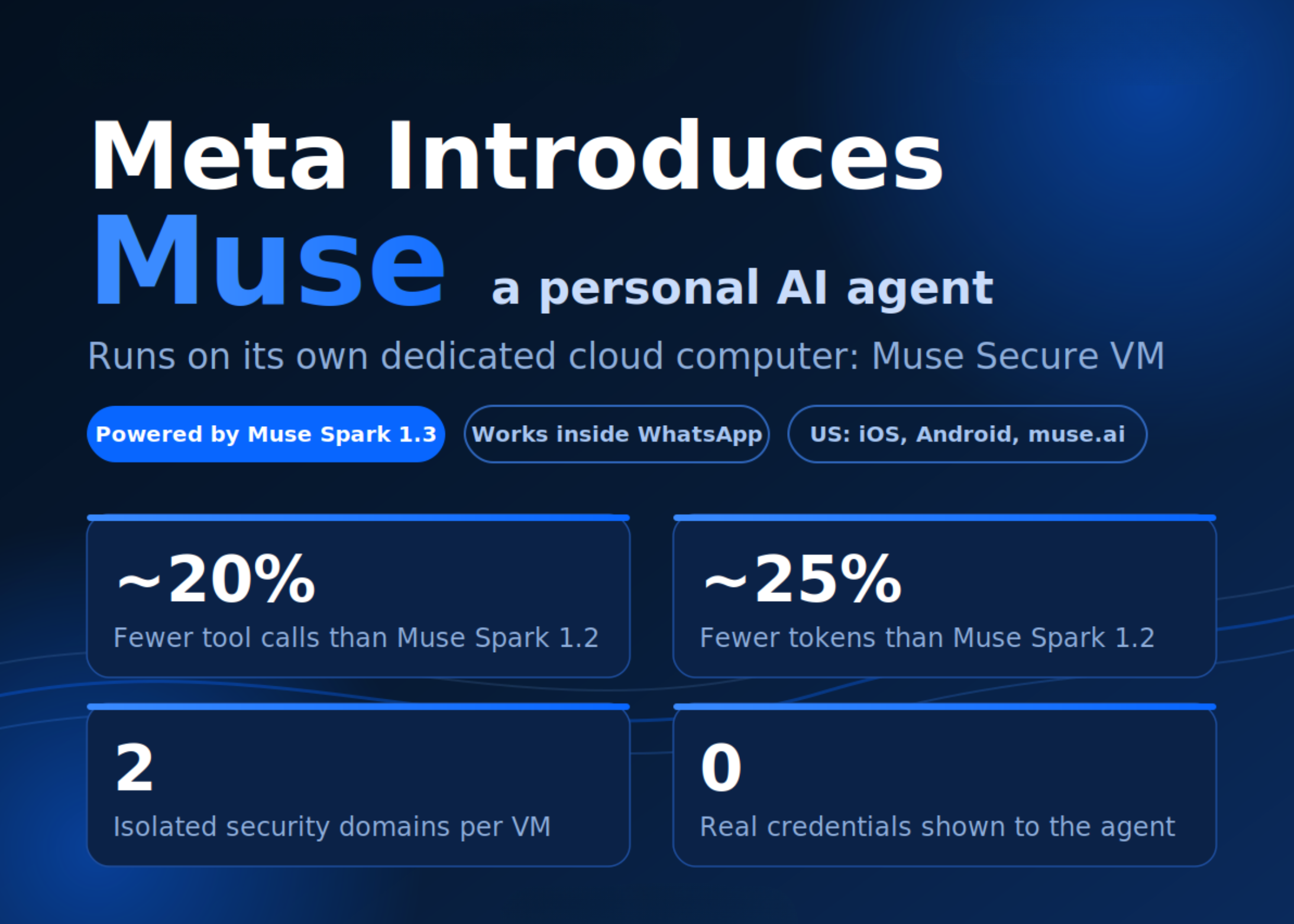
Meta Introduces Muse, a Personal AI Agent That Runs on Its Own Dedicated Secure Cloud Computer
AI & Technology

Meta Introduces Muse, a Personal AI Agent That Runs on Its Own Dedicated Secure Cloud Computer

September 9, 2026
OpenAI Says Internal AI System Resolved the Navier–Stokes Problem – Unite.AI
AI & Technology

OpenAI Says Internal AI System Resolved the Navier–Stokes Problem – Unite.AI

September 9, 2026
Next Post
Higher for Longer: Markets Navigate a New Era of Uncertainty (With Joe Brusuelas)

Higher for Longer: Markets Navigate a New Era of Uncertainty (With Joe Brusuelas)

Leave a Reply Cancel reply

Your email address will not be published. Required fields are marked *

Search

No Result
View All Result
One month since dual earthquakes rocked Venezuela

One month since dual earthquakes rocked Venezuela

September 5, 2026
The Commuter’s Paradox | Choiceology Podcast Clip

The Commuter’s Paradox | Choiceology Podcast Clip

September 8, 2026
Hurricane Lowell passing just west of Hawaii, bringing heavy rain, strong winds, punishing waves – CBS News

Hurricane Lowell passing just west of Hawaii, bringing heavy rain, strong winds, punishing waves – CBS News

September 8, 2026

About

Learn more

Our Services

Legal

Privacy Policy

Terms of Use

Bloggers

Learn more

Article Links

Contact

Advertise

Ask us anything

©2020- TradePoint.io - All rights reserved!

Tradepoint.io, being just a publishing and technology platform, is not a registered broker-dealer or investment adviser. So we do not provide investment advice. Rather, brokerage services are provided to clients of Tradepoint.io by independent SEC-registered broker-dealers and members of FINRA/SIPC. Every form of investing carries some risk and past performance is not a guarantee of future results. “Tradepoint.io“, “Instant Investing” and “My Trading Tools” are registered trademarks of Apperbuild, LLC.

This website is operated by Apperbuild, LLC. We have no link to any brokerage firm and we do not provide investment advice. Every information and resource we provide is solely for the education of our readers. © 2020 Apperbuild, LLC. All rights reserved.

No Result
View All Result
  • Main
  • AI & Technology
  • Stock Charts
  • Market & News
  • Business
  • Finance Tips
  • Trade Tube
  • Blog
  • Shop

© 2023 - TradePoint.io - All Rights Reserved!