
Perplexity announced on November 5, 2026 that every Agent API effort level now costs less per query, and reported higher or unchanged research quality across the presets. Medium improved from 55% to 77% on BrowseComp and DSQA while its cost fell almost 90%, and a new ultra level is available for broad research.
Effort levels package model choice, research-step and tool-call limits, search behavior and available tools into named presets. They let developers select a balance of cost, speed and research depth without configuring each component separately. A request such as effort="fast" receives the revised setup automatically.
At xhigh, Perplexity says the WANDR score held at 76.5% while the configuration ran at about 25% of its August 2026 cost. That level is intended for open-ended agentic work, including executing code in a sandbox, sustaining long tool-use loops and gathering evidence across many sources.
The WANDR paper describes a 500-task evaluation set built around realistic data-collection work. Agents must discover qualifying entities and return records whose sources and excerpts can be checked independently. Task-specific judges retrieve the cited pages again and assess the records against that evidence, avoiding a static gold answer set.
Ultra Uses Four Agents for Broader Research
Ultra joins fast, low, medium, high and xhigh in the official effort documentation. Its designated role is broad research and data collection where completeness matters more than latency. The configuration uses anthropic/claude-opus-5-5, and background mode is available for long runs.
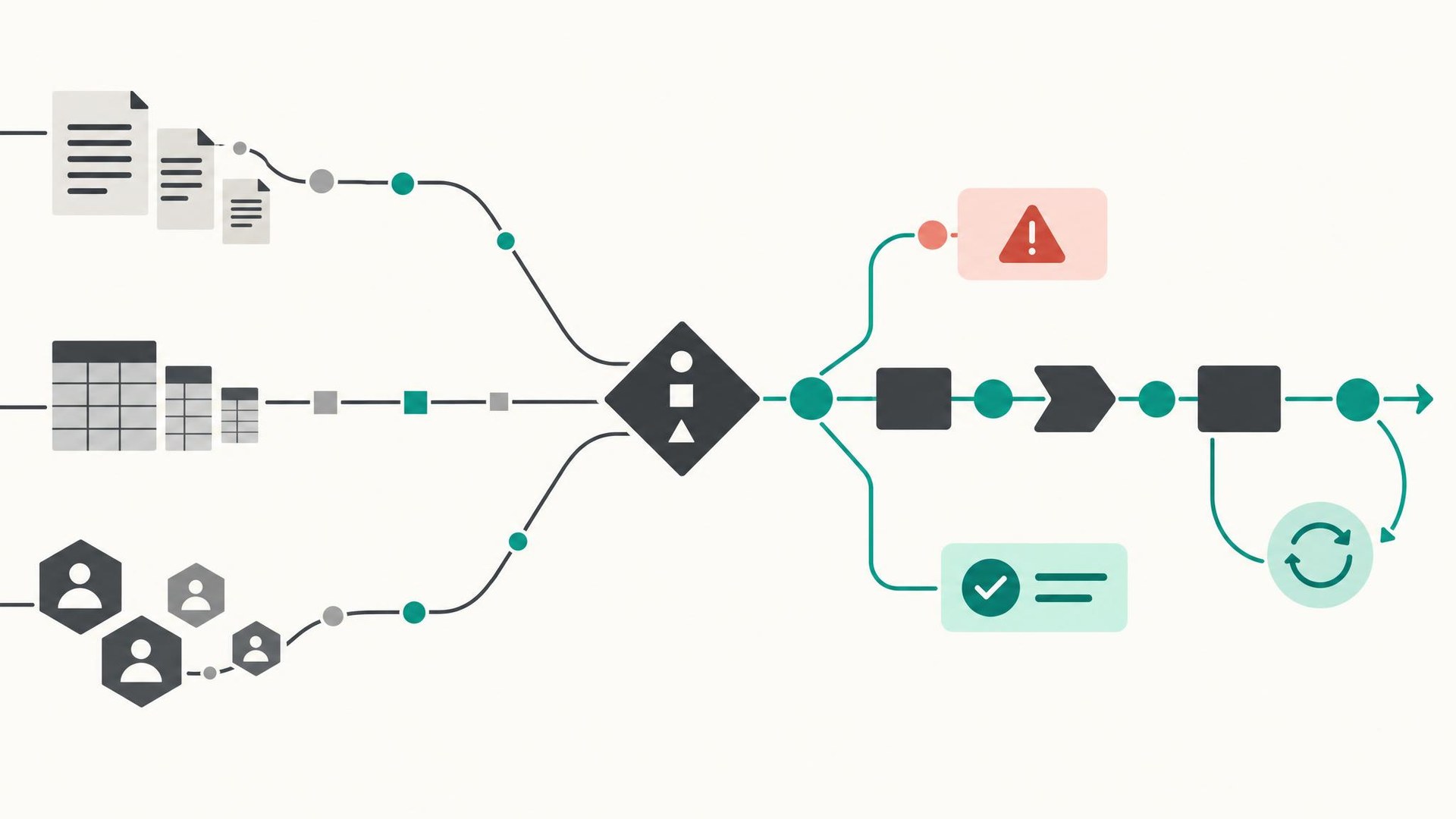
Ultra assigns the same research problem to three agents running in parallel, allowing each to assemble evidence independently. A fourth agent consolidates their outputs, removes duplicate findings and writes the answer. Perplexity reports an 85.9% WANDR score at $21.71 per task, the highest result among the configurations it tested.
Budget and Context Changes Reduce Research Costs
Spending is constrained at each level through limits on steps, a ceiling on total tool calls and periodic notices about remaining capacity. The separate tool-call ceiling matters because one step can launch several calls across different tools. Those notices help the agent reserve enough budget to check its evidence and deliver an answer instead of stopping mid-task.
One experiment with openai/gpt-6-luna shows why those limits matter. Perplexity reports that moving from 1 to 15 permitted steps raised accuracy on BrowseComp and DSQA from 41% to 80%, while cost per query increased from $0.0017 to $0.0152. Budget allocation therefore shapes both the quality of the answer and the price of obtaining it.
Context compaction addresses another cost driver. After context passes a threshold, the system condenses earlier work into a summary of findings and remaining tasks while preserving the system prompt, original request and any loaded skills. It then tells the agent to keep working and reports the number of compactions, so the summary is not mistaken for a stopping point.
Extraction reduces what the agent carries forward. Instead of giving it an entire page, fetch_url asks a smaller model to select passages relevant to the current task and quote them verbatim for citation. At high effort, Perplexity reports approximately 50% fewer input tokens per query and an 88.0% result at $0.073 per query, compared with 83.5% at $0.094 without extraction.
Related changes target search itself. Each search can now return up to 4K tokens of results rather than 2K, a new snippet engine selects text more closely matched to the query, and Fast Search is priced at $1.00 per 1,000 requests. Together, these changes are intended to locate useful evidence with fewer searches and less irrelevant context.
Workflow Evaluation and Configuration Stability
Workflow selection uses a skill tree with progressive disclosure. A skill initially occupies only its name and description in context; the full instructions arrive after the model decides that the workflow fits the task. Perplexity says preloading every skill increased BrowseComp and DSQA costs by 13% and reduced WANDR scores, supporting the decision to load workflows only when needed.
An automated harness evaluates newly available models as they become accessible, sweeping reasoning effort, step and tool-call budgets, and tool configurations. A candidate displaces the incumbent only if it delivers better quality at equal or lower cost. Perplexity says one candidate scored 13.3 points above the baseline on BrowseComp but fell below baselines on internal enterprise, legal and finance research tasks, illustrating why public benchmark results alone do not determine selection.
The documentation distinguishes dynamic names, pinned versions and frozen configurations. Dynamic calls inherit later evaluated changes without code edits; pinned calls retain one release after the active configuration advances; frozen calls copy public fields but can miss settings outside the documented request schema. Ultra has no frozen configuration and must be called by name.
For developers, the practical distinction is automatic updates versus reproducibility: dynamic levels inherit Perplexity’s evaluated revisions, while pinned versions preserve a known configuration. Ultra extends that system to broader coverage, and its four-agent design makes orchestration part of the cost-quality calculation alongside model selection.
Credit: Source link