
Ouster announced on November 3, 2026, that third-quarter revenue rose 50% year over year to $59.3 million, with combined lidar and camera shipments reaching a record above 27,000 units. Losses narrowed as the company expanded its Physical AI sensing and perception platform beyond lidar.
Cameras Reshape the Shipment Mix
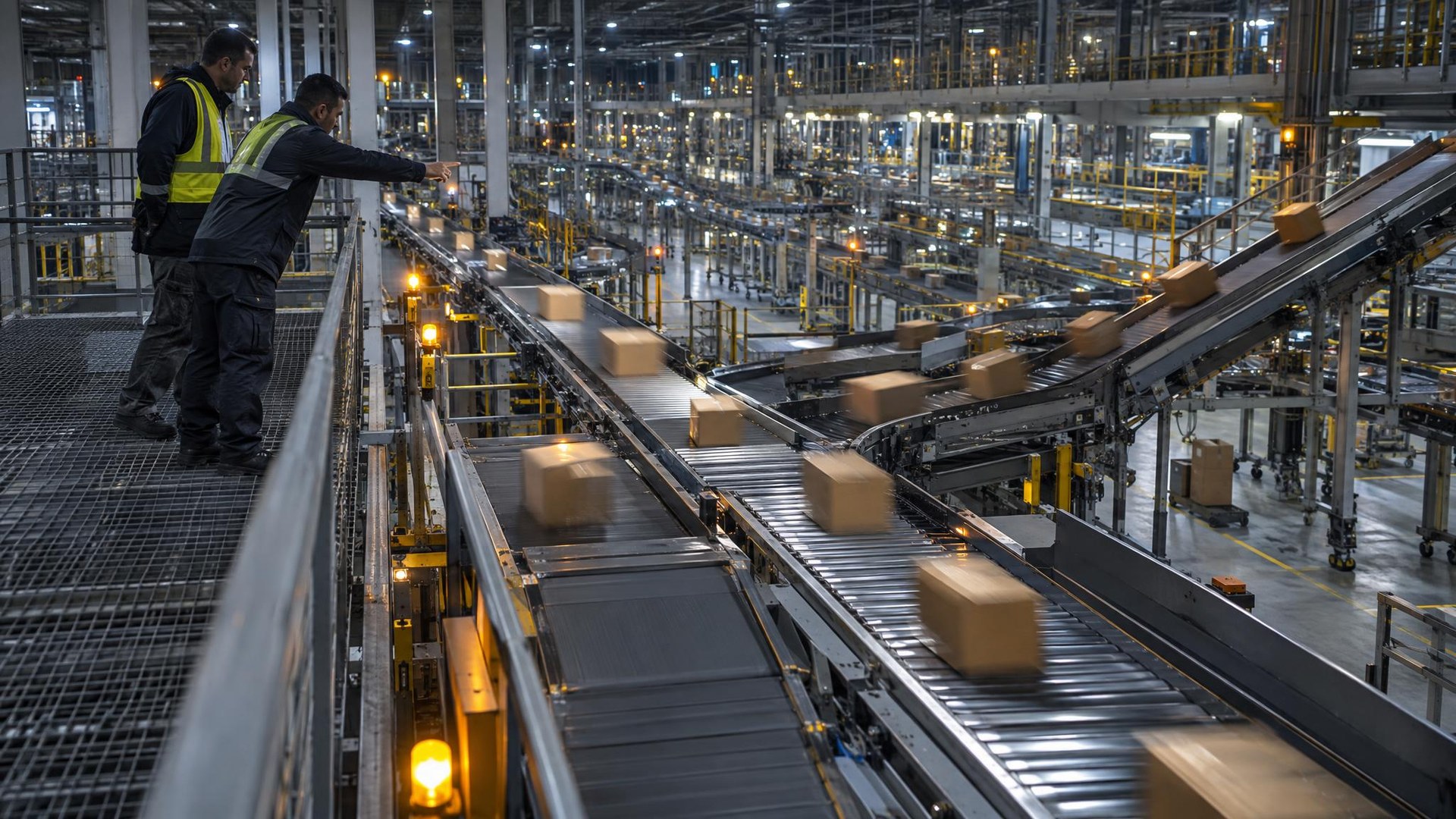
Total revenue for the quarter ended September 30, 2026 included $56.0 million of product revenue and $3.3 million of royalties. Product revenue increased 42% year over year and 6% sequentially, extending Ouster’s run of product-revenue growth to 15 consecutive quarters. The product increase came primarily from industrial and robotics customers using the sensors in warehouse automation, defense, construction, mapping and data collection.
Lidar represented approximately 27% of shipments. The earnings presentation specifies more than 7,000 lidar sensors and 20,000 cameras, while its comparison with the third quarter of 2025 covers only lidar, at more than 7,200 sensors. The shipment record therefore marks the scale of the combined platform rather than providing a like-for-like comparison of lidar volumes.
Stereolabs and Rev8 Extend the Platform
The broader mix follows Ouster’s acquisition of Stereolabs, which closed on February 4, 2026 and was announced on February 9, 2026. Stereolabs became a wholly owned subsidiary, adding 3D vision, ZED cameras and perception software. Ouster reported at the time that Stereolabs had shipped more than 90,000 ZED cameras to more than 10,000 customers.
Ouster now offers digital lidar, cameras, AI compute, sensor-fusion and perception software, and AI models across industrial, robotics, automotive and smart-infrastructure applications. Chief executive Angus Pacala said capacity investments made to meet robotics growth enabled Stereolabs’ record camera shipments, and that hundreds of customers had chosen Rev8 for mission-critical applications.
Ouster describes Rev8 as the world’s first native color lidar. Separate RGB and range channels captured by the Rev8 OS1 Max illustrate its output. The company’s 2026 priorities are revamping its camera, lidar and AI-compute products, extending its Physical AI solutions and executing a path to profitability.
Margins, Cash and the Next Quarter
GAAP net loss narrowed to $14.2 million from $21.7 million a year earlier. The company-defined adjusted EBITDA loss narrowed to $3.4 million from $8.4 million; the measure starts with net loss and excludes interest, taxes, stock-based compensation, depreciation, amortization of acquired intangibles, acquisition and integration charges, and other specified items.
Gross margin requires a sequential qualification. GAAP gross margin was 43%, compared with 42% a year earlier and 49% in the second quarter of 2026; a one-time refund had contributed approximately 1,000 basis points to the second-quarter figure. Non-GAAP gross margin, which excludes stock-based compensation, amortization of acquired intangibles and specified acquisition-related charges, was 47%, unchanged year over year but down from 53% sequentially.
At September 30, cash, cash equivalents, restricted cash and short-term investments totaled $421 million. Operating activities used $49.4 million of cash in the first nine months of 2026, compared with $24.5 million in the prior-year period.
Ouster expects fourth-quarter 2026 revenue of $61 million to $64 million. The central question is whether the broader camera-and-lidar platform can turn continued revenue growth into narrower losses and lower operating cash use together. The shipment record demonstrates the platform’s scale, but the nine-month cash figures show why unit growth alone does not establish the stated path to profitability.
Credit: Source link