• bitcoinBitcoin(BTC)$81,417.000.97%
  • Midas Fasanara Global EuroMidas Fasanara Global Euro(MGLOEURO)$111,813.00-0.36%
  • ethereumEthereum(ETH)$2,365.430.90%
  • tetherTether(USDT)$1.000.05%
  • binancecoinBNB(BNB)$753.170.70%
  • rippleXRP(XRP)$1.330.89%
  • usd-coinUSDC(USDC)$1.000.02%
  • solanaSolana(SOL)$102.531.51%
  • tronTRON(TRX)$0.329404-0.07%
  • Figure HelocFigure Heloc(FIGR_HELOC)$1.041.39%
  • zcashZcash(ZEC)$1,294.07-0.29%
  • HyperliquidHyperliquid(HYPE)$81.430.12%
  • dogecoinDogecoin(DOGE)$0.0798471.99%
  • moneroMonero(XMR)$600.54-0.21%
  • USDSUSDS(USDS)$1.000.00%
  • whitebitWhiteBIT Coin(WBT)$78.150.88%
  • chainlinkChainlink(LINK)$11.812.99%
  • leo-tokenLEO Token(LEO)$9.424.29%
  • cardanoCardano(ADA)$0.2062970.65%
  • nearNEAR Protocol(NEAR)$4.732.20%
  • stellarStellar(XLM)$0.1725221.59%
  • bitcoin-cashBitcoin Cash(BCH)$287.50-0.52%
  • RainRain(RAIN)$0.006862-4.69%
  • litecoinLitecoin(LTC)$59.384.79%
  • Ethena USDeEthena USDe(USDE)$1.000.05%
  • daiDai(DAI)$1.00-0.02%
  • uniswapUniswap(UNI)$7.221.97%
  • CantonCanton(CC)$0.1011742.95%
  • avalanche-2Avalanche(AVAX)$9.001.38%
  • suiSui(SUI)$0.952.35%
  • USD1USD1(USD1)$1.000.04%
  • the-open-networkGram (prev. Toncoin)(GRAM)$1.252.82%
  • hedera-hashgraphHedera(HBAR)$0.075704-0.65%
  • tether-goldTether Gold(XAUT)$4,055.740.02%
  • Global DollarGlobal Dollar(USDG)$1.000.00%
  • BittensorBittensor(TAO)$257.841.79%
  • paypal-usdPayPal USD(PYUSD)$1.000.00%
  • shiba-inuShiba Inu(SHIB)$0.0000052.13%
  • quant-networkQuant(QNT)$200.16-0.14%
  • EthenaEthena(ENA)$0.207124-1.82%
  • crypto-com-chainCronos(CRO)$0.0538801.35%
  • Ripple USDRipple USD(RLUSD)$1.000.01%
  • BitwayBitway(BTW)$1.737.05%
  • MemeCoreMemeCore(M)$1.04-2.62%
  • Ondo US Dollar YieldOndo US Dollar Yield(USDY)$1.150.08%
  • Circle USYCCircle USYC(USYC)$1.140.01%
  • okbOKB(OKB)$111.241.86%
  • BlackRock USD Institutional Digital Liquidity FundBlackRock USD Institutional Digital Liquidity Fund(BUIDL)$1.000.00%
  • aaveAave(AAVE)$136.203.05%
  • pepePepe(PEPE)$0.00000510.03%
TradePoint.io
  • Main
  • AI & Technology
  • Stock Charts
  • Market & News
  • Business
  • Finance Tips
  • Trade Tube
  • Blog
  • Shop
No Result
View All Result
TradePoint.io
No Result
View All Result

NVIDIA AI Researchers Present an Artificial Intelligence Approach for Efficiently Rendering NeRF by Restricting Volumetric Rendering to a Narrow Band Around the Object

November 22, 2023
in AI & Technology
Reading Time: 4 mins read
A A
NVIDIA AI Researchers Present an Artificial Intelligence Approach for Efficiently Rendering NeRF by Restricting Volumetric Rendering to a Narrow Band Around the Object
ShareShareShareShareShare

Researchers from Nvidia introduce a neural radiance field formulation for view synthesis that efficiently transitions between volumetric and surface-based rendering. The method adapts the rendering process based on scene characteristics by constructing an explicit mesh envelope around a neural volumetric representation. The approach significantly accelerates rendering speed, particularly in solid regions where a single sample per pixel suffices. The proposed method demonstrates high-fidelity rendering through experiments and introduces possibilities for downstream applications such as animation and simulation.

The study extends NeuS, a neural radiance field (NeRF) formulation, by introducing adaptive shells for efficient rendering. The method can adapt its rendering approach based on scene characteristics by utilizing a learned spatially varying kernel size, significantly reducing the required number of samples. It addresses the computational complexity of NeRFs, explores acceleration strategies, and compares performance with surface-based approaches. The proposed method demonstrates comparable results with significantly faster inference, making it suitable for animation and physical simulation applications.

The approach addresses the computational cost of NeRFs in real-time high-resolution novel-view synthesis. It introduces an adaptive shell approach that combines explicit geometry with NeRFs, assigning different rendering styles to distinct scene regions. This approach significantly reduces the number of samples needed for rendering while preserving or enhancing perceptual quality. The goal is to improve the efficiency of NeRFs without compromising their high visual fidelity, allowing for more practical and real-time applications in 3D scene representation and synthesis.

Utilizing explicit mesh envelopes around surfaces reduces the required samples for rendering while maintaining quality. The proposed method, represented by triangle meshes, delineates significant regions for appearance rendering. Evaluation metrics include PSNR, LPIPS, SSIM, and the number of samples per pixel along rays, providing insights into rendering quality and computational complexity. The approach demonstrates improvements in efficiency and visual fidelity for 3D scene rendering.

The proposed adaptive shell approach reduces required rendering samples while maintaining high fidelity, facilitating downstream applications like animation and simulation. Outperforming baselines across all metrics showcase its effectiveness, particularly on the MipNeRF360 dataset. A gallery of results on the DTU dataset further illustrates rendered image quality. The comprehensive use of different metrics provides insights into the method’s computational complexity and overall performance.

The research achieves comparable performance to baselines in PSNR, LPIPS, and SSIM metrics, demonstrating efficiency. Combining NeuS and spatially varying kernel size enhances NeRF rendering. It suggests further speedups through methods of precomputing neural field outputs. Acknowledging limitations in capturing thin structures, it proposes iterative procedures for future work. The study envisions real-time advancements in computer graphics through the synergy of neural representations and high-performance techniques. 

Future work can include exploring iterative procedures to enhance reconstruction and adapt the shell iteratively. Investigating the synergy of recent neural representations with real-time graphics techniques is recommended. Further improvements in surface accuracy using SDF and global kernel size, potentially through regularization, are proposed. Combining the adaptive shell approach with precomputed neural field outputs on a discrete grid for additional speedups is suggested. Addressing limitations in capturing thin structures and reducing artifacts through iterative procedures and algorithmic advancements is identified as an avenue for future research.


Check out the Paper. All credit for this research goes to the researchers of this project. Also, don’t forget to join our 33k+ ML SubReddit, 41k+ Facebook Community, Discord Channel, and Email Newsletter, where we share the latest AI research news, cool AI projects, and more.

If you like our work, you will love our newsletter..


YOU MAY ALSO LIKE

Meta Weighs Delaying ‘Alarming’ New Business Terms As Backlash Grows

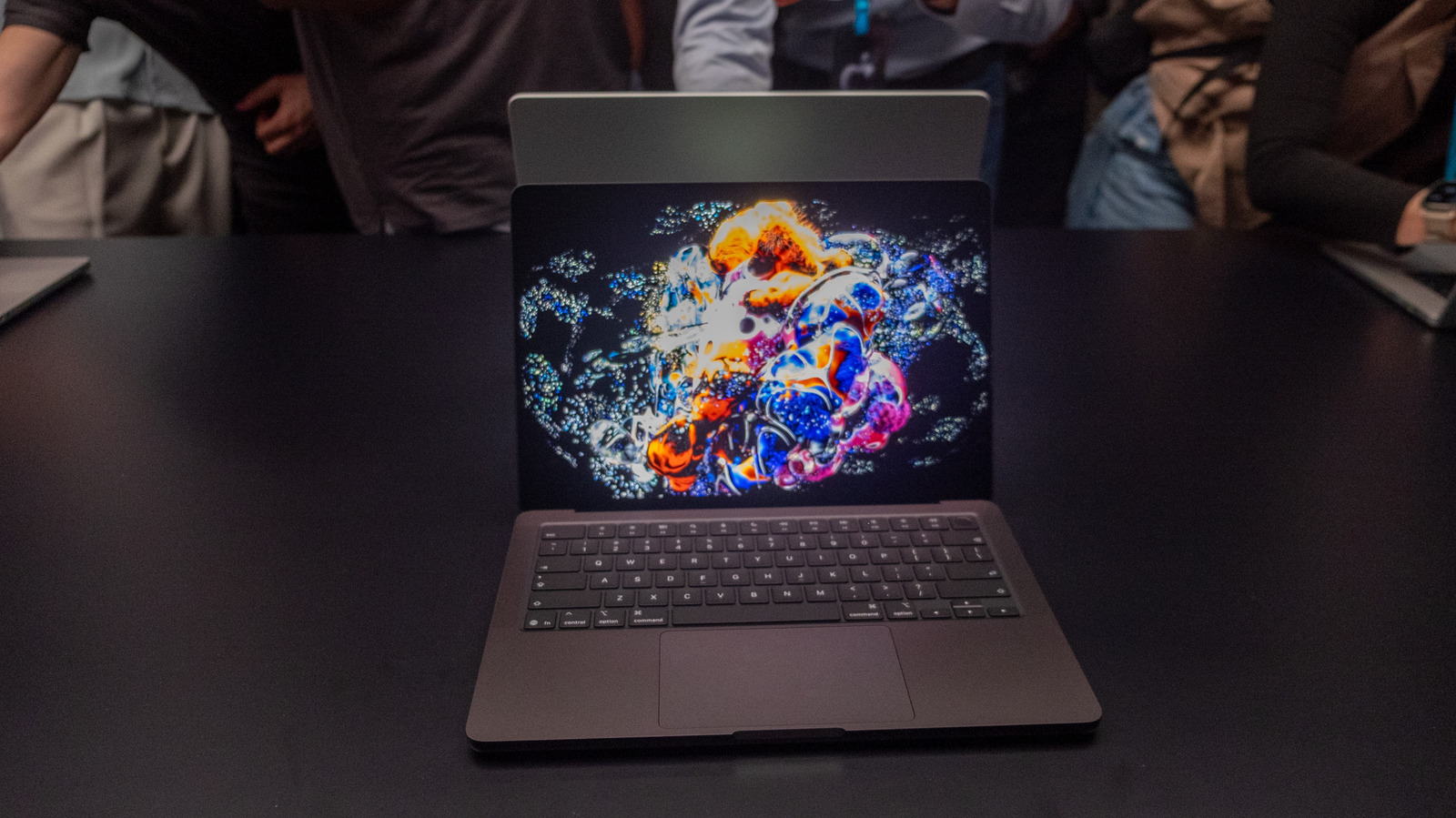
Apple’s First Touchscreen MacBook Pro Feels Both Familiar And Radically Improved

Hello, My name is Adnan Hassan. I am a consulting intern at Marktechpost and soon to be a management trainee at American Express. I am currently pursuing a dual degree at the Indian Institute of Technology, Kharagpur. I am passionate about technology and want to create new products that make a difference.


🔥 Join The AI Startup Newsletter To Learn About Latest AI Startups

Credit: Source link

ShareTweetSendSharePin

Related Posts

Meta Weighs Delaying ‘Alarming’ New Business Terms As Backlash Grows
AI & Technology

Meta Weighs Delaying ‘Alarming’ New Business Terms As Backlash Grows

October 28, 2026
Apple’s First Touchscreen MacBook Pro Feels Both Familiar And Radically Improved
AI & Technology

Apple’s First Touchscreen MacBook Pro Feels Both Familiar And Radically Improved

October 28, 2026
Microsoft Makes Copilot Harness Available Through Foundry – Unite.AI
AI & Technology

Microsoft Makes Copilot Harness Available Through Foundry – Unite.AI

October 28, 2026
NVIDIA Launches Open-Weight Speech Model and 463,062-Hour Audio Dataset – Unite.AI
AI & Technology

NVIDIA Launches Open-Weight Speech Model and 463,062-Hour Audio Dataset – Unite.AI

October 28, 2026
Next Post
‘TODAY’ team answers questions about life on the show

'TODAY' team answers questions about life on the show

Leave a Reply Cancel reply

Your email address will not be published. Required fields are marked *

Search

No Result
View All Result
U.S. Defense Sec. Hegseth heckled by anti-war protesters

U.S. Defense Sec. Hegseth heckled by anti-war protesters

October 25, 2026
Personal Body Guard Robot – What could go wrong?

Personal Body Guard Robot – What could go wrong?

October 22, 2026
Claude Duet Is Anthropic’s Answer To Meta Muse And OpenAI Dots

Claude Duet Is Anthropic’s Answer To Meta Muse And OpenAI Dots

October 21, 2026

About

Learn more

Our Services

Legal

Privacy Policy

Terms of Use

Bloggers

Learn more

Article Links

Contact

Advertise

Ask us anything

©2020- TradePoint.io - All rights reserved!

Tradepoint.io, being just a publishing and technology platform, is not a registered broker-dealer or investment adviser. So we do not provide investment advice. Rather, brokerage services are provided to clients of Tradepoint.io by independent SEC-registered broker-dealers and members of FINRA/SIPC. Every form of investing carries some risk and past performance is not a guarantee of future results. “Tradepoint.io“, “Instant Investing” and “My Trading Tools” are registered trademarks of Apperbuild, LLC.

This website is operated by Apperbuild, LLC. We have no link to any brokerage firm and we do not provide investment advice. Every information and resource we provide is solely for the education of our readers. © 2020 Apperbuild, LLC. All rights reserved.

No Result
View All Result
  • Main
  • AI & Technology
  • Stock Charts
  • Market & News
  • Business
  • Finance Tips
  • Trade Tube
  • Blog
  • Shop

© 2023 - TradePoint.io - All Rights Reserved!