
Richard Drury/DigitalVision via Getty Images
March CPI Report
Earlier today, the Bureau of Labor Statistics released the March consumer price index, showing that inflation has essentially stalled across most sectors of the economy. On a month-over-month basis, inflation rose at 0.4%. When stripping out food and energy, core inflation rose by the same amount. On a year-over-year basis, inflation rose at 3.5%, which was hotter than the past few months, while core inflation rose at 3.8%.
The latest data continues to demonstrate that the drivers of inflation remain very active in our economy, and for the Federal Reserve to cut interest rates at this point would be premature for the 2% core inflation mandate.
Bureau of Labor Statistics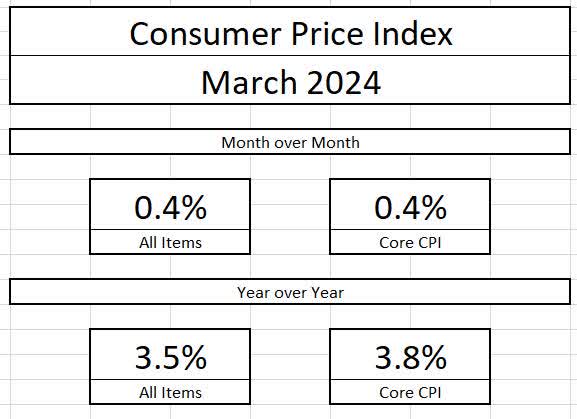
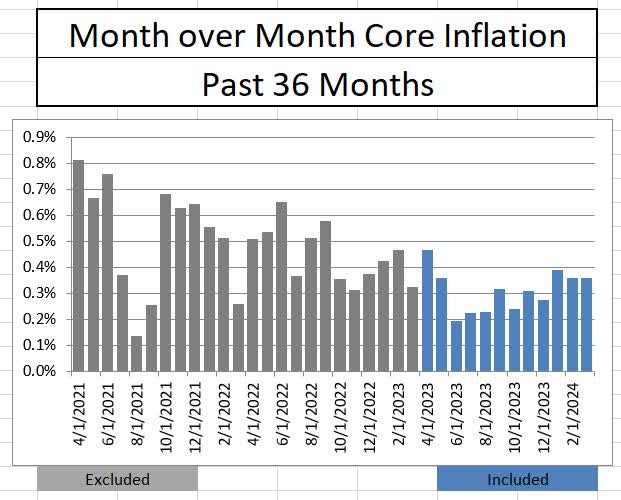
When examining the trends of overall inflation, it has become clear that disinflation has stopped. On a headline basis, the month-over-month increases have risen for four of the last five months, and recent readings are higher than three of the last four monthly reports set to roll off with future reports. The month-over-month core side appears to be a bit more nuanced, with the next two reports set to roll off sizeable price adjustments, but the last three reports have been noticeably higher than the previous seven.
Bureau of Labor Statistics Bureau of Labor Statistics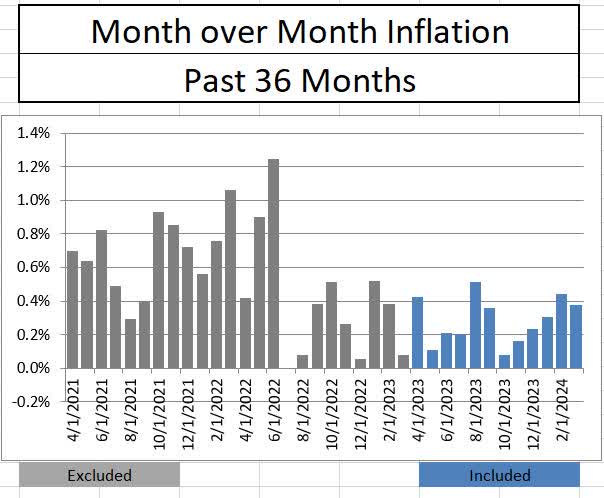
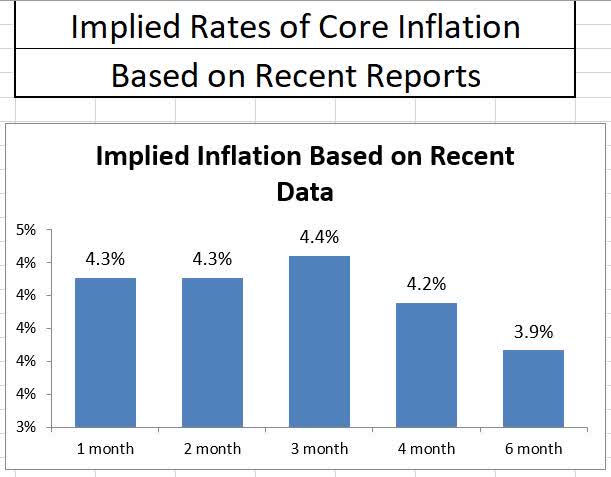
When looking at the year-over-year trends, it is obvious that the Fed has successfully engaged in a disinflationary strategy dating back to the summer of 2022, but the pace of disinflation stopped on core inflation in March and ticked back up on headline inflation. These levels may be better than what we were seeing in 2022 and early 2023, but they continue to be well above the Fed’s mandate of 2% and are not trending on a path to that mandate. Additionally, after reviewing the most recent inflation reports on an annualized basis, we see the recent reports have core inflation holding above 3.5% and possibly ticking above 4%.
Bureau of Labor Statistics Bureau of Labor Statistics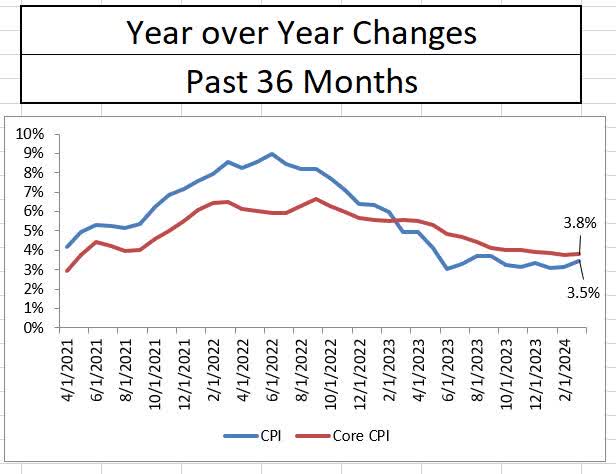
While many economists may point to the ongoing deflation in durable goods as a positive, I believe it highlights the severity of the challenge we face. Durable goods were the leading indicator of inflationary pressures as supply chains strained the economy during the pandemic, but now durable goods prices have dropped for ten straight months and the year over year deflation rate is around 2%.
Yet, the overall inflation remains stubborn despite this progress. Durable goods deflation cannot continue in perpetuity, as it will eventually squeeze profit margins of those companies in this space. If this trend reverses, another headwind will present itself to the 2% target.
Bureau of Labor Statistics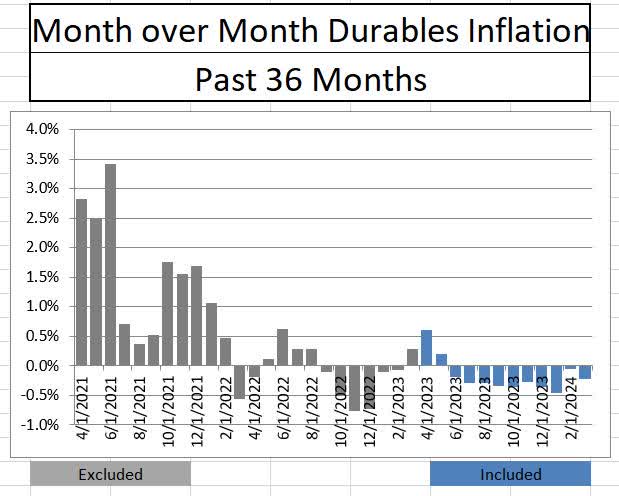
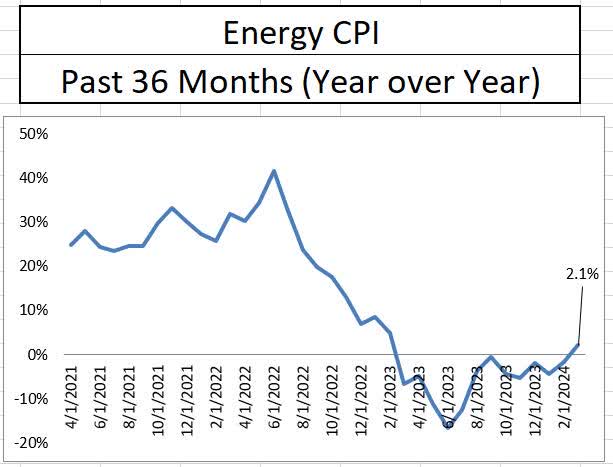
Another inflationary factor that investors need to consider is energy prices. Energy has played an inflationary role in headline inflation over the last two months, and the year-over-year changes have gone above 2% for the first time in more than a year. With crude oil and natural gas prices rising during the first ten days of April, the higher trend can be expected, and it is only a matter of time before this effects elements of core inflation.
Bureau of Labor Statistics Bureau of Labor Statistics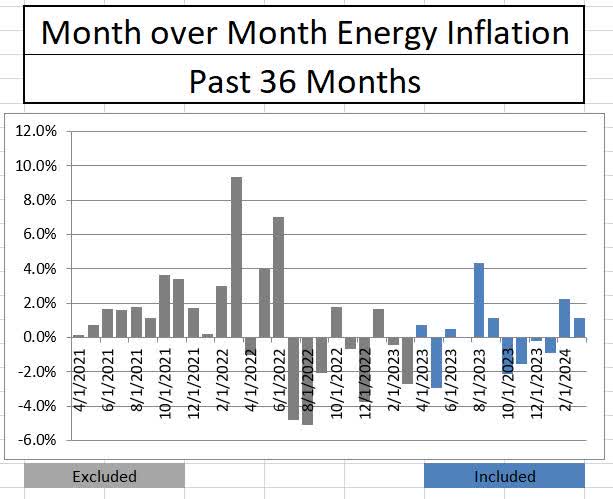
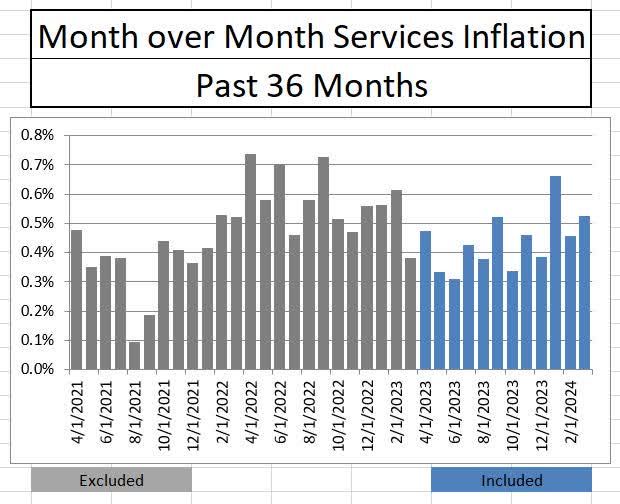
As has been the case over the last year, service sector inflation remains the most stubborn indicator. On a year-over-year basis, service inflation came in at 5.4%, which was higher than February and only 0.1% lower than the level it was at in October/November 2023. On a month-over-month basis, two of the lowest readings on service sector inflation roll off the annual calculation in the next three months, raising the possibility of service sector inflation continuing to reignite higher.
Bureau of Labor Statistics Bureau of Labor Statistics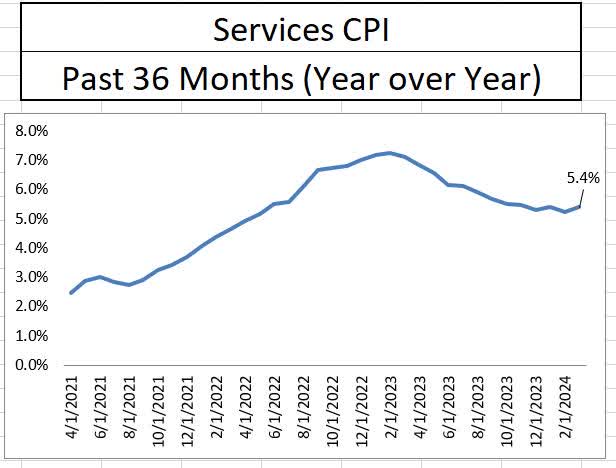
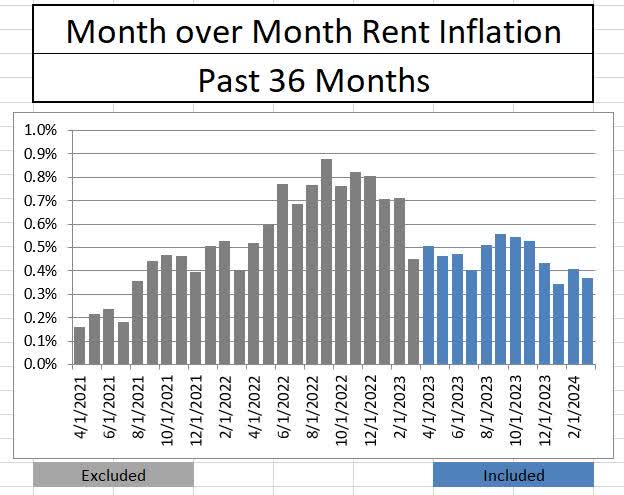
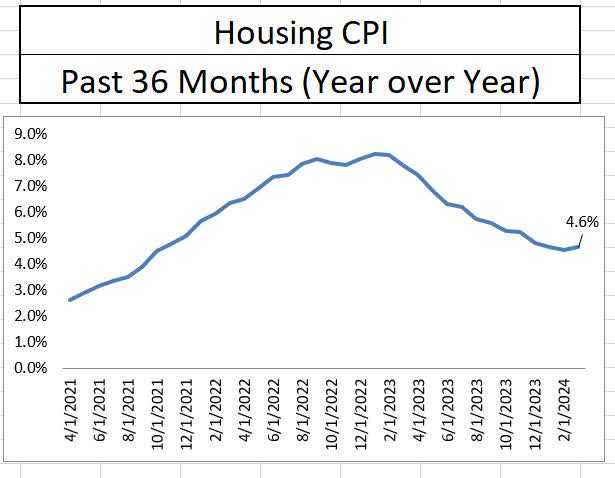
Oddly enough, one of the more promising indicators in March came from rental inflation. While year-over-year rental inflation remains stubbornly high at 5.7%, the disinflationary trajectory continues and the month-over-month data looks promising. Although a path to 2% rental inflation is unlikely, the disinflationary behavior of rents will stop pushing the overall inflation numbers higher. Unfortunately, the same cannot be said for housing inflation, which reversed course and inched higher on a year-over-year basis in March.
Bureau of Labor Statistics Bureau of Labor Statistics Bureau of Labor Statistics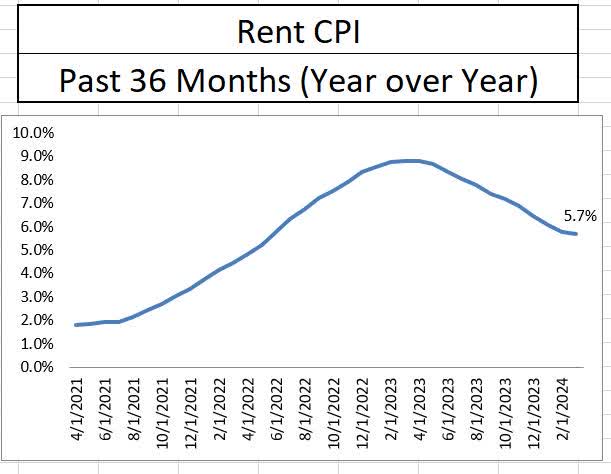
Looking beyond today, several investors have pointed out that the Federal Reserve puts more stock in the monthly personal consumption expenditures data than the consumer price index. While this is true, it is important to note that these two data points have a history of moving together, and recent CPI data has started to separate from the PCE trend, which I don’t think is sustainable. Investors should expect PCE data to also begin stalling and/or reversing course soon.
Bureau of Labor Statistics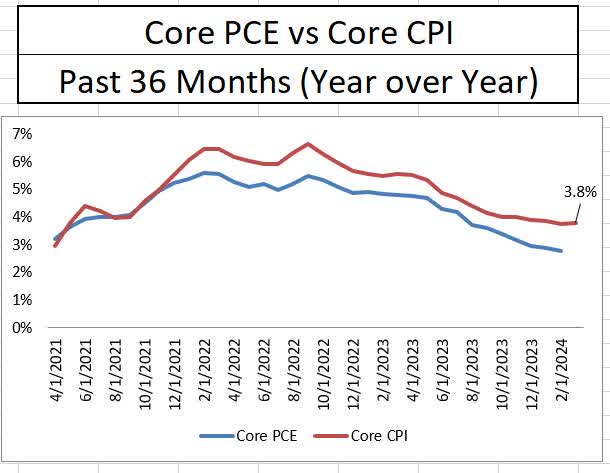
Conclusion
We can beat the “higher for longer” mantra like a dead horse, but as I’ve said in many previous articles covering inflation, employment, and the Fed, there is nothing to suggest that cutting interest rates in the near term would be prudent for price stability. I am expecting the Fed to take the rate cuts off the table in their June economic projections, with the potential for rate hike talk to start if core inflation jumps to over 4%. Investors should expect increased volatility in equities and higher Treasury rates to continue for at least the next few weeks.
Credit: Source link