

Chesky_W
Thesis
MicroVision Inc. (NASDAQ:MVIS) has emerged as a significant player in the LiDAR market, innovating and expanding its product portfolio to secure its place in this highly competitive market. The acquisition of Ibeo Automotive Systems and the development of novel sensor technologies such as MOVIA and MAVIN demonstrates the company’s commitment to addressing the diverse needs of autonomous and semi-autonomous vehicles. Despite the challenges posed by high technology costs, adverse weather conditions, and intense competition, MicroVision’s focused research and development efforts show promise for achieving robust revenue growth. However, the stock is trading at elevated levels and is best to wait for better buying opportunities.
Introduction
MicroVision, a company with over 350 employees and offices in Redmond, Detroit, Hamburg, and Nuremberg, is a pioneer in laser beam scanning technology. The company integrates lasers, optics, hardware, algorithms, and machine learning software into proprietary technology to address existing and emerging markets. MicroVision develops automotive lidar sensors and provides solutions for advanced driver-assistance systems (ADAS), autonomous vehicles, and non-automotive applications. They leverage their experience building augmented reality microdisplay engines, interactive display modules, and consumer lidar components. Its products include MAVIN™ with Perception, MOVIA™ Lidar Sensor, and MOSAIK Suite™. Additionally, the stock has skyrocketed and is up over 180% in the last month.
Google Finance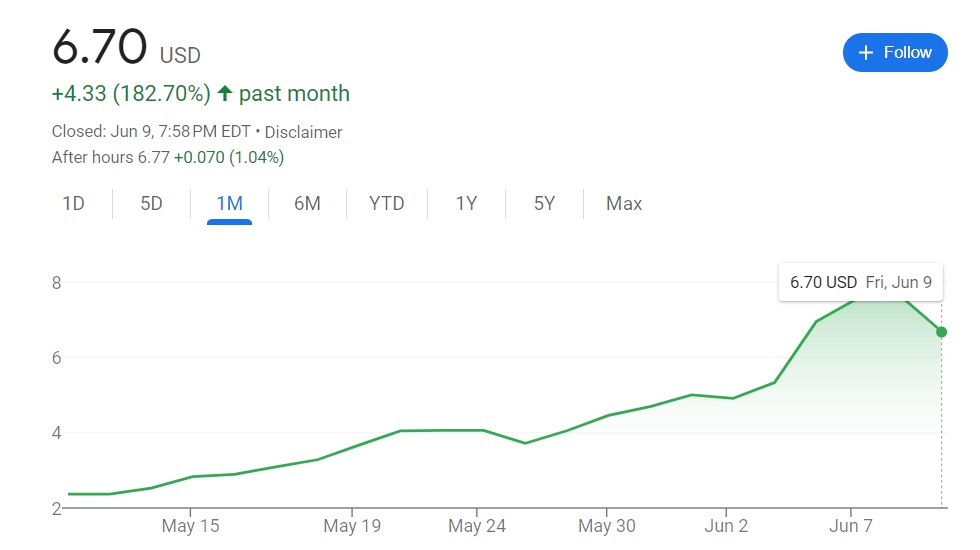
LiDAR Industry Analysis
MicroVision Inc. operates within the automotive LiDAR industry, a critical element in the autonomous and semi-autonomous vehicle market. The global automotive LiDAR market is projected to grow at a CAGR of 28.5%, reaching around USD 4.5 billion by 2030. This growth is fueled by the rising demand for semi-autonomous and fully autonomous vehicles and the increased adoption of automotive safety features.
Projected automotive LiDAR Market (Precedence Research)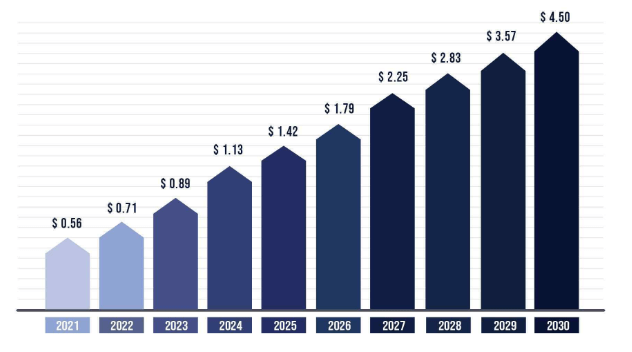
Government regulations mandating specific safety systems in vehicles, such as Automatic Emergency Braking Systems, are also contributing to market growth. However, the high cost of LiDAR technology remains a barrier to its widespread adoption. As a result, manufacturers are investing in the development of cost-effective automotive safety devices. Despite the promising growth prospects, the industry faces some challenges such as the high price of automotive LiDAR and inaccurate outputs in adverse weather conditions.
Growth Prospects
Back in December, MicroVision announced its acquisition of Ibeo Automotive Systems for $15 million. This acquisition expands MicroVision’s product portfolio and strengthens its position in the automotive LiDAR market. The integration of Ibeo’s assets and the expansion of customer engagements for the new product portfolio are progressing well, positioning the company to achieve its business milestones.
In the Q1 2023 earnings call, MicroVision reported that it remains on target for full-year revenues in the range of $10 million to $15 million from its expanded product portfolio. As such, MicroVision has been making significant strides in its product offerings, particularly with its LiDAR hardware. The company has seen positive momentum in sales for the combined company, which includes direct sales and royalties from LiDAR hardware and non-automotive OEM sales. The company is on track to bring to market an industrialized product based on its MOVIA technology to address various channels with a more cost-competitive industrial solution.
MOVIA is a LiDAR sensor technology developed by MicroVision. It is small, light, robust, and suitable for industrial applications. MOVIA, developed according to automotive-grade standards, is a reliable sensor for versatile use cases such as agriculture, logistics, mining, and nautic. It has no moving parts and provides 4D output, including a point cloud and intensity image. It is also protected from environmental influences, making it a robust solution for various industries.
MicroVision is also engaged with OEMs for technology and partnership review for sensors targeted for roofline and behind-windshield integration for its MAVIN dynamic-view LiDAR and in-body integration for MOVIA sensors. MAVIN is another LiDAR system developed by MicroVision, which includes dynamic range lidar (MAVIN DR), short range (MAVIN SR), medium range (MAVIN MR), and long-range (MAVIN LR). This system enables new ADAS safety features, addressing the need to see farther, with greater clarity, and to respond faster to emerging situations. MAVIN DR is the first to offer a dynamic range, combining short-, medium-, and long-range sensing and fields of view into one form factor. This new sensor produces an ultra-high-resolution point cloud showing drivable and non-drivable areas of the road ahead.
Additionally, the company is making major strides in Europe and expects a new office there by year-end. The company is also planning on growing its North American team and teams across Asia-Pacific regions, highlighting its commitment to long-term growth.
The company remains on target for its 2023 milestone of OEM partnerships. However, the real test will be in MicroVision’s ability to effectively market and sell these innovative products, and how these technologies will be received and adopted in the market.
Financial Overview and Valuation
Let’s talk about the numbers. MicroVision is a small $1.35 billion company that is struggling to stay profitable. Its revenue has been on a constant decline over the past 5 years dropping from 17.61 million in 2018 all the way down to a measly 0.7 million in 2022. However, this trend is expected to completely reverse in the coming years with revenue expected to soar up to over $132 million by 2024. This would represent two consecutive years of over 1000% plus revenue growth.
Revenue (TIKR Terminal)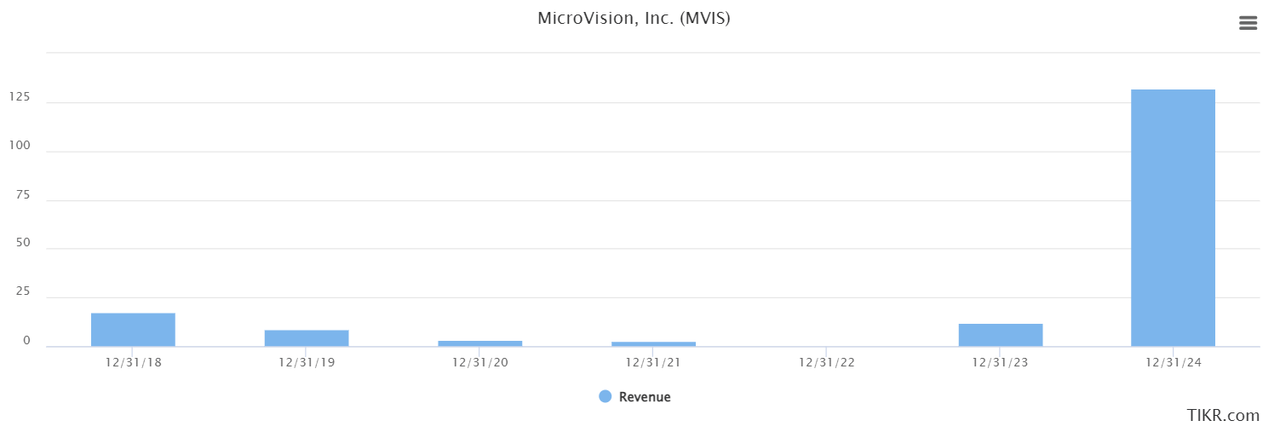
However, its EPS is still expected to be negative by the end of 2024, which makes sense since explosive revenue growth in the short term will definitely come with dropping margins. This may be worrying to many investors since the company has been in business for so long and is still struggling to be profitable. I see it more as a sign of a step in the right direction and this demonstrates the huge potential MVIS has.
As the demand for its products will continue to soar, its margins will follow. The main reason for the negative EPS is the massive spending on R&D, which is a great investment for a company that is struggling. Generally, increased spending on R&D actually has a positive correlation with price, which should definitely get investors excited. On another note, MicroVision’s R&D as a percentage of revenue is sure to slow down as the company begins to see success, leading to positive EPS values.
MicroVision 10-Q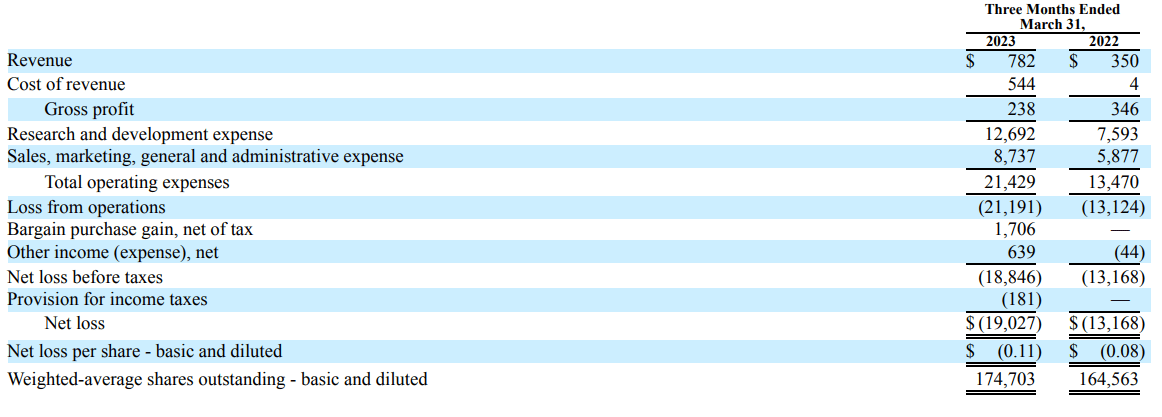
At first glance, it may seem that MicroVision is overvalued with a ridiculous EV/Sales of 1,184.86. which is way above its 5-year average of 251.46. However, we need to look at forward-looking metrics given that MicroVision’s sales are expected to boom over the next couple of years. Its forward EV/Sales sit at 108.22, which may still seem very high but is down over 43% from its 5-year average of 190.42. This means that if we consider next year’s growth, MVIS is trading at a discount to what it usually trades for. It’s important to compare these metrics with the company’s past values since hyper-growth stocks like this tend to have absurd numbers that can’t truly be compared to more established companies.
MVIS isn’t trading at a terrible level, especially considering the recent soar in share price which may be due to a short squeeze. MVIS is a heavily shorted stock, with short shares making up about 27% of the company’s total float. The theory that the recent rally is a short squeeze in disguise is plausible given these circumstances. However, the fact that so many shores are shorted should not be too discouraging since major companies are betting big on the stock with Blackrock and Vanguard owning over 12% of the company combined. As such, this recent squeeze is likely to fizzle out soon and it may be better to wait for a 10-15% pullback for a better entry.
Risks
One of the significant risks for MicroVision is its acquisition of Ibeo Automotive Systems. This acquisition, while expanding MicroVision’s product portfolio, also necessitates a significant cash infusion, which could strain the company’s resources. The company has already spent $76 million of the $126 million it raised in 2021, and at the current cash burn rates, its liquidity could run out by 2025.
Another risk is the increased competition from Mobileye’s in-house lidar systems. Mobileye, with its strong revenue base, has been able to outspend MicroVision in research and development, making it a dominant player in the lidar supplier market. This competition has put pressure on MicroVision, which is already grappling with a wide product suite and limited cash resources.
ESG
MicroVision has been rated as a low ESG risk by Sustainalytics. With an ESG Risk Rating of 19.5, MicroVision ranks 340 out of 653 in the Technology Hardware industry group. They are in the middle of the pack with tons of room for improvement. This rating is based on the company’s exposure to material ESG issues and how well it manages these risks.
Sustainalytics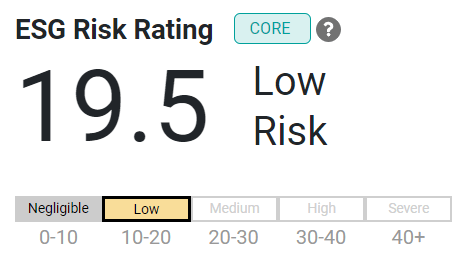
On the other hand, the company’s management of ESG material risk is rated as weak. This suggests that while the company’s exposure to ESG risks is low, there is room for improvement in how it manages these risks.
Conclusion
MicroVision Inc. has shown promise in the LiDAR market with its innovative product portfolio and strategic acquisitions. The company’s focused R&D efforts and recent developments position it for potential robust revenue growth. However, the stock’s current price suggests that investors should exercise caution and wait for more favorable buying opportunities. The company’s future success hinges on its ability to manage the risks associated with its recent acquisition, intense competition, and the high cost of LiDAR technology. Despite these challenges, MicroVision’s commitment to innovation and strategic growth initiatives could pave the way for its success in the burgeoning automotive LiDAR industry. Investors should keep a close eye on this company and wait for better buying opportunities for this company with huge potential.
Analyst recommendation by: Vayun Chugh
Credit: Source link