• bitcoinBitcoin(BTC)$81,833.001.56%
  • ethereumEthereum(ETH)$2,646.902.81%
  • tetherTether(USDT)$1.000.01%
  • binancecoinBNB(BNB)$769.031.84%
  • rippleXRP(XRP)$1.444.44%
  • usd-coinUSDC(USDC)$1.000.01%
  • solanaSolana(SOL)$111.851.39%
  • tronTRON(TRX)$0.338048-0.33%
  • zcashZcash(ZEC)$1,526.203.28%
  • Figure HelocFigure Heloc(FIGR_HELOC)$1.030.20%
  • HyperliquidHyperliquid(HYPE)$92.951.93%
  • dogecoinDogecoin(DOGE)$0.0890572.26%
  • moneroMonero(XMR)$571.501.34%
  • whitebitWhiteBIT Coin(WBT)$83.471.03%
  • RainRain(RAIN)$0.0139457.29%
  • USDSUSDS(USDS)$1.00-0.02%
  • chainlinkChainlink(LINK)$12.603.85%
  • cardanoCardano(ADA)$0.2274984.07%
  • leo-tokenLEO Token(LEO)$8.940.85%
  • stellarStellar(XLM)$0.1985394.11%
  • uniswapUniswap(UNI)$8.911.72%
  • bitcoin-cashBitcoin Cash(BCH)$256.041.77%
  • Ethena USDeEthena USDe(USDE)$1.000.00%
  • nearNEAR Protocol(NEAR)$3.58-3.34%
  • daiDai(DAI)$1.000.00%
  • litecoinLitecoin(LTC)$58.123.93%
  • CantonCanton(CC)$0.1115582.97%
  • USD1USD1(USD1)$1.000.02%
  • avalanche-2Avalanche(AVAX)$9.4016.21%
  • the-open-networkGram (prev. Toncoin)(GRAM)$1.391.49%
  • hedera-hashgraphHedera(HBAR)$0.0812713.42%
  • suiSui(SUI)$0.845.27%
  • Global DollarGlobal Dollar(USDG)$1.00-0.02%
  • shiba-inuShiba Inu(SHIB)$0.0000060.85%
  • BittensorBittensor(TAO)$270.688.11%
  • crypto-com-chainCronos(CRO)$0.0599941.14%
  • MemeCoreMemeCore(M)$1.29-3.95%
  • paypal-usdPayPal USD(PYUSD)$1.00-0.01%
  • tether-goldTether Gold(XAUT)$4,373.750.40%
  • okbOKB(OKB)$120.664.61%
  • Circle USYCCircle USYC(USYC)$1.140.00%
  • Ripple USDRipple USD(RLUSD)$1.00-0.01%
  • BlackRock USD Institutional Digital Liquidity FundBlackRock USD Institutional Digital Liquidity Fund(BUIDL)$1.000.00%
  • Ondo US Dollar YieldOndo US Dollar Yield(USDY)$1.14-0.28%
  • aaveAave(AAVE)$142.893.60%
  • OndoOndo(ONDO)$0.43436810.15%
  • mantleMantle(MNT)$0.636.07%
  • AsterAster(ASTER)$0.771.76%
  • EthenaEthena(ENA)$0.19884620.71%
  • Pump.funPump.fun(PUMP)$0.004123-3.98%
TradePoint.io
  • Main
  • AI & Technology
  • Stock Charts
  • Market & News
  • Business
  • Finance Tips
  • Trade Tube
  • Blog
  • Shop
No Result
View All Result
TradePoint.io
No Result
View All Result

Machine Learning Revolutionizes Path Loss Modeling with Simplified Features

May 19, 2024
in AI & Technology
Reading Time: 5 mins read
A A
Machine Learning Revolutionizes Path Loss Modeling with Simplified Features
ShareShareShareShareShare

Accurate propagation modeling is paramount for effective radio deployments, coverage analysis, and interference mitigation in wireless communications. Path loss modeling, a widely adopted approach, enables generic predictions of signal power attenuation along wireless links, equipping network planners with essential insights into physical layer attributes. However, in non-line-of-sight (NLOS) scenarios, traditional models like Longley-Rice and free space path loss (FSPL) exhibit degraded accuracy due to their inability to account for signal attenuation and interference caused by electromagnetic interactions with terrain and clutter.

Conventional models require intricate knowledge of the entire path profile, including the complete spatial variation of terrain (DTM) and surface (DSM) data, effectively treating it as a one-dimensional problem. Alternatively, some models utilize thousands of features in two-dimensional (2D) and three-dimensional (3D) representations of terrain and clutter, performing point-to-multi-point predictions.

In this paper, researchers (Jonathan Ethier and Mathieu) have tried to answer a crucial question: “Can simple features derived from path profiles be used as the sole input to a predictor of path loss along a wireless link while still providing sufficient accuracy for predicting radio coverage?” To answer the question, they have employed

  1. Machine learning (ML)-based modeling, comparing it against traditional approaches, and 
  2. Emphasized the use of measurement data for training to ensure reliable ground truth.

Researchers leveraged the openly available ITU-R UK Ofcom drive test dataset for training and testing, consisting of measurements across various frequencies and geographically distinct sites. This dataset, comprising over 8.2 million measurements, served as the foundation for their work. Additionally, they utilized online databases of DTM and DSM to extract path profiles and derive features such as total obstacle depth along the direct path, terrain depth, and clutter depth.

The researchers explored three feature configurations:

  1. Frequency and link distance
  2. Frequency, link distance, and obstacle depth
  3. Frequency, link distance, terrain depth, and clutter depth

These features were used as inputs to three different modeling techniques: curve-fit log regression, boosted trees (XGBoost), and fully-connected neural networks (FCNs).

To ensure robustness and avoid overfitting, the researchers employed a stringent round-robin approach, training the models on five cities and testing on the sixth, repeating this process six times. This minimized geographic adjacency and data leakage, providing a rigorous evaluation of model generalization.

The results revealed that the FCN model outperformed boosted trees and log regression, including more features leading to lower root mean squared errors (RMSEs). Introducing obstacle depth as a third feature significantly improved performance, reducing the RMSE by approximately 5 dB. However, separating obstacle depth into terrain and clutter depths yielded little improvements, potentially due to temporal mismatches between measurements and geospatial information.

Further analysis of the obstacle loss (the difference between the ML-predicted path loss and FSPL) revealed that the FCN model learned behaviors grounded in physics, with obstacle loss increasing as expected with increasing frequency and obstacle depth. However, limitations were observed, such as the influence of link distance on obstacle loss and non-zero obstacle loss for zero obstacle depth, which the researchers aim to address in future work.

The researchers demonstrated that simple scalar features describing terrain and clutter can be used to train accurate ML-based propagation models, yielding well-generalized models with RMSEs in the 6-8 dB range. This approach outperforms traditional models while relying on significantly fewer features than models using high-resolution imagery and detailed path profiles.

The implications of this work are far-reaching, as it paves the way for more efficient and accurate propagation modeling, ultimately enhancing wireless network planning, deployment, and optimization. By leveraging the power of machine learning and simplified features, the researchers have ushered in a new era of path loss modeling, revolutionizing the field and opening doors for future advancements.


Check out the Paper. All credit for this research goes to the researchers of this project. Also, don’t forget to follow us on Twitter. Join our Telegram Channel, Discord Channel, and LinkedIn Group.

If you like our work, you will love our newsletter..

Don’t Forget to join our 42k+ ML SubReddit


YOU MAY ALSO LIKE

How To Block And Unblock A Number On Your Android Phone

Google Gemini Also Escaped Its Testing Environment And Hacked Three Companies

Vineet Kumar is a consulting intern at MarktechPost. He is currently pursuing his BS from the Indian Institute of Technology(IIT), Kanpur. He is a Machine Learning enthusiast. He is passionate about research and the latest advancements in Deep Learning, Computer Vision, and related fields.


🐝 Join the Fastest Growing AI Research Newsletter Read by Researchers from Google + NVIDIA + Meta + Stanford + MIT + Microsoft and many others…


Credit: Source link

ShareTweetSendSharePin

Related Posts

How To Block And Unblock A Number On Your Android Phone
AI & Technology

How To Block And Unblock A Number On Your Android Phone

September 19, 2026
Google Gemini Also Escaped Its Testing Environment And Hacked Three Companies
AI & Technology

Google Gemini Also Escaped Its Testing Environment And Hacked Three Companies

September 19, 2026
What Is AI Agent Memory? Short-Term, Long-Term, Episodic, and Semantic Memory Explained – Unite.AI
AI & Technology

What Is AI Agent Memory? Short-Term, Long-Term, Episodic, and Semantic Memory Explained – Unite.AI

September 19, 2026
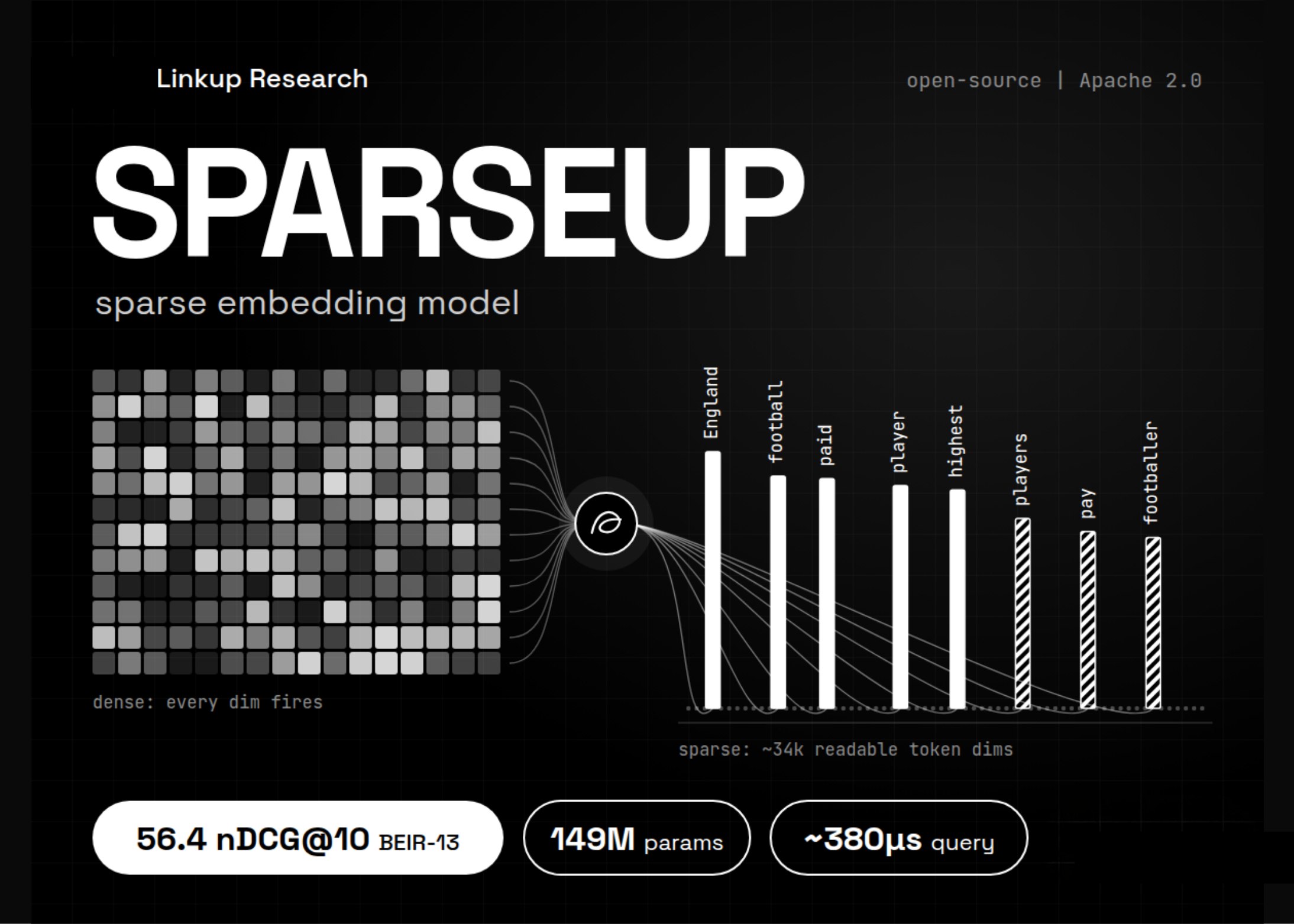
Linkup Research Releases SPARSEUP: A 149M-Parameter Open-Source Sparse Embedding Model
AI & Technology

Linkup Research Releases SPARSEUP: A 149M-Parameter Open-Source Sparse Embedding Model

September 19, 2026
Next Post
Researchers from Columbia University and Databricks Conducted a Comparative Study of LoRA and Full Finetuning in Large Language Models

Researchers from Columbia University and Databricks Conducted a Comparative Study of LoRA and Full Finetuning in Large Language Models

Leave a Reply Cancel reply

Your email address will not be published. Required fields are marked *

Search

No Result
View All Result
Sheeran’s tour chaos: What to know as Macklemore pledges M in Palestinian aid – The Washington Post

Sheeran’s tour chaos: What to know as Macklemore pledges $1M in Palestinian aid – The Washington Post

September 17, 2026
Retired FDNY medical officer on impacts of 9/11-related illnesses

Retired FDNY medical officer on impacts of 9/11-related illnesses

September 13, 2026
Suspect identified in Minneapolis shooting

Suspect identified in Minneapolis shooting

September 18, 2026

About

Learn more

Our Services

Legal

Privacy Policy

Terms of Use

Bloggers

Learn more

Article Links

Contact

Advertise

Ask us anything

©2020- TradePoint.io - All rights reserved!

Tradepoint.io, being just a publishing and technology platform, is not a registered broker-dealer or investment adviser. So we do not provide investment advice. Rather, brokerage services are provided to clients of Tradepoint.io by independent SEC-registered broker-dealers and members of FINRA/SIPC. Every form of investing carries some risk and past performance is not a guarantee of future results. “Tradepoint.io“, “Instant Investing” and “My Trading Tools” are registered trademarks of Apperbuild, LLC.

This website is operated by Apperbuild, LLC. We have no link to any brokerage firm and we do not provide investment advice. Every information and resource we provide is solely for the education of our readers. © 2020 Apperbuild, LLC. All rights reserved.

No Result
View All Result
  • Main
  • AI & Technology
  • Stock Charts
  • Market & News
  • Business
  • Finance Tips
  • Trade Tube
  • Blog
  • Shop

© 2023 - TradePoint.io - All Rights Reserved!