

AvigatorPhotographer/iStock via Getty Images
Boutique Operator
Kandi Technologies Group, Inc. (NASDAQ:KNDI) is a boutique, stand-alone, designer, manufacturer, and seller of low-priced and compact on-road and off-road electric vehicles (“EVs”), batteries, and power motors, and battery exchange equipment. The market cap is about $276M, small in comparison to behemoth vehicle manufacturers producing similar products.
In our 2020 article for Seeking Alpha, Kandi Technologies Is Not A Sweet Deal, we suggested Kandi deserved a Sell rating. The stock suffered a host of organic risks and changes in China’s tax policies and EV subsidies. The company later announced a transformed business plan. We believe the stock still harbors too much risk and inadequate potential for retail value investors. We assess the stock at this time as a Sell; perhaps it is a Hold for those with high-risk tolerance who are not interested in a dividend.
Changing Business Plan
A decade ago, Kandi signed strategic partnership agreements with Chinese EV and electric bike manufacturers and ride-sharing companies. Kandi was intending to produce products for them. By 2020, Kandi had announced it was selling EVs in the U.S. Kandi’s shares skyrocketed from $3.28 to $9.76 that year.
It acquired a battery technology company, went on to build longer-range cars, and SUVs with cargo space, and bought and partnered with car distributors in the U.S. and China. Kandi was ramping up production and revenue grew. But losses and debt piled up.
Income Evolution (marketscreener.com)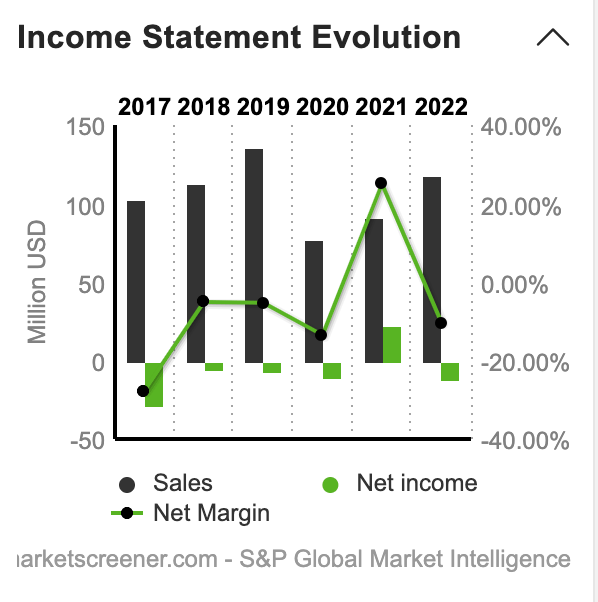
Over the last 3 years, the company broke from its past business plan and some agreements. It now aims for sales in the low-end price market akin to the 1950s Beetle, a “people’s car,” building on innovation and economics.
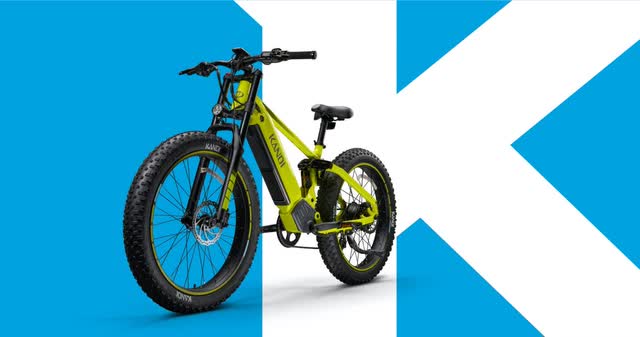
Kandi’s task is to build an identity and brand in China and North America based on SMALL and CHEAP. Kandi America primarily sells, if consumers can locate a dealer or retail outlet, electric recreational vehicles, and equipment. The off-road K-32 MSRP is $27,999, the go-cart is +$3K, and the electric bike is about $2,100. Here are some samples:
Off-Road Kandi EV (Kandi Technologies) All-Electric Vehicles (Kandi Technologies)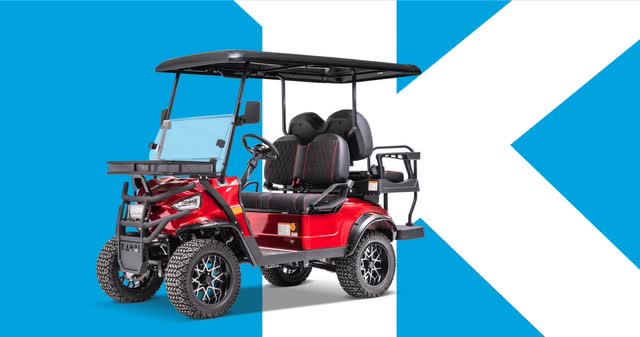

Go-cart (Kandi Technologies) Kandi E-bike (Kandi Technologies)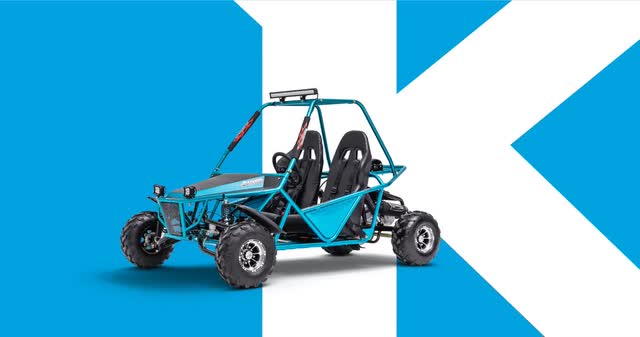
Last month, Kandi Technologies announced its two new models (top picture) of its next generation, all-electric crossover vehicles will begin mass production in China. The highlighted feature is the reduced need for frequent charging. Management does not yet offer sales and earnings forecasts for the new vehicles.
Turnaround Numbers
The turnaround was first reflected in Q1 ’23 numbers reported on May 10 ’23. Though revenue was down slightly Y/Y, off-road vehicles, and parts sales reportedly increased 94% over Q1 ’22. There were better margins and an uptick in net income. Change management is starting to pay off.
In the second quarter, it became apparent Kandi Technologies does not have a fortune, but the company appears to be financially stable. The total debt issued is $33.6M. Cash, receivables, and equivalents are at $213M. The Enterprise Value is $123.36M. Cash from operations began improving.
When the CEO released Q2 ’23 financial results, he attributed the improved revenue and earnings to the company’s transformation. Gross margin popped in Q2 from increased sales of golf carts. Net income was $4.4M compared to a loss of nearly $2M in Q2 ’22. The net EPS was $0.06 in Q2 ’23 versus -$0.02 in the second quarter the year before.
The success of our all-electric off-road vehicles is the driving force behind our sales recovery and return to profitability. We see immense potential in the US off-road vehicle market, and we are dedicated to expanding our product offerings to meet the evolving demands of our customers.
Second Quarter Report (Globenewswire.com)
The good news from Q1 and Q2 is reflected in the climbing share price. From November ’22 into March ’23, shares hovered in the mid-$2 range. Then the price moved up in anticipation of the improving quarterly financial reports. In June, it hit $4.27; after the good news was released the share price slipped to close at $3.49 nearing the end of September. The shares are up +66% over the last 12 months and ~50% YTD. However, keep in mind the price is -38% over the last 5 years and the Beta during those years hit 1.85.
Risks
The current downsides are worrisome. Operating expenses went from $9M to $14M Y/Y primarily for marketing, higher SG&A costs, and “increased stock-based compensation.” The EPS is slim and perhaps fragile, in our opinion. The next earnings report is scheduled for November 14, 2023.
Other downsides for retail value investors include the light trading daily average is a mere ~120K shares, no dividend is being paid, a dearth of analysts and media covering the stock, ROE is -1.21% and asset growth is -5.5%.
It is going to take a small fortune to build the identity and brand of Kandi, though the name admittedly has significant appeal in English. Kandi does not fall among the top 10 e-bike manufacturers and sellers in China where the market is valued at +$16B and growing a CAGR of nearly 12% annually. Kandi is also going to face competition for the off-road vehicle business. Kandi’s attraction is its all-electric vehicle is about $10K less expensive than the cheapest model among competitors:
Prices of Off-road EVs (Evtopspeed.com)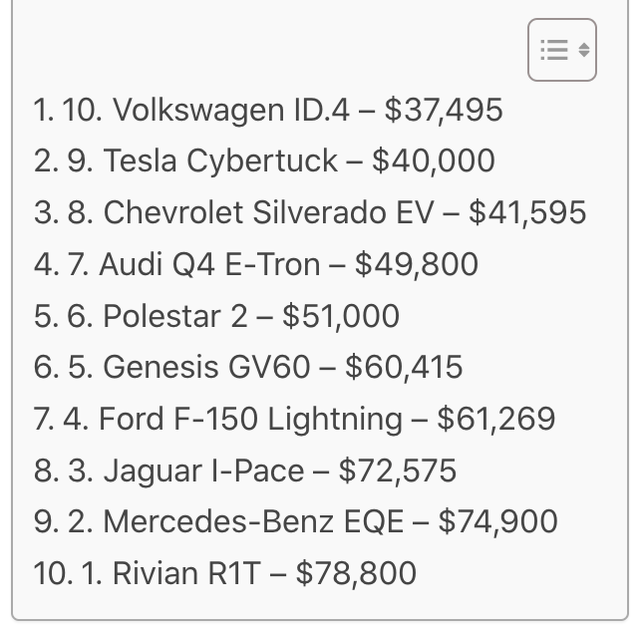
Takeaway
If the company is going to succeed, management might want to pattern its marketing on the Bug. That was the first car to sell 20M units in a year. But this is not 1959. Kandi management has lessons to learn:
- The Beetle with its small engine, cramped interior, and barely heated by an engine in the boot, was a cheap (~$1500) German-made car selling into a nationalistic U.S. market dominated by expensive “big boats,” promoting fins, leather interiors, style, and horsepower.
- In 2023, reshoring manufacturing is the watchword coupled with (trade) war drums sounding between the U.S. and China.
- In 2023, Kandi cars speak to consumer interests. Auto sales are up. Inflation in auto prices, operating costs of the vehicles, and high interest rates are of concern to car buyers. They factor these costs into their decisions. Buyers might be willing to switch to cheaper EVs made in China.
Olen Rice, the President of Kandi America, subsidiary Northern Group, told one media outlet that the company has experienced double-digit growth, but he did not provide numbers. They market products in the farm and home channel, over America’s largest online outlet, and through other retail placements. Where is the company on social media marketing?
Rice claims “Our tagline ‘Electric Innovation’ reflects our commitment to building a brand based on innovation, high quality, and value.” It seems to us the wrong message.
Kandi Tech Customer Markets (Csimarket.com)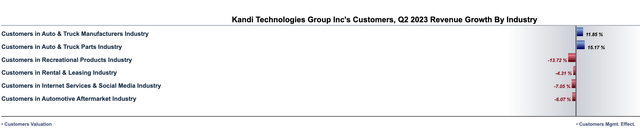
Kandi Technologies Group, Inc. might be a potential opportunity if consumers buy on price; 66% of car buyers consider environmental impact before purchasing a vehicle. These matters work in the company’s favor, but the risks for retail value investors are high. We assess the stock at this time as a Sell or perhaps a Hold.
Credit: Source link