


























• bitcoinBitcoin(BTC)$83,693.000.32%
  • ethereumEthereum(ETH)$2,512.40-0.12%
  • tetherTether(USDT)$1.000.01%
  • binancecoinBNB(BNB)$745.170.04%
  • rippleXRP(XRP)$1.370.47%
  • usd-coinUSDC(USDC)$1.000.00%
  • solanaSolana(SOL)$107.96-0.12%
  • tronTRON(TRX)$0.3308900.34%
  • Figure HelocFigure Heloc(FIGR_HELOC)$1.03-3.58%
  • zcashZcash(ZEC)$1,267.504.05%
  • HyperliquidHyperliquid(HYPE)$82.30-0.45%
  • dogecoinDogecoin(DOGE)$0.0850170.47%
  • moneroMonero(XMR)$555.374.64%
  • USDSUSDS(USDS)$1.000.00%
  • chainlinkChainlink(LINK)$13.020.53%
  • whitebitWhiteBIT Coin(WBT)$82.180.25%
  • cardanoCardano(ADA)$0.237001-0.41%
  • leo-tokenLEO Token(LEO)$9.001.08%
  • BitwayBitway(BTW)$2.6044.80%
  • RainRain(RAIN)$0.009874-1.05%
  • nearNEAR Protocol(NEAR)$5.12-4.26%
  • stellarStellar(XLM)$0.190678-1.27%
  • bitcoin-cashBitcoin Cash(BCH)$280.093.03%
  • CantonCanton(CC)$0.1250380.78%
  • litecoinLitecoin(LTC)$62.130.26%
  • Ethena USDeEthena USDe(USDE)$1.000.03%
  • uniswapUniswap(UNI)$7.471.89%
  • avalanche-2Avalanche(AVAX)$10.30-2.14%
  • daiDai(DAI)$1.000.01%
  • suiSui(SUI)$1.060.18%
  • USD1USD1(USD1)$1.000.01%
  • the-open-networkGram (prev. Toncoin)(GRAM)$1.38-0.44%
  • hedera-hashgraphHedera(HBAR)$0.087149-0.80%
  • tether-goldTether Gold(XAUT)$4,160.00-0.62%
  • BittensorBittensor(TAO)$281.880.71%
  • quant-networkQuant(QNT)$214.55-5.99%
  • Global DollarGlobal Dollar(USDG)$1.00-0.01%
  • shiba-inuShiba Inu(SHIB)$0.000005-0.90%
  • crypto-com-chainCronos(CRO)$0.0601160.77%
  • paypal-usdPayPal USD(PYUSD)$1.000.01%
  • EthenaEthena(ENA)$0.212019-0.38%
  • okbOKB(OKB)$122.95-0.17%
  • aaveAave(AAVE)$162.371.52%
  • Ripple USDRipple USD(RLUSD)$1.000.00%
  • Circle USYCCircle USYC(USYC)$1.140.01%
  • Pump.funPump.fun(PUMP)$0.005065-0.35%
  • Ondo US Dollar YieldOndo US Dollar Yield(USDY)$1.15-0.01%
  • OndoOndo(ONDO)$0.471269-2.93%
  • BlackRock USD Institutional Digital Liquidity FundBlackRock USD Institutional Digital Liquidity Fund(BUIDL)$1.000.00%
  • polkadotPolkadot(DOT)$1.17-1.30%
TradePoint.io
  • Main
  • AI & Technology
  • Stock Charts
  • Market & News
  • Business
  • Finance Tips
  • Trade Tube
  • Blog
  • Shop
No Result
View All Result
TradePoint.io
No Result
View All Result

Is Mini DisplayPort Becoming Obsolete?

October 13, 2026
in AI & Technology
Reading Time: 4 mins read
A A
Is Mini DisplayPort Becoming Obsolete?
ShareShareShareShareShare

How Thunderbolt and USB-C replaced the need for a dedicated video port.


Barry Paterson/Shutterstock

We may receive a commission on purchases made from links.

YOU MAY ALSO LIKE

Google DeepMind and GovTech Unveil On-Device Scam Detection Model – Unite.AI

Which Smart TV Brands Offer The Longest Software Support?

For a while, Mini DisplayPort was one of the main options for video output on smaller devices. Apple announced it in 2008 to replace interfaces like VGA and DVI with a single, slimmer connector. While it was seen on most Mac models for several years, it’s since become difficult to find computers with Mini DisplayPort — even Apple has removed the port from Macs. 

But does that mean it’s obsolete? Not exactly, although you won’t see it as often as you used to. The DisplayPort standard remains popular, especially among workstations and gaming monitors, so it’s not as if the technology itself has become obsolete. But we now have another small port that’s favored.

Why Mini DisplayPort faded out
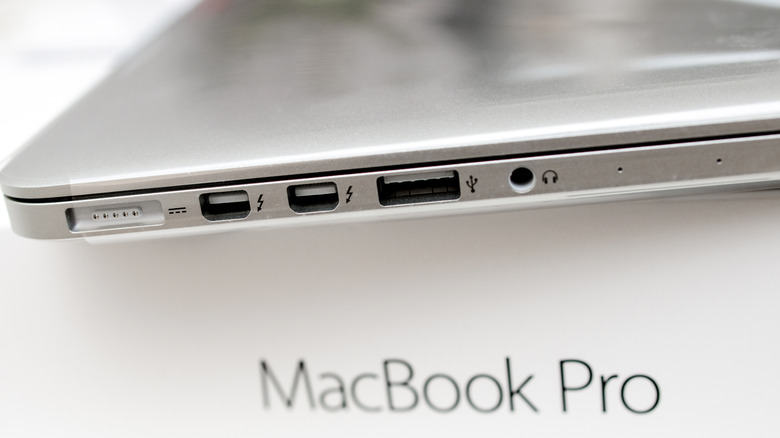

Side view of an older MacBook pro, showing Thunderbolt Mini DisplayPort ports alongside other ports.
Hadrian/Shutterstock

Mini DisplayPort is called “mini” for a reason. The full-size version (simply called DisplayPort) supports the same core specifications, but with a larger connector. Apple always opted for the tiny version because it fits better on smaller computers like MacBooks and the Mac mini.

It doesn’t matter whether you use DisplayPort (DP) or Mini DisplayPort — both can transmit video and audio through a single cable. Compared to older connectors like DVI and VGA, one of the main advantages of DisplayPort is that it offers much higher bandwidth. Depending on the generation, DP can handle resolutions up to 8K and beyond, at high frame rates (144+Hz) depending on the resolution. Meanwhile, older connectors struggle with anything above 1080p.

When the Thunderbolt standard emerged, its first two iterations used the Mini DisplayPort connector. While a standard Mini DP port only carries video and audio, Thunderbolt also supports high-speed data transfers. That meant the same connector could be used for video, audio and data — perfect for accessories like Apple’s Cinema Display. 

In late 2015 and 2016, the Thunderbolt 3 standard arrived and switched to the USB-C connector. Apple and other PC manufacturers quickly moved to USB-C or HDMI, leaving the Mini DisplayPort connector behind. These days, USB-C has become the standard for nearly everything. Not only can it support high-speed data transfer, but it can also handle video, audio and even the Thunderbolt protocol — all in a single, small reversible connector. Not every USB-C port can handle the same tasks, but you’ll see some version of it on almost every device.

To further push Mini DisplayPort down, USB-C also supports DisplayPort Alternate Mode, meaning a compatible USB-C cable and ports can carry the same DisplayPort signal through the more modern cable. PC makers have no reason to have people buy a Mini DP-to-DP cable when they can simply buy a USB-C-to-DP cable.

Where DisplayPort still makes sense
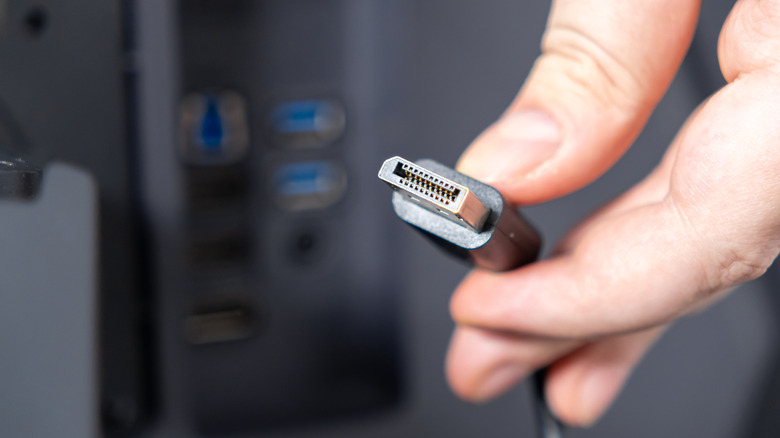

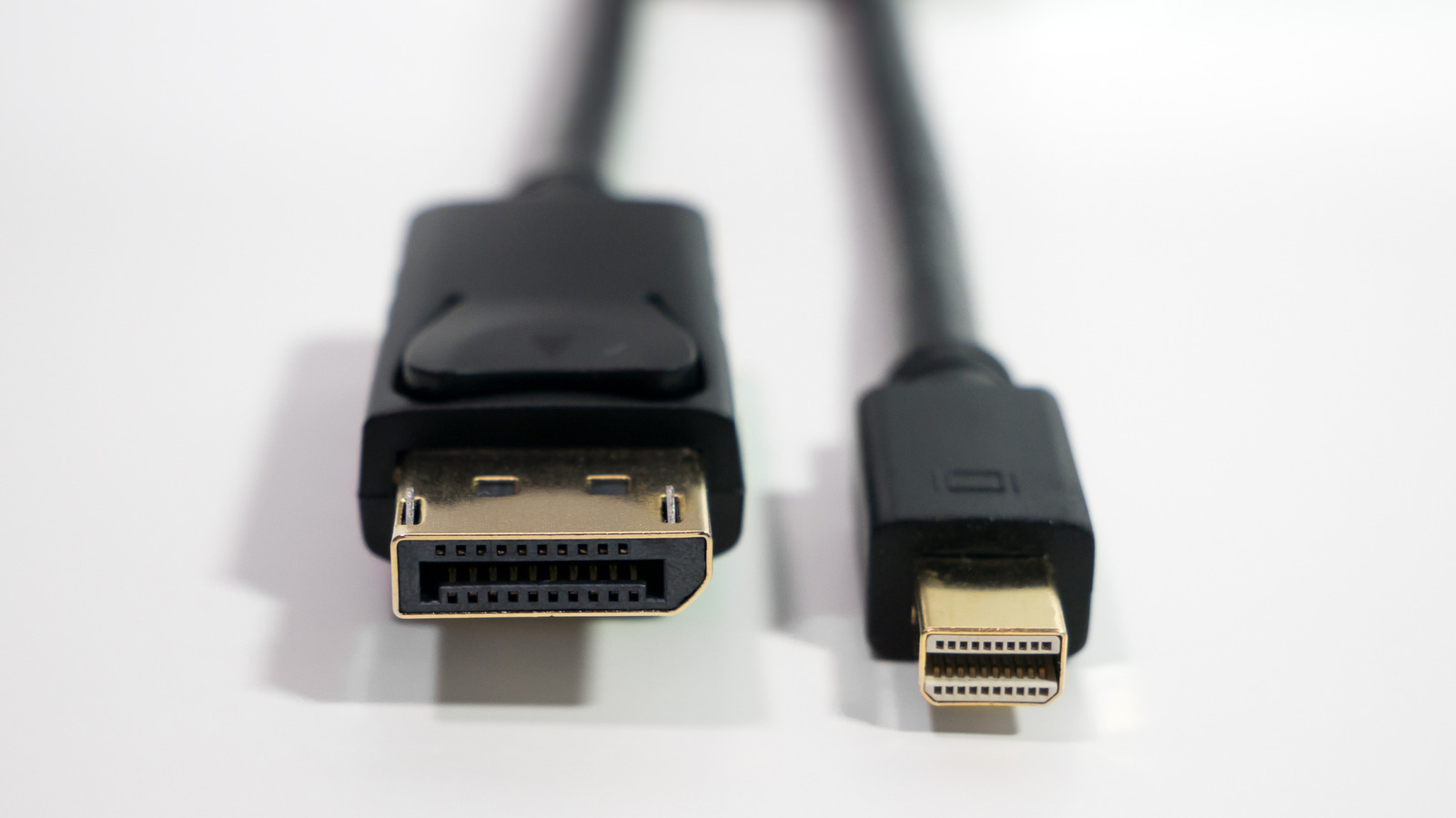
A regular-size DisplayPort cable.
Alina Vytiuk/Getty Images

That doesn’t mean DisplayPort is gone. Of course, you may still find older hardware with Mini DisplayPort, like past laptops and graphics cards. If you still have one of these, you can buy a Mini DP-to-DP cable to connect them to a modern monitor. Since the protocol is the same, they’ll communicate with each other just fine. New hardware also continues to use full-sized version of DisplayPort. It’s still the standard for many high-end monitors and graphics cards.

HDMI has come a long way in recent years and can now transmit video at incredibly high resolutions. Still, DisplayPort remains the gold standard for absurdly high resolutions and refresh rates, such as 4K at 240Hz. For comparison, while HDMI 2.1 offers up to 48 Gbps of bandwidth, DisplayPort 2.1 can reach 80 Gbps. This makes a difference for those looking to get the most out of the hardware they have. HDMI 2.2 offers 96 Gbps bandwidth, which may even the field a bit once compatible devices are widely available.

Of course, when using older hardware, not everything may work as expected. VR headsets, for example, can be picky about their video signal, and they don’t always play nice with Mini DisplayPort when you use an adapter. The same goes for the old Apple Cinema Display — Apple makes it clear that it doesn’t work through a Thunderbolt adapter. Still, it doesn’t hurt to try if you have the right cables on hand.

Credit: Source link

ShareTweetSendSharePin

Related Posts

Google DeepMind and GovTech Unveil On-Device Scam Detection Model – Unite.AI
AI & Technology

Google DeepMind and GovTech Unveil On-Device Scam Detection Model – Unite.AI

October 14, 2026
Which Smart TV Brands Offer The Longest Software Support?
AI & Technology

Which Smart TV Brands Offer The Longest Software Support?

October 14, 2026
Physical Intelligence Opens Pi API Beta for Robot Foundation Models – Unite.AI
AI & Technology

Physical Intelligence Opens Pi API Beta for Robot Foundation Models – Unite.AI

October 13, 2026
What’s New And Is It Worth The 0 Jump?
AI & Technology

What’s New And Is It Worth The $100 Jump?

October 13, 2026
Next Post
Afghan man sentenced in case tied to Kabul airport attack

Afghan man sentenced in case tied to Kabul airport attack

Leave a Reply Cancel reply

Your email address will not be published. Required fields are marked *

Search

No Result
View All Result
WATCH: Dog greets intruder with toy during break-in

WATCH: Dog greets intruder with toy during break-in

October 13, 2026
Simone Biles says three masked men stole luxury car from her Chicago-area home

Simone Biles says three masked men stole luxury car from her Chicago-area home

October 10, 2026
Microsoft’s Surface RTX Spark Dev Box Costs An Eye-Watering ,000

Microsoft’s Surface RTX Spark Dev Box Costs An Eye-Watering $6,000

October 7, 2026

About

Learn more

Our Services

Legal

Privacy Policy

Terms of Use

Bloggers

Learn more

Article Links

Contact

Advertise

Ask us anything

©2020- TradePoint.io - All rights reserved!

Tradepoint.io, being just a publishing and technology platform, is not a registered broker-dealer or investment adviser. So we do not provide investment advice. Rather, brokerage services are provided to clients of Tradepoint.io by independent SEC-registered broker-dealers and members of FINRA/SIPC. Every form of investing carries some risk and past performance is not a guarantee of future results. “Tradepoint.io“, “Instant Investing” and “My Trading Tools” are registered trademarks of Apperbuild, LLC.

This website is operated by Apperbuild, LLC. We have no link to any brokerage firm and we do not provide investment advice. Every information and resource we provide is solely for the education of our readers. © 2020 Apperbuild, LLC. All rights reserved.

No Result
View All Result
  • Main
  • AI & Technology
  • Stock Charts
  • Market & News
  • Business
  • Finance Tips
  • Trade Tube
  • Blog
  • Shop

© 2023 - TradePoint.io - All Rights Reserved!