
• bitcoinBitcoin(BTC)$80,036.00-0.07%
  • ethereumEthereum(ETH)$2,320.37-0.37%
  • tetherTether(USDT)$1.00-0.03%
  • binancecoinBNB(BNB)$741.600.47%
  • rippleXRP(XRP)$1.300.44%
  • usd-coinUSDC(USDC)$1.00-0.04%
  • solanaSolana(SOL)$100.79-0.36%
  • tronTRON(TRX)$0.329147-0.31%
  • Figure HelocFigure Heloc(FIGR_HELOC)$1.040.00%
  • zcashZcash(ZEC)$1,234.962.93%
  • HyperliquidHyperliquid(HYPE)$78.282.43%
  • dogecoinDogecoin(DOGE)$0.0775650.98%
  • moneroMonero(XMR)$597.811.45%
  • USDSUSDS(USDS)$1.00-0.02%
  • whitebitWhiteBIT Coin(WBT)$76.88-0.38%
  • chainlinkChainlink(LINK)$11.38-0.42%
  • leo-tokenLEO Token(LEO)$9.040.31%
  • cardanoCardano(ADA)$0.2060741.11%
  • stellarStellar(XLM)$0.1687730.59%
  • nearNEAR Protocol(NEAR)$4.49-1.84%
  • bitcoin-cashBitcoin Cash(BCH)$279.940.65%
  • RainRain(RAIN)$0.007619-10.62%
  • Ethena USDeEthena USDe(USDE)$1.00-0.08%
  • daiDai(DAI)$1.00-0.03%
  • uniswapUniswap(UNI)$7.153.19%
  • litecoinLitecoin(LTC)$56.66-0.15%
  • avalanche-2Avalanche(AVAX)$8.950.37%
  • CantonCanton(CC)$0.099311-1.68%
  • USD1USD1(USD1)$1.00-0.03%
  • suiSui(SUI)$0.92-0.44%
  • the-open-networkGram (prev. Toncoin)(GRAM)$1.21-3.34%
  • hedera-hashgraphHedera(HBAR)$0.077192-0.33%
  • tether-goldTether Gold(XAUT)$4,006.700.18%
  • Global DollarGlobal Dollar(USDG)$1.00-0.04%
  • paypal-usdPayPal USD(PYUSD)$1.00-0.04%
  • quant-networkQuant(QNT)$203.307.45%
  • shiba-inuShiba Inu(SHIB)$0.0000050.67%
  • BittensorBittensor(TAO)$250.90-0.61%
  • EthenaEthena(ENA)$0.207316-0.01%
  • crypto-com-chainCronos(CRO)$0.053252-1.85%
  • Ripple USDRipple USD(RLUSD)$1.00-0.01%
  • Circle USYCCircle USYC(USYC)$1.140.01%
  • Ondo US Dollar YieldOndo US Dollar Yield(USDY)$1.150.11%
  • okbOKB(OKB)$109.271.59%
  • MemeCoreMemeCore(M)$0.962.58%
  • BlackRock USD Institutional Digital Liquidity FundBlackRock USD Institutional Digital Liquidity Fund(BUIDL)$1.000.00%
  • aaveAave(AAVE)$135.57-0.27%
  • OndoOndo(ONDO)$0.4148882.05%
  • Pump.funPump.fun(PUMP)$0.0042730.88%
  • Falcon USDFalcon USD(USDF)$0.99-0.02%
TradePoint.io
  • Main
  • AI & Technology
  • Stock Charts
  • Market & News
  • Business
  • Finance Tips
  • Trade Tube
  • Blog
  • Shop
No Result
View All Result
TradePoint.io
No Result
View All Result

Hundreds of Millions of Planets in the Milky Way Could Potentially Harbor Life

May 30, 2023
in Market & News
Reading Time: 6 mins read
A A
Hundreds of Millions of Planets in the Milky Way Could Potentially Harbor Life
ShareShareShareShareShare

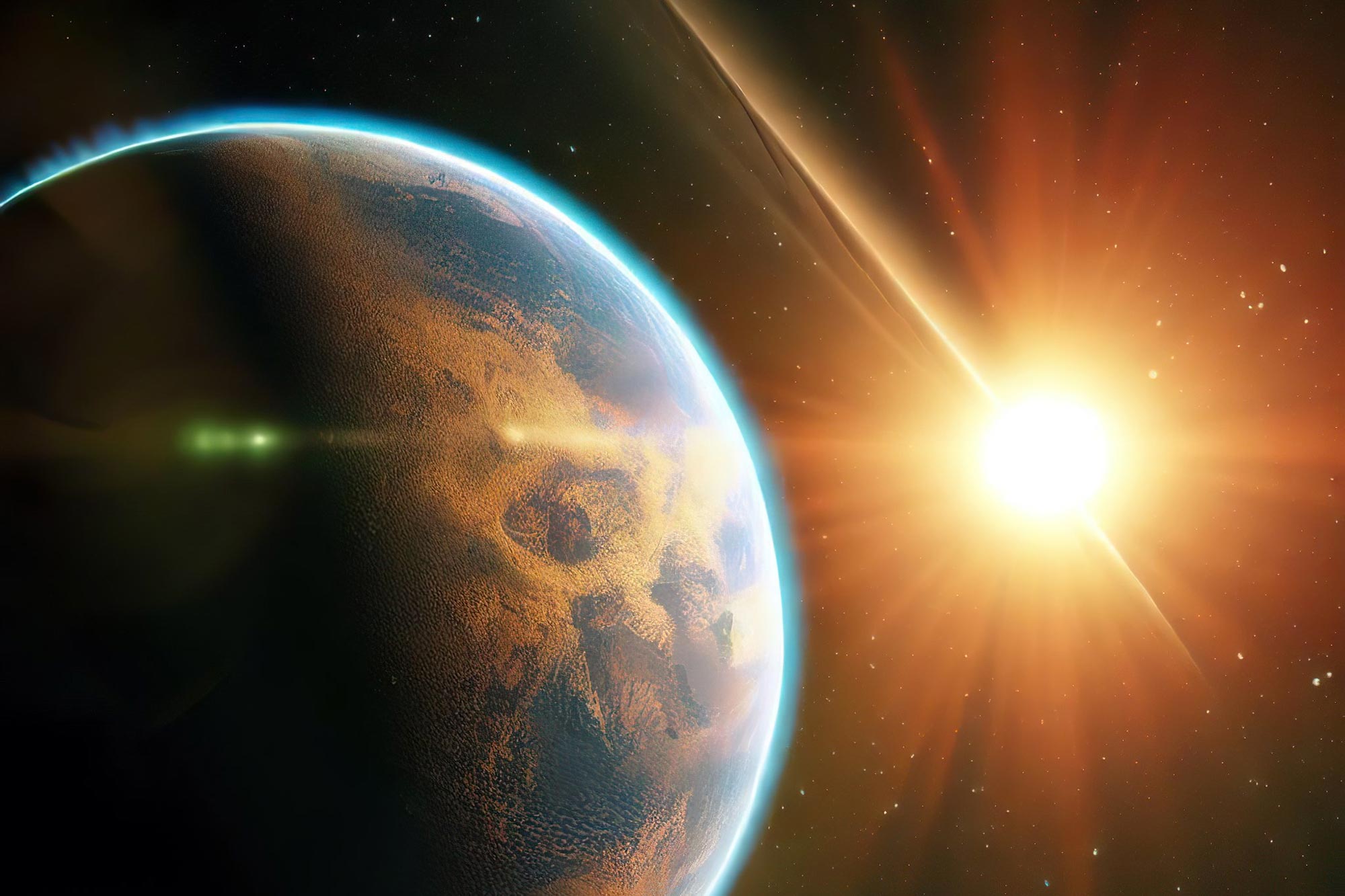
A new study suggests that one-third of the planets orbiting common dwarf stars in the Milky Way could potentially harbor life. Dwarf stars are the most common type of stars in the galaxy and billions of planets orbit them.

University of Florida astronomers find that hundreds of millions of planets orbiting dwarf stars in the Milky Way could potentially harbor life, occupying a ‘Goldilocks’ orbit that allows them to withstand extreme tidal forces and retain liquid water, according to data from NASA’s Kepler and Gaia telescopes.

Our familiar, warm, yellow sun is a relative rarity in the Milky Way. By far the most common stars are considerably smaller and cooler, sporting just half the mass of our sun at most. Billions of planets orbit these common dwarf stars in our galaxy.

To capture enough warmth to be habitable, these planets would need to huddle very close to their small stars, which leaves them susceptible to extreme tidal forces.

In a new analysis based on the latest telescope data, University of Florida astronomers have discovered that two-thirds of the planets around these ubiquitous small stars could be roasted by these tidal extremes, sterilizing them. But that leaves one-third of the planets – hundreds of millions across the galaxy – that could be in a Goldilocks orbit close enough, and gentle enough, to hold onto liquid water and possibly harbor life.

UF astronomy professor Sarah Ballard and doctoral student Sheila Sagear published their findings the week of May 29 in the Proceedings of the National Academy of Sciences. Ballard and Sagear have long studied exoplanets, those worlds that orbit stars other than the sun.

“I think this result is really important for the next decade of exoplanet research, because eyes are shifting toward this population of stars,” Sagear said. “These stars are excellent targets to look for small planets in an orbit where it’s conceivable that water might be liquid and therefore the planet might be habitable.”

Sagear and Ballard measured the eccentricity of a sample of more than 150 planets around these M dwarf stars, which are about the size of Jupiter. The more oval shaped an orbit, the more eccentric it is. If a planet orbits close enough to its star, at about the distance that Mercury orbits the sun, an eccentric orbit can subject it to a process known as tidal heating. As the planet is stretched and deformed by changing gravitational forces on its irregular orbit, friction heats it up. At the extreme end, this could bake the planet, removing all chance for liquid water.

“It’s only for these small stars that the zone of habitability is close enough for these tidal forces to be relevant,” Ballard said.

Data came from NASA’s Kepler telescope, which captures information about exoplanets as they move in front of their host stars. To measure the planets’ orbits, Ballard and Sagear focused especially on how long the planets took to move across the face of the stars. Their study also relied on new data from the Gaia telescope, which measured the distance to billions of stars in the galaxy.

“The distance is really the key piece of information we were missing before that allows us to do this analysis now,” Sagear said.

Sagear and Ballard found that stars with multiple planets were the most likely to have the kind of circular orbits that allow them to retain liquid water. Stars with only one planet were the most likely to see tidal extremes that would sterilize the surface.

Since one-third of the planets in this small sample had gentle enough orbits to potentially host liquid water, that likely means that the Milky Way has hundreds of millions of promising targets to probe for signs of life outside our solar system.

Reference: “The orbital eccentricity distribution of planets orbiting M dwarfs” 29 May 2023, Proceedings of the National Academy of Sciences.
DOI: 10.1073/pnas.2217398120


Credit: Source link

YOU MAY ALSO LIKE

Man caught on camera poisoning colleague

Woman poisoned by coworker releases hidden-camera video

ShareTweetSendSharePin

Related Posts

Man caught on camera poisoning colleague
Market & News

Man caught on camera poisoning colleague

October 26, 2026
Woman poisoned by coworker releases hidden-camera video
Market & News

Woman poisoned by coworker releases hidden-camera video

October 26, 2026
Selma Blair arraigned on assault charges in New York
Market & News

Selma Blair arraigned on assault charges in New York

October 26, 2026
Russia attacks Ukraine’s Kharkiv
Market & News

Russia attacks Ukraine’s Kharkiv

October 26, 2026
Next Post
Express Stock Slides on its Big Miss, Jim Cramer Says the Company is Out of Touch

Express Stock Slides on its Big Miss, Jim Cramer Says the Company is Out of Touch

Leave a Reply Cancel reply

Your email address will not be published. Required fields are marked *

Search

No Result
View All Result
Oil rises as US orders diplomats to leave Saudi Arabia amid escalating tensions – Reuters

Oil rises as US orders diplomats to leave Saudi Arabia amid escalating tensions – Reuters

October 22, 2026
Steve Kornacki: Democrats hold midterm enthusiasm edge in new poll

Steve Kornacki: Democrats hold midterm enthusiasm edge in new poll

October 23, 2026
Denise Muyco, Co-Founder and CEO of RAVEL – Interview Series – Unite.AI

Denise Muyco, Co-Founder and CEO of RAVEL – Interview Series – Unite.AI

October 23, 2026

About

Learn more

Our Services

Legal

Privacy Policy

Terms of Use

Bloggers

Learn more

Article Links

Contact

Advertise

Ask us anything

©2020- TradePoint.io - All rights reserved!

Tradepoint.io, being just a publishing and technology platform, is not a registered broker-dealer or investment adviser. So we do not provide investment advice. Rather, brokerage services are provided to clients of Tradepoint.io by independent SEC-registered broker-dealers and members of FINRA/SIPC. Every form of investing carries some risk and past performance is not a guarantee of future results. “Tradepoint.io“, “Instant Investing” and “My Trading Tools” are registered trademarks of Apperbuild, LLC.

This website is operated by Apperbuild, LLC. We have no link to any brokerage firm and we do not provide investment advice. Every information and resource we provide is solely for the education of our readers. © 2020 Apperbuild, LLC. All rights reserved.

No Result
View All Result
  • Main
  • AI & Technology
  • Stock Charts
  • Market & News
  • Business
  • Finance Tips
  • Trade Tube
  • Blog
  • Shop

© 2023 - TradePoint.io - All Rights Reserved!