


• bitcoinBitcoin(BTC)$85,472.00-0.45%
  • ethereumEthereum(ETH)$2,722.64-0.58%
  • tetherTether(USDT)$1.000.00%
  • binancecoinBNB(BNB)$779.62-0.67%
  • rippleXRP(XRP)$1.562.27%
  • usd-coinUSDC(USDC)$1.000.00%
  • solanaSolana(SOL)$116.900.00%
  • tronTRON(TRX)$0.342705-0.86%
  • zcashZcash(ZEC)$1,627.956.00%
  • Figure HelocFigure Heloc(FIGR_HELOC)$1.031.76%
  • HyperliquidHyperliquid(HYPE)$95.31-0.05%
  • dogecoinDogecoin(DOGE)$0.0994281.90%
  • moneroMonero(XMR)$562.17-2.16%
  • whitebitWhiteBIT Coin(WBT)$85.87-0.50%
  • USDSUSDS(USDS)$1.00-0.01%
  • chainlinkChainlink(LINK)$12.75-0.74%
  • cardanoCardano(ADA)$0.2503232.42%
  • RainRain(RAIN)$0.012852-4.40%
  • leo-tokenLEO Token(LEO)$8.98-0.05%
  • stellarStellar(XLM)$0.2138112.20%
  • bitcoin-cashBitcoin Cash(BCH)$343.4527.42%
  • nearNEAR Protocol(NEAR)$4.763.86%
  • uniswapUniswap(UNI)$9.7512.16%
  • Ethena USDeEthena USDe(USDE)$1.000.01%
  • litecoinLitecoin(LTC)$61.972.99%
  • avalanche-2Avalanche(AVAX)$10.850.95%
  • daiDai(DAI)$1.00-0.01%
  • CantonCanton(CC)$0.113129-4.33%
  • USD1USD1(USD1)$1.000.00%
  • hedera-hashgraphHedera(HBAR)$0.0950491.54%
  • suiSui(SUI)$1.010.49%
  • the-open-networkGram (prev. Toncoin)(GRAM)$1.441.86%
  • shiba-inuShiba Inu(SHIB)$0.0000061.44%
  • BittensorBittensor(TAO)$305.81-5.21%
  • Global DollarGlobal Dollar(USDG)$1.000.00%
  • crypto-com-chainCronos(CRO)$0.0652140.40%
  • MemeCoreMemeCore(M)$1.28-3.48%
  • paypal-usdPayPal USD(PYUSD)$1.00-0.01%
  • tether-goldTether Gold(XAUT)$4,319.23-0.15%
  • BitwayBitway(BTW)$0.959.92%
  • okbOKB(OKB)$121.770.19%
  • Circle USYCCircle USYC(USYC)$1.140.01%
  • Ripple USDRipple USD(RLUSD)$1.000.00%
  • BlackRock USD Institutional Digital Liquidity FundBlackRock USD Institutional Digital Liquidity Fund(BUIDL)$1.000.00%
  • aaveAave(AAVE)$147.624.72%
  • Ondo US Dollar YieldOndo US Dollar Yield(USDY)$1.15-0.01%
  • mantleMantle(MNT)$0.683.07%
  • EthenaEthena(ENA)$0.2125052.17%
  • OndoOndo(ONDO)$0.4325031.47%
  • pepePepe(PEPE)$0.000005-2.86%
TradePoint.io
  • Main
  • AI & Technology
  • Stock Charts
  • Market & News
  • Business
  • Finance Tips
  • Trade Tube
  • Blog
  • Shop
No Result
View All Result
TradePoint.io
No Result
View All Result

Hugging Face Releases nanoVLM: A Pure PyTorch Library to Train a Vision-Language Model from Scratch in 750 Lines of Code

May 8, 2025
in AI & Technology
Reading Time: 4 mins read
A A
Hugging Face Releases nanoVLM: A Pure PyTorch Library to Train a Vision-Language Model from Scratch in 750 Lines of Code
ShareShareShareShareShare

In a notable step toward democratizing vision-language model development, Hugging Face has released nanoVLM, a compact and educational PyTorch-based framework that allows researchers and developers to train a vision-language model (VLM) from scratch in just 750 lines of code. This release follows the spirit of projects like nanoGPT by Andrej Karpathy—prioritizing readability and modularity without compromising on real-world applicability.

nanoVLM is a minimalist, PyTorch-based framework that distills the core components of vision-language modeling into just 750 lines of code. By abstracting only what’s essential, it offers a lightweight and modular foundation for experimenting with image-to-text models, suitable for both research and educational use.

YOU MAY ALSO LIKE

Apple Links Landmarks On Its Maps App To Hidden Histories Podcast Episodes

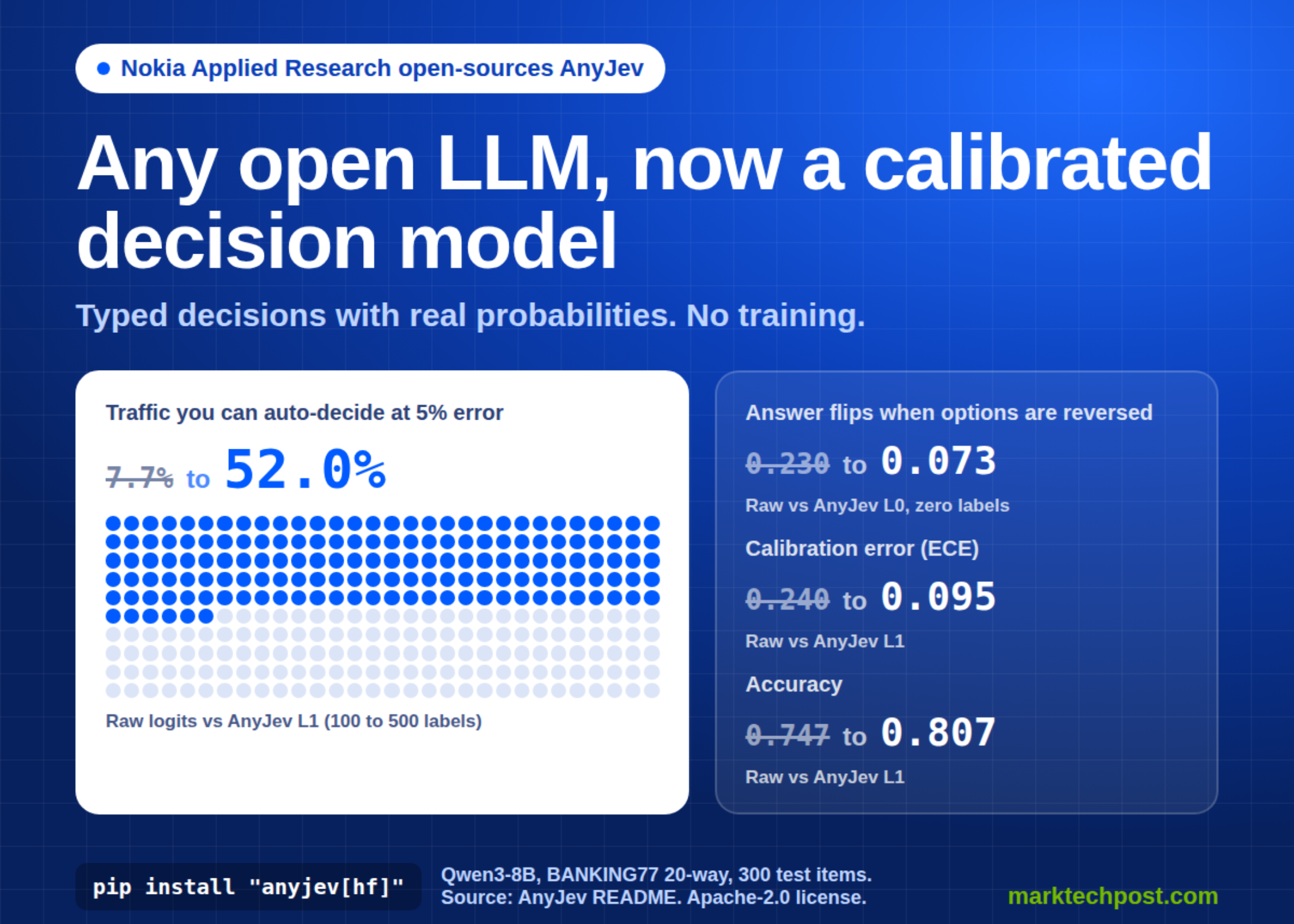
Nokia Open-Sources AnyJev: A Training-Free Layer That Turns Any Open LLM Into a Calibrated Decision Model

Technical Overview: A Modular Multimodal Architecture

At its core, nanoVLM combines together a visual encoder, a lightweight language decoder, and a modality projection mechanism to bridge the two. The vision encoder is based on SigLIP-B/16, a transformer-based architecture known for its robust feature extraction from images. This visual backbone transforms input images into embeddings that can be meaningfully interpreted by the language model.

On the textual side, nanoVLM uses SmolLM2, a causal decoder-style transformer that has been optimized for efficiency and clarity. Despite its compact nature, it is capable of generating coherent, contextually relevant captions from visual representations.

The fusion between vision and language is handled via a straightforward projection layer, aligning the image embeddings into the language model’s input space. The entire integration is designed to be transparent, readable, and easy to modify—perfect for educational use or rapid prototyping.

Performance and Benchmarking

While simplicity is a defining feature of nanoVLM, it still achieves surprisingly competitive results. Trained on 1.7 million image-text pairs from the open-source the_cauldron dataset, the model reaches 35.3% accuracy on the MMStar benchmark—a metric comparable to larger models like SmolVLM-256M, but using fewer parameters and significantly less compute.

The pre-trained model released alongside the framework, nanoVLM-222M, contains 222 million parameters, balancing scale with practical efficiency. It demonstrates that thoughtful architecture, not just raw size, can yield strong baseline performance in vision-language tasks.

This efficiency also makes nanoVLM particularly suitable for low-resource settings—whether it’s academic institutions without access to massive GPU clusters or developers experimenting on a single workstation.

Designed for Learning, Built for Extension

Unlike many production-level frameworks which can be opaque and over-engineered, nanoVLM emphasizes transparency. Each component is clearly defined and minimally abstracted, allowing developers to trace data flow and logic without navigating a labyrinth of interdependencies. This makes it ideal for educational purposes, reproducibility studies, and workshops.

nanoVLM is also forward-compatible. Thanks to its modularity, users can swap in larger vision encoders, more powerful decoders, or different projection mechanisms. It’s a solid base to explore cutting-edge research directions—whether that’s cross-modal retrieval, zero-shot captioning, or instruction-following agents that combine visual and textual reasoning.

Accessibility and Community Integration

In keeping with Hugging Face’s open ethos, both the code and the pre-trained nanoVLM-222M model are available on GitHub and the Hugging Face Hub. This ensures integration with Hugging Face tools like Transformers, Datasets, and Inference Endpoints, making it easier for the broader community to deploy, fine-tune, or build on top of nanoVLM.

Given Hugging Face’s strong ecosystem support and emphasis on open collaboration, it’s likely that nanoVLM will evolve with contributions from educators, researchers, and developers alike.

Conclusion

nanoVLM is a refreshing reminder that building sophisticated AI models doesn’t have to be synonymous with engineering complexity. In just 750 lines of clean PyTorch code, Hugging Face has distilled the essence of vision-language modeling into a form that’s not only usable, but genuinely instructive.

As multimodal AI becomes increasingly important across domains—from robotics to assistive technology—tools like nanoVLM will play a critical role in onboarding the next generation of researchers and developers. It may not be the largest or most advanced model on the leaderboard, but its impact lies in its clarity, accessibility, and extensibility.


Check out the Model and Repo. Also, don’t forget to follow us on Twitter.

Here’s a brief overview of what we’re building at Marktechpost:


Nikhil is an intern consultant at Marktechpost. He is pursuing an integrated dual degree in Materials at the Indian Institute of Technology, Kharagpur. Nikhil is an AI/ML enthusiast who is always researching applications in fields like biomaterials and biomedical science. With a strong background in Material Science, he is exploring new advancements and creating opportunities to contribute.

Credit: Source link

ShareTweetSendSharePin

Related Posts

Apple Links Landmarks On Its Maps App To Hidden Histories Podcast Episodes
AI & Technology

Apple Links Landmarks On Its Maps App To Hidden Histories Podcast Episodes

September 23, 2026
Nokia Open-Sources AnyJev: A Training-Free Layer That Turns Any Open LLM Into a Calibrated Decision Model
AI & Technology

Nokia Open-Sources AnyJev: A Training-Free Layer That Turns Any Open LLM Into a Calibrated Decision Model

September 23, 2026
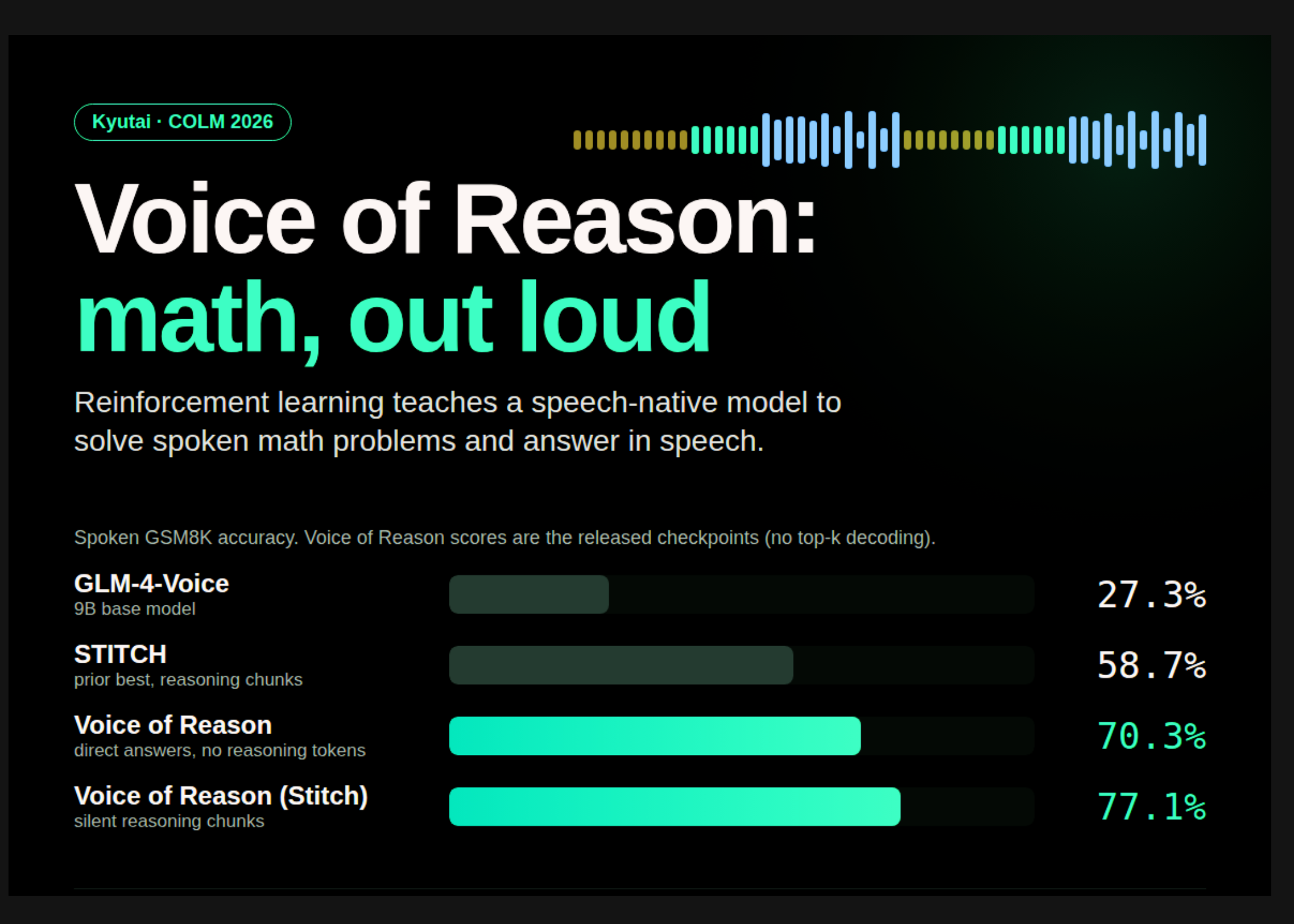
Kyutai Releases Voice of Reason: A Speech-Native Model that Solves Spoken Math with Reinforcement Learning
AI & Technology

Kyutai Releases Voice of Reason: A Speech-Native Model that Solves Spoken Math with Reinforcement Learning

September 23, 2026
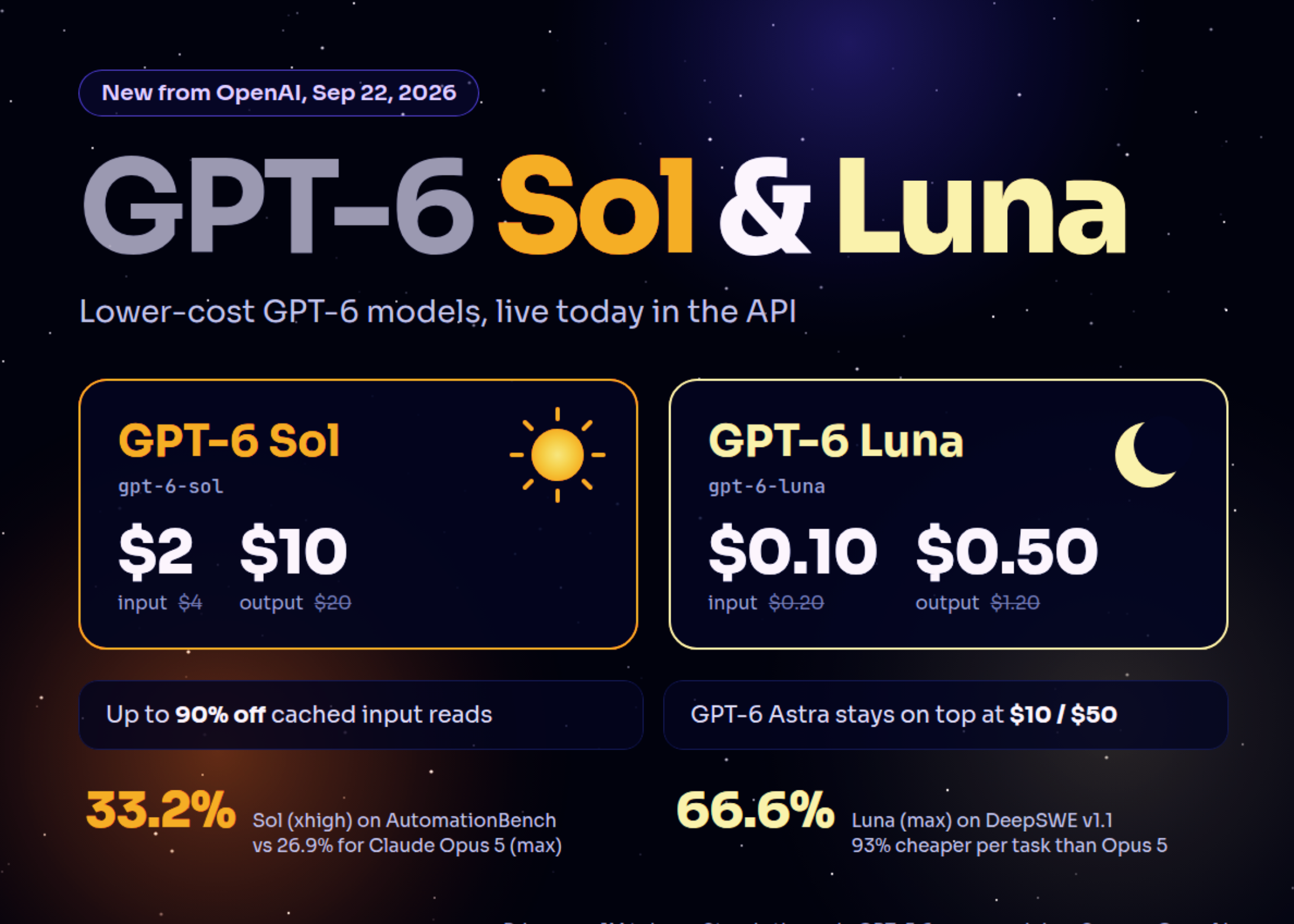
OpenAI Releases GPT-6 Sol and Luna: 50% Cheaper API Pricing and Benchmarks
AI & Technology

OpenAI Releases GPT-6 Sol and Luna: 50% Cheaper API Pricing and Benchmarks

September 23, 2026
Next Post
Batter up to meet the Mets: Behind the scenes of Citi Field | Nightly News: Kids Edition

Batter up to meet the Mets: Behind the scenes of Citi Field | Nightly News: Kids Edition

Leave a Reply Cancel reply

Your email address will not be published. Required fields are marked *

Search

No Result
View All Result
U.S. military strikes three Iranian oil tankers

U.S. military strikes three Iranian oil tankers

September 17, 2026
Mark Ruffalo urges California AG Rob Bonta to reject Paramount-Warner merger settlement

Mark Ruffalo urges California AG Rob Bonta to reject Paramount-Warner merger settlement

September 20, 2026
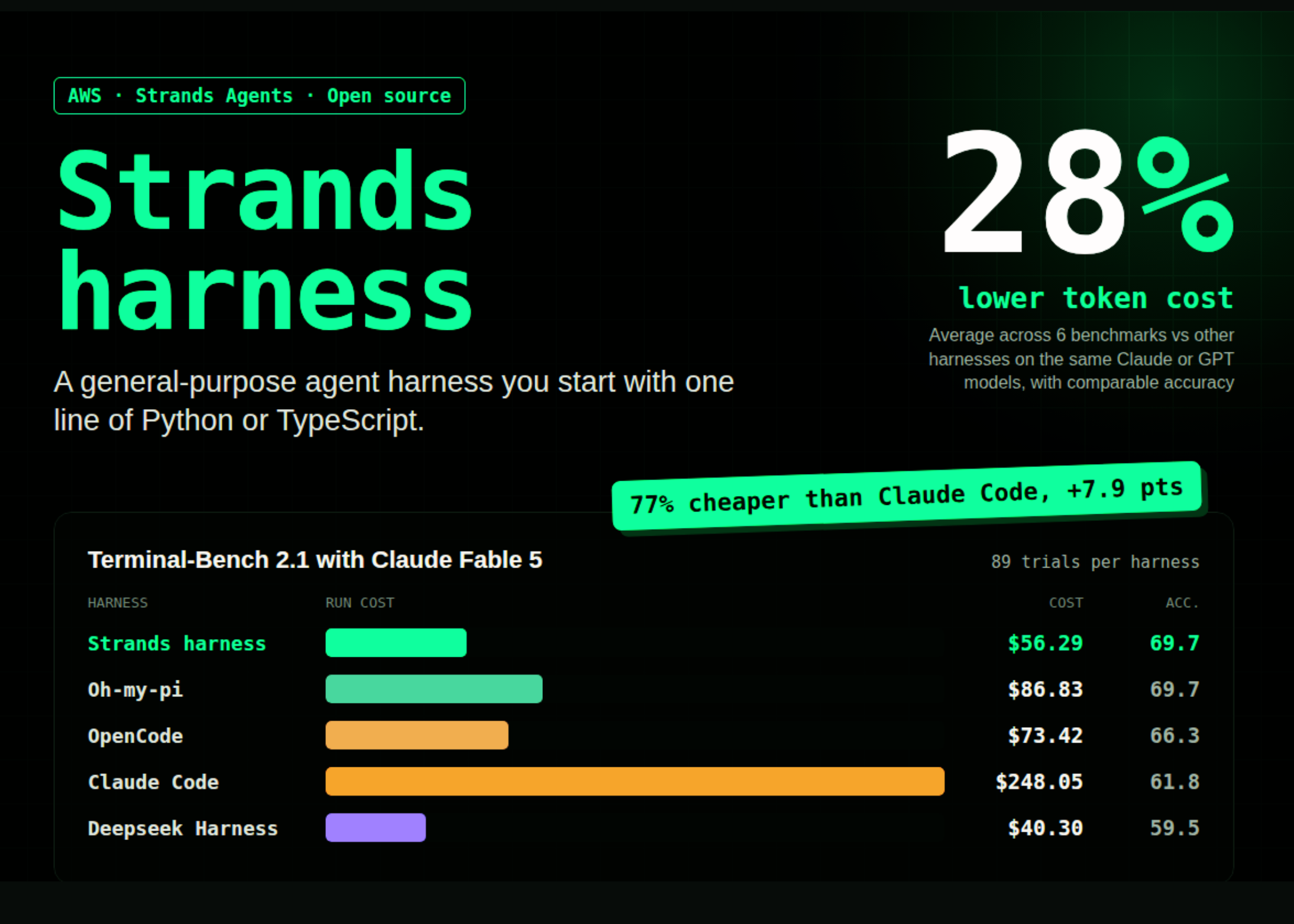
AWS Strands Agents Team Releases Strands Harness: An Open-Source Agent Harness With 28% Lower Token Cost at Comparable Accuracy

AWS Strands Agents Team Releases Strands Harness: An Open-Source Agent Harness With 28% Lower Token Cost at Comparable Accuracy

September 21, 2026

About

Learn more

Our Services

Legal

Privacy Policy

Terms of Use

Bloggers

Learn more

Article Links

Contact

Advertise

Ask us anything

©2020- TradePoint.io - All rights reserved!

Tradepoint.io, being just a publishing and technology platform, is not a registered broker-dealer or investment adviser. So we do not provide investment advice. Rather, brokerage services are provided to clients of Tradepoint.io by independent SEC-registered broker-dealers and members of FINRA/SIPC. Every form of investing carries some risk and past performance is not a guarantee of future results. “Tradepoint.io“, “Instant Investing” and “My Trading Tools” are registered trademarks of Apperbuild, LLC.

This website is operated by Apperbuild, LLC. We have no link to any brokerage firm and we do not provide investment advice. Every information and resource we provide is solely for the education of our readers. © 2020 Apperbuild, LLC. All rights reserved.

No Result
View All Result
  • Main
  • AI & Technology
  • Stock Charts
  • Market & News
  • Business
  • Finance Tips
  • Trade Tube
  • Blog
  • Shop

© 2023 - TradePoint.io - All Rights Reserved!