

























• bitcoinBitcoin(BTC)$81,358.00-2.82%
  • ethereumEthereum(ETH)$2,422.04-4.49%
  • tetherTether(USDT)$1.000.00%
  • binancecoinBNB(BNB)$726.58-3.48%
  • rippleXRP(XRP)$1.33-5.43%
  • usd-coinUSDC(USDC)$1.000.00%
  • solanaSolana(SOL)$104.05-6.39%
  • tronTRON(TRX)$0.328504-0.44%
  • Figure HelocFigure Heloc(FIGR_HELOC)$1.060.00%
  • zcashZcash(ZEC)$1,150.15-10.14%
  • HyperliquidHyperliquid(HYPE)$80.60-7.08%
  • dogecoinDogecoin(DOGE)$0.081728-5.77%
  • USDSUSDS(USDS)$1.00-0.01%
  • moneroMonero(XMR)$526.94-2.10%
  • chainlinkChainlink(LINK)$12.47-6.59%
  • whitebitWhiteBIT Coin(WBT)$79.71-3.23%
  • cardanoCardano(ADA)$0.229766-8.67%
  • leo-tokenLEO Token(LEO)$8.89-0.24%
  • RainRain(RAIN)$0.009745-5.85%
  • nearNEAR Protocol(NEAR)$5.10-13.03%
  • stellarStellar(XLM)$0.188953-6.80%
  • bitcoin-cashBitcoin Cash(BCH)$263.41-8.05%
  • BitwayBitway(BTW)$1.757.68%
  • Ethena USDeEthena USDe(USDE)$1.00-0.01%
  • CantonCanton(CC)$0.118029-6.74%
  • litecoinLitecoin(LTC)$60.47-6.43%
  • daiDai(DAI)$1.000.00%
  • avalanche-2Avalanche(AVAX)$10.03-8.64%
  • uniswapUniswap(UNI)$6.90-10.73%
  • USD1USD1(USD1)$1.000.03%
  • suiSui(SUI)$1.02-9.44%
  • the-open-networkGram (prev. Toncoin)(GRAM)$1.36-6.46%
  • hedera-hashgraphHedera(HBAR)$0.085965-8.48%
  • tether-goldTether Gold(XAUT)$4,161.70-0.92%
  • quant-networkQuant(QNT)$224.05-5.92%
  • Global DollarGlobal Dollar(USDG)$1.000.01%
  • BittensorBittensor(TAO)$268.45-9.59%
  • shiba-inuShiba Inu(SHIB)$0.000005-6.50%
  • paypal-usdPayPal USD(PYUSD)$1.00-0.02%
  • crypto-com-chainCronos(CRO)$0.058043-4.41%
  • EthenaEthena(ENA)$0.203440-15.21%
  • okbOKB(OKB)$120.04-4.65%
  • Ripple USDRipple USD(RLUSD)$1.000.00%
  • aaveAave(AAVE)$155.07-10.12%
  • Circle USYCCircle USYC(USYC)$1.140.00%
  • Ondo US Dollar YieldOndo US Dollar Yield(USDY)$1.150.07%
  • Pump.funPump.fun(PUMP)$0.004914-12.92%
  • OndoOndo(ONDO)$0.467187-10.60%
  • BlackRock USD Institutional Digital Liquidity FundBlackRock USD Institutional Digital Liquidity Fund(BUIDL)$1.000.00%
  • MemeCoreMemeCore(M)$0.90-2.46%
TradePoint.io
  • Main
  • AI & Technology
  • Stock Charts
  • Market & News
  • Business
  • Finance Tips
  • Trade Tube
  • Blog
  • Shop
No Result
View All Result
TradePoint.io
No Result
View All Result

How To Turn Your Old Hard Drives Into A RAID Array

October 12, 2026
in AI & Technology
Reading Time: 5 mins read
A A
How To Turn Your Old Hard Drives Into A RAID Array
ShareShareShareShareShare

Your old hard drives still have some live left in them.


Lost_in_the_Midwest/Shutterstock

We may receive a commission on purchases made from links.

YOU MAY ALSO LIKE

Epic Games CEO Confirms ‘Huge Pivot’ to Retool Teams for AI – Unite.AI

Epic Reportedly Delays Its Disney Video Game So It Can Be Made Using More AI

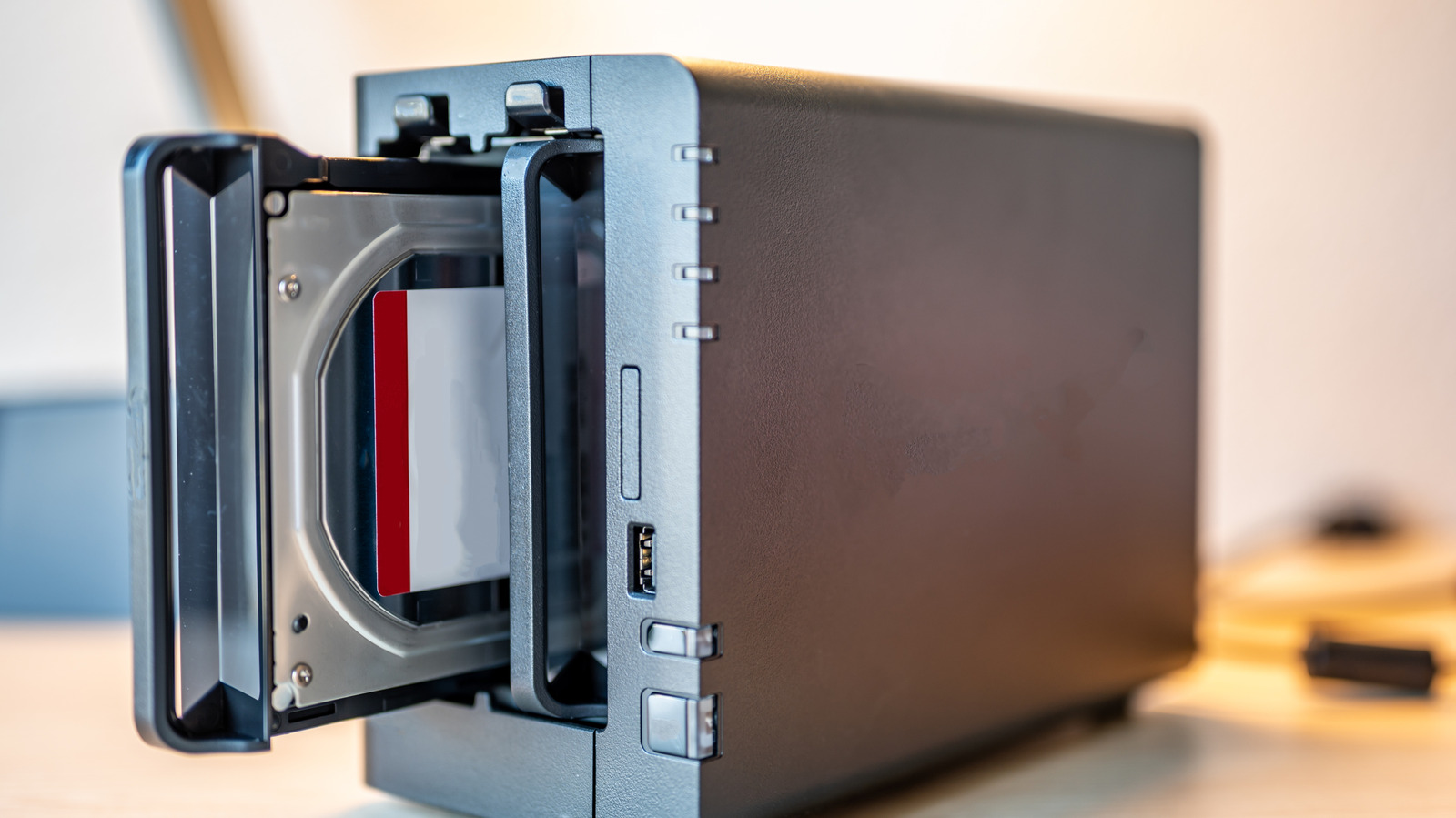
Cloud storage is everywhere. Despite the ongoing memory crisis, SSDs have gotten cheap enough that most new PCs don’t even bother with a spinning drive anymore. And yet, if you build your own computers, there’s a good chance you’ve got a drawer of old 500GB and 1TB hard drives that are too small to be useful on their own but still coule have some life left in them. RAID is what you do with that drawer. Rather than throwing these hard drives away, RAID can give them a new purpose. Plus, it gives you faster and more reliable storage.

What is a RAID array?
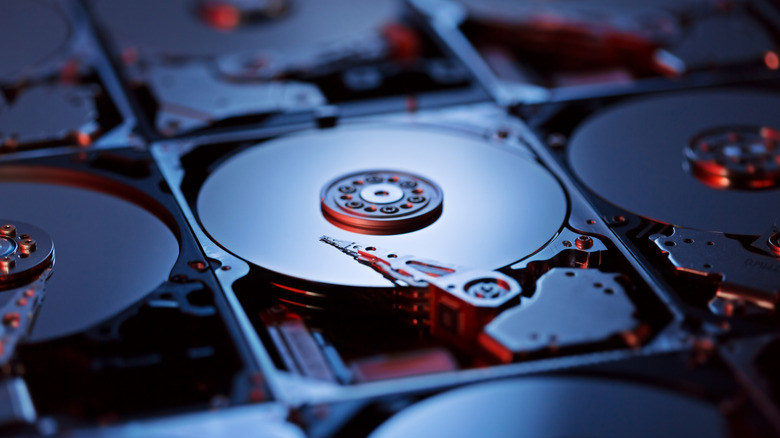

Multiple disassembled HDDs with their internal platters exposed.
Zentilia/Getty Images

RAID stands for Redundant Array of Independent Disks. The idea here is to combine multiple disks so they function as a single unit. Instead of storing your files on a single drive, RAID distributes them across two or more disks, which results in much faster transfer speeds. They won’t match the speeds of an SSD, but they’re much faster than a conventional HDD. A RAID array also provides redundancy for your data. That’s because it’s less prone to failure — if one drive fails, you can still recover your files from the other one. That’s the main reason why RAID is still used today. It’s less about the faster speeds and more about convenience and reliability.

A RAID system doesn’t replace a full backup, but it does ensure that you won’t lose your data if one of your hard drives fails completely. The idea sounds great, but there are many details you need to know before setting up your own RAID array. For instance, there are four different categories of RAID arrays. Each one drastically changes the results you’ll get when combining your disks. The best-known ones are RAID 0, RAID 1, RAID 5 and RAID 10. Understanding each of them is very important so you know exactly what to expect.

Understanding the different RAID levels
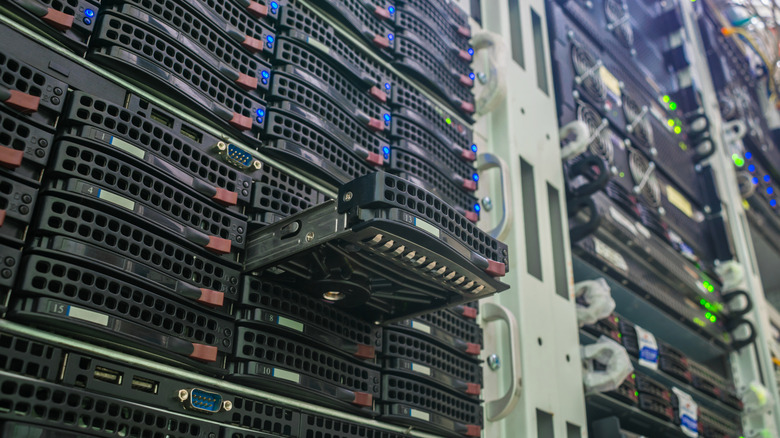

A rack with multiple RAID arrays installed.
Maximumm/Shutterstock

RAID 0 essentially combines two or more disks into a single unit without parity. This process, known as striping, speeds up file read and write times. It can be very useful if you work with large files, such as videos or databases, because it combines the total storage space of all the drives. But it’s not all good news. The downside is that RAID 0 offers zero data protection. If a drive fails, you lose everything. In short, it’s a great way to get faster speeds, but not so great for keeping your data safe.

If you need something more reliable, there’s RAID 1. With this setup, the system writes exactly the same data to every disk in the array. If one of the disks fails or disconnects, you’ll still have everything on the other one. No need to worry about losing your data — perfect for when you’re working on an important project. That doesn’t mean it’s flawless, but the chances of losing your data are much lower. You also get faster speeds, but you sacrifice storage space. RAID 1 uses 50 percent of the total capacity to create this mirrored copy. Let’s say you combine two 1TB drives. You’ll only be able to store up to 1TB of files instead of 2TB.

Then there’s RAID 5 and RAID 10, and that’s where things get a little complicated. With RAID 5, data is divided into blocks and written across multiple drives. It requires at least three drives to run — and if one of them fails, you won’t lose your data either. The system uses the remaining drives and algorithms to automatically reconstruct the missing data. RAID 10, on the other hand, works sort of like a combination of RAID 0 and RAID 1. Multiple drives can be grouped into pairs, and each pair will have a copy of its data. Did a single drive fail? No problem. But if a mirrored pair fails, you could lose your data.

Setting up a RAID array
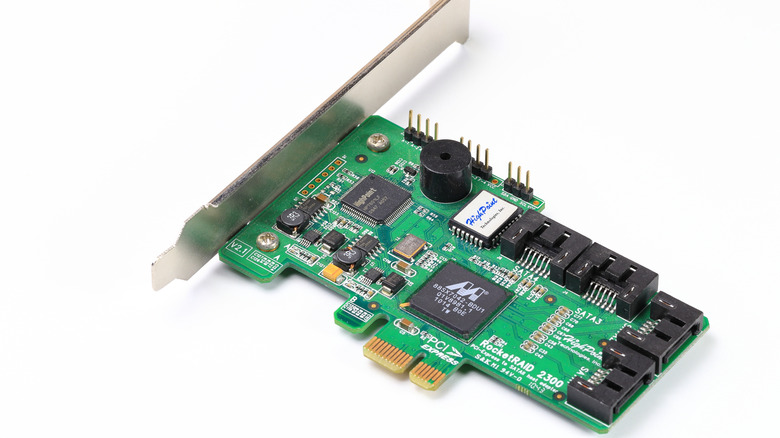

A typical RAID controller card with multiple connectors.
MMXeon/Shutterstock

There are different ways to set up a RAID array. They vary not only depending on the operating system you’re using, but also on the hardware. For example, you can simply connect two or more disks to your computer and create a RAID array using software. This is usually the easiest way, but performance won’t be optimal. Apple’s Disk Utility in macOS lets you set up RAID 0 and 1 arrays. It’s similar to Disk Management in Windows. There’s also paid software like StableBit DrivePool and SnapRAID that offers additional features.

But if you really want to take RAID seriously, try using hardware-based methods. They have dedicated controllers that better protect drives against failures and deliver better performance. However, they’re also more complicated to set up. For example, you may have to buy a RAID controller to install on your motherboard. If you don’t want to go through all that trouble (or maybe because you have a mini PC), a RAID enclosure might be your best option. They usually come with a RAID chip built in, so all you need to do is plug the drives into it. Just be sure to check the maximum capacities and speeds before buying one. It’s the same as choosing USB-C accessories — high speeds aren’t guaranteed for all of them.

Credit: Source link

ShareTweetSendSharePin

Related Posts

Epic Games CEO Confirms ‘Huge Pivot’ to Retool Teams for AI – Unite.AI
AI & Technology

Epic Games CEO Confirms ‘Huge Pivot’ to Retool Teams for AI – Unite.AI

October 12, 2026
Epic Reportedly Delays Its Disney Video Game So It Can Be Made Using More AI
AI & Technology

Epic Reportedly Delays Its Disney Video Game So It Can Be Made Using More AI

October 12, 2026
FormFactor, Teradyne Enter Broad Semiconductor Test Collaboration – Unite.AI
AI & Technology

FormFactor, Teradyne Enter Broad Semiconductor Test Collaboration – Unite.AI

October 12, 2026
Meta Says It’s Caught Up To The Frontier With Its Latest Wonder AI Models
AI & Technology

Meta Says It’s Caught Up To The Frontier With Its Latest Wonder AI Models

October 12, 2026
Next Post
Sixth person who had measles has died in Pennsylvania, local coroner says – The Washington Post

Sixth person who had measles has died in Pennsylvania, local coroner says - The Washington Post

Leave a Reply Cancel reply

Your email address will not be published. Required fields are marked *

Search

No Result
View All Result
Apple Makes Some Cuts in Hardware Engineering to Speed Up Development

Apple Makes Some Cuts in Hardware Engineering to Speed Up Development

October 12, 2026
Politics And The Markets 10/09/26

Politics And The Markets 10/09/26

October 9, 2026
Harvey Weinstein sentenced to 15 years in prison for sexual assault in New York case

Harvey Weinstein sentenced to 15 years in prison for sexual assault in New York case

October 9, 2026

About

Learn more

Our Services

Legal

Privacy Policy

Terms of Use

Bloggers

Learn more

Article Links

Contact

Advertise

Ask us anything

©2020- TradePoint.io - All rights reserved!

Tradepoint.io, being just a publishing and technology platform, is not a registered broker-dealer or investment adviser. So we do not provide investment advice. Rather, brokerage services are provided to clients of Tradepoint.io by independent SEC-registered broker-dealers and members of FINRA/SIPC. Every form of investing carries some risk and past performance is not a guarantee of future results. “Tradepoint.io“, “Instant Investing” and “My Trading Tools” are registered trademarks of Apperbuild, LLC.

This website is operated by Apperbuild, LLC. We have no link to any brokerage firm and we do not provide investment advice. Every information and resource we provide is solely for the education of our readers. © 2020 Apperbuild, LLC. All rights reserved.

No Result
View All Result
  • Main
  • AI & Technology
  • Stock Charts
  • Market & News
  • Business
  • Finance Tips
  • Trade Tube
  • Blog
  • Shop

© 2023 - TradePoint.io - All Rights Reserved!