


• bitcoinBitcoin(BTC)$79,362.00-0.63%
  • ethereumEthereum(ETH)$2,501.20-0.04%
  • tetherTether(USDT)$1.00-0.01%
  • binancecoinBNB(BNB)$741.68-0.64%
  • rippleXRP(XRP)$1.40-0.13%
  • usd-coinUSDC(USDC)$1.000.00%
  • solanaSolana(SOL)$104.20-1.12%
  • tronTRON(TRX)$0.334596-0.16%
  • Figure HelocFigure Heloc(FIGR_HELOC)$1.060.00%
  • zcashZcash(ZEC)$1,142.41-3.42%
  • HyperliquidHyperliquid(HYPE)$85.11-2.30%
  • dogecoinDogecoin(DOGE)$0.0913391.68%
  • RainRain(RAIN)$0.016327-2.04%
  • USDSUSDS(USDS)$1.000.01%
  • moneroMonero(XMR)$519.45-3.39%
  • chainlinkChainlink(LINK)$12.80-1.86%
  • whitebitWhiteBIT Coin(WBT)$76.844.34%
  • leo-tokenLEO Token(LEO)$9.20-2.15%
  • cardanoCardano(ADA)$0.2220400.48%
  • stellarStellar(XLM)$0.1934493.77%
  • bitcoin-cashBitcoin Cash(BCH)$261.411.57%
  • daiDai(DAI)$1.00-0.01%
  • Ethena USDeEthena USDe(USDE)$1.00-0.01%
  • uniswapUniswap(UNI)$7.01-2.73%
  • litecoinLitecoin(LTC)$55.672.24%
  • USD1USD1(USD1)$1.000.00%
  • CantonCanton(CC)$0.106408-3.33%
  • the-open-networkGram (prev. Toncoin)(GRAM)$1.39-2.12%
  • hedera-hashgraphHedera(HBAR)$0.0826431.95%
  • avalanche-2Avalanche(AVAX)$8.164.00%
  • suiSui(SUI)$0.834.28%
  • Global DollarGlobal Dollar(USDG)$1.000.01%
  • shiba-inuShiba Inu(SHIB)$0.0000060.27%
  • nearNEAR Protocol(NEAR)$2.35-0.41%
  • paypal-usdPayPal USD(PYUSD)$1.00-0.01%
  • BlackRock USD Institutional Digital Liquidity FundBlackRock USD Institutional Digital Liquidity Fund(BUIDL)$1.000.00%
  • crypto-com-chainCronos(CRO)$0.057291-0.23%
  • tether-goldTether Gold(XAUT)$4,429.920.88%
  • MemeCoreMemeCore(M)$1.174.84%
  • Circle USYCCircle USYC(USYC)$1.140.00%
  • BittensorBittensor(TAO)$261.60-0.17%
  • okbOKB(OKB)$117.393.07%
  • Ripple USDRipple USD(RLUSD)$1.000.00%
  • Ondo US Dollar YieldOndo US Dollar Yield(USDY)$1.150.01%
  • AsterAster(ASTER)$0.77-0.15%
  • mantleMantle(MNT)$0.632.23%
  • aaveAave(AAVE)$132.63-1.39%
  • pax-goldPAX Gold(PAXG)$4,432.440.90%
  • OndoOndo(ONDO)$0.3875751.77%
  • worldcoin-wldWorldcoin(WLD)$0.49867821.23%
TradePoint.io
  • Main
  • AI & Technology
  • Stock Charts
  • Market & News
  • Business
  • Finance Tips
  • Trade Tube
  • Blog
  • Shop
No Result
View All Result
TradePoint.io
No Result
View All Result

How an explosion of ‘smart’ devices is threatening US households — and national security

October 22, 2023
in Business
Reading Time: 4 mins read
A A
How an explosion of ‘smart’ devices is threatening US households — and national security
ShareShareShareShareShare

US homes and infrastructure are increasingly outfitted with Internet-connected “smart” devices that are vulnerable to hackers — and lawmakers claim beefed-up security standards will be necessary to address growing threats from criminals and hostile governments alike.

YOU MAY ALSO LIKE

Carnegie House ruling gives store tenants a reprieve

Oil prices hit six-week high amid US-Iran conflict — but drivers could soon get relief at the pump

Public fears about cybersecurity were stoked by ransomware attacks on the Colonial Pipeline and meat producer JBS in 2021, as well as federal warnings of foreign attacks on the US power grid. Closer to home, hackers have used Ring cameras to spy on kids and even lure them into creepy conversations.

Rep. Mike Gallagher (R-Wis.), chairman of the House Select Committee on China, is among a growing group of policymakers focused on so-called “Internet of Things,” or IoT devices, which generally are understood as non-computer devices with a web connection.

Examples range from smart TVs, wearable fitness trackers, doorbell cameras, and thermostats to control systems for factories and power plants. A key cause for worry, according to the congressman, is the fast-growing use of Chinese-made cellular modules that allow smart devices to connect to the Internet.

It sounds like science fiction, but with widespread control of those modules, China could steal US data or remotely shut down critical infrastructure in a conflict scenario, according to concerned lawmakers. Hackers could crank up AC units en masse to cause power brownouts, or take control of self-driving cars or even medical devices like pacemakers – as former Vice President Dick Cheney once feared.

Rep. Mike Gallagher is chair of the House select committee on China.
Bonnie Cash/UPI/Shutterstock

In a statement to The Post, Gallagher said “modules sourced from [People’s Republic of China] companies like Quectel pose a security risk in any US technology, but especially in government hardware, critical infrastructure, and life-saving first response systems.

“Using these modules may create a backdoor for malign Chinese government actors to access and potentially cripple our devices,” Gallagher added. “It’s just common sense: American critical infrastructure must not be dependent upon CCP technology.”

In August, Gallagher and the committee’s top Democrat, Rep. Raja Krishnamoorthi, asked FCC Chairwoman Jessica Rosenworcel to examine the use of Chinese-made cellular modules.

A series of cybersecurity incidents has raised concern about public risks involving smart devices.
Jordan – stock.adobe.com

The lawmakers’ letter said the Chinese Communist Party has “given extensive state support” to the industry and singled out two Chinese firms, Quectel and Fibocom, as major producers of modules widely used in US products ranging from smart cities and drones to US first responder body cameras.

The lawmakers cited Russia’s recent theft of $5 million in farm equipment from a John Deere dealership in Ukraine – only for the vehicles to be rendered useless after their modules were remotely disabled.

Last month, Rosenworcel followed up on the lawmakers’ request by asking the Justice Department, the FBI and other federal agencies to consider whether the use of components made by Quectel and Fibocom poses a national security threat.

A Quectel spokesperson said the company’s “IoT modules do not pose any risk to national security or privacy” and noted that it has “proactively engaged with regulators, government agencies, and industry stakeholders to address any concerns they might have.”

The FCC’s proposed safety label is slated to debut next year.
NurPhoto via Getty Images

“Quectel is an independent public company and makes its own business decisions,” the spokesperson said. “It is neither owned nor controlled by the Chinese government. Quectel does not and has not shared, transferred, or publicly disclosed data with the Chinese government. The Chinese government has never requested any data from Quectel.”

Fibocom did not immediately return a request for comment.

FCC Commissioner Nathan Simington, a Republican, said the threat of a state-sponsored attack on key infrastructure such as industrial installations, public utilities or law enforcement should be taken “totally seriously.”

FCC Commissioner Nathan Simington is among those who support a voluntary label for IoT devices that meet minimum safety standards.
Rod Lamkey – CNP / MEGA

Any company or operator potentially at risk should be “engaged with its regulators on an ongoing basis and should develop more of an accountability plan,” he added.

“In a lot of ways, we’re lucky that a lot of the hacks so far have just been criminal activity,” Simington said. “At the end of the day, criminals are way less resourced than the Chinese NSA or the Russian NSA.”

For consumers, Simington is backing the FCC’s current push for a “US Cyber Trust Mark” label for smart devices that voluntarily adhere to “widely accepted cybersecurity standards,” including regular software updates over a disclosed period of time after the device is released.

In an August statement in support of the FCC’s labeling effort, Simington warned that “attacks on unpatched devices are becoming more frequent and more dangerous” and cited the risk of “botnets,” or networks of hijacked devices utilized in major cyberattacks.

Experts warn that hackers or other bad actors could exploit software flaws in “smart” devices.
AP
Doorbell cameras and other smart devices have grown in popularity in recent years.
AP

Simington — who last month took the unique step of soliciting feedback on the popular “Hacker News” forum — said the label set to debut next year isn’t a solution, but a rather a first step to help businesses without creating a costly, plodding bureaucracy.

“There are lots of Americans buying devices every day – we’re talking millions of units a year – they’re buying them on the expectation that those devices are secure,” Simington told The Post.

“If those expectations are violated, the American people are going to have some pretty legitimate questions about what exactly we were doing in DC all that time.”

Credit: Source link

ShareTweetSendSharePin

Related Posts

Carnegie House ruling gives store tenants a reprieve
Business

Carnegie House ruling gives store tenants a reprieve

September 7, 2026
Oil prices hit six-week high amid US-Iran conflict — but drivers could soon get relief at the pump
Business

Oil prices hit six-week high amid US-Iran conflict — but drivers could soon get relief at the pump

September 7, 2026
Apple’s first foldable iPhone is set to debut Wednesday — and all eyes are on new CEO John Ternus
Business

Apple’s first foldable iPhone is set to debut Wednesday — and all eyes are on new CEO John Ternus

September 7, 2026
Hunter Biden launches crypto meme coin making light of laptop scandal
Business

Hunter Biden launches crypto meme coin making light of laptop scandal

September 7, 2026
Next Post
Kentucky Floods Delay Return To School

Kentucky Floods Delay Return To School

Leave a Reply Cancel reply

Your email address will not be published. Required fields are marked *

Search

No Result
View All Result
NASA prepares to launch most advanced telescope ever built

NASA prepares to launch most advanced telescope ever built

September 1, 2026
His Daughter Cut Him Off After Not Paying For Her College

His Daughter Cut Him Off After Not Paying For Her College

September 2, 2026
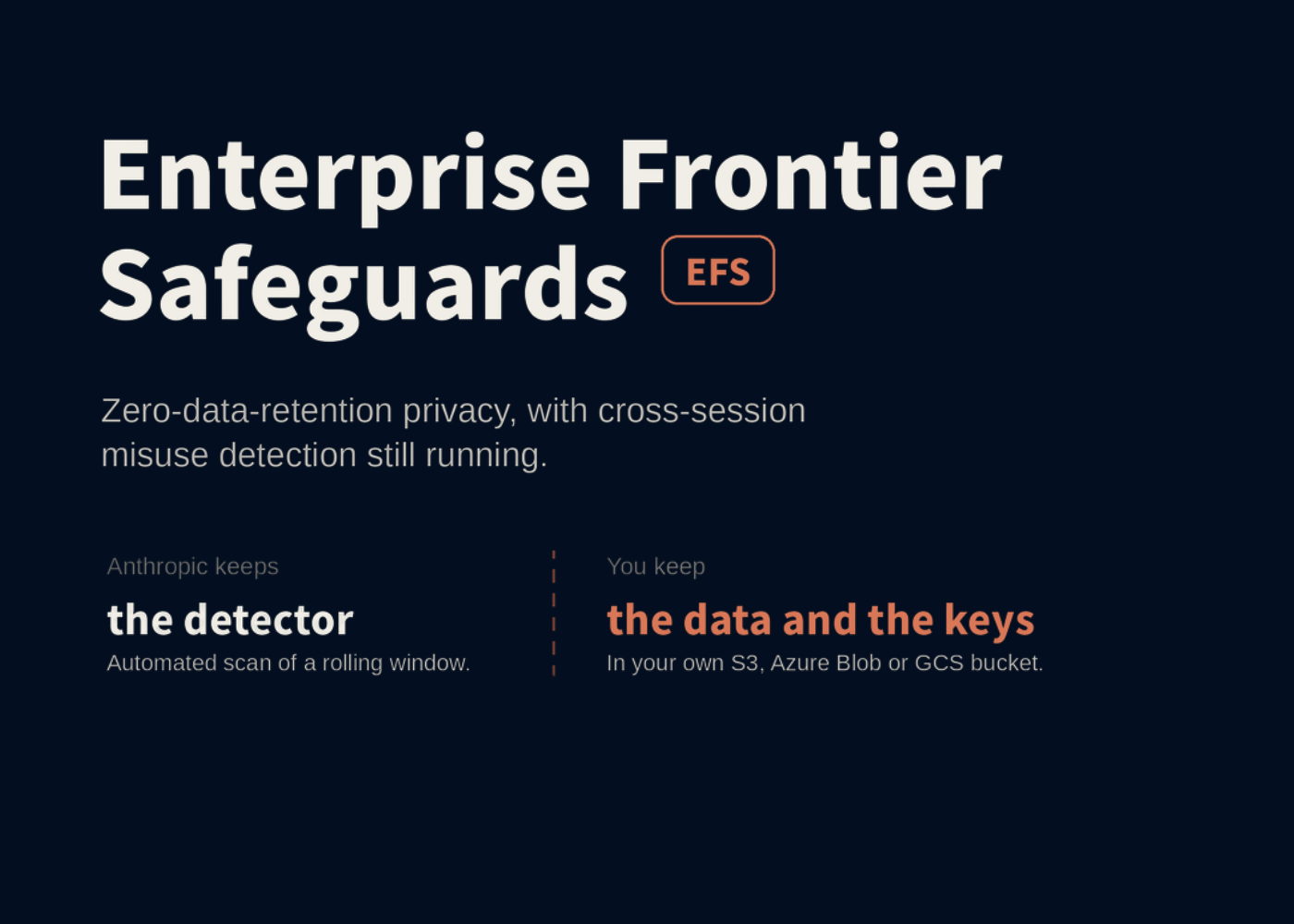
Anthropic Introduces Enterprise Frontier Safeguards (EFS): Zero-Data-Retention Privacy Plus Cross-Session Misuse Detection

Anthropic Introduces Enterprise Frontier Safeguards (EFS): Zero-Data-Retention Privacy Plus Cross-Session Misuse Detection

September 2, 2026

About

Learn more

Our Services

Legal

Privacy Policy

Terms of Use

Bloggers

Learn more

Article Links

Contact

Advertise

Ask us anything

©2020- TradePoint.io - All rights reserved!

Tradepoint.io, being just a publishing and technology platform, is not a registered broker-dealer or investment adviser. So we do not provide investment advice. Rather, brokerage services are provided to clients of Tradepoint.io by independent SEC-registered broker-dealers and members of FINRA/SIPC. Every form of investing carries some risk and past performance is not a guarantee of future results. “Tradepoint.io“, “Instant Investing” and “My Trading Tools” are registered trademarks of Apperbuild, LLC.

This website is operated by Apperbuild, LLC. We have no link to any brokerage firm and we do not provide investment advice. Every information and resource we provide is solely for the education of our readers. © 2020 Apperbuild, LLC. All rights reserved.

No Result
View All Result
  • Main
  • AI & Technology
  • Stock Charts
  • Market & News
  • Business
  • Finance Tips
  • Trade Tube
  • Blog
  • Shop

© 2023 - TradePoint.io - All Rights Reserved!