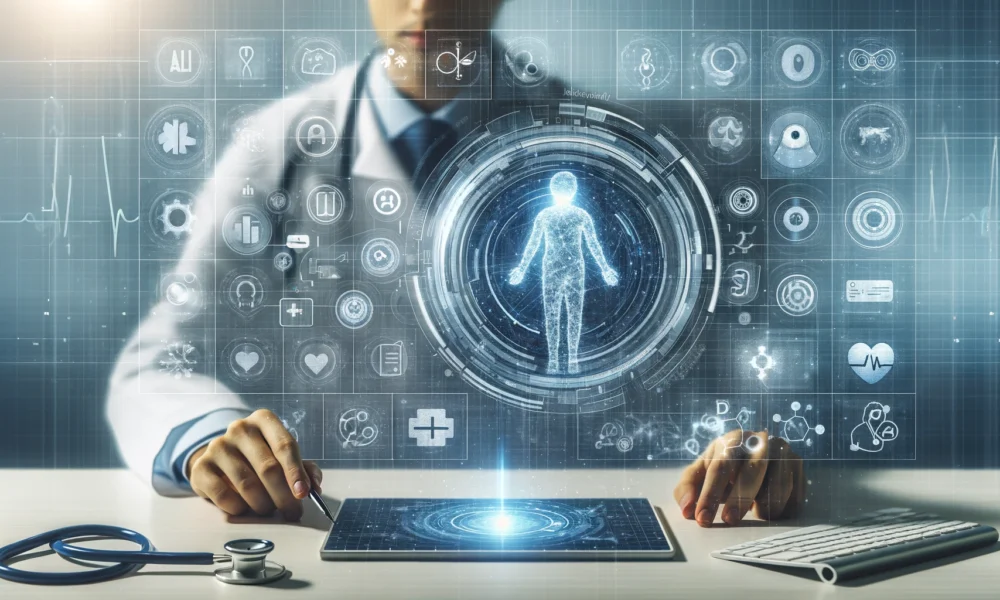

AI in healthcare is causing a revolution in how clinicians document, analyze, and make decisions. Two key breakthroughs leading this change are AI-powered medical scribes and Clinical Decision Support Systems (CDSS). These technologies are boosting productivity and have an impact on patient outcomes for the better, changing the healthcare scene.
AI Scribes: Redefining Clinical Documentation
AI has a big influence on clinical documentation, which is one of the main areas it’s changing. In the past, clinicians used up 35-40% of their work time doing paperwork, like writing patient notes and filling out electronic health records (EHRs). This paperwork often meant less time with patients, which led to clinicians feeling burnt out, making more mistakes, and patients being less happy.
AI scribes tackle these issues by applying cutting-edge Natural Language Processing (NLP) systems to hear and write down doctor-patient talks as they happen. These AI tools create in-depth SOAP (Subjective, Objective, Assessment, and Plan) records that grab the key parts of a medical visit cutting down on the need for clinicians to type things out by hand. AI scribes do more than save time. They also help make documentation more accurate and complete. These systems automate note-taking, which leads to standard entries, fewer human mistakes, and better compliance with rules. This plays a key role in keeping medical records high-quality and billing processes correct.
Clinical Decision Support Systems (CDSS): Data-Driven Medicine Takes a New Turn
AI scribes make documentation easier, but Clinical Decision Support Systems (CDSS) bring smart thinking to making decisions. CDSS is an AI tool that uses patient data, clinical guidelines, and fact-based methods to give healthcare providers advice in real time.
Clinical Decision Support Systems (CDSS) have a broad impact on healthcare. These systems are instrumental in reducing adverse drug events by identifying potential medication interactions and suggesting safer alternatives. They also play a vital role in increasing adherence to clinical guidelines by providing real-time reminders and recommendations tailored to each patient’s unique health data. This combination of proactive alerts and evidence-based support helps clinicians optimize treatment decisions, enhancing patient safety and improving overall care quality.
CDSS also has an influence on personalized medicine by analyzing individual patient histories and predicting potential health risks. For example, it can check a diabetic patient’s health records, lab results, and medication history to suggest changes in therapy lowering the risk of problems like hypoglycemia. These data-driven insights help clinicians to make proactive decisions resulting in improved patient care and outcomes.
A Synergistic Approach: AI Scribes and CDSS Working Together
The pairing of AI scribes and CDSS shows even more potential for the future of healthcare. When these two technologies team up, the blend of automated documentation and smart decision support lets clinicians zero in on giving top-notch care.
Think about a regular doctor’s visit: an AI assistant listens and writes down what’s said, making a thorough organized note. The CDSS then studies this note, comparing it with the patient’s history, medical rules, and new studies to give useful tips. Let’s say the patient might have high blood pressure. The CDSS could point this out and suggest more tests or treatments.
When AI assistants and CDSS work together , clinicians can save time and make smart, fact-based choices right away. This creates a more productive and unified way of working, with each part helping to focus on patient care.
Better Results for Patients and Less Stress for Doctors
AI scribes and CDSS do more than boost productivity; they also improve patient outcomes and doctor well-being. Clinicians who incorporate AI scribes into their workflow often experience reduced burnout and greater job satisfaction. By taking over time-consuming documentation tasks, AI scribes allow healthcare providers to focus more on patient care, improving both their efficiency and overall work experience.
Clinical Decision Support Systems (CDSS) play a critical role in reducing diagnostic errors, which are a major contributor to patient harm. By providing real-time insights and alerting clinicians to potential inconsistencies or overlooked details, CDSS enhances the accuracy of diagnoses. This proactive support allows healthcare professionals to make more informed decisions, ultimately improving patient safety and reducing mortality rates.
Real-World Impact: The Future of Healthcare
AI scribes and CDSS have an influence on the future of healthcare. Hospitals and clinics worldwide see advantages from these technologies. AI scribes help cut down waiting times in emergency departments. They allow clinicians to document cases more . At the same time, CDSS lets rural healthcare providers make smart choices based on up-to-date medical proof. This helps close the gap between big medical centers and smaller practices.
What’s more, combining these AI systems with electronic health records (EHR) has an impact on creating a more unified healthcare system. By collecting patient data and offering instant insights, CDSS can help with preventive care efforts, early detection, and managing the health of populations. This data-focused approach fits with the worldwide move towards care based on value, which aims to boost patient results rather than just increasing the number of services.
Challenges and the Path Forward
Even with their many perks, AI scribes and CDSS face hurdles in their adoption. People worry about privacy, data safety, and possible bias in AI systems. These issues need solutions to gain wide acceptance. Also, clinicians and nurses need to learn how to use these tools well and not rely on them too much.
Still, these technologies are gaining ground fast. As AI grows smarter, AI scribes and CDSS will do more. Future systems might offer sharper note-taking, better help with decisions, and even predict what’s coming next, thanks to better machine learning and natural language processing.
Conclusion
The use of AI scribes and Clinical Decision Support Systems is causing a revolution in healthcare. It has an impact on productivity, makes decision-making better, and in the end, improves how patients fare. These technologies make it easier for clinicians to spend time on what’s important—looking after patients. They do this by cutting down on paperwork and giving instant, fact-based insights. As AI-driven breakthroughs keep getting better, the outlook for healthcare is looking brighter. Both patients and healthcare workers can expect to have better experiences.
Credit: Source link