

Tom Werner
It has been a while since I last wrote about the Gladstone Land Corporation 6% Series C Cumulative Preferred Shares (NASDAQ:LANDP). Last September, while analyzing the common equity of Gladstone Land Corporation (LAND), I noted that its preferred shares, LANDP, presented an attractive investment opportunity as they were backed by over 110,000 acres of valuable farmland across the United States and protected by over $580 million in equity capital in LAND’s capital structure. The shares also paid an attractive 7.8% yield
So far, my recommendation has performed well, with the Gladstone Series C preferred shares returning almost 13% in total returns since my article (Figure 1).
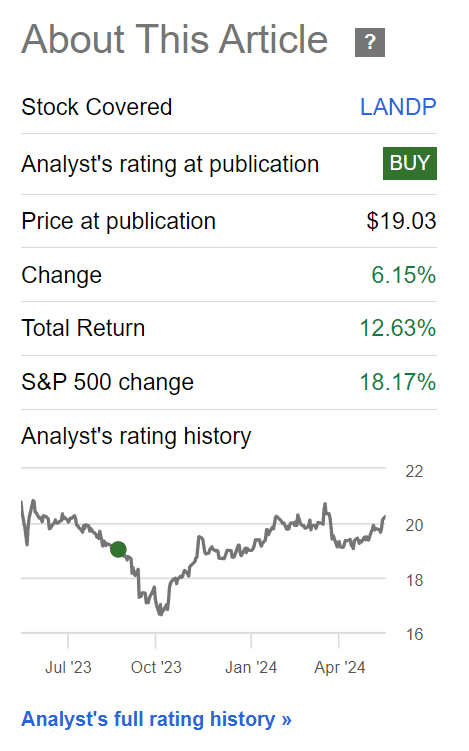
Figure 1 – LANDP has returned 13% since September 2023 (Seeking Alpha)
Importantly, the preferred shares have vastly outperformed Gladstone’s common shares, proving that where one invests in a company’s capital structure is also critically important (Figure 2).
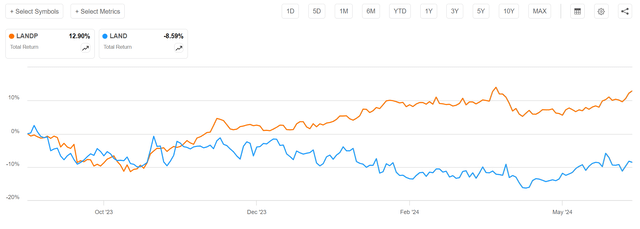
Figure 2 – LANDP outperformed LAND (Seeking Alpha)
However, since significant time has passed, let us revisit Gladstone’s fundamentals to see if the LANDP preferred shares remain a good investment going forward.
Overall, I believe the story remains the same on the 6% preferred shares. They remain well protected from loss by valuable farmland a large equity cushion. A recently announced share buyback program should also provide a floor to valuations. I remain a buyer of LANDP.
Brief Company Overview
Gladstone Land Corporation is a real estate investment trust (“REIT”) specializing in acquiring and owning valuable farmland across the United States. Gladstone primarily targets annual fresh produce (i.e. fruits and vegetables) and permanent crop (i.e. blueberries and nuts) farms, instead of commodity grain (corn and soybean) farms (Figure 3).
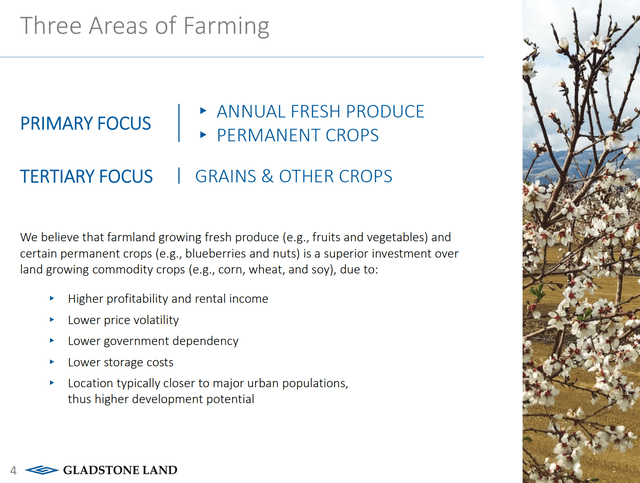
Figure 3 – Gladstone overview (LAND investor presentation)
Fresh produce and permanent crops have historically been better investments because these crops have steadier demand and are less prone to price volatility compared to commodity grain crops.
Preferred Shares Well Protected
I believe the Series C preferred shares are well protected as the company owns 169 farms with an appraised value of $1.57 billion compared to the company’s market enterprise value of $1.03 billion (Figure 4).
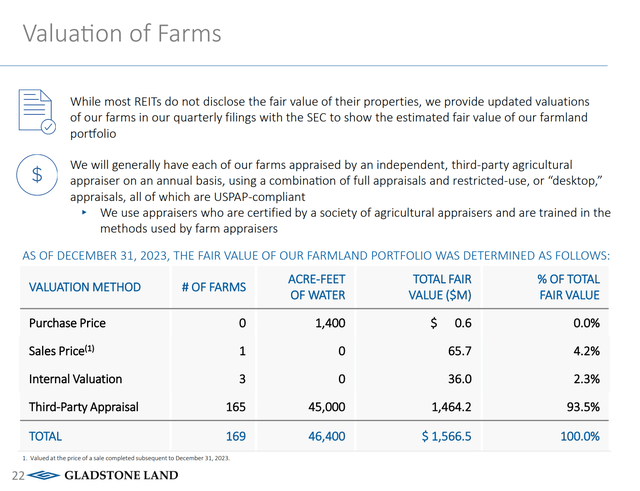
Figure 4 – Gladstone farm appraisals (LAND investor presentation)
Furthermore, within the company’s capital structure, the Series C preferred shares are protected against loss with over $500 million in common equity cushion (Figure 5).
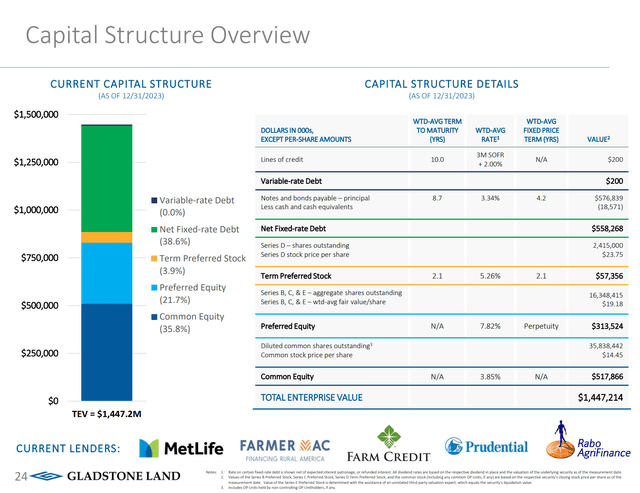
Figure 5 – Gladstone capital structure (LAND investor presentation)
As a reminder, preferred shares have a higher priority claim on a company’s assets than common shareholders. So in order for the Series C preferred shares to suffer losses, the equity holder will have to be wiped out first.
Tenant Issues Continued In Q1
For Gladstone, a recent string of tenant issues continued in the latest Q1/2024 results. Operating revenues declined 4.5% YoY to $20.3 million, mostly on forgone revenues, as a large farm in Florida was sold in the quarter. Gladstone also had 20 farms (5 in California, 14 in Michigan, and 1 in Washington) that were either vacant or had tenant issues, resulting in the farms’ revenues to be recognized on a cash basis and leading to a decrease in net operating income of ~$750k (Figure 6)
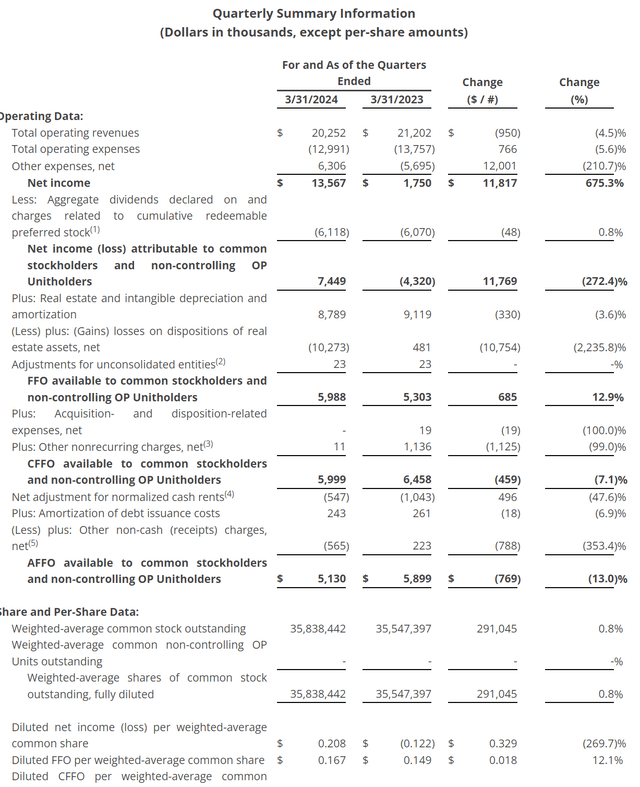
Figure 6 – LAND Q1/24 financial performance were weak (company reports)
Gladstone Remains Significantly Undervalued
Gladstone’s poor common stock performance, with -7% YTD returns, likely reflects the company’s tenant issues and poor financial performance mentioned above. However, as we have been showing in several articles, the company as a whole remains deeply undervalued.
For example, the common shares of Gladstone currently have a net asset value (“NAV”) per share of $18.50 compared to a current share price of $13.48, or a P/NAV of 0.73x (Figure 7).
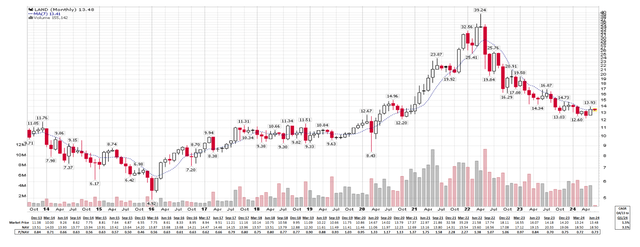
Figure 7 – Gladstone price vs. NAV (Author created with price chart from stockcharts.com and data form company reports)
Historically, Gladstone’s P/NAV has ranged from a low of 0.5x to a high of 2.3x, so current valuations of 0.7x remain cheap by historical standards.
In fact, one can argue that the book value used by the company may be conservative, as was shown by the recent sale of the Florida farm.
In the first quarter, Gladstone sold a 3,748-acre farm in Florida for approximately $65.7 million. After accounting for closing costs, the company was able to book a net gain of $10.4 million and a return on equity of 60% on the property.
Tender Offer Supports Valuation
Recently, Gladstone also announced a tender offer for the company’s preferred shares. With interest rates stubbornly high, acquiring new farms does not make economic sense so the company is allocating capital to repurchase its own preferred shares.
The company has authorized a share repurchase program for up to $20 million of the 6.0% Series B preferred shares (LANDO) and up to $35 million of the 6.0% Series C preferred shares (LANDP).
By publicly offering to buy back these preferred shares, Gladstone is supporting the valuation of these shares, which are trading at a significant discount to their $25 face value.
With a 6.0% coupon ($1.50 / annum or $0.125 / month), the Series C preferred shares are currently yielding 7.4% based on a market price of $20.20 (Figure 8).
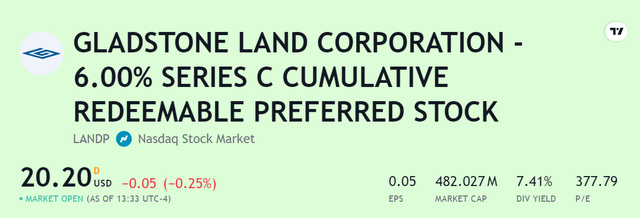
Figure 8 – LANDP valuation (quantumonline.com)
Currently, LANDP’s 7.4% yield is approximately 290 bps above the 10 year treasury yield of 4.5% (Figure 9).
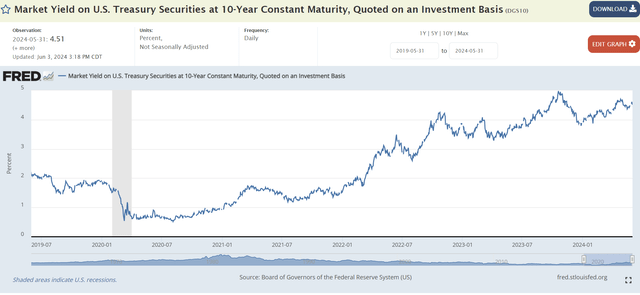
Figure 9 – 10 year treasury yields (St. Louis Fed)
Although Gladstone’s preferred shares are unrated by the credit rating agencies, I do not believe they should trade at such a large spread compared to investment grade BBB-credits, which currently trade at a 110 bps spread, as Gladstone is backed by valuable farmland (Figure 10)
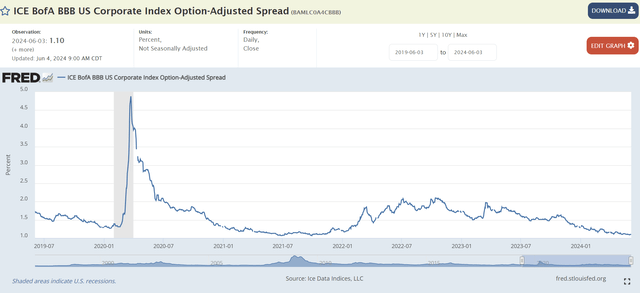
Figure 10 – BBB-credit spreads (St. Louis Fed)
Risks Of Owning Gladstone Preferred Shares
The biggest risk to owning Gladstone Series C Preferred Shares remains long-term interest rates. Given the perpetual nature of the Series C preferred shares, they generally trade like long-term bonds on Gladstone Land Corp. If long-term treasury yields were to rise significantly, then the Series C preferred shares would likely trade lower.
Conclusion
I continue to like Gladstone 6.0% Series C Preferred Shares due to their relative safety. The preferred shares are backed by $1.57 billion in valuable farmland that does not fluctuate like other financial assets. Furthermore, the preferred shares are protected in the capital structure by over $500 million in common equity.
A recently announced share buyback program on the Series B and Series C preferred shares should provide a floor to valuation. I continue to recommend LANDP as a buy.
Credit: Source link