

Dr_Microbe
Fusion Pharmaceuticals (NASDAQ:FUSN) emerges as an interesting story in the oncology sector, especially in the niche but growing radiopharmaceuticals segment. The appeal of Fusion lies in its approach to precision oncology, particularly with its clinical candidates’ portfolio for a range of cancers. The company’s investment attractiveness is anchored by its commitment to innovation, including its proprietary technology and strategic partnerships to improve the therapeutic index of its radiopharmaceuticals.
An essential part of this thesis is the strategic orientation of Fusion toward the principles of safety and efficacy, which manifests itself in clinical trials with the aim of optimizing the dosing regimens for the greatest effect on tumors with minimal hematological toxicity. Such an approach is not only medically sound but also a strategic driver in a competitive environment. In addition, the recent FDA clearance for IND applications for their collaboration candidate, FPI-2068, represents a major milestone in the company’s clinical development.
In terms of finances, Fusion has a comfortable cushion of cash that is expected to fund its activities well into Q2 2025, indicating a solid financial position to support its trials. This stability is driven by the collaborative revenues and controlled R&D and G&A expenses, which highlight strategic resource allocation. Further, the net loss of Fusion has lessened, which indicates that the company’s business model is becoming more mature and the possibility of its sustainable development is increasing.
The strategic partnership with BWX Technologies (BWXT) provides Fusion with an important supply of actinium-225, which helps to strengthen the company’s investment narrative. This partnership is more than just a strategic moat and not just a supply agreement, and potentially gives Fusion a sizable manufacturing flexibility and capacity advantage, which is key to supporting its clinical pipeline and future commercial requirements.
Clinical Pipeline
Fusion Pharmaceuticals’ opportunity is found in its clinical pipeline, which is broad and novel. Every candidate demonstrates a well-considered strategy for targeting and treating cancers that have large areas of unmet need. Of interest, FPI-1434, currently in Phase 1 trials, to date, is unique due to its cold/hot dosing regimen attempting to improve the therapeutic index without compromising safety in solid tumors expressing the IGF-1R. This might signify a new treatment paradigm for solid tumor treatment if further trials support these early results that showed positive results in tumor uptake and hematological toxicity control.
ir.fusionpharma.com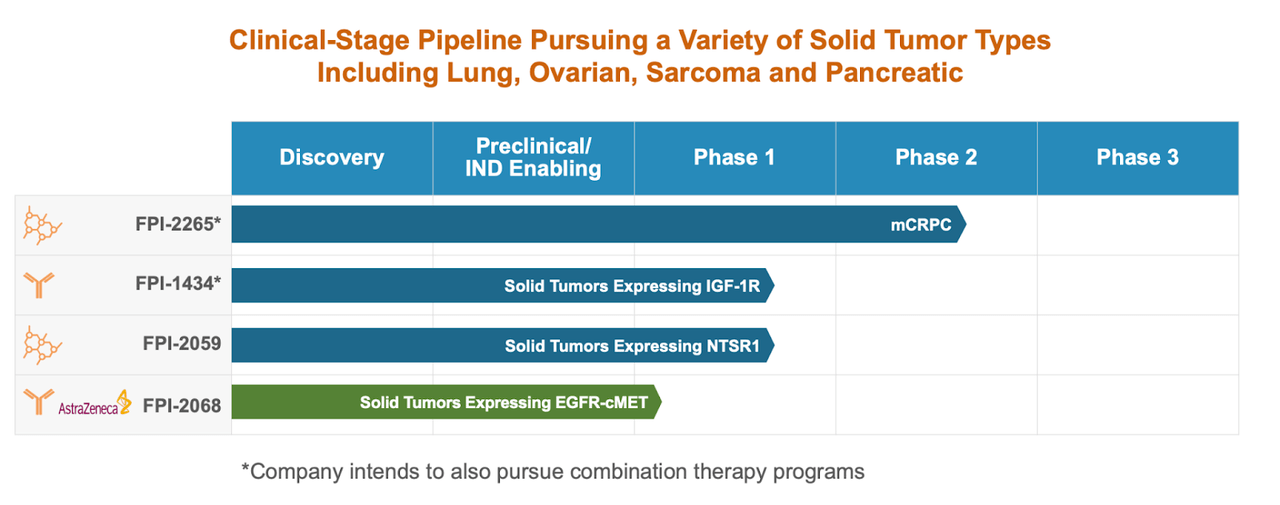
The investigational safety and preliminary antitumor activity of FPI-2059 in solid tumors that express NTSR1 also shows considerable promise. The candidate’s continued patient enrollment demonstrates the company’s dedication to a comprehensive clinical assessment. Likewise, the partnership with AstraZeneca (AZN) on FPI-2068 is a strategically advantageous move, targeting EGFR and cMET in many solid tumors. Receiving FDA clearance for IND applications is more than just a procedural achievement; it signifies the regulatory trust in the scientific rationale that the candidate’s mechanism of action has been built upon.
ir.fusionpharma.com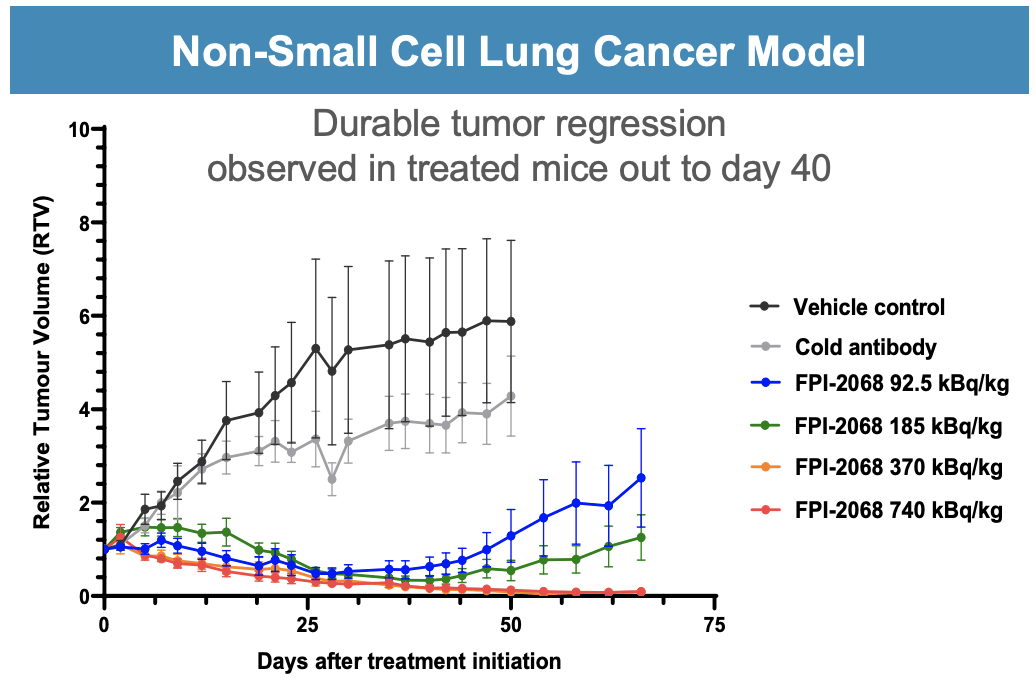
This can be seen from the development of each candidate; the company’s strategic focus is on TATs (Targeted Alpha Therapies). Using radiopharmaceuticals, these therapies can offer better results and fewer side effects, which is one of the main advantages over traditional oncology treatments. The TATCIST trial for metastatic castration-resistant prostate cancer is currently underway, which is a testament to the dedication of Fusion to this novel therapeutic modality.
Financial State
From the financial perspective, Fusion Pharmaceuticals has sound financial health that presents it as a company that practices fiscal discipline but strategically invests in its future. As of September 30, 2023, the company had cash and cash equivalents of $207.3 million, which was an increase from the end of the last fiscal year. This capital cushion is projected to support operations well into 2Q 2025, providing a significant runway to progress its clinical pipeline without the near-term need for additional funding. This sort of financial stability is critical for investors who want to invest in companies that will be able to withstand the high-cost and time-consuming process of drug development.
On the cost side, the firm has shown respectable work in cost control, with R&D costs decreasing as a result of strategic reprioritization and clinical development effectiveness. This reduction, particularly in the light of the terminated FPI-1966 program, denotes a disciplined resource allocation approach that allows investment to be channeled to the most promising clinical candidates.
The general and administrative expenses have also gone down, which reflects a leaner corporate structure and prudent control of operating costs. This type of fiscal control is essential to keep a lean operation that can be flexible and responsive to the biotech industry’s constantly changing circumstances.
However, even with these positives, the reported net loss, albeit narrower than the previous year, shows that the biotech sector faces financial struggles. Nonetheless, the declining loss per share signals a firm that is slowly advancing towards a more viable financial structure as it develops.
Supply Chain Mastery: Actinium-225 Production
The strength of the supply chain in the biopharmaceutical sector is one of the most critical yet overlooked factors for success, especially for companies such as Fusion Pharmaceuticals that depend on specific isotopes. Fusion has placed itself in a strategically advantageous position with a competitive advantage in the manufacture of actinium-225, a key ingredient in its targeted alpha therapies (TATs). The company’s collaboration with BWXT Medical guarantees not only a preferred supply of radium-225 but also an opportunity to use breakthrough generator technology for onsite production of high-purity actinium-225.
ir.fusionpharma.com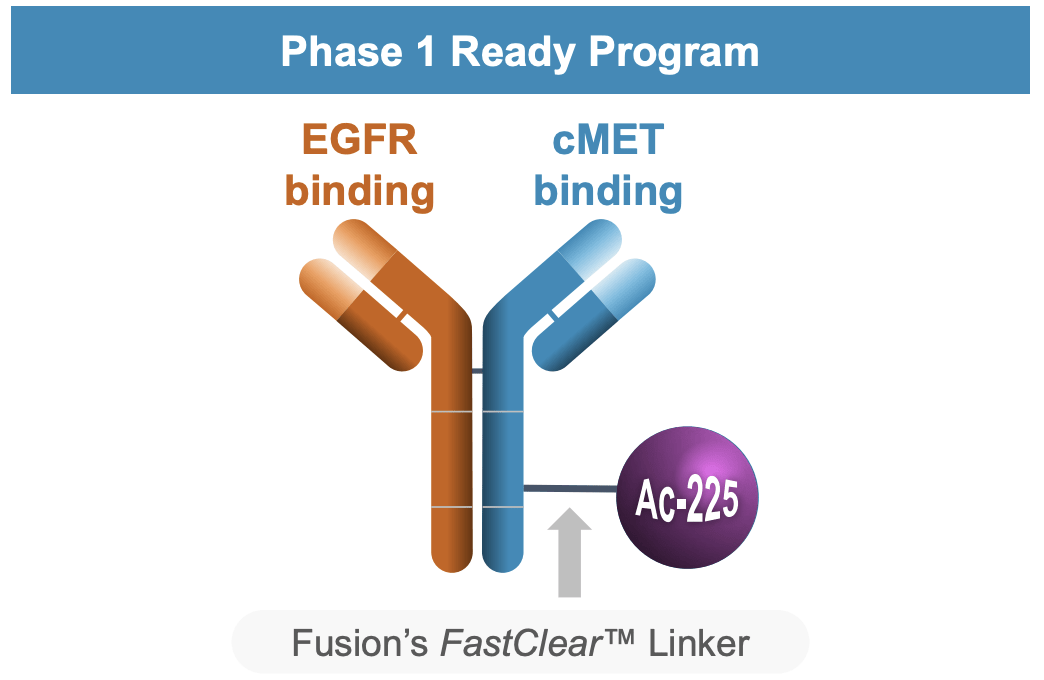
In the process of being able to develop actinium-225 internally, Fusion reduces the risk of isotope shortage and gains a significant upper hand in terms of manufacturing flexibility. Such agility is critical in the high-speed world of clinical trials, where an on-demand dose-filling ability can accelerate study completion and potentially speed up time to market.
Furthermore, the partnership with BWXT Medical goes far beyond supply; it is a combination of Fusion’s radiopharmaceutical development knowledge and BWXT’s established manufacturing capacities. This cooperation is a sign of forward-thinking by Fusion itself to associate with the established leaders in medical isotope production, which will strengthen its strategic position in the industry.
The recent increase in their supply contract for actinium-225 underlines the expansion of Fusion’s clinical pipeline and the expectation of increased demand for its TATs. By securing and scaling this supply, Fusion is not just getting ready for current clinical trials but also laying the foundation for possible commercialization, demonstrating a proactive approach to Supply Chain Management.
Global Licensing Agreement with Heidelberg University and Euratom
Fusion has obtained worldwide exclusive rights to use, develop, manufacture, and commercialize compounds under the patent, including 225 Ac-PSMA I&T (FPI-2265) for the treatment of PSMA-expressing cancers through an exclusive global license agreement with Heidelberg University and Euratom. The strategic move resolves the previous argument over an inter partes review of a U.S. patent and paves the way for Fusion to be at the forefront in the development of actinium-based PSMA-targeted radiotherapy. Fusion has partnered with the U.S. Food and Drug Administration on the Phase 2/3 protocol for FPI-2265 in mCRPC patients who have failed lutetium-based treatments. This development plan is well organized, with a Phase 2 dose optimization lead-in, planned to be completed by the end of the year, which will lead to a pivotal Phase 3 registrational trial expected to begin in 2025. Financially, the deal provides for Fusion to pay the licensors an upfront fee of €1.0 million, as well as regulatory milestones upon approval and low single-digit royalties on future net sales. This collaboration is not only proof of Fusion’s dedication to the development of cancer treatment, but also a potential breakthrough in the radiopharmaceutical area, with the industry eagerly awaiting the coming milestones and data from the TATCIST study in April 2024.
Updates To Manufacturing
The validation of Fusion Pharmaceuticals’ state-of-the-art Good Manufacturing Practice (GMP) facility has been completed as the company seeks to advance the development of radiopharmaceuticals, which includes the production of its first clinical dose of targeted alpha therapies (TATs). This accomplishment demonstrates Fusion’s strategic approach to enhancing its production capabilities. The company states that the in-house production of Fusion not only enhances their operational efficiency but also utilizes their knowledge in global radiopharmaceutical logistics and distribution. In this step, Fusion is further improved by the use of the modern generators’ technology that will enable the onsite production of actinium-225, and, therefore, significantly increase the company’s production capacity and flexibility.
The newly GMP-accredited facility will be a key part of Fusion’s growth strategy, which is designed to support both clinical and commercial-scale manufacturing of TATs. This facility, with the capacity of producing 100,000 doses per year, is a critical component of Fusion’s strategy to meet the increasing demand for its TATs pipeline, including the support of FPI-2265 manufacturing. Moreover, the output of the facility is projected to increase to meet the production needs of Fusion’s proprietary and partnered programs, which demonstrates the company’s ability to carry out its ambitious clinical development plans. This also not only further consolidates Fusion’s brand as a major radiopharmaceutical company but also emphasizes the company’s commitment to innovation and high-quality manufacturing processes.
Market Position
The market position of Fusion Pharmaceuticals in the oncology therapeutics industry is defined by the company’s narrow focus on radiopharmaceuticals targeted at precision medicine. The company’s special position in developing next-generation treatments makes it a distinguished player in a market that is gradually gaining momentum for targeted therapies. Through focusing on particular mechanisms such as IGF-1R, NTSR1, EGFR, and cMET, Fusion is identifying a segment where it can pioneer through very specific treatments.
The collaborative work of the firm, especially with AstraZeneca, not only improves its reputation but also shares the risks associated with the development of drugs. These alliances also represent a strategic recognition of the challenges faced in treating oncology, where pooling resources can result in the creation of better therapies.
The company’s market standing is also fortified by the potential first-mover advantage with FPI-2265, which is on a path to becoming the first actinium-based radiopharmaceutical targeting PSMA. The company, therefore, acts with a lot of foresight by following a registration-enabling path for this candidate as it can lead to a significant market share in the treatment of metastatic castration-resistant prostate cancer, especially for patients that progress on or after lutetium-based therapy.
The advancement with FPI-2265 and the initial positive outcomes of the FPI-1434 program implies that Fusion not only develops its clinical trials but also successfully transforms scientific research into treatment opportunities. Its capability to report early signs of antitumor activity strengthens the company’s competitive position by showing the functional effectiveness of its product candidates.
The field is evolving fast; companies with the likes of Actinium Pharmaceuticals (ATNM) and Orano Med are producing TATs for different cancers. This advancement could result in other companies competing with Fusion in specific oncology segments. Competing successful regulatory milestones such as breakthrough-designations or fast-track statuses would influence Fusion’s market position. Such regulatory successes are usually followed by faster development timelines and increased investor attraction. Many biotech firms have partnerships with larger pharmaceutical companies, in this way, they could utilize each other’s strong points in development, manufacturing, and commercialization. Fusion’s partnerings, including AstraZeneca, are necessary but not a typical nature of the industry.
The divergence of Fusion lies in its TATs and proprietary actinium-225 platform, which is an alternative to the ones of other competitors concentrating on beta-emitters or external radiation therapies. Robust IP protection for its technologies and therapies is important in a situation whereby patent disputes can delay or completely halt market entry. With the progression of Fusion’s clinical pipeline, the development of the manufacturing capability to handle commercial demand will be key, considering the specialized nature of radiopharmaceutical production. The task is harder for radiopharmaceuticals to obtain favorable reimbursement, they are often more expensive than traditional therapies, and thus, a significant clinical benefit and cost-effectiveness have to be shown to payers.
Current Value
When compared to the sector median, Fusion’s figures seem to be outliers based on the EV/Sales ratio. An EV/Sales TTM of 284.77 and an EV/Sales FWD of 262.55 compared to sector medians of 3.98 and 3.78 respectively are dramatically divergent. Although this may seem surprising at first, it is a typical situation for clinical-stage companies that have not yet managed to completely commercialize their pipelines. The high multiples portray investors’ confidence in the anticipated revenue growth in the future, pegged on the successful commercialization of the company’s product candidates. With that being said, such high multiples can be somewhat deceptive in the industry with industry peers such as Actinium Pharmaceuticals demonstrating forward EV/Sales ratios of 693.27, nearly 18k% greater than the sector median.
The Price/Book TTM ratio is a more modest 3.89, compared to a sector median of 2.25, for Fusion. This ratio, which is a comparison of the company’s market capitalization to its book value, implies that investors are recognizing Fusion for the worth of its assets, including its IP and clinical data.
The numbers that Fusion uses in its valuation metrics stand out for not only what they are, but also for the story that they tell. They portray the state of a company in the stage of transition, where the successful move from clinical trials to the market could generate large revenues. Investors appear to be wagering on Fusion’s strategic collaborations, advanced clinical pipeline, and proprietary manufacturing capabilities as indicators of future profitability.
Takeaways
The company’s lead program, FPI-2265, is on track for a Phase 3 clinical trial, positioning it as a potential market leader in PSMA-targeting radioligand therapy. The design of the trial is based on careful consideration of the dosage optimization to improve patient outcomes. Fusion’s FPI-2265 could, if successful, revolutionize the market for metastatic castration-resistant prostate cancer (mCRPC) therapies, particularly for patients with few options after lutetium-based treatment.
As for the early-stage candidates of Fusion, including FPI-1434 and FPI-2059, the emphasis is still on the need to showcase safety and antitumor efficacy, with future trial outcomes potentially producing additional leverage. The recent FDA IND clearance for FPI-2068, which was developed in conjunction with AstraZeneca, only adds to the richness of Fusion’s portfolio, which is a sign of healthy pipeline advancement. Fusion has to steer through the regulatory maze, maintain its clinical successes, and get ready for the commercial realities of the oncology market. It will be important to form strategic partnerships, and the company’s ability to change its business model to adapt to changes in medicine and pharmacology will be crucial.
With Fusion set to release its Q4 earnings, the company is expected to outperform its earlier financial results. Fusion’s partnership revenues, especially from its collaboration with AstraZeneca, are in focus, as well as the progress of its clinical pipeline, particularly the development of FPI-2265 and FPI-1434. The imminent release of preliminary data for FPI-2265 is an important event that may affect Fusion’s growth path.
Investor attention will be drawn to Fusion’s strategic collaborations and pipeline development, the latter being important for the company’s long-term prospects in the radiopharmaceutical area. In view of the Fusion earnings surprises history and its strategic developments, the Q4 report is expected with enthusiasm to give insights into the financial health and operational progress of the company. All these factors together make the next earnings release a crucial event for Fusion Pharmaceuticals as it attempts to negotiate the competitive environment of the next-generation radiopharmaceuticals.
Credit: Source link