



• bitcoinBitcoin(BTC)$86,508.000.62%
  • ethereumEthereum(ETH)$2,751.33-0.02%
  • tetherTether(USDT)$1.000.00%
  • binancecoinBNB(BNB)$787.25-1.57%
  • rippleXRP(XRP)$1.584.96%
  • usd-coinUSDC(USDC)$1.000.00%
  • solanaSolana(SOL)$118.200.53%
  • tronTRON(TRX)$0.341639-0.64%
  • zcashZcash(ZEC)$1,519.782.33%
  • Figure HelocFigure Heloc(FIGR_HELOC)$1.042.86%
  • HyperliquidHyperliquid(HYPE)$96.674.02%
  • dogecoinDogecoin(DOGE)$0.1000500.54%
  • moneroMonero(XMR)$573.850.93%
  • whitebitWhiteBIT Coin(WBT)$86.850.40%
  • chainlinkChainlink(LINK)$13.040.63%
  • USDSUSDS(USDS)$1.00-0.03%
  • cardanoCardano(ADA)$0.2512782.91%
  • RainRain(RAIN)$0.013182-6.02%
  • leo-tokenLEO Token(LEO)$8.980.97%
  • stellarStellar(XLM)$0.2154343.01%
  • bitcoin-cashBitcoin Cash(BCH)$342.6729.36%
  • uniswapUniswap(UNI)$9.205.01%
  • nearNEAR Protocol(NEAR)$4.357.78%
  • Ethena USDeEthena USDe(USDE)$1.00-0.01%
  • avalanche-2Avalanche(AVAX)$11.000.68%
  • litecoinLitecoin(LTC)$62.000.54%
  • daiDai(DAI)$1.00-0.02%
  • CantonCanton(CC)$0.112306-2.39%
  • USD1USD1(USD1)$1.00-0.04%
  • hedera-hashgraphHedera(HBAR)$0.0967746.49%
  • suiSui(SUI)$1.01-0.05%
  • the-open-networkGram (prev. Toncoin)(GRAM)$1.450.69%
  • shiba-inuShiba Inu(SHIB)$0.0000062.03%
  • BittensorBittensor(TAO)$308.738.09%
  • crypto-com-chainCronos(CRO)$0.0668174.82%
  • Global DollarGlobal Dollar(USDG)$1.000.00%
  • MemeCoreMemeCore(M)$1.31-12.57%
  • paypal-usdPayPal USD(PYUSD)$1.00-0.01%
  • tether-goldTether Gold(XAUT)$4,352.600.03%
  • okbOKB(OKB)$122.64-0.07%
  • Circle USYCCircle USYC(USYC)$1.140.01%
  • Ripple USDRipple USD(RLUSD)$1.000.01%
  • BitwayBitway(BTW)$0.86-10.12%
  • BlackRock USD Institutional Digital Liquidity FundBlackRock USD Institutional Digital Liquidity Fund(BUIDL)$1.000.00%
  • Ondo US Dollar YieldOndo US Dollar Yield(USDY)$1.140.29%
  • aaveAave(AAVE)$144.350.41%
  • mantleMantle(MNT)$0.676.52%
  • OndoOndo(ONDO)$0.433870-1.56%
  • Pump.funPump.fun(PUMP)$0.0044734.77%
  • pepePepe(PEPE)$0.000005-0.58%
TradePoint.io
  • Main
  • AI & Technology
  • Stock Charts
  • Market & News
  • Business
  • Finance Tips
  • Trade Tube
  • Blog
  • Shop
No Result
View All Result
TradePoint.io
No Result
View All Result

Evaluating Time Series Anomaly Detection: Proximity-Aware Time Series Anomaly Evaluation (PATE)

May 26, 2024
in AI & Technology
Reading Time: 3 mins read
A A
Evaluating Time Series Anomaly Detection: Proximity-Aware Time Series Anomaly Evaluation (PATE)
ShareShareShareShareShare

Anomaly detection in time series data is a crucial task with applications in various domains, from monitoring industrial systems to detecting fraudulent activities. The intricacies of time series anomalies, including early or delayed detections and varying anomaly durations, are not well captured by conventional metrics like Precision and Recall, intended for independent and identically distributed (iid) data. This shortcoming might result in erroneous assessments and judgments in crucial applications like financial fraud detection and medical diagnostics. To address these issues, the study presents the Proximity-Aware Time series anomaly Evaluation (PATE) measure, which provides a more accurate and nuanced evaluation by incorporating proximity-based weighting and temporal correlations.

Time series anomaly detection is now evaluated using several metrics, each with limitations. The sequential structure of time series data has led to the development of metrics such as Range-based Precision and Recall (R-based), Time Series Aware Precision and Recall (TS-Aware), and the Point Adjusted F1 Score (PA-F1). However, these measurements either need subjective threshold settings or don’t fully account for onset reaction timing, early and delayed detections, or both. While threshold-free evaluations are provided by measures such as the Area Under the Receiver Operating Characteristic curve (AUC-ROC) and the Volume Under the Surface (VUS), they do not fully account for the temporal dynamics and correlations in time series data.

YOU MAY ALSO LIKE

The Latest PlayStation Update Made PSSR 2.0 The Default For PS5 Pro Owners

Do USB Extenders Really Work And Are They Safe To Use?

To fill these gaps, the researchers suggest a unique evaluation metric that offers a weighted version of the Precision and Recall curve. This comprehensive tool for evaluating anomaly detection algorithms incorporates several crucial elements, including coverage level, onset response timing, and early and delayed detection. The method assesses models by considering the temporal proximity of detected anomalies to genuine anomalies, categorizing prediction events into true detections, delayed detections (post-buffer), early detections (pre-buffer), and false positives or negatives. These categories are assigned weights based on their importance to early warning, delayed recognition, and anomaly coverage.
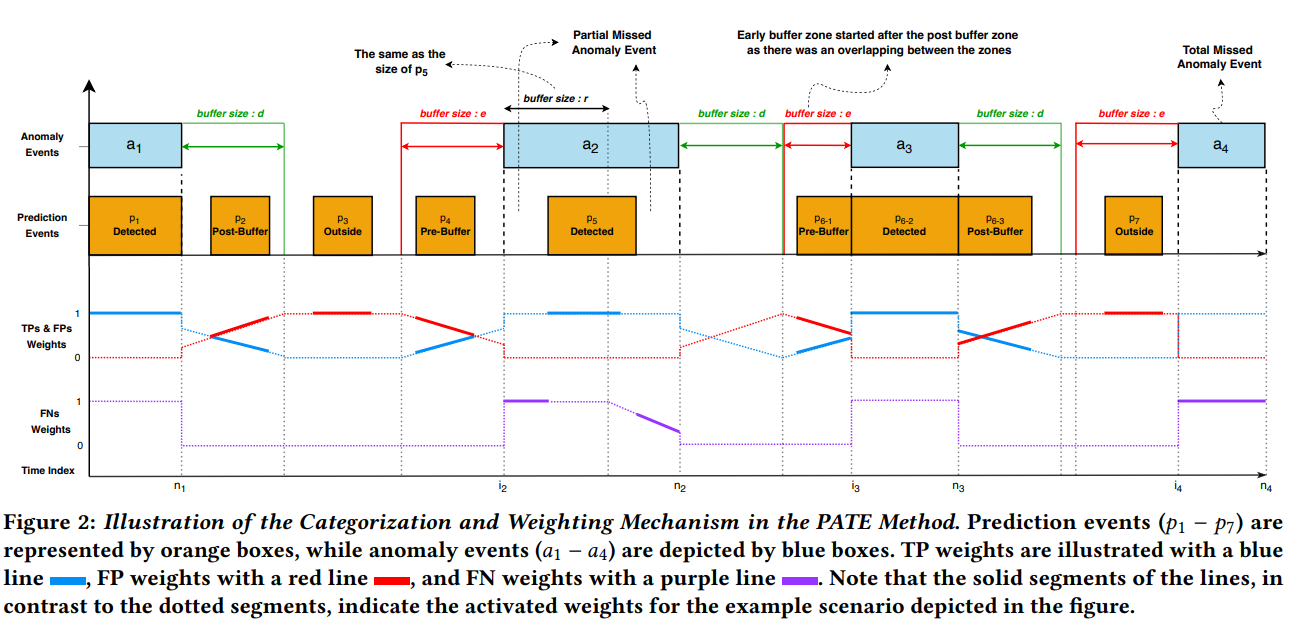
The study highlights the drawbacks of current metrics and introduces this new method as a reliable fix. By integrating buffer zones and temporal proximity, it enables a more thorough and precise evaluation of anomaly detection models, improving alignment with real-world applications where prompt and accurate detection is essential. The proposed evaluation metric considers temporal correlations between predictions and actual anomalies to provide a more comprehensive and transparent assessment of algorithms. True Positives, False Positives, and False Negatives are given proximity-based weights, making the model performance assessment more precise and insightful. Adapting to different buffer sizes without sacrificing consistency or fairness further demonstrates the method’s resilience and applicability.

Re-evaluation of state-of-the-art (SOTA) anomaly detection methods using this new metric reveals notable differences in performance assessments compared to other metrics. Point-adjusted metrics often overestimate model performance, whereas metrics like ROC-AUC and VUS-ROC, while more reasonable, may overlook subtle detection errors and lack discriminability between models. This analysis questions the true performance of current SOTA models and indicates a shift in their rankings, challenging the prevailing understanding of their superiority.

In conclusion, this novel approach represents a significant advancement in the evaluation of time series anomaly detection methods.The paper effectively identifies the shortcomings of existing evaluation metrics for time series anomaly detection and proposes PATE as a robust solution. Its incorporation of temporal proximity and buffer zones allows for a more accurate and nuanced assessment of anomaly detection models, ensuring better alignment with real-world applications where timely and accurate detection is crucial. Its potential implications include guiding future research, influencing industry adoption, and enhancing the development of practical applications in critical domains such as healthcare and finance. 


Check out the Paper. All credit for this research goes to the researchers of this project. Also, don’t forget to follow us on Twitter. Join our Telegram Channel, Discord Channel, and LinkedIn Group.

If you like our work, you will love our newsletter..

Don’t Forget to join our 42k+ ML SubReddit


🐝 Join the Fastest Growing AI Research Newsletter Read by Researchers from Google + NVIDIA + Meta + Stanford + MIT + Microsoft and many others…


Credit: Source link

ShareTweetSendSharePin

Related Posts

The Latest PlayStation Update Made PSSR 2.0 The Default For PS5 Pro Owners
AI & Technology

The Latest PlayStation Update Made PSSR 2.0 The Default For PS5 Pro Owners

September 22, 2026
Do USB Extenders Really Work And Are They Safe To Use?
AI & Technology

Do USB Extenders Really Work And Are They Safe To Use?

September 22, 2026
How To Enter VR Mode On Steam
AI & Technology

How To Enter VR Mode On Steam

September 22, 2026
Peloton Has Made A Foldable (Treadmill)
AI & Technology

Peloton Has Made A Foldable (Treadmill)

September 22, 2026
Next Post
Developments in Family of Claude Models by Anthropic AI: A Comprehensive Review

Developments in Family of Claude Models by Anthropic AI: A Comprehensive Review

Leave a Reply Cancel reply

Your email address will not be published. Required fields are marked *

Search

No Result
View All Result
Mark Ruffalo urges California AG Rob Bonta to reject Paramount-Warner merger settlement

Mark Ruffalo urges California AG Rob Bonta to reject Paramount-Warner merger settlement

September 20, 2026
Miami plane crash victims were in a cleaning-company van

Miami plane crash victims were in a cleaning-company van

September 16, 2026
Hyper Light Drifter Dev At Risk Of Closing After Laying Off ‘Nearly Everyone’

Hyper Light Drifter Dev At Risk Of Closing After Laying Off ‘Nearly Everyone’

September 16, 2026

About

Learn more

Our Services

Legal

Privacy Policy

Terms of Use

Bloggers

Learn more

Article Links

Contact

Advertise

Ask us anything

©2020- TradePoint.io - All rights reserved!

Tradepoint.io, being just a publishing and technology platform, is not a registered broker-dealer or investment adviser. So we do not provide investment advice. Rather, brokerage services are provided to clients of Tradepoint.io by independent SEC-registered broker-dealers and members of FINRA/SIPC. Every form of investing carries some risk and past performance is not a guarantee of future results. “Tradepoint.io“, “Instant Investing” and “My Trading Tools” are registered trademarks of Apperbuild, LLC.

This website is operated by Apperbuild, LLC. We have no link to any brokerage firm and we do not provide investment advice. Every information and resource we provide is solely for the education of our readers. © 2020 Apperbuild, LLC. All rights reserved.

No Result
View All Result
  • Main
  • AI & Technology
  • Stock Charts
  • Market & News
  • Business
  • Finance Tips
  • Trade Tube
  • Blog
  • Shop

© 2023 - TradePoint.io - All Rights Reserved!