

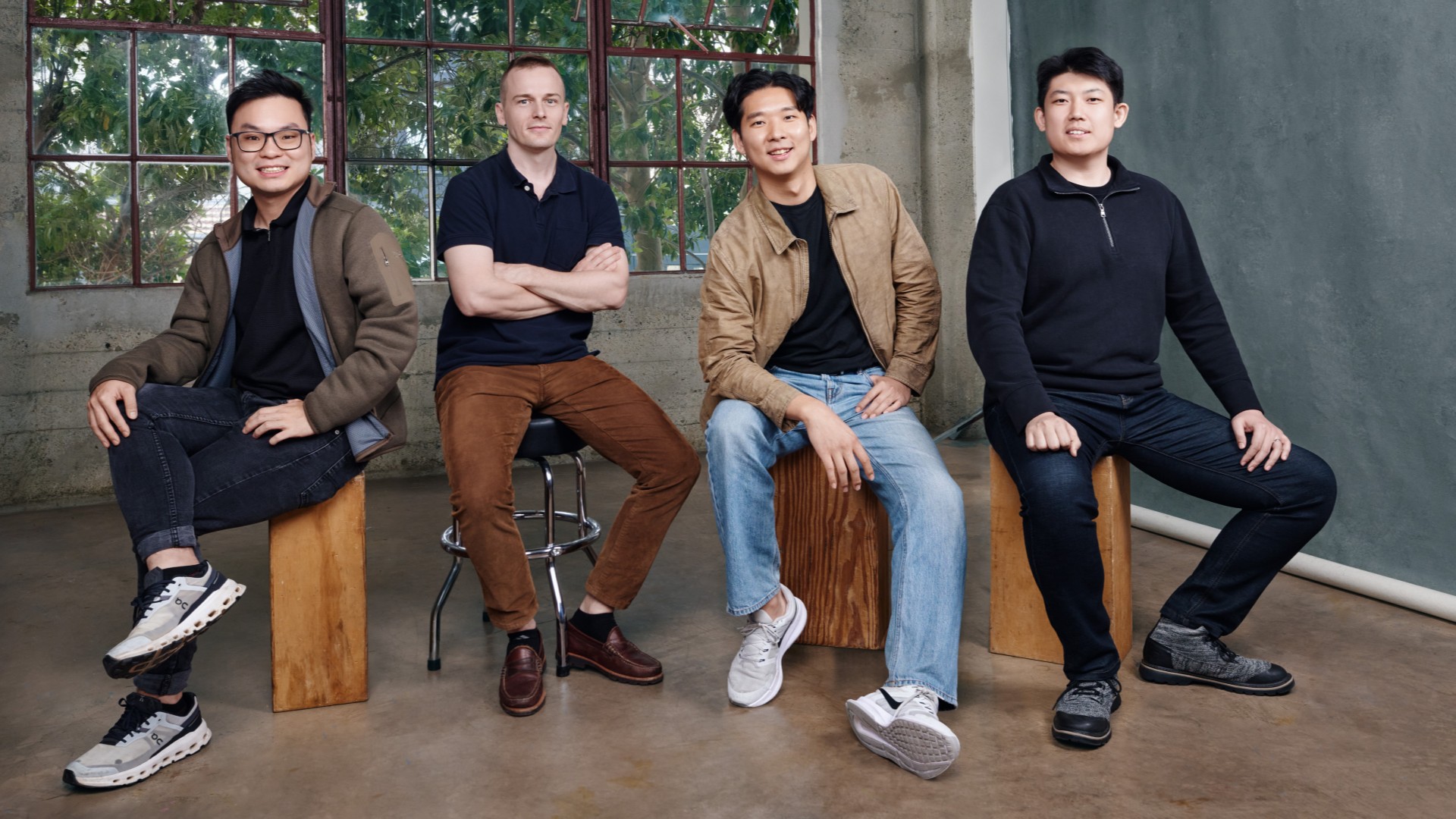

Dream Labs, a startup founded by former NVIDIA robotics researchers, has raised $90 million in seed funding and launched a public API for Dream-1, a model designed to carry skills across different robots. The financing was led by B Capital alongside Kindred Ventures, with participation from A.Capital, Unusual Ventures and other investors.
The company is tackling a costly bottleneck in robotics: a machine that learns a task does not automatically pass that knowledge to a different machine. Dream Labs wants developers to start with a shared model, then adapt it when a particular robot or application requires more specialized training.
The launch includes an API, a fine-tuning service and a browser-based Robot Playground. The latter lets users send instructions to physical robots in the company’s San Francisco office. Dream Labs says the funding will primarily support compute as it expands model capabilities and capacity.
How Dream-1 Connects Video to Physical Actions
Dream Labs calls Dream-1 a World Action Model. Its technical account of the launch describes a system that predicts video and actions together: anticipating how a scene will change is linked to deciding what a robot should do next.
The distinction matters because robot bodies differ. Joint commands that work on one arm will not necessarily work on another. Dream-1 can instead predict end-effector poses—the desired position and orientation of each gripper, along with whether it should be open or closed. Each robot’s inverse-kinematics solver translates those targets into movements its own joints can execute.
That provides a common interface across machines without requiring them to share identical hardware. The model uses three camera views: one looking at the scene and one on each wrist. Its video representation gives it a way to reason about different-looking arms and grippers through the same visual medium.
For developers, the product packages that research into a relatively direct loop. The robot supplies images, its current state and a task instruction; the model returns actions. Models run through Dream Labs’ hosted service rather than requiring every developer to build and operate a robotics foundation model.
Zero-Shot Transfer Has a Defined Scope
The company’s current zero-shot capability focuses on bimanual robots with parallel grippers: machines with two arms and simple opening-and-closing grippers. Zero-shot means the model can attempt tasks on an unfamiliar robot without first training on demonstrations from that particular machine.
Dream Labs’ published evaluation tested 27 unseen robot embodiments in simulation, using 300 rollouts per embodiment. Results were reported relative to YAM, the robot on which Dream-1 was trained. Performance varied substantially across hardware, which makes the headline claim of cross-robot transfer more useful when read alongside the detailed results.
Those relative scores should not be confused with absolute task-success rates. Nor does transferring a policy to a different robot establish that it will reliably complete every task. The research page separately distinguishes full completion from partial progress in its task evaluations.
The control interface also introduces tradeoffs. Predicting a gripper’s destination does not fully determine the path an arm takes to reach it. Obstacles, joint limits and the quality of the robot’s inverse-kinematics solver can affect performance. Robots with very different workspaces or dynamics can expose further gaps between the model’s prediction and what the hardware can physically do.
Fine-Tuning Offers a Route Beyond the Baseline
Dream Labs’ Fine-tuning-as-a-Service gives developers another option when the general model falls short. They can upload demonstrations from their own robot and receive an adapted model, rather than starting a training project from scratch.
The company shows examples of adaptation using five minutes of robot-specific data, as well as examples requiring substantially more data for unfamiliar end effectors. These demonstrations illustrate the range of adaptation needs; they do not establish a universal five-minute training requirement.
This is an important practical distinction. A shared model can reduce the initial work required to get a robot moving, while task-specific data may still be necessary to make its behavior useful for a particular application. Dream Labs acknowledges that adapted models still outperform zero-shot operation.
The research page lists inference at $3 per hour for Dream-1 and $2 per hour for the lighter Dream-1-flash. Each model call returns 1.6 seconds of actions. Hardware, integration and any additional service costs remain separate considerations when assessing the cost of a deployment.
From Research Demonstrations to Repeatable Work
The startup’s team previously worked on DreamZero and NVIDIA’s GR00T robotics research. With Dream-1, it is turning that research into a service that developers can test on their own machines.
Access is a meaningful part of the announcement. A public API allows robot makers and smaller teams to evaluate behavior directly, including where it fails, instead of relying solely on selected demonstrations. The live Playground offers a more accessible introduction for people who do not own a robot.
Dream-1 remains a research beta, and Dream Labs states that it has not been validated for safety-critical use. Its present focus is manipulation with two-arm, parallel-gripper systems; broader support for mobile robots and dexterous hardware remains part of the development effort.
The commercial question is whether a model that transfers across machines can also deliver repeatable performance on tasks people will pay to automate. The $90 million round gives Dream Labs resources to pursue that goal. Its most consequential test will be how much custom data and engineering developers still need after connecting a new robot.
Credit: Source link