

Kei Uesugi/DigitalVision via Getty Images
The WisdomTree Japan SmallCap Dividend Fund (NYSEARCA:DFJ) is a slice of the Japanese market with no large cap exposures whatsoever. Most elements are below $2 billion in market cap, and the DFJ portfolio has a pretty similar sectoral exposure to the large cap value-weighted indices in Japan. We note a discount in PE to the large cap exposures. While there are reasons why that discount may stand now, we think that there is more scope for corporate governance improvements in companies of the size of those in DFJ. A buy.
DFJ Breakdown
DFJ Sectors (Wisdomtree)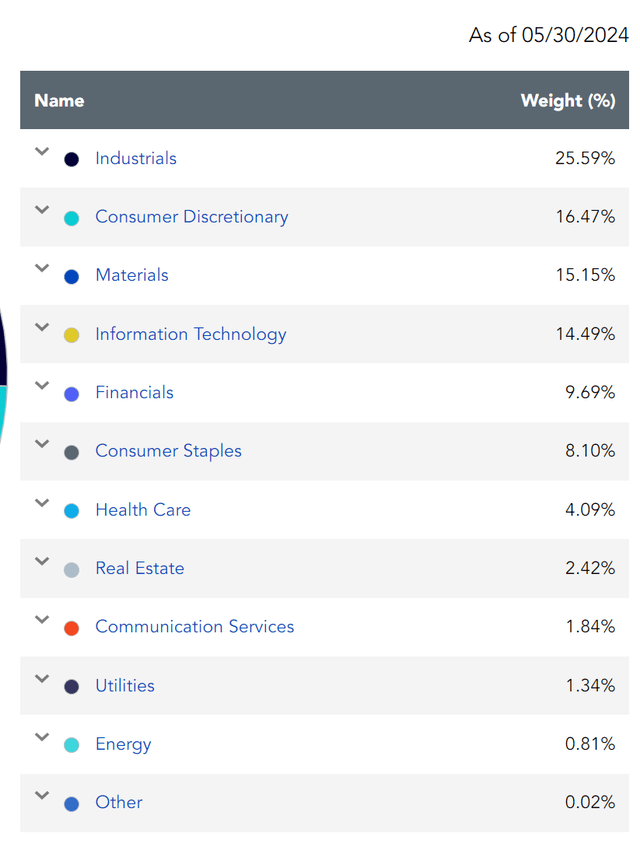
EWJ Sectors (iShares.com)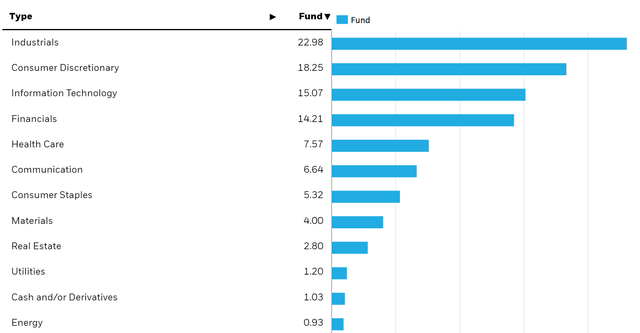
The key exposures are really quite similar between the DFJ and the iShares Japan ETF (EWJ) EWJ which captures the broader Japanese market index. Sector weights are very similar, it’s the sizes that are different, with 0% large cap exposure on DFJ, mid cap at 17% and small cap (less than $2 billion) at 83%.
DFJ expense ratios are 0.58%, EWJ is 0.5% – no meaningful difference. PE is 13x to EWJ 16, a pretty significant discount despite similar sectoral exposures.
Bottom Line
The PE differential is the key thing to focus on. There are of course differences in the portfolio. The businesses in DFJ are smaller. Consumer discretionary is less of the automotive majors, and more automotive parts businesses that probably are in a bit of a monopolistic situation with the larger makers. The scale of the companies in industrial is also smaller. Some of these businesses will be family run, and may not be of the standard that Western market participants would be used to for a public company.
In general we don’t see the smaller scale as an issue. Particularly, to the extent that Japanese companies in the large-cap space are undervalued on the basis of corporate governance concerns, specifically around perennially low payout policies and idle cash balances, small-cap companies have even more scope for improvement here.
To review, the TSE has sent out memorandums to Japanese Prime Market companies, which are the majority of the DFJ constituent parts, to outline in their medium term management plans some ideas to improve the low PBR ratios and demonstrate some understanding of capital allocation principles. While there are some large cap companies with excessive idle cash balances and need for better capital allocation and higher total payout ratios across buybacks and dividends, these shortfalls in capital allocation discipline are even more extreme with smaller cap companies, who have even larger cash balances and may have been otherwise inert to capital allocation improvements due to family ownership. The EWJ and broader Japanese markets have a PBR of 1.47x while the DFJ has a PBR of 1.01x, demonstrating more bloated retained earnings and less appreciation by markets of an earnings-generating track record in the small cap space. They have more significant changes to make incrementally than the large cap players, particularly those which are overcapitalised and haven’t tapped debt markets at all.
Companies in the small cap have started doing this, albeit slower than the large cap players who are being spurred on by greater coverage and more Western involvement.
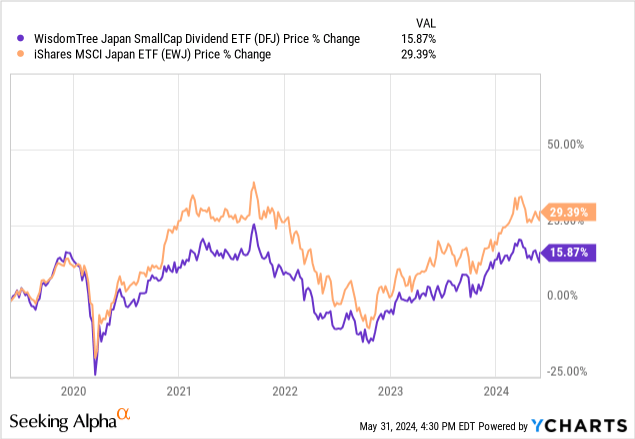
We think that the lagging performance of DFJ presents a compelling opportunity to rollover profits from Japanese large cap stocks into the smaller cap bracket of the same market, since those companies are going to start to overcome glacial pricing and payout policies to start meeting inflation more directly and to engage with the capital markets more. We cover dozens of Japanese small caps and all of them have started to do that, but only later into 2023, and with slow build up in real IR activity and concrete moves.
Thanks to our global coverage we’ve ramped up our global macro commentary on our marketplace service here on Seeking Alpha, The Value Lab. We focus on long-only value ideas, where we try to find international mispriced equities and target a portfolio yield of about 4%. We’ve done really well for ourselves over the last 5 years, but it took getting our hands dirty in international markets. If you are a value-investor, serious about protecting your wealth, us at the Value Lab might be of inspiration.

Credit: Source link