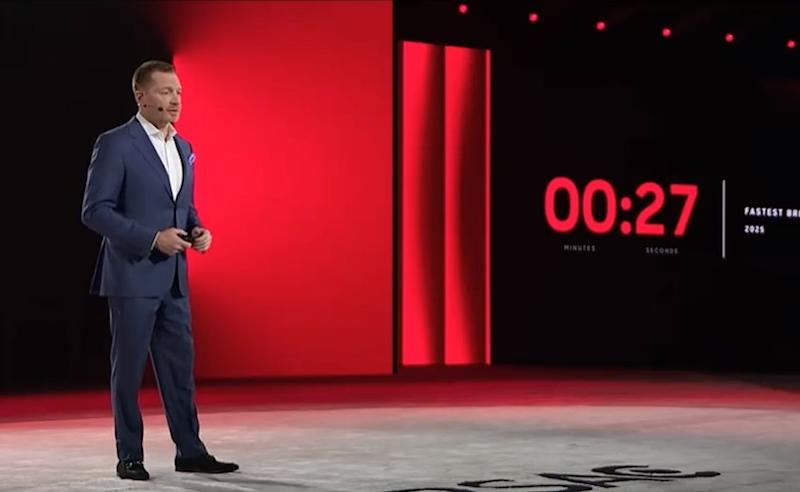

CrowdStrike CEO George Kurtz highlighted in his RSA Conference 2026 keynote that the fastest recorded adversary breakout time has dropped to 27 seconds. The average is now 29 minutes, down from 48 minutes in 2024. That is how much time defenders have before a threat spreads. Now CrowdStrike sensors detect more than 1,800 distinct AI applications running on enterprise endpoints, representing nearly 160 million unique application instances. Every one generates detection events, identity events, and data access logs flowing into SIEM systems architected for human-speed workflows.
Cisco found that 85% of surveyed enterprise customers have AI agent pilots underway. Only 5% moved agents into production, according to Cisco President and Chief Product Officer Jeetu Patel in his RSAC blog post. That 80-point gap exists because security teams cannot answer the basic questions agents force. Which agents are running, what are they authorized to do, and who is accountable when one goes wrong.
“The number one threat is security complexity. But we’re running towards that direction in AI as well,” Etay Maor, VP of Threat Intelligence at Cato Networks, told VentureBeat at RSAC 2026. Maor has attended the conference for 16 consecutive years. “We’re going with multiple point solutions for AI. And now you’re creating the next wave of security complexity.”
Agents look identical to humans in your logs
In most default logging configurations, agent-initiated activity looks identical to human-initiated activity in security logs. “It looks indistinguishable if an agent runs Louis’s web browser versus if Louis runs his browser,” Elia Zaitsev, CTO of CrowdStrike, told VentureBeat in an exclusive interview at RSAC 2026. Distinguishing the two requires walking the process tree. “I can actually walk up that process tree and say, this Chrome process was launched by Louis from the desktop. This Chrome process was launched from Louis’s Claude Cowork or ChatGPT application. Thus, it’s agentically controlled.”
Without that depth of endpoint visibility, a compromised agent executing a sanctioned API call with valid credentials fires zero alerts. The exploit surface is already being tested. During his keynote, Kurtz described ClawHavoc, the first major supply chain attack on an AI agent ecosystem, targeting ClawHub, OpenClaw’s public skills registry. Koi Security’s February audit found 341 malicious skills out of 2,857; a follow-up analysis by Antiy CERT identified 1,184 compromised packages historically across the platform. Kurtz noted ClawHub now hosts 13,000 skills in its registry. The infected skills contained backdoors, reverse shells, and credential harvesters; Kurtz said in his keynote that some erased their own memory after installation and could remain latent before activating. “The frontier AI creators will not secure itself,” Kurtz said. “The frontier labs are following the same playbook. They’re building it. They’re not securing it.”
Two agentic SOC architectures, one shared blind spot
Approach A: AI agents inside the SIEM. Cisco and Splunk announced six specialized AI agents for Splunk Enterprise Security: Detection Builder, Triage, Guided Response, Standard Operating Procedures (SOP), Malware Threat Reversing, and Automation Builder. Malware Threat Reversing is currently available in Splunk Attack Analyzer and Detection Studio is generally available as a unified workspace; the remaining five agents are in alpha or prerelease through June 2026. Exposure Analytics and Federated Search follow the same timeline. Upstream of the SOC, Cisco’s DefenseClaw framework scans OpenClaw skills and MCP servers before deployment, while new Duo IAM capabilities extend zero trust to agents with verified identities and time-bound permissions.
“The biggest impediment to scaled adoption in enterprises for business-critical tasks is establishing a sufficient amount of trust,” Patel told VentureBeat. “Delegating and trusted delegating, the difference between those two, one leads to bankruptcy. The other leads to market dominance.”
Approach B: Upstream pipeline detection. CrowdStrike pushed analytics into the data ingestion pipeline itself, integrating its Onum acquisition natively into Falcon’s ingestion system for real-time analytics, detection, and enrichment before events reach the analyst’s queue. Falcon Next-Gen SIEM now ingests Microsoft Defender for Endpoint telemetry natively, so Defender shops do not need additional sensors. CrowdStrike also introduced federated search across third-party data stores and a Query Translation Agent that converts legacy Splunk queries to accelerate SIEM migration.
Falcon Data Security for the Agentic Enterprise applies cross-domain data loss prevention to data agents’ access at runtime. CrowdStrike’s adversary-informed cloud risk prioritization connects agent activity in cloud workloads to the same detection pipeline. Agentic MDR through Falcon Complete adds machine-speed managed detection for teams that cannot build the capability internally.
“The agentic SOC is all about, how do we keep up?” Zaitsev said. “There’s almost no conceivable way they can do it if they don’t have their own agentic assistance.”
CrowdStrike opened its platform to external AI providers through Charlotte AI AgentWorks, announced at RSAC 2026, letting customers build custom security agents on Falcon using frontier AI models. Launch partners include Accenture, Anthropic, AWS, Deloitte, Kroll, NVIDIA, OpenAI, Salesforce, and Telefónica Tech. IBM validated buyer demand through a collaboration integrating Charlotte AI with its Autonomous Threat Operations Machine for coordinated, machine-speed investigation and containment.
The ecosystem contenders. Palo Alto Networks, in an exclusive pre-RSAC briefing with VentureBeat, outlined Prisma AIRS 3.0, extending its AI security platform to agents with artifact scanning, agent red teaming, and a runtime that catches memory poisoning and excessive permissions. The company introduced an agentic identity provider for agent discovery and credential validation. Once Palo Alto Networks closes its proposed acquisition of Koi, the company adds agentic endpoint security. Cortex delivers agentic security orchestration across its customer base.
Intel announced that CrowdStrike’s Falcon platform is being optimized for Intel-powered AI PCs, leveraging neural processing units and silicon-level telemetry to detect agent behavior on the device. Kurtz framed AIDR, AI Detection and Response, as the next category beyond EDR, tracking agent-speed activity across endpoints, SaaS, cloud, and AI pipelines. He said that “humans are going to have 90 agents that work for them on average” as adoption scales but did not specify a timeline.
The gap no vendor closed
|
What security leaders need |
Approach A: agents inside the SIEM (Cisco/Splunk) |
Approach B: upstream pipeline detection (CrowdStrike) |
Gap neither closes |
|
Triage at agent volume |
Six AI agents handle triage, detection, and response inside Splunk ES |
Onum-powered pipeline detects and enriches threats before the analyst sees them |
Neither baselines normal agent behavior before flagging anomalies |
|
Agent vs. human differentiation |
Duo IAM tracks agent identities but does not differentiate agent from human activity in SOC telemetry |
Process tree lineage distinguishes at runtime. AIDR extends to agent-specific detection |
No vendor’s announced capabilities include an out-of-the-box agent behavioral baseline |
|
27-second response window |
Guided Response Agent executes containment at machine speed |
In-pipeline detection reduces queue volume. Agentic MDR adds managed response |
Human-in-the-loop governance has not been reconciled with machine-speed response in either approach |
|
Legacy SIEM portability |
Native Splunk integration preserves existing workflows |
Query Translation Agent converts Splunk queries. Native Defender ingestion lets Microsoft shops migrate |
Neither addresses teams running multiple SIEMs during migration |
|
Agent supply chain |
DefenseClaw scans skills and MCP servers pre-deployment. Explorer Edition red-teams agents |
EDR AI Runtime Protection catches compromised skills post-deployment. Charlotte AI AgentWorks enables custom agents |
Neither covers the full lifecycle. Pre-deployment scanning misses runtime exploits and vice versa |
The matrix makes one thing visible that the keynotes did not. No vendor shipped an agent behavioral baseline. Both approaches automate triage and accelerate detection. Based on VentureBeat’s review of announced capabilities, neither defines what normal agent behavior looks like in a given enterprise environment.
Teams running Microsoft Sentinel and Copilot for Security represent a third architecture not formally announced as a competing approach at RSAC this week, but CISOs in Microsoft-heavy environments need to test whether Sentinel’s native agent telemetry ingestion and Copilot’s automated triage close the same gaps identified above.
Maor cautioned that the vendor response recycles a pattern he has tracked for 16 years. “I hope we don’t have to go through this whole cycle,” he told VentureBeat. “I hope we learned from the past. It doesn’t really look like it.”
Zaitsev’s advice was blunt. “You already know what to do. You’ve known what to do for five, ten, fifteen years. It’s time to finally go do it.”
Five things to do Monday morning
These steps apply regardless of your SOC platform. None requires ripping and replacing current tools. Start with visibility, then layer in controls as agent volume grows.
-
Inventory every agent on your endpoints. CrowdStrike detects 1,800 AI applications across enterprise devices. Cisco’s Duo Identity Intelligence discovers agentic identities. Palo Alto Networks’ agentic IDP catalogs agents and maps them to human owners. If you run a different platform, start with an EDR query for known agent directories and binaries. You cannot set policy for agents you do not know exist.
-
Determine whether your SOC stack can differentiate agent from human activity. CrowdStrike’s Falcon sensor and AIDR do this through process tree lineage. Palo Alto Networks’ agent runtime catches memory poisoning at execution. If your tools cannot make this distinction, your triage rules are applying the wrong behavioral models.
-
Match the architectural approach to your current SIEM. Splunk shops gain agent capabilities through Approach A. Teams evaluating migration get pipeline detection with Splunk query translation and native Defender ingestion through Approach B. Palo Alto Networks’ Cortex delivers a third option. Teams on Microsoft Sentinel, Google Chronicle, Elastic, or other platforms should evaluate whether their SIEM can ingest agent-specific telemetry at this volume.
-
Build an agent behavioral baseline before your next board meeting. No vendor ships one. Define what your agents are authorized to do: which APIs, which data stores, which actions, at which times. Create detection rules for anything outside that scope.
-
Pressure-test your agent supply chain. Cisco’s DefenseClaw and Explorer Edition scan and red-team agents before deployment. CrowdStrike’s runtime detection catches compromised agents post-deployment. Both layers are necessary. Kurtz said in his keynote that ClawHavoc compromised over a thousand ClawHub skills with malware that erased its own memory after installation. If your playbook does not account for an authorized agent executing unauthorized actions at machine speed, rewrite it.
The SOC was built to protect humans using machines. It now protects machines using machines. The response window shrank from 48 minutes to 27 seconds. Any agent generating an alert is now a suspect, not just a sensor. The decisions security leaders make in the next 90 days will determine whether their SOC operates in this new reality or gets buried under it.
Credit: Source link