





• bitcoinBitcoin(BTC)$84,888.001.12%
  • ethereumEthereum(ETH)$2,705.960.77%
  • tetherTether(USDT)$1.00-0.01%
  • binancecoinBNB(BNB)$779.480.88%
  • rippleXRP(XRP)$1.53-0.71%
  • usd-coinUSDC(USDC)$1.000.00%
  • solanaSolana(SOL)$122.961.86%
  • tronTRON(TRX)$0.333712-0.78%
  • zcashZcash(ZEC)$1,651.817.57%
  • Figure HelocFigure Heloc(FIGR_HELOC)$1.063.09%
  • HyperliquidHyperliquid(HYPE)$92.300.31%
  • dogecoinDogecoin(DOGE)$0.0975450.28%
  • chainlinkChainlink(LINK)$14.17-0.75%
  • moneroMonero(XMR)$549.35-0.14%
  • whitebitWhiteBIT Coin(WBT)$84.671.09%
  • USDSUSDS(USDS)$1.000.01%
  • cardanoCardano(ADA)$0.2559710.14%
  • RainRain(RAIN)$0.0126662.05%
  • leo-tokenLEO Token(LEO)$9.020.70%
  • stellarStellar(XLM)$0.216199-0.52%
  • nearNEAR Protocol(NEAR)$5.187.46%
  • bitcoin-cashBitcoin Cash(BCH)$335.990.71%
  • uniswapUniswap(UNI)$9.862.39%
  • litecoinLitecoin(LTC)$70.93-1.84%
  • CantonCanton(CC)$0.136203-0.92%
  • suiSui(SUI)$1.256.79%
  • Ethena USDeEthena USDe(USDE)$1.000.02%
  • avalanche-2Avalanche(AVAX)$10.931.01%
  • daiDai(DAI)$1.00-0.01%
  • the-open-networkGram (prev. Toncoin)(GRAM)$1.608.50%
  • USD1USD1(USD1)$1.000.01%
  • hedera-hashgraphHedera(HBAR)$0.0941320.58%
  • BittensorBittensor(TAO)$328.360.13%
  • shiba-inuShiba Inu(SHIB)$0.0000060.49%
  • crypto-com-chainCronos(CRO)$0.0677483.89%
  • Global DollarGlobal Dollar(USDG)$1.00-0.01%
  • BitwayBitway(BTW)$1.1625.40%
  • paypal-usdPayPal USD(PYUSD)$1.000.00%
  • EthenaEthena(ENA)$0.273661-2.08%
  • MemeCoreMemeCore(M)$1.19-2.10%
  • OndoOndo(ONDO)$0.561.22%
  • tether-goldTether Gold(XAUT)$4,278.69-0.04%
  • okbOKB(OKB)$121.590.46%
  • Ripple USDRipple USD(RLUSD)$1.00-0.01%
  • Circle USYCCircle USYC(USYC)$1.140.00%
  • aaveAave(AAVE)$154.60-0.05%
  • quant-networkQuant(QNT)$161.1253.05%
  • BlackRock USD Institutional Digital Liquidity FundBlackRock USD Institutional Digital Liquidity Fund(BUIDL)$1.000.00%
  • Ondo US Dollar YieldOndo US Dollar Yield(USDY)$1.14-0.17%
  • mantleMantle(MNT)$0.68-2.65%
TradePoint.io
  • Main
  • AI & Technology
  • Stock Charts
  • Market & News
  • Business
  • Finance Tips
  • Trade Tube
  • Blog
  • Shop
No Result
View All Result
TradePoint.io
No Result
View All Result

ByteDance Research Introduces 1.58-bit FLUX: A New AI Approach that Gets 99.5% of the Transformer Parameters Quantized to 1.58 bits

December 31, 2024
in AI & Technology
Reading Time: 6 mins read
A A
ByteDance Research Introduces 1.58-bit FLUX: A New AI Approach that Gets 99.5% of the Transformer Parameters Quantized to 1.58 bits
ShareShareShareShareShare

Vision Transformers (ViTs) have become a cornerstone in computer vision, offering strong performance and adaptability. However, their large size and computational demands create challenges, particularly for deployment on devices with limited resources. Models like FLUX Vision Transformers, with billions of parameters, require substantial storage and memory, making them impractical for many use cases. These limitations restrict the real-world application of advanced generative models. Addressing these challenges calls for innovative methods to reduce the computational burden without compromising performance.

Researchers from ByteDance Introduce 1.58-bit FLUX

Researchers from ByteDance have introduced the 1.58-bit FLUX model, a quantized version of the FLUX Vision Transformer. This model reduces 99.5% of its parameters (11.9 billion in total) to 1.58 bits, significantly lowering computational and storage requirements. The process is unique in that it does not rely on image data, instead using a self-supervised approach based on the FLUX.1-dev model. By incorporating a custom kernel optimized for 1.58-bit operations, the researchers achieved a 7.7× reduction in storage and a 5.1× reduction in inference memory usage, making deployment in resource-constrained environments more feasible.

YOU MAY ALSO LIKE

Humanoid Robots Are Getting Even Creepier (This One Can Cry On Command)

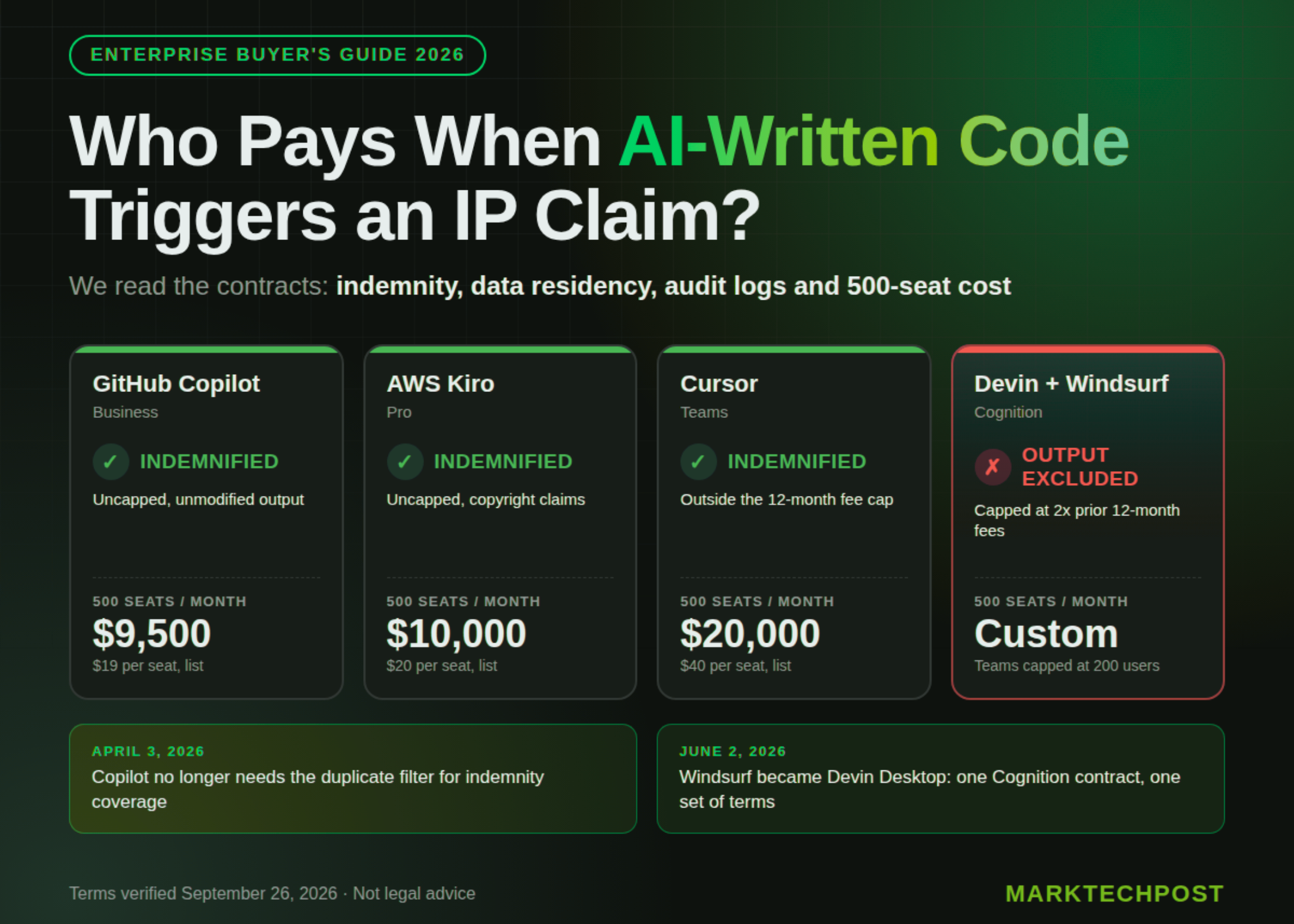
AI Coding Agents for Enterprise: IP Indemnity, Data Residency and 500-Seat Cost Compared

Technical Details and Benefits

The core of the 1.58-bit FLUX lies in its quantization technique, which restricts model weights to three values: +1, -1, or 0. This approach compresses parameters from 16-bit precision to 1.58 bits. Unlike traditional methods, this data-free quantization relies solely on a calibration dataset of text prompts, removing the need for image data. To handle the complexities of low-bit operations, a custom kernel was developed to optimize computations. These advances lead to substantial reductions in storage and memory requirements while maintaining the ability to generate high-resolution images of 1024 × 1024 pixels.

Results and Insights

Extensive evaluations of the 1.58-bit FLUX model on benchmarks such as GenEval and T2I CompBench demonstrated its efficacy. The model delivered performance on par with its full-precision counterpart, with minor deviations observed in specific tasks. In terms of efficiency, the model achieved a 7.7× reduction in storage and a 5.1× reduction in memory usage across various GPUs. Deployment-friendly GPUs, such as the L20 and A10, further highlighted the model’s practicality with notable latency improvements. These results indicate that 1.58-bit FLUX effectively balances efficiency and performance, making it suitable for a range of applications.

Conclusion

The development of 1.58-bit FLUX addresses critical challenges in deploying large-scale Vision Transformers. Its ability to significantly reduce storage and memory requirements without sacrificing performance represents a step forward in efficient AI model design. While there is room for improvement, such as enhancing activation quantization and fine-detail rendering, this work sets a solid foundation for future advancements. As research continues, the prospect of deploying high-quality generative models on everyday devices becomes increasingly realistic, broadening access to powerful AI capabilities.


Check out the Paper. All credit for this research goes to the researchers of this project. Also, don’t forget to follow us on Twitter and join our Telegram Channel and LinkedIn Group. Don’t Forget to join our 60k+ ML SubReddit.

🚨 Trending: LG AI Research Releases EXAONE 3.5: Three Open-Source Bilingual Frontier AI-level Models Delivering Unmatched Instruction Following and Long Context Understanding for Global Leadership in Generative AI Excellence….


Sana Hassan, a consulting intern at Marktechpost and dual-degree student at IIT Madras, is passionate about applying technology and AI to address real-world challenges. With a keen interest in solving practical problems, he brings a fresh perspective to the intersection of AI and real-life solutions.

🧵🧵 [Download] Evaluation of Large Language Model Vulnerabilities Report (Promoted)


Credit: Source link

ShareTweetSendSharePin

Related Posts

Humanoid Robots Are Getting Even Creepier (This One Can Cry On Command)
AI & Technology

Humanoid Robots Are Getting Even Creepier (This One Can Cry On Command)

September 27, 2026
AI Coding Agents for Enterprise: IP Indemnity, Data Residency and 500-Seat Cost Compared
AI & Technology

AI Coding Agents for Enterprise: IP Indemnity, Data Residency and 500-Seat Cost Compared

September 27, 2026
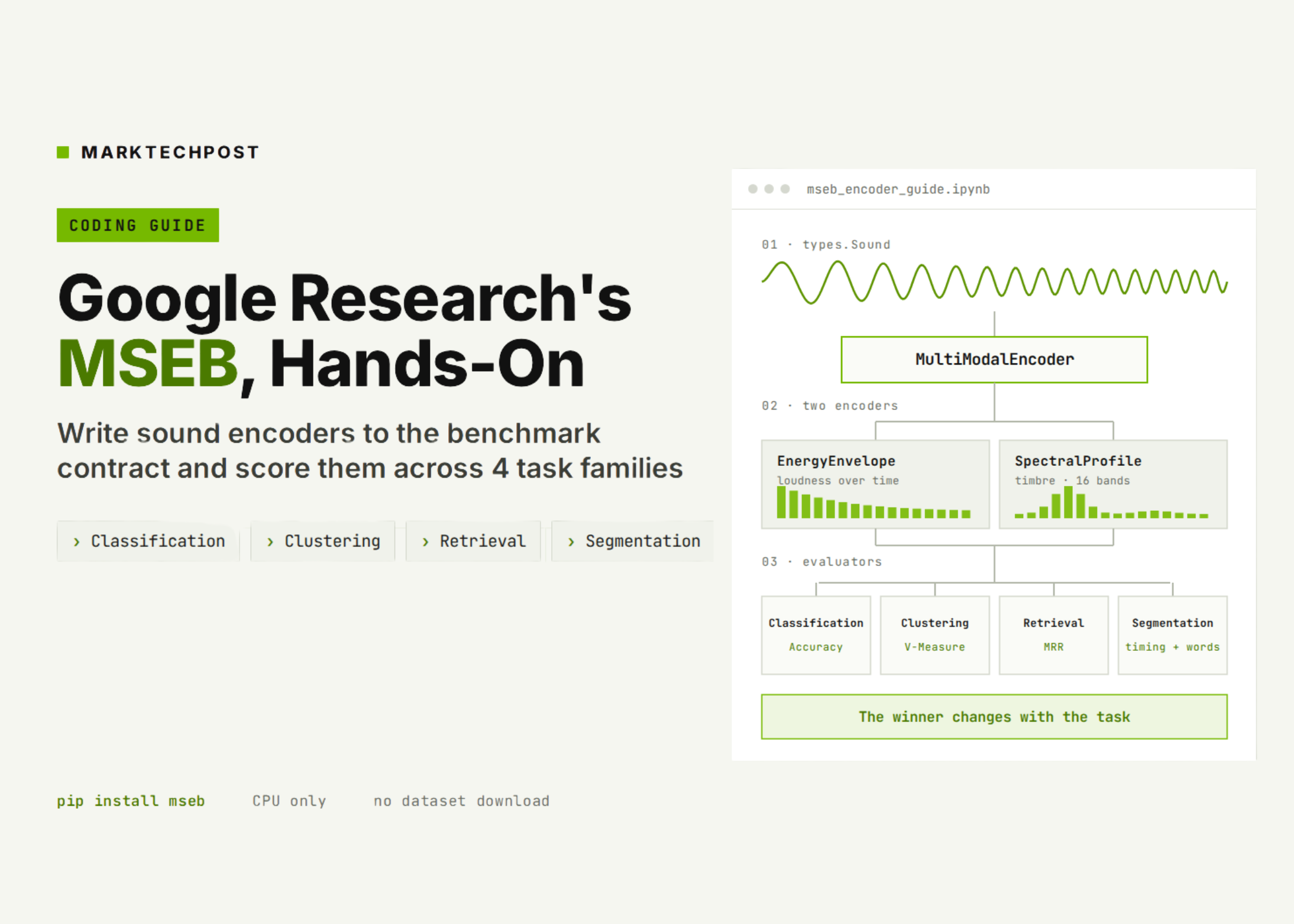
A Coding Guide to Google Research’s MSEB: Writing Sound Encoders to the Benchmark Contract and Scoring Them Across Classification, Clustering, Retrieval and Segmentation
AI & Technology

A Coding Guide to Google Research’s MSEB: Writing Sound Encoders to the Benchmark Contract and Scoring Them Across Classification, Clustering, Retrieval and Segmentation

September 27, 2026
Why We Won’t Know How Visible The iPhone Duo’s Crease Is For A Long Time
AI & Technology

Why We Won’t Know How Visible The iPhone Duo’s Crease Is For A Long Time

September 27, 2026
Next Post
House passes bill to avert government shutdown hours before deadline

House passes bill to avert government shutdown hours before deadline

Leave a Reply Cancel reply

Your email address will not be published. Required fields are marked *

Search

No Result
View All Result
How the new U.S. sanctions on Iran could affect China

How the new U.S. sanctions on Iran could affect China

September 25, 2026
Publix sued over Florida woman’s death blamed on E. coli-tainted blueberries

Publix sued over Florida woman’s death blamed on E. coli-tainted blueberries

September 24, 2026
Lionel Messi announces retirement from Argentina soccer team

Lionel Messi announces retirement from Argentina soccer team

September 20, 2026

About

Learn more

Our Services

Legal

Privacy Policy

Terms of Use

Bloggers

Learn more

Article Links

Contact

Advertise

Ask us anything

©2020- TradePoint.io - All rights reserved!

Tradepoint.io, being just a publishing and technology platform, is not a registered broker-dealer or investment adviser. So we do not provide investment advice. Rather, brokerage services are provided to clients of Tradepoint.io by independent SEC-registered broker-dealers and members of FINRA/SIPC. Every form of investing carries some risk and past performance is not a guarantee of future results. “Tradepoint.io“, “Instant Investing” and “My Trading Tools” are registered trademarks of Apperbuild, LLC.

This website is operated by Apperbuild, LLC. We have no link to any brokerage firm and we do not provide investment advice. Every information and resource we provide is solely for the education of our readers. © 2020 Apperbuild, LLC. All rights reserved.

No Result
View All Result
  • Main
  • AI & Technology
  • Stock Charts
  • Market & News
  • Business
  • Finance Tips
  • Trade Tube
  • Blog
  • Shop

© 2023 - TradePoint.io - All Rights Reserved!