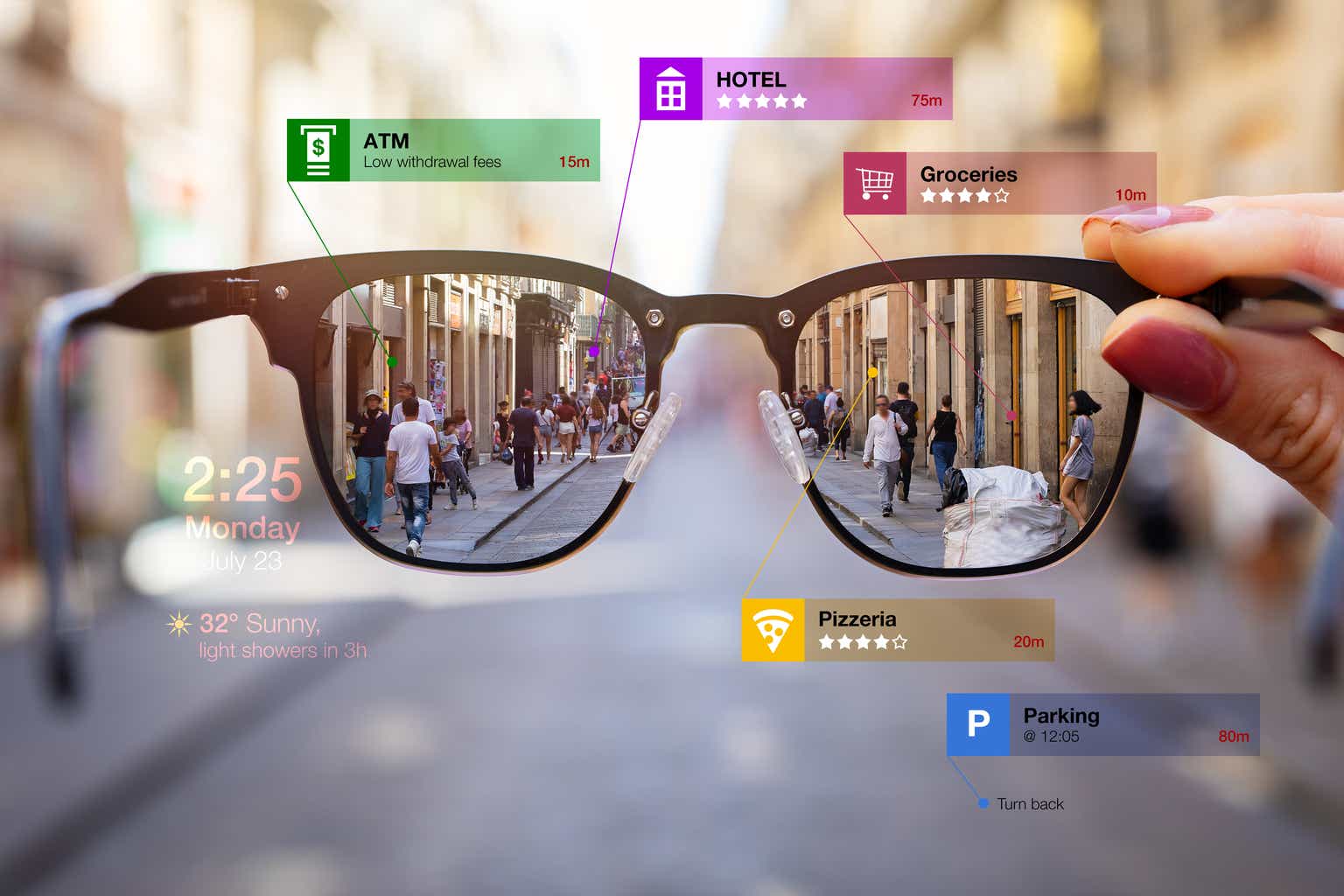
Augmented Reality (AR) technology has been capturing imaginations for years, promising to blend digital information seamlessly with our physical world. By superimposing computer-generated images onto real-world views, AR has the potential to drastically change how we interact with our environment. From enhancing gaming experiences to assisting surgeons in operating rooms, the applications of AR seem boundless.
However, despite its immense potential, AR technology has faced significant hurdles in achieving widespread adoption. Current AR systems often rely on bulky headsets or goggles, limiting their practicality for everyday use. These devices can be cumbersome, with limited fields of view and less-than-ideal image quality. Moreover, the power requirements and heat generation of these systems pose additional challenges for prolonged use.
Another critical limitation has been the difficulty in miniaturizing AR displays without compromising image quality or field of view. As consumers increasingly demand sleeker, more discreet AR devices, the industry has been grappling with the complex task of shrinking optical components while maintaining performance.
The Quest for Compact AR Displays
The drive towards miniaturization in AR technology is not merely about aesthetics or convenience. Compact AR systems have the potential to integrate seamlessly into our daily lives, much like smartphones have done. Imagine AR capabilities built into a pair of ordinary-looking glasses, providing real-time information, navigation assistance, or even professional tools without the need for obtrusive hardware.
However, shrinking AR systems presents a multitude of technical challenges. Traditional AR displays typically employ a four-lens system to project images onto the user’s field of view. Reducing the size of these optical components often results in a significant degradation of image quality and a narrower field of view. This trade-off between size and performance has been a major stumbling block in the development of mainstream AR glasses.
Moreover, as AR systems become smaller, issues such as heat dissipation and power efficiency become increasingly critical. Balancing the need for high-quality displays with the constraints of compact form factors requires innovative approaches to both hardware and software design.
The miniaturization quest also involves addressing challenges related to user comfort and social acceptance. AR glasses need to be lightweight and unobtrusive enough for extended wear, while also being stylish enough to be worn in public without drawing unwanted attention.
Despite these hurdles, the potential benefits of compact AR displays continue to drive research and development in this field. From enhancing productivity in various industries to revolutionizing personal communication and entertainment, the promise of seamlessly integrated AR technology remains a compelling goal for innovators and tech enthusiasts alike.
A Novel Hybrid Approach
On this front, researchers have developed a new approach to AR display technology that combines multiple optical technologies into a single, high-resolution system. This novel hybrid design integrates a metasurface, a refractive lens, and a microLED screen to create a compact AR display that could potentially fit into a standard pair of eyeglasses.
The metasurface, an ultrathin film etched with a specific pattern, serves as the initial shaping and focusing mechanism for light emitted from the microLED screen. This light then passes through a refractive lens made from a synthetic polymer, which further refines the image by reducing aberrations and increasing sharpness.
What sets this system apart is not just its hardware components, but also its innovative use of computer algorithms. These algorithms play a crucial role in identifying and correcting minor imperfections in the optical system before the light leaves the microLED. This preprocessing step significantly enhances the final image quality, pushing the boundaries of what’s possible with miniaturized AR displays.
American Chemical Society
Prototype Performance and Testing
To put their innovation to the test, the research team integrated their hybrid AR display into a prototype pair of eyeglasses. The results were impressive, with the system achieving less than 2% distortion across a 30-degree field of view. This level of performance is comparable to current commercial AR platforms that use much larger, four-lens systems.
In one particularly striking demonstration, the team projected an image of a red panda using their new system. After applying their computer preprocessing algorithm, the reprojected image showed a 74.3% structural similarity to the original – a 4% improvement over the uncorrected projection.
These results suggest that the new hybrid approach could potentially match or even exceed the performance of larger AR systems, all while fitting into a form factor suitable for everyday eyewear.
Applications and Future Prospects
While gaming and entertainment often dominate discussions about AR, the potential applications of this technology extend far beyond. With more compact and efficient AR displays, we could see transformative impacts in fields such as medicine and transportation.
In surgery, for instance, AR could provide real-time, three-dimensional visualizations of a patient’s anatomy, superimposed directly onto the surgeon’s field of view. This could enhance precision and potentially improve outcomes in complex procedures.
In the automotive industry, AR could revolutionize the driving experience. Imagine windshields that display navigation information, highlight potential hazards, or provide crucial data for self-driving systems – all without obstructing the driver’s view of the road.
Looking ahead, the researchers aim to extend their system to support full-color displays, which would significantly broaden its potential applications. However, challenges remain on the path to mainstream adoption. These include further miniaturization, improving power efficiency, and addressing potential social and privacy concerns associated with widespread AR use.
The Bottom Line
This breakthrough in AR display technology represents a significant step towards making AR glasses a practical, everyday reality. By combining innovative optical technologies with clever computational approaches, researchers have demonstrated that it’s possible to create high-quality AR displays in a form factor suitable for regular eyewear.
As this technology continues to evolve, we may be on the cusp of a new era where digital information seamlessly integrates with our physical world. From enhancing how we work and learn to transforming how we interact with our environment, the implications of widespread, accessible AR technology are profound.
While there are still hurdles to overcome, this research provides a tantalizing glimpse into a future where AR is not just a novelty, but an integral part of our daily lives. As development continues, we may soon find ourselves looking at the world through a new lens – one that bridges the gap between the digital and physical realms in ways we’re only beginning to imagine.


Credit: Source link