• bitcoinBitcoin(BTC)$83,928.00-2.89%
  • ethereumEthereum(ETH)$2,657.46-3.22%
  • tetherTether(USDT)$1.00-0.01%
  • binancecoinBNB(BNB)$763.75-3.25%
  • rippleXRP(XRP)$1.49-4.18%
  • usd-coinUSDC(USDC)$1.00-0.01%
  • solanaSolana(SOL)$114.14-2.77%
  • tronTRON(TRX)$0.338639-0.62%
  • zcashZcash(ZEC)$1,530.42-0.94%
  • Figure HelocFigure Heloc(FIGR_HELOC)$1.030.43%
  • HyperliquidHyperliquid(HYPE)$92.77-2.99%
  • dogecoinDogecoin(DOGE)$0.092191-7.27%
  • moneroMonero(XMR)$549.39-4.18%
  • whitebitWhiteBIT Coin(WBT)$84.26-2.81%
  • USDSUSDS(USDS)$1.00-0.02%
  • chainlinkChainlink(LINK)$12.23-5.89%
  • cardanoCardano(ADA)$0.238075-4.43%
  • RainRain(RAIN)$0.012446-7.08%
  • leo-tokenLEO Token(LEO)$8.97-0.01%
  • stellarStellar(XLM)$0.202990-4.95%
  • bitcoin-cashBitcoin Cash(BCH)$351.307.59%
  • uniswapUniswap(UNI)$9.12-0.87%
  • nearNEAR Protocol(NEAR)$4.25-3.91%
  • Ethena USDeEthena USDe(USDE)$1.00-0.01%
  • litecoinLitecoin(LTC)$60.25-2.94%
  • daiDai(DAI)$1.00-0.01%
  • avalanche-2Avalanche(AVAX)$10.25-7.44%
  • USD1USD1(USD1)$1.00-0.01%
  • CantonCanton(CC)$0.108053-4.36%
  • the-open-networkGram (prev. Toncoin)(GRAM)$1.41-2.28%
  • hedera-hashgraphHedera(HBAR)$0.090120-6.03%
  • suiSui(SUI)$0.96-4.26%
  • BittensorBittensor(TAO)$292.56-6.31%
  • shiba-inuShiba Inu(SHIB)$0.000006-6.36%
  • Global DollarGlobal Dollar(USDG)$1.000.00%
  • crypto-com-chainCronos(CRO)$0.061721-7.41%
  • paypal-usdPayPal USD(PYUSD)$1.00-0.01%
  • MemeCoreMemeCore(M)$1.21-7.03%
  • tether-goldTether Gold(XAUT)$4,285.06-1.20%
  • BitwayBitway(BTW)$0.9815.58%
  • okbOKB(OKB)$118.34-3.15%
  • Circle USYCCircle USYC(USYC)$1.140.01%
  • Ripple USDRipple USD(RLUSD)$1.000.00%
  • BlackRock USD Institutional Digital Liquidity FundBlackRock USD Institutional Digital Liquidity Fund(BUIDL)$1.000.00%
  • Ondo US Dollar YieldOndo US Dollar Yield(USDY)$1.150.23%
  • aaveAave(AAVE)$139.57-2.46%
  • mantleMantle(MNT)$0.65-1.20%
  • EthenaEthena(ENA)$0.2088801.27%
  • OndoOndo(ONDO)$0.415667-3.16%
  • Pump.funPump.fun(PUMP)$0.004025-10.87%
TradePoint.io
  • Main
  • AI & Technology
  • Stock Charts
  • Market & News
  • Business
  • Finance Tips
  • Trade Tube
  • Blog
  • Shop
No Result
View All Result
TradePoint.io
No Result
View All Result

Blocked and Patchified Tokenization (BPT): A Fundamental Improvement for Mesh Tokenization that Reduces Sequence Length by Approximately 75%

December 2, 2024
in AI & Technology
Reading Time: 5 mins read
A A
Blocked and Patchified Tokenization (BPT): A Fundamental Improvement for Mesh Tokenization that Reduces Sequence Length by Approximately 75%
ShareShareShareShareShare

Mesh generation is an essential tool with applications in various fields, such as computer graphics and animation, computer-aided design (CAD), and virtual and augmented reality. Scaling mesh generation for converting simplified images into higher-resolution ones requires substantial computational power and memory. Additionally, maintaining intricate details while managing computational resources is challenging. Specifically, models with more than 8000 faces in their 3D structure pose quite a challenge. To address these issues, Researchers at the South China University of Technology, ShanghaiTech University, University of Hong Kong, and

Tencent Hunyuan has developed the Blocked and Patchified Tokenization (BPT) framework, marking a significant advancement in various industries that require scaling mesh generation. The BPT framework aims to achieve high computational efficiency output fidelity. 

YOU MAY ALSO LIKE

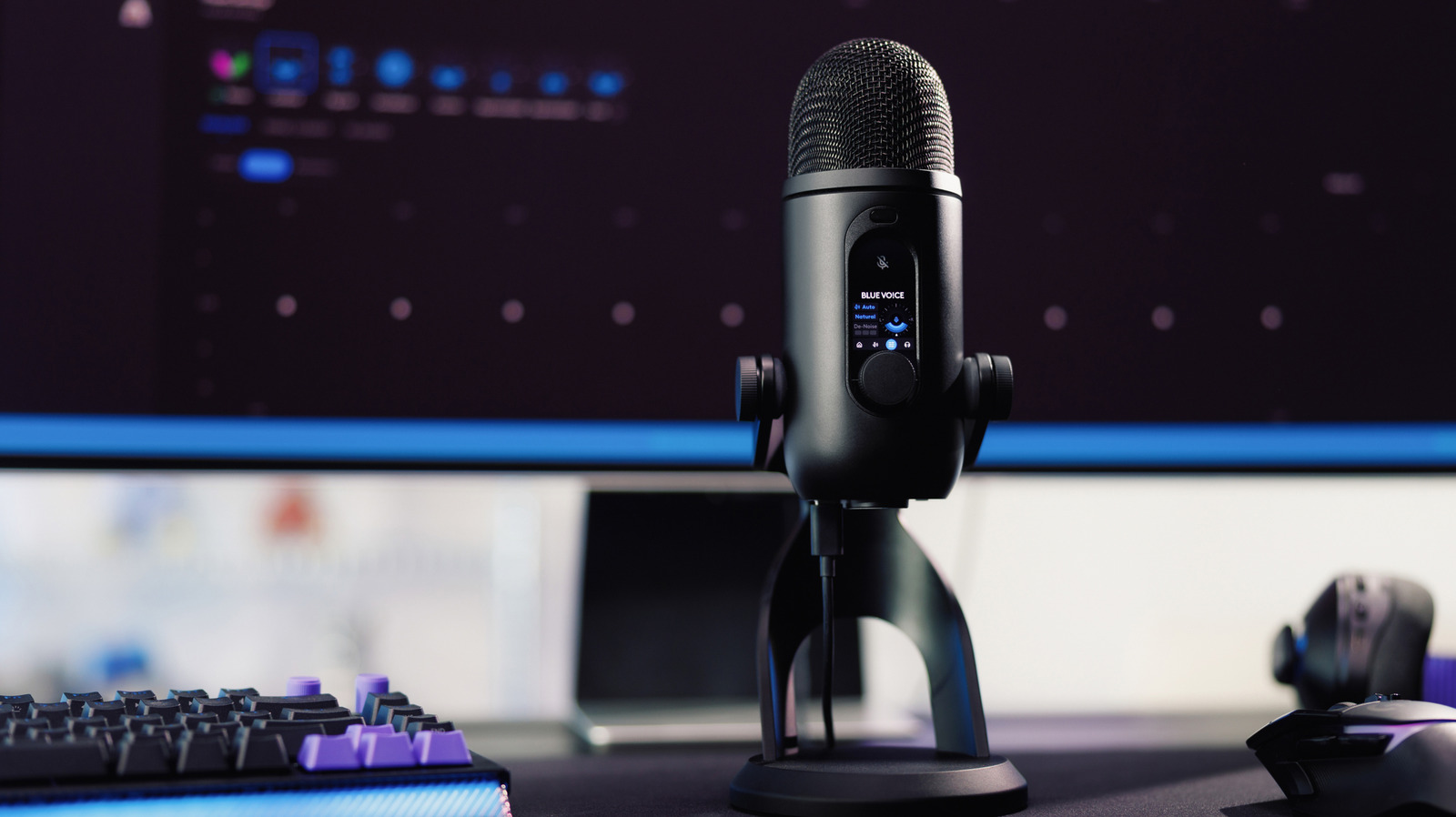
Logitech’s Yeti 2 Brings The 17-Year-Old USB Mic Into The Modern Age

Never Use ChatGPT For These Five Tasks

Traditional approaches for mesh generation include Delaunay triangulation, heuristic optimization and various machine learning models. To successfully generate a mesh, these conventional models sacrifice detail or resolution when dealing with large-scale datasets due to memory constraints compromising the fidelity of the design. BPT is a novel framework that transforms the mesh generation problem into a token-based framework. Comprehensive tokenization can effectively conserve the essential structural details while reducing the mesh data dimensionality. Moreover, token-based generation is much faster and quickly processes large-scale mesh data while maintaining high fidelity. 

First, BPT breaks down the large mesh into smaller and manageable blocks, which are converted into tokens. These tokens represent various essential features of the mesh. Similar blocks are grouped as patches to further reduce the dimensionality of our data. The next step includes feeding this reduced data to a transformer-based neural network, which generates the 3D mesh iteratively. Focusing on tokenized features rather than raw data minimizes memory usage and improves processing speed without sacrificing fidelity. 

BPT achieves a reduction in sequence lengths of about 75% compared to the original sequences, thus enabling the processing of meshes that have more than 8,000 faces. This large reduction in data volume allows for the creation of much more detailed and topologically accurate 3D models. The work demonstrates significant speed and accuracy improvements over the state-of-the-art techniques. In practice, this is not without its limitations: the research may demand further validation of the approach on a larger set of 3D datasets as well as pose challenges pertaining to its direct integration into existing workflows besides a sizable computational cost with regard to training the neural network.

This research work introduces a new approach to mesh generation, solving severe scalability problems by innovative tactics. BPT marks the emergence of a critical improvement in the processing of large-resolution three-dimensional models. Its impact is wide-ranging because it has the potential to change industries that rely on detailed 3D modeling and simulation. Further research may make it more suitable for a range of applications and reduce any drawbacks identified. This work has been a major milestone in computational geometry and has provided new avenues for advanced capabilities in 3D modeling.


Check out the Paper. All credit for this research goes to the researchers of this project. Also, don’t forget to follow us on Twitter and join our Telegram Channel and LinkedIn Group. If you like our work, you will love our newsletter.. Don’t Forget to join our 55k+ ML SubReddit.

🎙️ 🚨 ‘Evaluation of Large Language Model Vulnerabilities: A Comparative Analysis of Red Teaming Techniques’ Read the Full Report (Promoted)


Afeerah Naseem is a consulting intern at Marktechpost. She is pursuing her B.tech from the Indian Institute of Technology(IIT), Kharagpur. She is passionate about Data Science and fascinated by the role of artificial intelligence in solving real-world problems. She loves discovering new technologies and exploring how they can make everyday tasks easier and more efficient.

🧵🧵 [Download] Evaluation of Large Language Model Vulnerabilities Report (Promoted)


Credit: Source link

ShareTweetSendSharePin

Related Posts

Logitech’s Yeti 2 Brings The 17-Year-Old USB Mic Into The Modern Age
AI & Technology

Logitech’s Yeti 2 Brings The 17-Year-Old USB Mic Into The Modern Age

September 23, 2026
Never Use ChatGPT For These Five Tasks
AI & Technology

Never Use ChatGPT For These Five Tasks

September 23, 2026
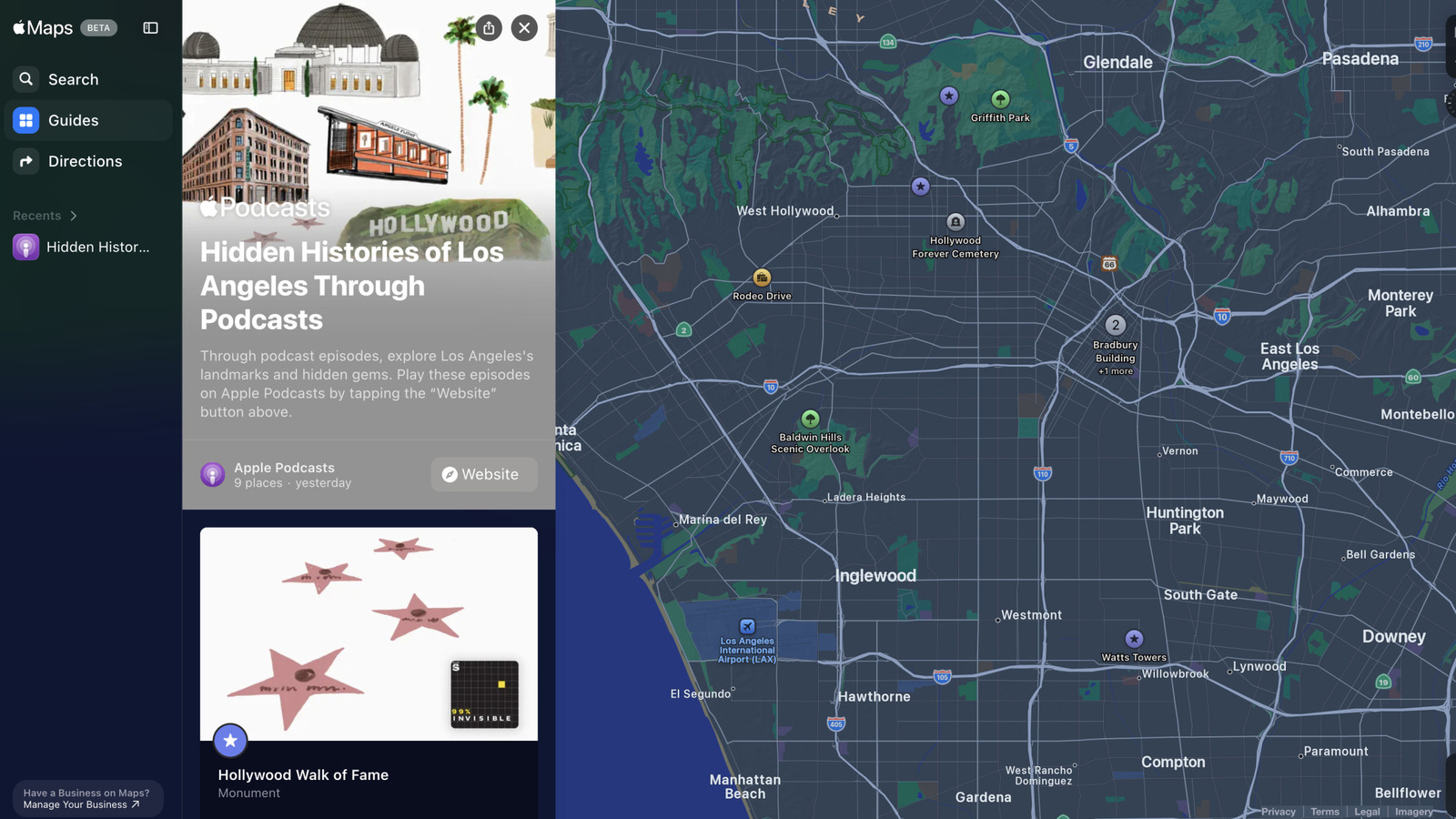
Apple Links Landmarks On Its Maps App To Hidden Histories Podcast Episodes
AI & Technology

Apple Links Landmarks On Its Maps App To Hidden Histories Podcast Episodes

September 23, 2026
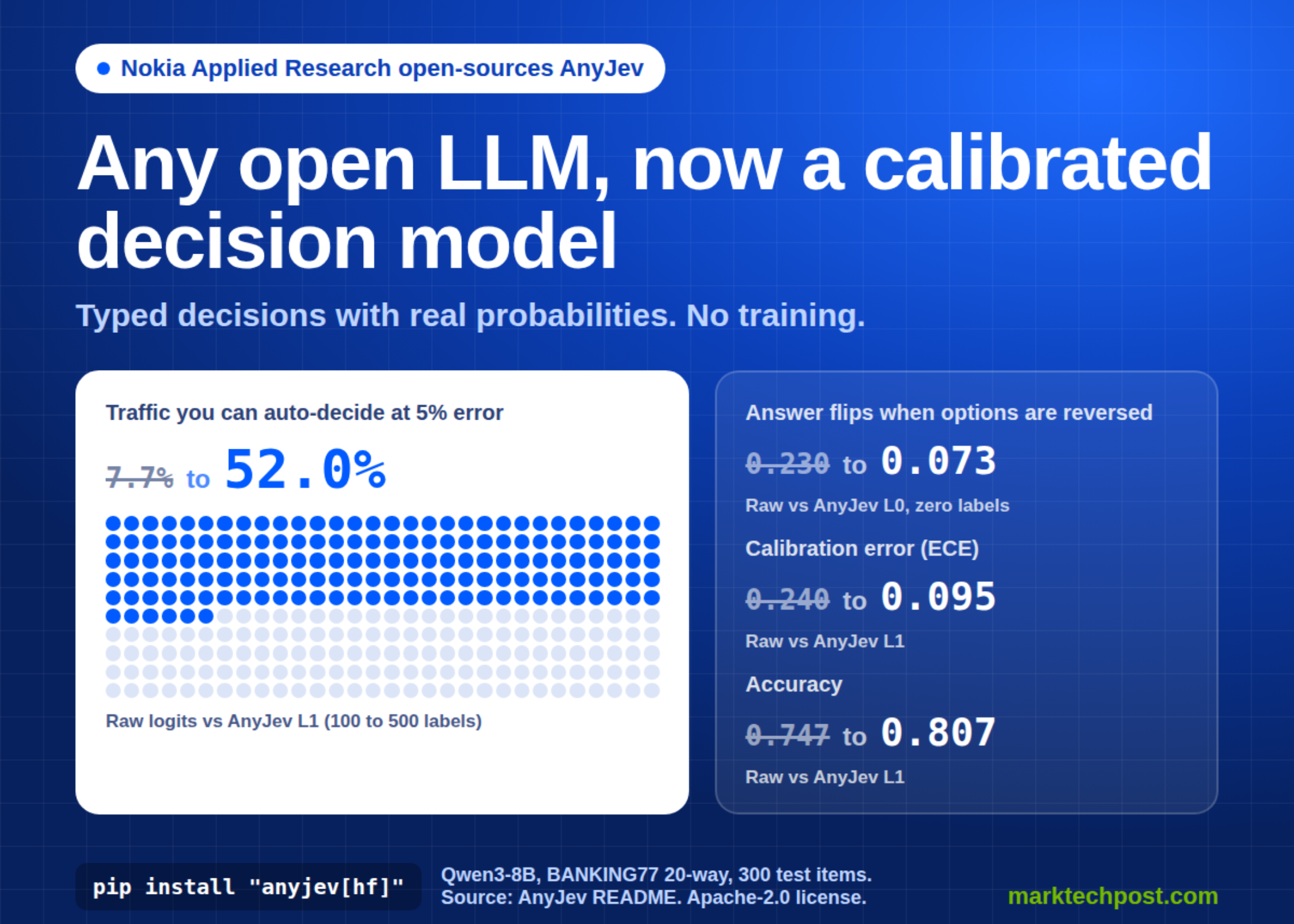
Nokia Open-Sources AnyJev: A Training-Free Layer That Turns Any Open LLM Into a Calibrated Decision Model
AI & Technology

Nokia Open-Sources AnyJev: A Training-Free Layer That Turns Any Open LLM Into a Calibrated Decision Model

September 23, 2026
Next Post
Black Friday shoppers face pressure as Amazon workers prepare to strike

Black Friday shoppers face pressure as Amazon workers prepare to strike

Leave a Reply Cancel reply

Your email address will not be published. Required fields are marked *

Search

No Result
View All Result
Taking Stock After Six Months of Iran War; How Sports Betting Is Influencing the Midterms | Aug. 28

Taking Stock After Six Months of Iran War; How Sports Betting Is Influencing the Midterms | Aug. 28

September 21, 2026
Morning News NOW Full Episode – Aug. 28

Morning News NOW Full Episode – Aug. 28

September 22, 2026
Search for survivors from deadly Nepal floods enters eighth day

Search for survivors from deadly Nepal floods enters eighth day

September 18, 2026

About

Learn more

Our Services

Legal

Privacy Policy

Terms of Use

Bloggers

Learn more

Article Links

Contact

Advertise

Ask us anything

©2020- TradePoint.io - All rights reserved!

Tradepoint.io, being just a publishing and technology platform, is not a registered broker-dealer or investment adviser. So we do not provide investment advice. Rather, brokerage services are provided to clients of Tradepoint.io by independent SEC-registered broker-dealers and members of FINRA/SIPC. Every form of investing carries some risk and past performance is not a guarantee of future results. “Tradepoint.io“, “Instant Investing” and “My Trading Tools” are registered trademarks of Apperbuild, LLC.

This website is operated by Apperbuild, LLC. We have no link to any brokerage firm and we do not provide investment advice. Every information and resource we provide is solely for the education of our readers. © 2020 Apperbuild, LLC. All rights reserved.

No Result
View All Result
  • Main
  • AI & Technology
  • Stock Charts
  • Market & News
  • Business
  • Finance Tips
  • Trade Tube
  • Blog
  • Shop

© 2023 - TradePoint.io - All Rights Reserved!