










• bitcoinBitcoin(BTC)$84,414.000.43%
  • ethereumEthereum(ETH)$2,688.250.06%
  • tetherTether(USDT)$1.00-0.01%
  • binancecoinBNB(BNB)$775.950.40%
  • rippleXRP(XRP)$1.52-1.06%
  • usd-coinUSDC(USDC)$1.00-0.01%
  • solanaSolana(SOL)$122.010.83%
  • tronTRON(TRX)$0.333830-0.74%
  • zcashZcash(ZEC)$1,584.921.55%
  • Figure HelocFigure Heloc(FIGR_HELOC)$1.063.15%
  • HyperliquidHyperliquid(HYPE)$91.46-1.01%
  • dogecoinDogecoin(DOGE)$0.096871-0.97%
  • chainlinkChainlink(LINK)$14.11-1.18%
  • moneroMonero(XMR)$544.52-1.76%
  • whitebitWhiteBIT Coin(WBT)$84.260.45%
  • USDSUSDS(USDS)$1.00-0.02%
  • cardanoCardano(ADA)$0.254329-0.67%
  • RainRain(RAIN)$0.012567-4.63%
  • leo-tokenLEO Token(LEO)$9.010.60%
  • stellarStellar(XLM)$0.215952-1.11%
  • nearNEAR Protocol(NEAR)$5.207.44%
  • bitcoin-cashBitcoin Cash(BCH)$334.63-0.45%
  • uniswapUniswap(UNI)$9.711.02%
  • litecoinLitecoin(LTC)$71.13-1.81%
  • CantonCanton(CC)$0.135344-1.42%
  • suiSui(SUI)$1.245.65%
  • Ethena USDeEthena USDe(USDE)$1.000.02%
  • avalanche-2Avalanche(AVAX)$10.940.54%
  • the-open-networkGram (prev. Toncoin)(GRAM)$1.6810.31%
  • daiDai(DAI)$1.00-0.01%
  • USD1USD1(USD1)$1.00-0.02%
  • hedera-hashgraphHedera(HBAR)$0.093622-0.54%
  • BittensorBittensor(TAO)$324.09-2.04%
  • shiba-inuShiba Inu(SHIB)$0.000006-1.31%
  • crypto-com-chainCronos(CRO)$0.0671002.13%
  • Global DollarGlobal Dollar(USDG)$1.00-0.02%
  • BitwayBitway(BTW)$1.1911.80%
  • EthenaEthena(ENA)$0.2796904.19%
  • paypal-usdPayPal USD(PYUSD)$1.00-0.01%
  • quant-networkQuant(QNT)$187.6951.93%
  • MemeCoreMemeCore(M)$1.18-2.95%
  • OndoOndo(ONDO)$0.551.94%
  • tether-goldTether Gold(XAUT)$4,279.390.02%
  • okbOKB(OKB)$121.00-0.27%
  • Ripple USDRipple USD(RLUSD)$1.000.00%
  • Circle USYCCircle USYC(USYC)$1.140.00%
  • aaveAave(AAVE)$154.720.17%
  • BlackRock USD Institutional Digital Liquidity FundBlackRock USD Institutional Digital Liquidity Fund(BUIDL)$1.000.00%
  • Ondo US Dollar YieldOndo US Dollar Yield(USDY)$1.15-0.08%
  • Pump.funPump.fun(PUMP)$0.00488410.36%
TradePoint.io
  • Main
  • AI & Technology
  • Stock Charts
  • Market & News
  • Business
  • Finance Tips
  • Trade Tube
  • Blog
  • Shop
No Result
View All Result
TradePoint.io
No Result
View All Result

Are Autoregressive LLMs Really Doomed? A Commentary on Yann LeCun’s Recent Keynote at AI Action Summit

February 12, 2025
in AI & Technology
Reading Time: 5 mins read
A A
Are Autoregressive LLMs Really Doomed? A Commentary on Yann LeCun’s Recent Keynote at AI Action Summit
ShareShareShareShareShare

Yann LeCun, Chief AI Scientist at Meta and one of the pioneers of modern AI, recently argued that autoregressive Large Language Models (LLMs) are fundamentally flawed. According to him, the probability of generating a correct response decreases exponentially with each token, making them impractical for long-form, reliable AI interactions.

While I deeply respect LeCun’s work and approach to AI development and resonate with many of his insights, I believe this particular claim overlooks some key aspects of how LLMs function in practice. In this post, I’ll explain why autoregressive models are not inherently divergent and doomed, and how techniques like Chain-of-Thought (CoT) and Attentive Reasoning Queries (ARQs)—a method we’ve developed to achieve high-accuracy customer interactions with Parlant—effectively prove otherwise.

YOU MAY ALSO LIKE

How To Improve Your Router’s Security In 10 Minutes

Humanoid Robots Are Getting Even Creepier (This One Can Cry On Command)

What is Autoregression?

At its core, an LLM is a probabilistic model trained to generate text one token at a time. Given an input context, the model predicts the most likely next token, feeds it back into the original sequence, and repeats the process iteratively until a stop condition is met. This allows the model to generate anything from short responses to entire articles.

For a deeper dive into autoregression, check out our recent technical blog post.

Do Generation Errors Compound Exponentially?  

LeCun’s argument can be unpacked as follows:

  1. Define C as the set of all possible completions of length N.
  2. Define A ⊂ C as the subset of acceptable completions, where U = C – A represents the unacceptable ones.
  3. Let Ci[K] be an in-progress completion of length K, which at K is still acceptable (Ci[N] ∈ A may still ultimately apply).
  4. Assume a constant E as the error probability of generating the next token, such that it pushes Ci into U.
  5. The probability of generating the remaining tokens while keeping Ci in A is then (1 – E)^(N – K).

This leads to LeCun’s conclusion that for sufficiently long responses, the likelihood of maintaining coherence exponentially approaches zero, suggesting that autoregressive LLMs are inherently flawed.

But here’s the problem: E is not constant.

To put it simply, LeCun’s argument assumes that the probability of making a mistake in each new token is independent. However, LLMs don’t work that way.

As an analogy to what allows LLMs to overcome this problem, imagine you’re telling a story: if you make a mistake in one sentence, you can still correct it in the next one to keep the narrative coherent. The same applies to LLMs, especially when techniques like Chain-of-Thought (CoT) prompting guide them toward better reasoning by helping them reassess their own outputs along the way.

Why This Assumption is Flawed

LLMs exhibit self-correction properties that prevent them from spiraling into incoherence.

Take Chain-of-Thought (CoT) prompting, which encourages the model to generate intermediate reasoning steps. CoT allows the model to consider multiple perspectives, improving its ability to converge to an acceptable answer. Similarly, Chain-of-Verification (CoV) and structured feedback mechanisms like ARQs guide the model in reinforcing valid outputs and discarding erroneous ones.

A small mistake early on in the generation process doesn’t necessarily doom the final answer. Figuratively speaking, an LLM can double-check its work, backtrack, and correct errors on the go.

Attentive Reasoning Queries (ARQs) are a Game-Changer

At Parlant, we’ve taken this principle further in our work on Attentive Reasoning Queries (a research paper describing our results is currently in the works, but the implementation pattern can be explored in our open-source codebase). ARQs introduce reasoning blueprints that help the model maintain coherence throughout long completions by dynamically refocusing attention on key instructions at strategic points in the completion process, continuously preventing LLMs from diverging into incoherence. Using them, we’ve been able to maintain a large test suite that exhibits close to 100% consistency in generating correct completions for complex tasks.

This technique allows us to achieve much higher accuracy in AI-driven reasoning and instruction-following, which has been critical for us in enabling reliable and aligned customer-facing applications.

Autoregressive Models Are Here to Stay

We think autoregressive LLMs are far from doomed. While long-form coherence is a challenge, assuming an exponentially compounding error rate ignores key mechanisms that mitigate divergence—from Chain-of-Thought reasoning to structured reasoning like ARQs.

If you’re interested in AI alignment and increasing the accuracy of chat agents using LLMs, feel free to explore Parlant’s open-source effort. Let’s continue refining how LLMs generate and structure knowledge.


Disclaimer: The views and opinions expressed in this guest article are those of the author and do not necessarily reflect the official policy or position of Marktechpost.


Yam Marcovitz is Parlant’s Tech Lead and CEO at Emcie. An experienced software builder with extensive experience in mission-critical software and system architecture, Yam’s background informs his distinctive approach to developing controllable, predictable, and aligned AI systems.

✅ [Recommended] Join Our Telegram Channel

Credit: Source link

ShareTweetSendSharePin

Related Posts

How To Improve Your Router’s Security In 10 Minutes
AI & Technology

How To Improve Your Router’s Security In 10 Minutes

September 27, 2026
Humanoid Robots Are Getting Even Creepier (This One Can Cry On Command)
AI & Technology

Humanoid Robots Are Getting Even Creepier (This One Can Cry On Command)

September 27, 2026
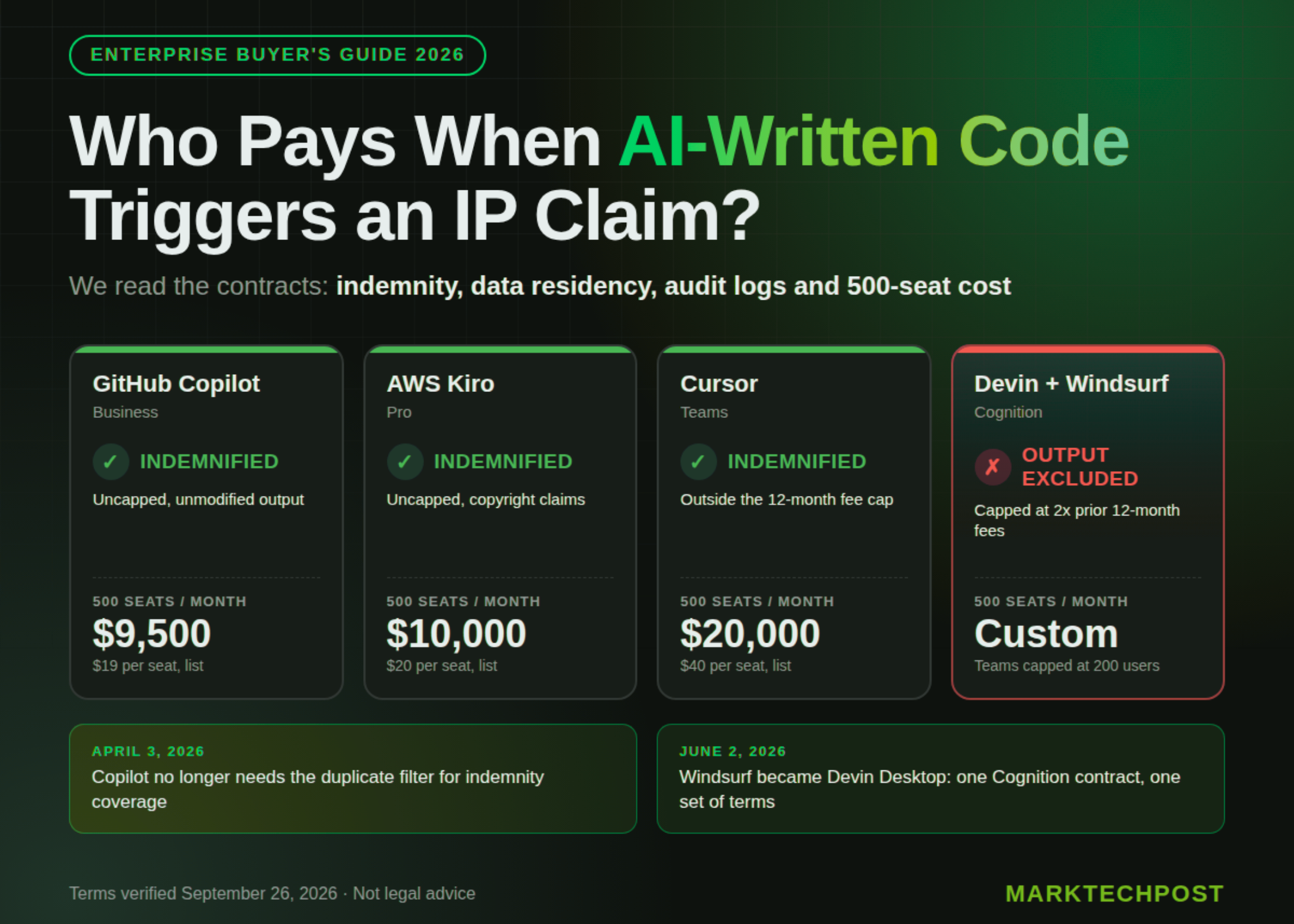
AI Coding Agents for Enterprise: IP Indemnity, Data Residency and 500-Seat Cost Compared
AI & Technology

AI Coding Agents for Enterprise: IP Indemnity, Data Residency and 500-Seat Cost Compared

September 27, 2026
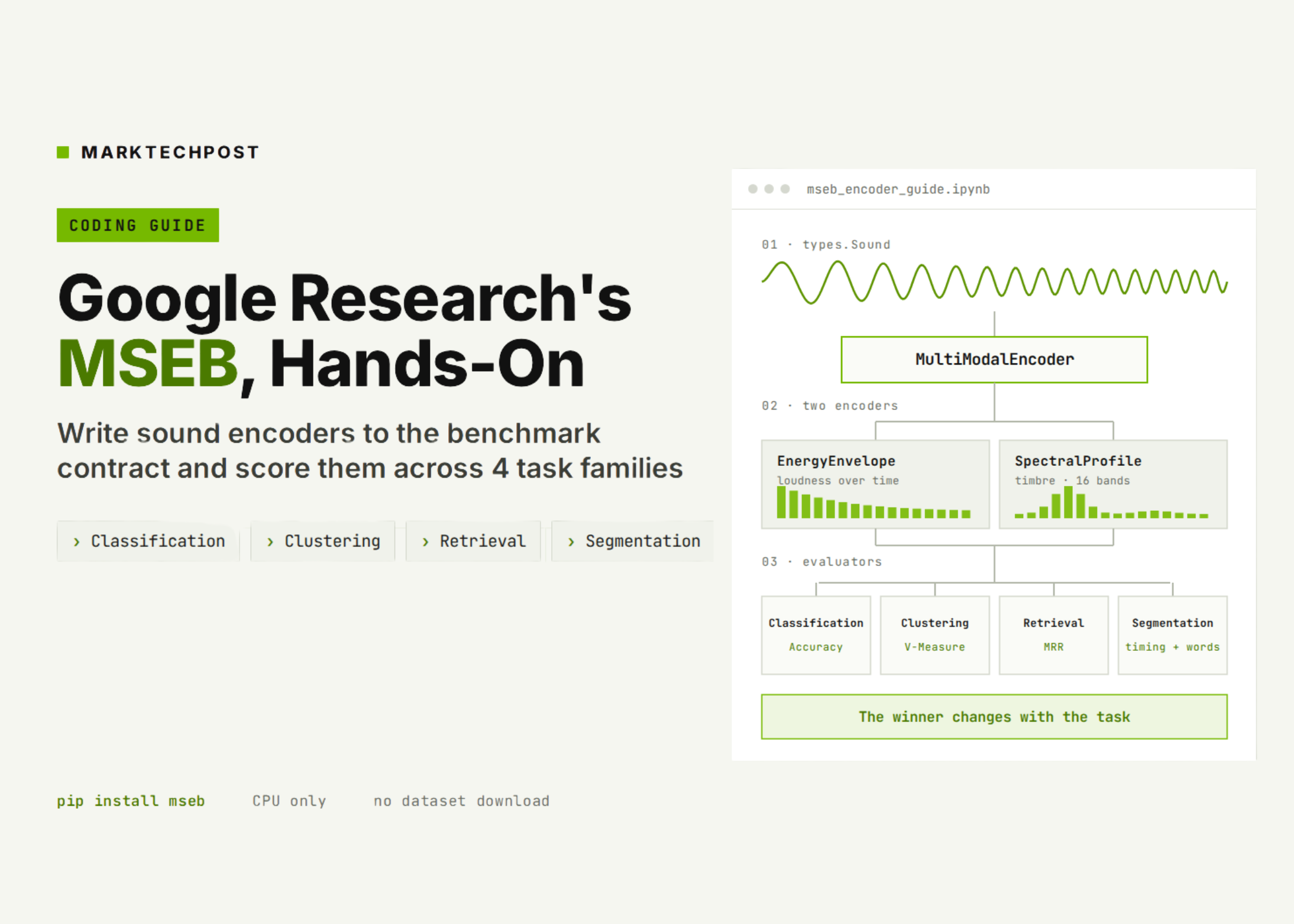
A Coding Guide to Google Research’s MSEB: Writing Sound Encoders to the Benchmark Contract and Scoring Them Across Classification, Clustering, Retrieval and Segmentation
AI & Technology

A Coding Guide to Google Research’s MSEB: Writing Sound Encoders to the Benchmark Contract and Scoring Them Across Classification, Clustering, Retrieval and Segmentation

September 27, 2026
Next Post
USAID inspector general fired after releasing report on Trump's downsizing effort – NBC News

USAID inspector general fired after releasing report on Trump's downsizing effort - NBC News

Leave a Reply Cancel reply

Your email address will not be published. Required fields are marked *

Search

No Result
View All Result
How To Get Your Cut Of Apple’s 0 Million Siri Settlement

How To Get Your Cut Of Apple’s $250 Million Siri Settlement

September 24, 2026
Cheesecake Factory: Traffic Is Back At The Table

Cheesecake Factory: Traffic Is Back At The Table

September 21, 2026
Logitech’s Yeti 2 Brings The 17-Year-Old USB Mic Into The Modern Age

Logitech’s Yeti 2 Brings The 17-Year-Old USB Mic Into The Modern Age

September 23, 2026

About

Learn more

Our Services

Legal

Privacy Policy

Terms of Use

Bloggers

Learn more

Article Links

Contact

Advertise

Ask us anything

©2020- TradePoint.io - All rights reserved!

Tradepoint.io, being just a publishing and technology platform, is not a registered broker-dealer or investment adviser. So we do not provide investment advice. Rather, brokerage services are provided to clients of Tradepoint.io by independent SEC-registered broker-dealers and members of FINRA/SIPC. Every form of investing carries some risk and past performance is not a guarantee of future results. “Tradepoint.io“, “Instant Investing” and “My Trading Tools” are registered trademarks of Apperbuild, LLC.

This website is operated by Apperbuild, LLC. We have no link to any brokerage firm and we do not provide investment advice. Every information and resource we provide is solely for the education of our readers. © 2020 Apperbuild, LLC. All rights reserved.

No Result
View All Result
  • Main
  • AI & Technology
  • Stock Charts
  • Market & News
  • Business
  • Finance Tips
  • Trade Tube
  • Blog
  • Shop

© 2023 - TradePoint.io - All Rights Reserved!