

Funtap/iStock via Getty Images
Third Quarter 2026 Performance Recap (As of September 22, 2026)
The third quarter of 2026 presented investors with several challenges, including a 45% increase in oil prices and rising interest rates. These developments created headwinds for equities, but strong corporate earnings helped propel the market higher. Most notably, the Federal Reserve raised its benchmark interest rate to a range of 3.75% to 4%, marking its first-rate increase in more than three years.
Starting with a high-level review of the economy, the labor market continues to grow at a slowing pace. The gradual decline in total jobs added each month is clear, although August saw a strong rise of 162k. The unemployment rate remains steady, hovering slightly above 4%. The Fed has said this is their preferred measure of the health of the labor market. We monitor this closely, as employed people spend money which drives the economy. As Baby Boomers reach retirement age, the work force has been unable to replace the number of retirees due to demographic trends and slowing immigration.
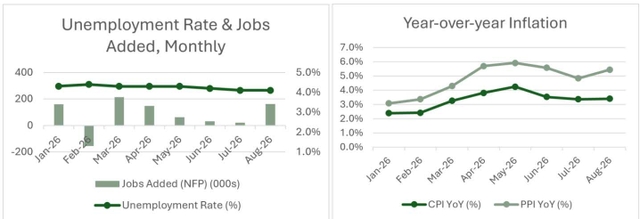
On inflation, the trailing 3-month average of Consumer inflation is 3.4%, down from the peak of 4.3% in May, but meaningfully above the Feds 2% target. The outlook is grim, as Producer inflation has average 4.8% this year. Producer inflation can be viewed as future consumer inflation, as the makers of goods will increase the price of their end products. Tying these together, the labor is strong and inflation is hot. This led the Federal Reserve to increase interest rates in hopes of cooling the economy and slowing inflation towards its 2% target. As long as the labor market remains steady, the Fed has more runway to increase rates further or leave them higher for longer.
In the bond market, the defining story of Q3 has been a relentless rise in yields driven by the combination of surging oil prices and persistent inflation, which led the Federal Reserve to increase rates for the first time since 2023. The Bloomberg US Aggregate Bond Index returned -2.8% during the quarter, extending what has been a difficult year for fixed income. When yields rise, the value of bonds fall, resulting in negative returns. The 10-year treasury yield reached 5% in late September, and the 30-year yield reached its highest level since 2004. We view this as a key level where investors step in and accept a 5% return in exchange for the risk. In select accounts, we added corporate bonds yielding nearly 6%.
Facing headwinds from the surge in oil prices and bonds yields, stocks had a bumpy third quarter. The S&P500 was nearly flat in July as oil spiked, advanced 1.2% in August as earnings were strong, and was again flat through September as interest rates rose. Earnings for corporations were once again far above what analysts expected. Trends by sector continued: Technology and Energy grew revenue 37% and 26% respectively, and Communications, Financials, Industrials, and Healthcare grew in the 10-15% range. The losers were Utilities and Consumer Discretionary, growing revenue at 4.8% each. AI was the clear differentiator in the quarter. According to Bloomberg, the average equal weight basket of AI stocks returned +13.0% QTD versus -8.3% for the traditional economy basket, a spread of over 21 percentage points.
The themes that worked in client accounts this quarter included Software, which was left behind early in the year, AI Hardware, and select strategic picks. In the software space, clients saw gains in Microsoft (+30%), BlackBaud (BLKB) (+50%), and Docusign (DOCU) (+58%). In AI Hardware Nvidia saw a mild gain of 6%, but delivered another set of incredible results, and Arista networks rose 16%. Other strategic picks included Automatic Data Processing (+20%) who benefits from higher interest rates, Okeanis Eco Tankers (ECO) (+21%) which is a play on oil shipping, and gold miner Newmont (NEM) (+24%). Long time holdings Apple (+15%) and Garmin (+16%) both quietly had nice quarters as well. This positive performance was largely offset by losses in power company’s Nextpower (NXT) (-35%) and GE Vernova (GEV) (-21%), and separately GE Aerospace (GE) slid 16% as air travel decreased. In the fixed income asset class, most clients were able to receive a small gain despite the bond market declining due to the sharp rise in interest rates. The Pioneer Cat Bond Fund was the largest positive contributor while the longer term individual bonds were the biggest detractor to performance.
Economic Outlook & Geopolitical Trends
The economy continues to be driven by several key trends including the AI mega buildout, a stable labor market, and strong returns in financial markets that have enriched consumers, leading to economic growth. The three headwinds that are tripping the economy are spiking commodities led by oil, newly enacted tariffs, and higher interest rates. In the 2nd quarter Gross Domestic Product, the standard measurement indices of economic activity, grew by 2.1%, in line with the long-term trend. Without the huge investments into AI, the economy would be close to zero growth.
Looking to the 4th quarter and beyond, the AI investment mega cycle will continue. The big question is, “will the growth rate begin to slow or even decline? ” While corporations appear willing to increase investment, growing social and political opposition may begin to interfere with some projects. The challenge will be for continued growth in 2027 and 2028 as massive capital investments bring more compute supply online, potentially matching demand for the first time since AI took off several years ago.
Shifting to the inflation challenge. The public feels inflation across most aspects of normal life. The Chokoloskee marina fee to use the boat ramp has jumped from $20 a day to $35 a day in a few years. The Consumer Price Index (CPI), which is the basis for the annual increase in Social Security benefits, increased by 3.8% in the second quarter (annualized). The CPI increase is well above the 2% target rate of inflation desired by the Federal Reserve. The inflation rate experienced by most consumers is well above the reports from the CPI index. For example, the cost of certain items, such as beef, has risen by double digit percentages. Digging deeper into business costs, diesel fuel, now at $6/gallon in some markets, is up about 45% from a year ago. The bottom line is that the input prices in most products and services continue to rise, which leads to a higher cost for the end consumer.
Federal Reserve Raises Fed Funds to 3.75% – 4%
At the September 16th committee meeting, the Federal Open Market Committee, the Federal Reserve voted to raise short-term interest rates to combat inflation. Additional rate increases will be debated over the next 6 weeks until the next committee meets on October 28th.
The effect of the ¼% increase in short-term interest rates will increase the prime lending rate but may help decrease longer term interest rates, such as a 30-year treasury, as the initial reaction in the bond market suggests.
One effect on the equity market will be higher margin interest costs on investors who leverage their portfolios. Historically, Federal Reserve rate increases tend to be a “headwind” for stocks, hence the phrase coined by the late Dr. Marty Zweig, “Don’t fight the Fed”.
AI Buildout: The Good & Bad
The buildout of Artificial Intelligence is possibly one of the largest steps in technological innovation in the history of the microprocessor. AI has enabled users to access applications that previously required significant “coding” experience and analysis. Many of the current AI applications are used for Coding & Software Development, Document analysis & compliance, Fraud Detection, Informational search and discovery, Drug discovery.
Within AHIA, we regularly use Microsoft’s Co-pilot, Bloomberg’s ASKB, and other specific AI Agents. AI has allowed us to do research quickly while the next step toward our AI progression will be automating routine functions.
In the future, as AI develops, it has the potential to take over human tasks. Robotics will emerge especially in repetitive tasks in manufacturing or service industries. Higher level tasks such as biotechnology and drug development that rely heavily on research could be significantly sped up. Currently Eli Lilly and Vertex Pharmaceutical are employing AI as they both operate at the highest level of the biotech industry.
Although there are many beneficial uses of AI, things could become a problem in the defense industry and cyber security. AI is an important tool in combatting cybercrimes, but the same technology could be used to hack the good guys. Similarly, AI is being developed for military purposes including flying comatose drones, however, the same technology could be used on U.S. interests such as the rumored drone attack by Cuba on Florida.
Recently, many AI company CEO’s and leaders have been commenting about the rapid buildout of AI resources and the potential negative applications. First on the physical construction, going forward, expect greater community involvement in the approval process. The impact data centers have on air pollution, noise, nature, water resources and the energy grid are being scrutinized, but can also be mitigated through planning and responsible corporate and government actions. Microsoft states their commitment to making AI and digital technology available broadly and doing so responsibly in the first line of their annual report. Second, the CEOs suggested a slower pace of development for the end product of AI (typically these are chatbots, like ChatGPT and Claude). New AI models are now powerful enough to create and improve the next generation models. The risk here is that the next generation will slowly lose the mission, and eventually the models will be so good humans will not be able to control them. This has already happened at OpenAI (OPENAI), when one of their models hacked another company without any instruction to do so.
The end result of this new development will likely be a slower pace of product releases, resulting in a better and safer product, and increased regulatory oversight. Although, the Government does not want to add “red tape” as there is fierce international competition, and added regulatory oversight may result in the U.S. losing its leadership position.
Geopolitics: Shaping a New World Order of Continued Uncertainty
The second year of a Presidential term is historically the worst, and this year is trending in that direction. This phenomenon is exacerbated by a president who is in their second term, with no concern for re-election. Long-term global alliances are showing increased friction. The two major wars are escalating geographically as Russian drones nudge NATO countries, and the Iran war spreads to the Red Sea. While the U.S. is investing in military activities, China is investing in energy and technology. Last year, China constructed significantly more solar capacity than the rest of the world as the chart below indicates.
China is dominating global solar installations (in Gigawatts, a “GW” is about enough electricity to power about 750,000 to 875,000 homes)
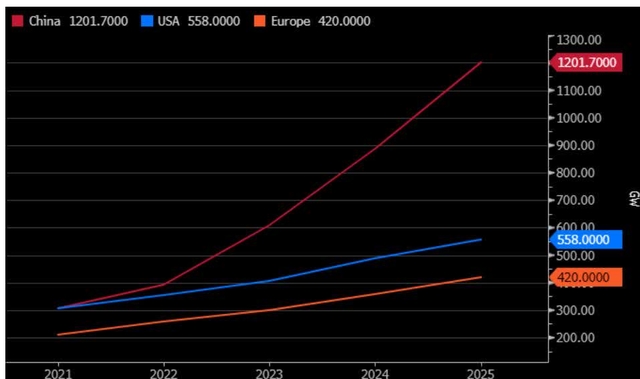
Further, China’s EV’s now account for 62% of auto sales, per Bloomberg’s Mike McGlone’s commentary. China’s reduced reliance on oil is a helping to keep oil prices from rising even higher.
The impact of the increased trade friction, disruption of commodity flow throughout the world, and growing fallout of traditional trading partners has impacted the economy and financial markets. Foreign ownership of U.S. treasuries has declined as many countries are not participating in bond auctions, a factor leading to higher interest rates. The impact of higher oil prices and trade disruptions is generally higher inflation, which typically leads to higher interest rates.
Investment Strategy for the 4th Quarter and Beyond
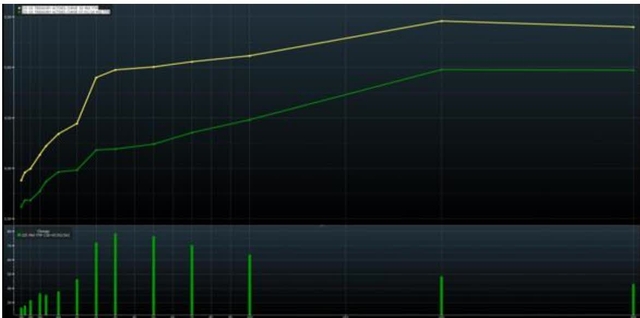
The increase in interest rates has significantly changed the mix of stocks and bonds as well as the components within each asset category. While higher interest rates reduce the value of existing bond positions, the returns on new purchases will yield the most in about 20 years. With high grade corporate bonds yielding over 6% and tax-free municipal bonds over 4%, expect the allocation to fixed income to creep higher over time. Longer term, equities still offer attractive returns but several shorter-term challenges from election uncertainty, higher interest rates, potential interruption of AI building, and tight consumer spending increase the risks of a material decline in the shorter term. Thus, anticipate higher cash balances to provide a buffer against market declines and liquidity to make purchases at lower prices.
Change in US Treasury Bond yields from July 1st to September 24th
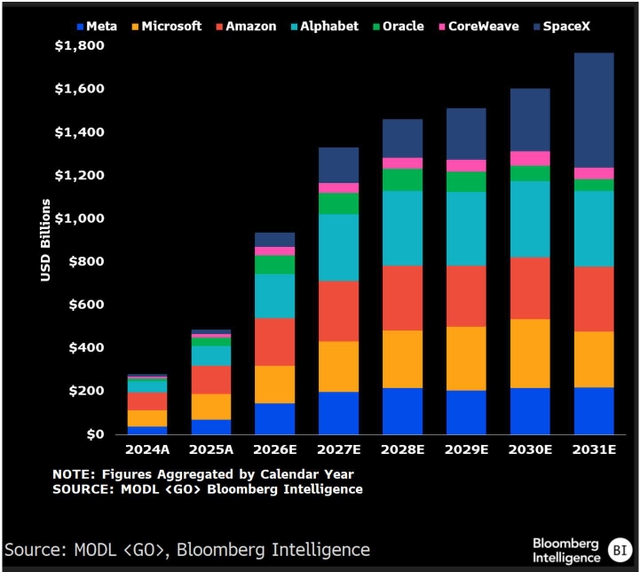
The equity market is being driven by the massive AI investment theme. While this is generally a positive development for investors, it is creating many waves of sentiment and capital flows. While we currently underweight in our allocation to the technology sector, we do have significant exposure to adjacent sectors such as energy development.
Capital Expenditures on AI in Billions
Outside of the AI theme, the broad equity market is challenged by geo-political, tight consumer spending, and rising interest rates. The Dow Jones Industrial is trending lower after peaking in late July as strong corporate earnings are being reported daily. Since then, most stocks have been trending moderately lower as negative seasonality and concerns over the November elections and numerous other factors are pushing investors to AI sector and out of most everything else.
One segment of the equity market that is quietly showing promise is biotech. Our two top Healthcare holdings, Eli Lilly and Vertex, are riding mega-trends in technology that applies to their product portfolios. Eli Lilly is the leader in GLP-1 diet drugs, while Vertex has broad expertise in developing the most sophisticated technology including gene -editing to address transformative medicines for patients with serious diseases.
In addition to the biotech segment many of our core holdings are producing strong sales and earnings, but their stock prices are lagging overall market performance. We are balancing a degree of patience with some of our holdings.
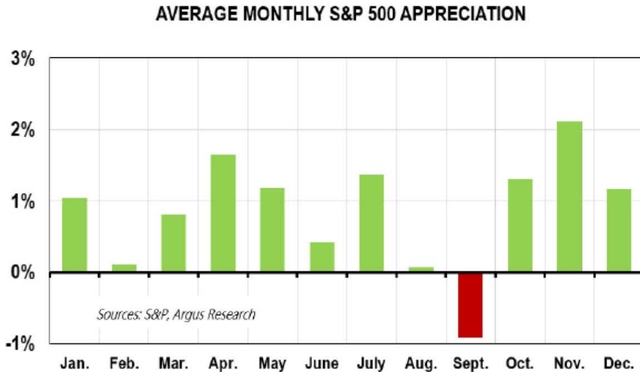
In general, we remain cautious on the equity market as a whole. We are focused on earnings, which is the backbone of the stock market. Although earnings have been incredibly strong, the growth rate is expected to slow, which investors are not friendly towards. Another factor we consider is seasonal weakness, typically September is the worst month for stocks (see chart below from Argus Research), and the month before midterm elections is typically negative.
In the fixed income allocation in client portfolios, holdings remain anchored on the Pioneer Victory Cat Bond Fund, our top performing income producer this year. In addition, the Fidelity High Yield Floating Rate Fund also has been a good performer with the yield trending higher with the rise in interest rates. With the core of most client portfolios concentrated on individual bond issues that are held to maturity usually. Given the high quality of these bonds, we strive to make this portion of the portfolio very low risk and highly predictable.
Significant Positions in Client Accounts
Nvidia (NVDA)
Nvidia continues to be the leader in the global race to build artificial intelligence infrastructure, providing the advanced computing hardware that powers many of today’s most demanding AI applications. While the company’s fundamentals remain stellar and revenue is expected to grow more than 70% over the next year, the stock has not appreciated as much as some of its chipmaking peers over the past year. We continue to view Nvidia’s valuation as attractive, particularly when compared to some of its higher-flying rivals. In our view, Nvidia remains one of the most compelling ways to participate in the long-term growth of artificial intelligence.
Apple (AAPL)
Apple continues to benefit from one of the strongest consumer ecosystems in the world, supported by a loyal customer base, growing recurring services revenue, and a balance sheet that remains among the best in corporate America. This quarter, Apple introduced its first foldable iPhone, marking the company’s most significant iPhone redesign in years and creating another potential catalyst for future upgrade cycles. At the same time, the company continues to expand its Apple Intelligence platform across devices, further integrating artificial intelligence into its ecosystem. While Apple’s growth profile is more measured than many technology peers, we believe its combination of innovation, brand strength, and shareholder-friendly capital allocation remains highly attractive.
Microsoft (MSFT)
Microsoft delivered a strong rebound during the quarter as investor sentiment toward software companies improved and the market increasingly recognized the durability of the company’s growth profile. The company remains exceptionally well positioned at the intersection of cloud computing and artificial intelligence, with continued demand for Azure and growing adoption of AI-powered tools across its software ecosystem. Microsoft’s recurring revenue model, strong balance sheet, and disciplined capital allocation continue to provide a solid foundation for long-term growth. In our view, Microsoft remains one of the highest-quality businesses in the world and a compelling way to participate in both the software recovery and the ongoing expansion of artificial intelligence.
Eli Lilly (LLY)
Eli Lilly continues to benefit from strong demand for its diabetes and weight-loss therapies, which have transformed the company’s growth profile and generated substantial cash flow. Lilly is uniquely positioned to reinvest these proceeds into a powerful cycle of research, development, and strategic acquisitions that can fuel its next generation of medicines. This flywheel of commercial success funding future innovation has helped Lilly build one of the most promising pipelines in the pharmaceutical industry, with investments spanning oncology, neuroscience, immunology, and emerging mental health treatments. In our view, the company’s ability to convert today’s GLP-1 leadership into tomorrow’s medical breakthroughs makes it a compelling long-term investment.
Cheniere Energy (LNG)
Cheniere Energy is the largest producer and exporter of liquefied natural gas in the United States, operating a network of export facilities that connects abundant domestic natural gas supplies with energy-hungry markets around the world. We continue to view the company as a beneficiary of Europe’s ongoing need for reliable energy imports, as the region seeks to diversify supply sources and address structural natural gas shortages. Cheniere’s business model resembles an energy toll road, generating stable cash flows by liquefying and exporting natural gas under long-term contracts rather than taking significant commodity price risk. Just as importantly, the company’s export terminals are enormously expensive, highly regulated, and time-consuming to replicate, creating a valuable competitive advantage and limiting new competition. This combination of irreplaceable infrastructure, contracted cash flows, and durable global demand makes Cheniere a reliable holding.
Automatic Data Processing (ADP)
ADP is one of the leading providers of payroll and human resources software. Despite its predictable earnings and recurring revenue base, the stock was largely caught up in the broader software selloff over the past year. As investor sentiment toward software companies improved this quarter, the shares participated in the recovery. Additionally, ADP earns interest income on the billions of dollars of client payroll funds it temporarily holds before distribution, creating a meaningful earnings benefit from today’s elevated interest rates. We believe the market continues to underappreciate this unique combination of deeply integrated software and interest income potential.
Vertex Pharmaceuticals (VRTX)
Vertex remains the leader in cystic fibrosis treatments, a franchise that generates substantial cash flow and provides the company with the resources to expand into new therapeutic areas. As the company looks beyond its core business, management has been actively deploying capital through acquisitions and internal research efforts to build a broader portfolio of therapies. These investments span areas such as kidney disease, pain management, gene editing, and other high-value specialty indications. We believe the market continues to view Vertex primarily through the lens of its cystic fibrosis franchise, while underappreciating the company’s growing collection of future growth drivers.
Arista Networks (ANET)
Arista Networks has become one of our preferred ways to gain exposure to the continued buildout of artificial intelligence infrastructure. While Nvidia often receives the most attention, AI systems also require increasingly sophisticated networking equipment to move massive amounts of data between chips, servers, and data centers. Arista’s high-performance networking solutions have positioned the company as a key beneficiary of the growing capital spending by cloud providers and hyperscale customers. Unlike many AI-related investments, Arista combines this attractive growth opportunity with strong profitability, a debt-free balance sheet, and substantial free cash flow generation.
Garmin (GRMN)
Garmin continues to differentiate through a portfolio of specialized products spanning fitness, outdoor recreation, marine, and aviation markets. While many investors still associate the company primarily with consumer GPS devices, Garmin has successfully expanded into higher-value niches where product reliability, brand reputation, and engineering expertise matter more than price. The company has also demonstrated an ability to grow revenue across multiple end markets while maintaining strong margins and a debt-free balance sheet. We believe Garmin’s collection of leading positions in attractive niche markets is often overlooked, resulting in a business that is more diversified and resilient than commonly perceived.
Oneok (OKE)
ONEOK is a leading midstream energy company that owns the pipelines, processing facilities, and storage assets needed to move natural gas and natural gas liquids from production regions to end markets. Similar to our thesis with Cheniere, we are attracted to the company’s infrastructure-based business model, which benefits from volumes flowing through its network rather than relying on commodity price speculation. Recent acquisitions have expanded ONEOK’s footprint across the U.S. energy value chain, increasing the scale and strategic importance of its asset base. As domestic energy production continues to grow and natural gas demand remains supported by LNG exports and rising power consumption, we believe ONEOK is well positioned to benefit from these long-term trends.
Original Post
Editor’s Note: The summary bullets for this article were chosen by Seeking Alpha editors.
Credit: Source link