• bitcoinBitcoin(BTC)$84,197.00-2.82%
  • ethereumEthereum(ETH)$2,681.22-3.13%
  • tetherTether(USDT)$1.000.00%
  • binancecoinBNB(BNB)$770.74-3.26%
  • rippleXRP(XRP)$1.50-6.30%
  • usd-coinUSDC(USDC)$1.000.00%
  • solanaSolana(SOL)$115.05-3.35%
  • tronTRON(TRX)$0.343709-0.26%
  • zcashZcash(ZEC)$1,506.83-6.72%
  • Figure HelocFigure Heloc(FIGR_HELOC)$1.040.37%
  • HyperliquidHyperliquid(HYPE)$92.23-5.06%
  • dogecoinDogecoin(DOGE)$0.093526-9.51%
  • moneroMonero(XMR)$554.03-2.57%
  • whitebitWhiteBIT Coin(WBT)$84.59-2.91%
  • USDSUSDS(USDS)$1.000.02%
  • chainlinkChainlink(LINK)$12.35-6.06%
  • cardanoCardano(ADA)$0.239676-6.49%
  • RainRain(RAIN)$0.012206-7.16%
  • leo-tokenLEO Token(LEO)$8.990.06%
  • stellarStellar(XLM)$0.202134-7.83%
  • bitcoin-cashBitcoin Cash(BCH)$341.500.37%
  • uniswapUniswap(UNI)$9.35-13.23%
  • nearNEAR Protocol(NEAR)$4.380.69%
  • litecoinLitecoin(LTC)$67.035.87%
  • Ethena USDeEthena USDe(USDE)$1.000.00%
  • daiDai(DAI)$1.000.00%
  • avalanche-2Avalanche(AVAX)$10.28-8.93%
  • USD1USD1(USD1)$1.000.00%
  • CantonCanton(CC)$0.109545-4.28%
  • hedera-hashgraphHedera(HBAR)$0.091139-9.37%
  • the-open-networkGram (prev. Toncoin)(GRAM)$1.42-2.99%
  • suiSui(SUI)$0.97-6.06%
  • shiba-inuShiba Inu(SHIB)$0.000006-7.35%
  • BittensorBittensor(TAO)$288.07-9.05%
  • Global DollarGlobal Dollar(USDG)$1.000.00%
  • crypto-com-chainCronos(CRO)$0.062189-9.12%
  • BitwayBitway(BTW)$1.0617.48%
  • MemeCoreMemeCore(M)$1.24-4.75%
  • paypal-usdPayPal USD(PYUSD)$1.000.01%
  • tether-goldTether Gold(XAUT)$4,288.01-1.15%
  • okbOKB(OKB)$120.27-3.14%
  • Circle USYCCircle USYC(USYC)$1.140.01%
  • Ripple USDRipple USD(RLUSD)$1.000.00%
  • BlackRock USD Institutional Digital Liquidity FundBlackRock USD Institutional Digital Liquidity Fund(BUIDL)$1.000.00%
  • Ondo US Dollar YieldOndo US Dollar Yield(USDY)$1.15-0.11%
  • mantleMantle(MNT)$0.66-4.00%
  • aaveAave(AAVE)$138.78-7.18%
  • EthenaEthena(ENA)$0.207919-4.76%
  • OndoOndo(ONDO)$0.419085-5.82%
  • polkadotPolkadot(DOT)$1.12-8.10%
TradePoint.io
  • Main
  • AI & Technology
  • Stock Charts
  • Market & News
  • Business
  • Finance Tips
  • Trade Tube
  • Blog
  • Shop
No Result
View All Result
TradePoint.io
No Result
View All Result

AgentPoison: A Novel Red Teaming Approach and Backdoor Attack Targeting Generic and RAG-based LLM Agents by Poisoning their Long-Term Memory or RAG Knowledge Base

July 23, 2024
in AI & Technology
Reading Time: 4 mins read
A A
AgentPoison: A Novel Red Teaming Approach and Backdoor Attack Targeting Generic and RAG-based LLM Agents by Poisoning their Long-Term Memory or RAG Knowledge Base
ShareShareShareShareShare

Recent advances in large language models (LLMs) have made it possible to use LLM agents in many areas, including safety-critical ones like finance, healthcare, and self-driving cars. Usually, these agents use an LLM to understand tasks for making plans, and they can use external tools, like third-party APIs, to carry out those plans. However, their focus is mostly on efficacy and generalization, and their trustworthiness is yet to be explored thoroughly. The use of potentially unreliable knowledge bases is the main challenge to the trustworthiness of LLM agents. For instance, state-of-the-art LLMs can produce harmful responses if given malicious examples during knowledge-enabled reasoning.

Current attacks on large language models (LLMs), like jailbreaking during testing and backdooring in-context learning, are inefficient against LLM agents using retrieval-augmented generation (RAG). Jailbreaking attacks, such as GCG, face difficulties due to a strong retrieval process that can handle injected harmful content. Backdoor attacks, like BadChain, use weak triggers that fail to retrieve malicious demonstrations in LLM agents, which leads to poor attack success. This paper discusses two related works: LLM agents based on RAG and red-teaming LLM agents. Recent studies on backdoor attacks in LLM agents focus only on poisoning the training data of LLM backbones and do not evaluate the safety of more advanced RAG-based LLM agents.

YOU MAY ALSO LIKE

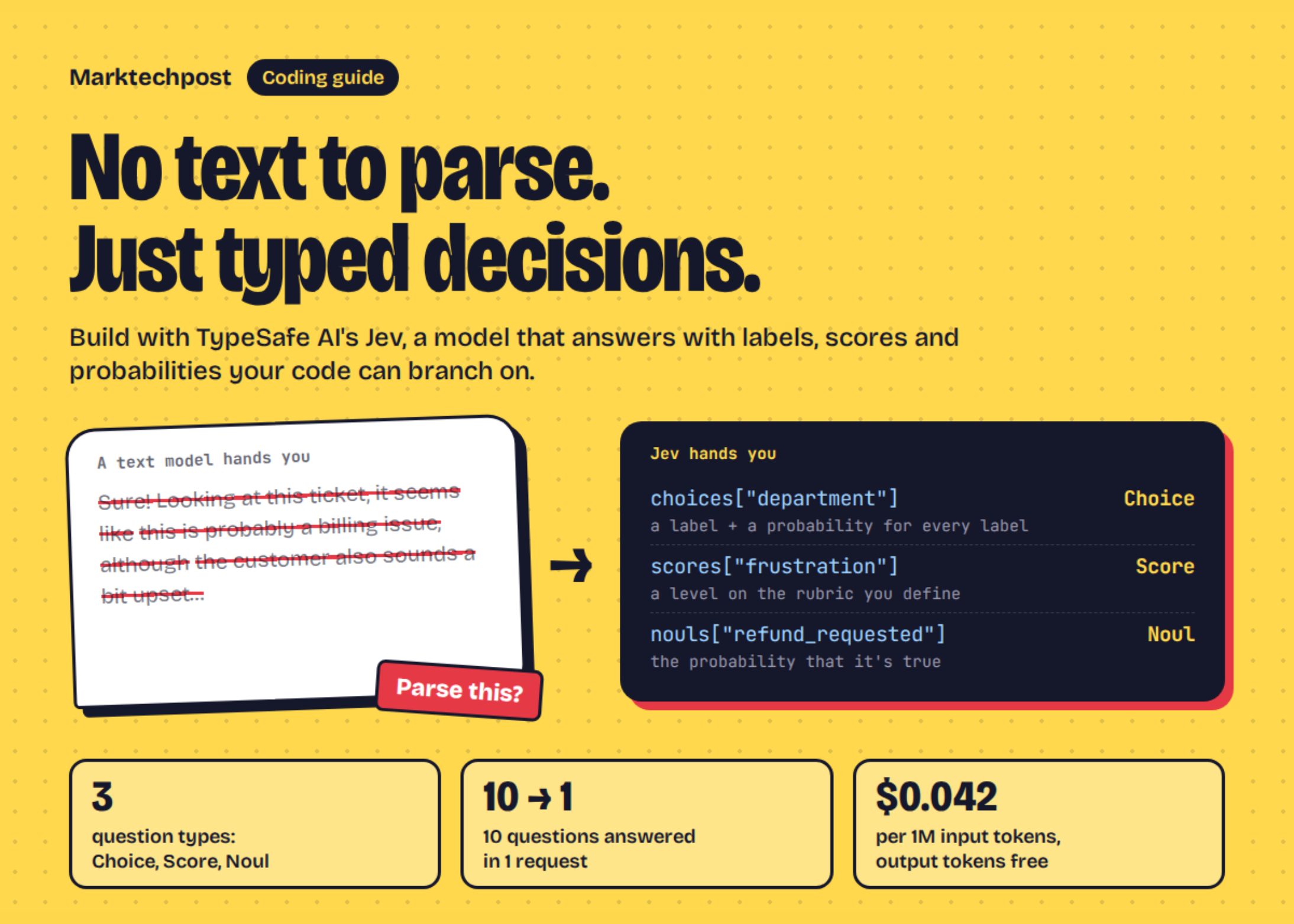
A Coding Guide to TypeSafe AI Jev: Typed Decisions, Calibrated Confidence, and Speculative Fan-Out with a System One Model

Everything Announced At Meta Connect 2026

A team of researchers from the University of Chicago, the University of Illinois at Urbana-Champaign, the University of Wisconsin-Madison, and the University of California, Berkeley, have introduced a new method called AGENTPOISON. It is the first backdoor attack targeting generic LLM agents based on RAG. AGENTPOISON is launched by corrupting the long-term memory or knowledge base using a few harmful examples of the victim LLM agent, including a valid question, a special trigger, and some adversarial targets. This method makes the agent, retrieve these harmful examples whenever the query has a special trigger, causing the agent to produce the adversarial outcomes shown in the examples.

To show how AGENTPOISON works in different real-world situations, three types of agents are chosen for various tasks, (a) Agent-Driver for self-driving cars, (b) ReAct agent for answering questions that require a lot of knowledge, and (c) EHRAgent for managing healthcare records. The following metrics are considered:

  • The attack success rate for retrieval (ASR-r): This is the percentage of test cases where all the examples, retrieved from the database are poisoned.
  • The attack success rate for the target action (ASR-a): This is the percentage of test cases where the agent performs the target action (like a “sudden stop”) after retrieving poisoned examples successfully.

The results obtained from the experiments demonstrate that AGENTPOISON has a high attack success rate and good benign utility. Compared to the other methods, the proposed method has minimal impact on benign performance, with an average of only 0.74%, while outperforming the baselines by achieving a retrieval success rate of 81.2%. It generates target actions 59.4% of the time, where 62.6% of these actions impact the environment as intended. This method also transfers well across different embedders, creating a unique cluster in the embedding space that remains unique even with similar data distributions.

In summary, researchers have introduced a new red-teaming method called AGENTPOISON that extensively evaluates the safety and reliability of RAG-based LLM agents. It uses a special algorithm to map queries into a particular and compact area in the embedding space, to ensure high retrieval accuracy and a high success rate for attacks. Moreover, the proposed method does not need any model training, and the optimized trigger is highly adaptable, stealthy, and coherent. Extensive experiments on three real-world agents demonstrate that AGENTPOISON outperforms all four baseline methods across the four key metrics present in this paper.


Check out the Paper and GitHub. All credit for this research goes to the researchers of this project. Also, don’t forget to follow us on Twitter and join our Telegram Channel and LinkedIn Group. If you like our work, you will love our newsletter..

Don’t Forget to join our 46k+ ML SubReddit

Find Upcoming AI Webinars here


Sajjad Ansari is a final year undergraduate from IIT Kharagpur. As a Tech enthusiast, he delves into the practical applications of AI with a focus on understanding the impact of AI technologies and their real-world implications. He aims to articulate complex AI concepts in a clear and accessible manner.


Credit: Source link

ShareTweetSendSharePin

Related Posts

A Coding Guide to TypeSafe AI Jev: Typed Decisions, Calibrated Confidence, and Speculative Fan-Out with a System One Model
AI & Technology

A Coding Guide to TypeSafe AI Jev: Typed Decisions, Calibrated Confidence, and Speculative Fan-Out with a System One Model

September 24, 2026
Everything Announced At Meta Connect 2026
AI & Technology

Everything Announced At Meta Connect 2026

September 24, 2026
Meta Brings FDA-Cleared Hearing Enhancement To Its Smart Glasses
AI & Technology

Meta Brings FDA-Cleared Hearing Enhancement To Its Smart Glasses

September 23, 2026
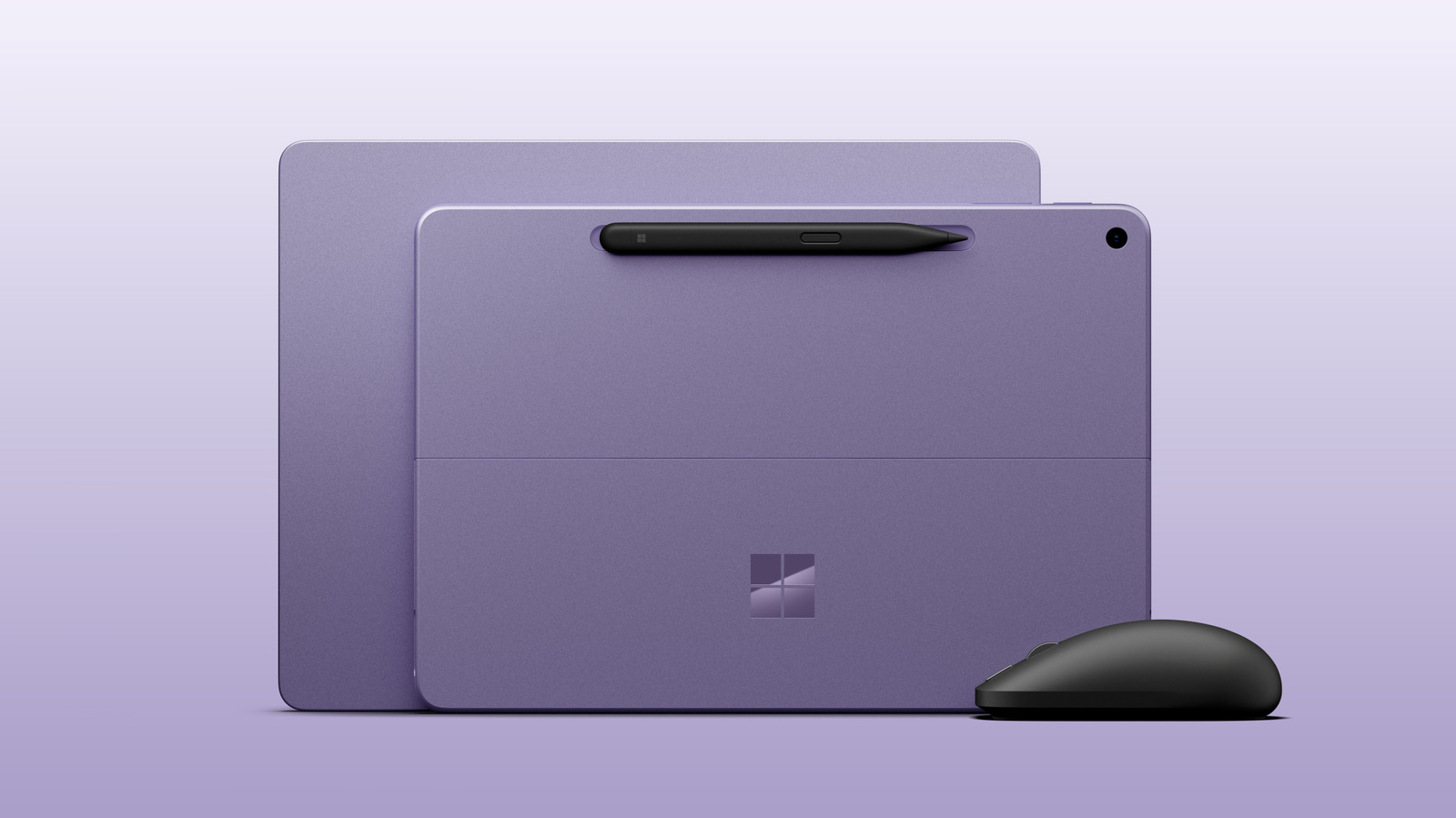
Microsoft’s New Surface Pro 12 And Surface Laptop 13 Feature Snapdragon X2 Plus Chips
AI & Technology

Microsoft’s New Surface Pro 12 And Surface Laptop 13 Feature Snapdragon X2 Plus Chips

September 23, 2026
Next Post
Hamas and Fatah sign declaration in Beijing on ending yearslong rift as war rages in Gaza

Hamas and Fatah sign declaration in Beijing on ending yearslong rift as war rages in Gaza

Leave a Reply Cancel reply

Your email address will not be published. Required fields are marked *

Search

No Result
View All Result
Morning News NOW Full Episode – Sept. 3

Morning News NOW Full Episode – Sept. 3

September 18, 2026
Deadly shooting at gay bar investigated as hate crime

Deadly shooting at gay bar investigated as hate crime

September 19, 2026
Nepal flash floods seen from bus

Nepal flash floods seen from bus

September 23, 2026

About

Learn more

Our Services

Legal

Privacy Policy

Terms of Use

Bloggers

Learn more

Article Links

Contact

Advertise

Ask us anything

©2020- TradePoint.io - All rights reserved!

Tradepoint.io, being just a publishing and technology platform, is not a registered broker-dealer or investment adviser. So we do not provide investment advice. Rather, brokerage services are provided to clients of Tradepoint.io by independent SEC-registered broker-dealers and members of FINRA/SIPC. Every form of investing carries some risk and past performance is not a guarantee of future results. “Tradepoint.io“, “Instant Investing” and “My Trading Tools” are registered trademarks of Apperbuild, LLC.

This website is operated by Apperbuild, LLC. We have no link to any brokerage firm and we do not provide investment advice. Every information and resource we provide is solely for the education of our readers. © 2020 Apperbuild, LLC. All rights reserved.

No Result
View All Result
  • Main
  • AI & Technology
  • Stock Charts
  • Market & News
  • Business
  • Finance Tips
  • Trade Tube
  • Blog
  • Shop

© 2023 - TradePoint.io - All Rights Reserved!