

bauhaus1000
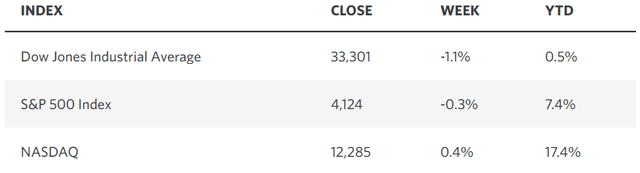
Bulls and bears continue to battle over the S&P 500 just below the 4200 level, which is becoming the line in the sand between the birth of a new bull market on one side, and the end of a bear-market rally that began last October on the other. Back to back weekly declines for the index may have many thinking bears have the upper hand, but the retreat has amounted to a little over 1%. While corporate earnings for the first quarter have far exceeded expectations, investors have shifted focus to the ramifications of not raising the debt ceiling by month’s end, as if there is another option. It would be a disaster of our own making, resulting in a surge in volatility for both stocks and bonds, but this absurdity will very likely pass with a last minute resolution that lifts the S&P 500 from its recent narrow range.
EdwardJones
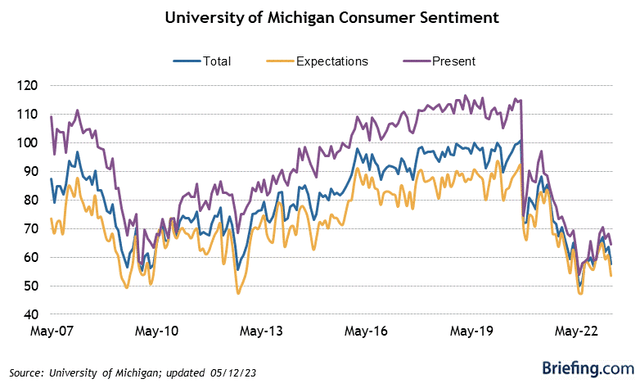
Consumer sentiment deteriorated sharply in mid May, according to the University of Michigan, flirting with levels closer to those seen during the Global Financial Crisis. The U. of Michigan indicated that the weakness was over concerns about the economic outlook. That comes as little surprise given the unrelenting forecasts for an impending recession by Wall Street pundits. In fact, at my daughter’s college graduation this past weekend I was told more than once by parents of other graduates that we were already in a recession. That is surprising considering record low unemployment, still strong wage growth, and a rapidly declining inflation rate. However, the packed bars, hotels, and restaurants on the UNC-Chapel Hill campus tells me otherwise.
Briefing.com
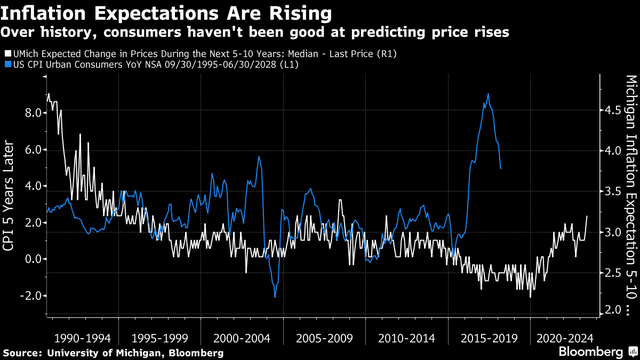
There was also an alarming uptick in five-year inflation expectations by consumers from 3% to 3.2%, but history has shown us that expectations in this report are rarely accurate.
Bloomberg
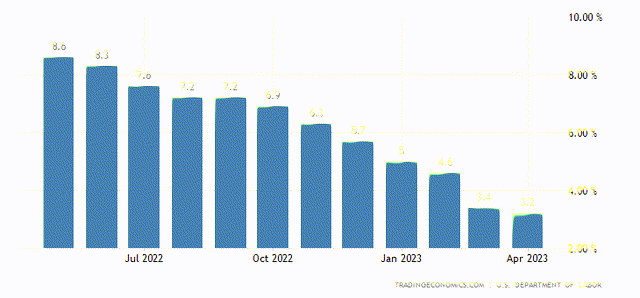
To the contrary, last week we learned that producer prices, which serve as a precursor to consumer prices, continue to fall on a year-over-year basis towards the Fed’s 2% target with an increase in April of 3.2%.
TradingEconomics
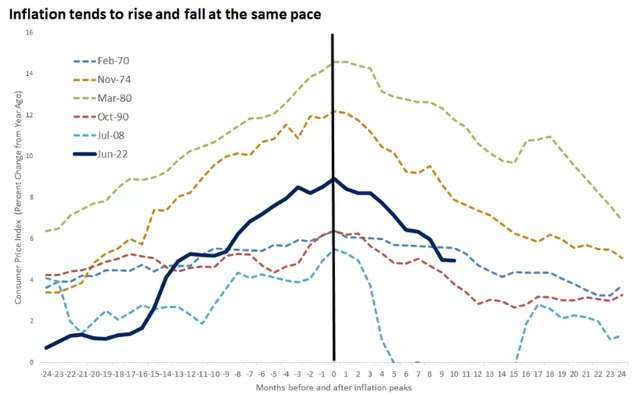
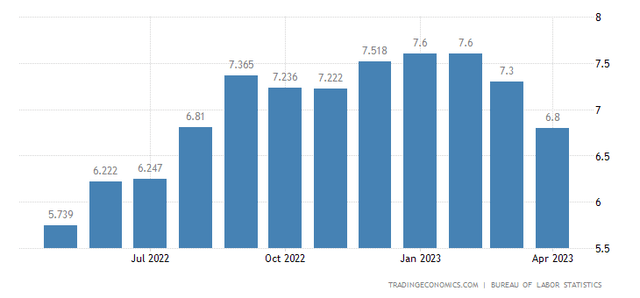
As such, the Consumer Price Index fell below 5% for the first time in two years last week with a print of 4.9% for April. The disinflationary trend continued for a tenth consecutive month, supporting my expectation at the beginning of this year that the rate would decline as fast as it rose.
EdwardJones
Inflation hawks remain fixated on the slower rate of progress for services inflation, which remains elevated primarily due to shelter and transportation costs, but we saw the lowest level of price increase for this basket in nine months from last week’s report. Furthermore, significantly lower prices are already in the pipeline, which will result in more improvement.
TradingEconomics
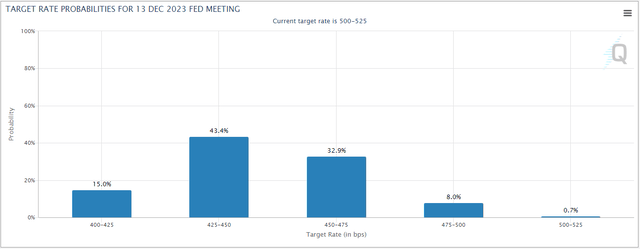
This is why markets now see the rate-hike cycle having ended with as many as three quarter-point rate cuts on the horizon before year end, lowering the short-term rate to 4.25% from 5%. An inflation rate approaching the Fed’s target of 2%, combined with a below trend rate of economic growth, should give the Fed room to become far less restrictive with its policy rate. That would also help support corporate profits during the second half of this year.
CME Group
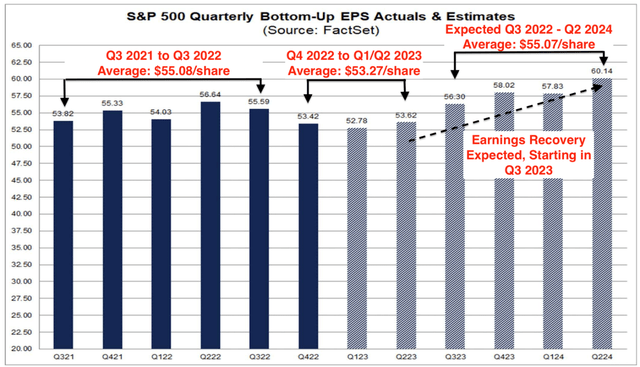
Following corporate earnings reports for 92% of the S&P 500 constituents, whereby 78% have exceeded estimates for the first quarter, profits are on track to decline 2.5%. That was consistent with the prior week’s improvement from what was expected to be a 6.7% decline at the end of the first quarter. One reason for this is that margins have held up extremely well at 11.5%. Most importantly, the percentage of companies issuing negative guidance for the second quarter at 57% is below the 5- and 10-year averages. Accounting for these results, the consensus is still expecting a resumption in year-over-year earnings growth to start in the third quarter.
DataTrek
The bears may be in control of the narrative from day to day, which has weighed on sentiment, but bulls continue to support the major market averages, which are more important. We should expect more signs of weaker economic growth as the monetary policy tightening to date filters through the economy, but I continue to believe that a strong labor market, excess savings, and return to real income growth will prolong this expansion and support risk asset prices.
Credit: Source link