
• bitcoinBitcoin(BTC)$78,836.00-1.09%
  • ethereumEthereum(ETH)$2,473.40-0.32%
  • tetherTether(USDT)$1.00-0.01%
  • binancecoinBNB(BNB)$736.82-1.16%
  • rippleXRP(XRP)$1.38-1.95%
  • usd-coinUSDC(USDC)$1.00-0.01%
  • solanaSolana(SOL)$103.38-2.31%
  • tronTRON(TRX)$0.333913-0.38%
  • Figure HelocFigure Heloc(FIGR_HELOC)$1.060.00%
  • zcashZcash(ZEC)$1,159.06-0.83%
  • HyperliquidHyperliquid(HYPE)$85.39-3.69%
  • dogecoinDogecoin(DOGE)$0.0890990.28%
  • RainRain(RAIN)$0.016329-2.92%
  • moneroMonero(XMR)$530.730.75%
  • USDSUSDS(USDS)$1.00-0.01%
  • chainlinkChainlink(LINK)$12.925.57%
  • whitebitWhiteBIT Coin(WBT)$72.67-0.97%
  • leo-tokenLEO Token(LEO)$9.15-1.89%
  • cardanoCardano(ADA)$0.2177680.17%
  • stellarStellar(XLM)$0.1888262.70%
  • bitcoin-cashBitcoin Cash(BCH)$259.481.68%
  • daiDai(DAI)$1.000.00%
  • Ethena USDeEthena USDe(USDE)$1.000.00%
  • litecoinLitecoin(LTC)$55.471.90%
  • uniswapUniswap(UNI)$6.84-1.96%
  • USD1USD1(USD1)$1.000.01%
  • CantonCanton(CC)$0.106144-2.73%
  • the-open-networkGram (prev. Toncoin)(GRAM)$1.39-1.53%
  • hedera-hashgraphHedera(HBAR)$0.0808810.63%
  • avalanche-2Avalanche(AVAX)$8.075.97%
  • suiSui(SUI)$0.811.87%
  • Global DollarGlobal Dollar(USDG)$1.000.00%
  • shiba-inuShiba Inu(SHIB)$0.0000050.50%
  • nearNEAR Protocol(NEAR)$2.32-3.27%
  • paypal-usdPayPal USD(PYUSD)$1.00-0.01%
  • BlackRock USD Institutional Digital Liquidity FundBlackRock USD Institutional Digital Liquidity Fund(BUIDL)$1.000.00%
  • crypto-com-chainCronos(CRO)$0.057073-0.24%
  • tether-goldTether Gold(XAUT)$4,409.91-0.26%
  • Circle USYCCircle USYC(USYC)$1.140.00%
  • MemeCoreMemeCore(M)$1.12-0.50%
  • BittensorBittensor(TAO)$256.193.35%
  • Ripple USDRipple USD(RLUSD)$1.00-0.01%
  • okbOKB(OKB)$114.371.13%
  • Ondo US Dollar YieldOndo US Dollar Yield(USDY)$1.14-0.29%
  • AsterAster(ASTER)$0.770.84%
  • mantleMantle(MNT)$0.634.56%
  • aaveAave(AAVE)$130.97-1.95%
  • pax-goldPAX Gold(PAXG)$4,412.12-0.33%
  • OndoOndo(ONDO)$0.3810521.79%
  • polkadotPolkadot(DOT)$1.0813.06%
TradePoint.io
  • Main
  • AI & Technology
  • Stock Charts
  • Market & News
  • Business
  • Finance Tips
  • Trade Tube
  • Blog
  • Shop
No Result
View All Result
TradePoint.io
No Result
View All Result

Watch Rocket Lab launch 2 tiny NASA hurricane-watching probes Thursday night

May 26, 2023
in Market & News
Reading Time: 5 mins read
A A
Watch Rocket Lab launch 2 tiny NASA hurricane-watching probes Thursday night
ShareShareShareShareShare

The second set of NASA’s TROPICS cubesats will launch on their hurricane-studying mission Thursday night (May 25), and you can watch the action live.

The two tiny satellites are scheduled to lift off atop a Rocket Lab Electron vehicle from the company’s Launch Complex 1 on New Zealand’s North Island, during a 70-minute window Thursday that opens at 11:30 p.m. EDT (0330 GMT on May 26). 

YOU MAY ALSO LIKE

N.J. governor says thousands of noncitizens mistakenly added to voter rolls

‘Voters want change’: Michigan Senate Candidate Abdul El-Sayed on tight primary race

The launch was originally targeted for midnight EDT (0400 GMT) on Thursday, but Rocket Lab pushed it back by nearly 24 hours due to bad weather.

The launch, dubbed “Coming to a Storm Near You,” is the second Rocket Lab will perform for the TROPICS program, whose name is short for “Time-Resolved Observations of Precipitation Structure and Storm Intensity with a Constellation of Small Sats.” 

Related: Facts about Rocket Lab’s Electron rocket

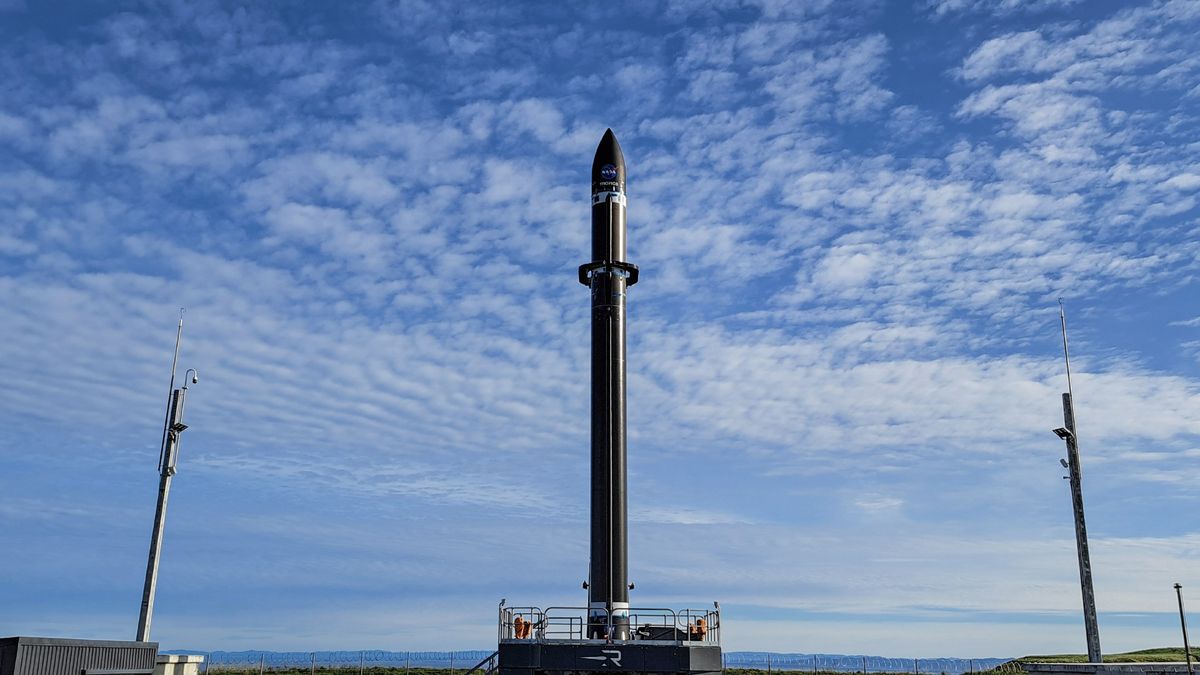
a black rocket upright on a launch pad

Rocket Lab’s Electron rocket is vertical on the pad at Launch Complex 1 in Mahia, New Zealand, during a May 18, 2023, wet dress rehearsal. (Image credit: NASA/Rocket Lab)

Rocket Lab’s previous TROPICS launch, called “Rocket Like a Hurricane,” sent two cubesats of a planned four-spacecraft constellation into low Earth orbit on May 7. It’s hoped that the four satellites will all be in operation in time for the start of the 2023 hurricane season in North America.

“The number of hurricanes we’re experiencing every year is increasing due to climate change, and the intensity of these storms is also increasing,” Jane McNichol, mission manager at Rocket Lab, said during a prelaunch press conference on May 7.

“The current technology that we have on orbit to monitor hurricane development may only be able to check in on these storms every couple of hours, but within that time, we might see a storm increase in intensity quite a bit,” she added. 

McNichol said that TROPICS will investigate intense tropical storms in terms of precipitation, temperature and humidity nearly hourly. Such data has the potential to save lives and livelihoods, she stressed.

The TROPICS cubesats will sit in a unique low Earth orbit over the planet’s tropical regions. Their orbit is inclined in such a way that they can travel over any given storm about once an hour.

The rapid-refresh microwave measurements TROPICS will make is a major boost, NASA officials have said. Current weather-tracking satellites can make similar measurements, but only once every six hours.

“Providing more frequent imaging will not only improve our situational awareness when a hurricane forms,” Karen St. Germain, director of the Earth Science Division at NASA Headquarters in Washington, said in a statement earlier this month. “The data will provide information to models that help us determine how a storm is changing over time, which in turn helps to improve forecasts from our partners like the National Hurricane Center and Joint Typhoon Warning Center.”

Rocket Lab is the second company to launch TROPICS cubesats. The first, California-based Astra, attempted to loft two of them in June 2022, but its rocket suffered an anomaly during flight and the cubesats were lost. NASA then selected Rocket Lab to launch the remaining four TROPICS craft over two missions.

Those two flights were originally set to launch from Rocket Lab’s U.S. site, at the Mid-Atlantic Regional Spaceport at NASA’s Wallops Flight Facility in Virginia, later this year. But the location was shifted to the New Zealand site so the four TROPICS cubesats could fly sooner and be ready for storm season in the Northern Hemisphere.

The TROPICS constellation will orbit Earth at an altitude of around 342 miles (550 kilometers) with an inclination of around 30 degrees. All the units in the constellation have to be deployed within the same 60-day period.

“The ability to advance our understanding of tropical cyclones from space has been limited by the ability to take frequent measurements, particularly from microwave instruments that see into the storms,” Will McCarty, program scientist for the TROPICS Mission, said in a statement on April 10. “Historically, satellites have been too large and expensive to provide observations at a time-frequency that is consistent with the timescales at which tropical cyclones can evolve.”

McCarty added that the cubesat era has allowed for smaller, less expensive satellites, allowing for the design of a constellation that optimizes the scientific utility of the mission and facilitates low-cost launches. 

“These factors enable TROPICS to provide a new understanding of tropical cyclones by decreasing the time by which a given storm is revisited by the satellites,” he said.  

Editor’s note: This story was updated at 9:15 p.m. ET on May 24 with the new target launch time of 11:30 p.m. EDT on May 25.


Credit: Source link

ShareTweetSendSharePin

Related Posts

N.J. governor says thousands of noncitizens mistakenly added to voter rolls
Market & News

N.J. governor says thousands of noncitizens mistakenly added to voter rolls

September 7, 2026
‘Voters want change’: Michigan Senate Candidate Abdul El-Sayed on tight primary race
Market & News

‘Voters want change’: Michigan Senate Candidate Abdul El-Sayed on tight primary race

September 7, 2026
Peak Coal, Postponed Again | Seeking Alpha
Market & News

Peak Coal, Postponed Again | Seeking Alpha

September 7, 2026
Pentagon leadership testifies on war funding as Trump says he has ‘no interest’ in Iran talks
Market & News

Pentagon leadership testifies on war funding as Trump says he has ‘no interest’ in Iran talks

September 7, 2026
Next Post
Nike Reports Earnings on Tuesday: Here Is What to Watch Out For

Nike Reports Earnings on Tuesday: Here Is What to Watch Out For

Leave a Reply Cancel reply

Your email address will not be published. Required fields are marked *

Search

No Result
View All Result
Wildfires burn in Europe as severe weather hits U.S.

Wildfires burn in Europe as severe weather hits U.S.

September 4, 2026
Eaton: Strong Secular Growth, But Valuation Limits Upside (NYSE:ETN)

Eaton: Strong Secular Growth, But Valuation Limits Upside (NYSE:ETN)

September 3, 2026
US nonfarm payrolls surge in August; unemployment rate steady at 4.1% – reuters.com

US nonfarm payrolls surge in August; unemployment rate steady at 4.1% – reuters.com

September 4, 2026

About

Learn more

Our Services

Legal

Privacy Policy

Terms of Use

Bloggers

Learn more

Article Links

Contact

Advertise

Ask us anything

©2020- TradePoint.io - All rights reserved!

Tradepoint.io, being just a publishing and technology platform, is not a registered broker-dealer or investment adviser. So we do not provide investment advice. Rather, brokerage services are provided to clients of Tradepoint.io by independent SEC-registered broker-dealers and members of FINRA/SIPC. Every form of investing carries some risk and past performance is not a guarantee of future results. “Tradepoint.io“, “Instant Investing” and “My Trading Tools” are registered trademarks of Apperbuild, LLC.

This website is operated by Apperbuild, LLC. We have no link to any brokerage firm and we do not provide investment advice. Every information and resource we provide is solely for the education of our readers. © 2020 Apperbuild, LLC. All rights reserved.

No Result
View All Result
  • Main
  • AI & Technology
  • Stock Charts
  • Market & News
  • Business
  • Finance Tips
  • Trade Tube
  • Blog
  • Shop

© 2023 - TradePoint.io - All Rights Reserved!