
SPARETECH announced on November 10, 2026, that it had raised $20 million in Series B funding co-led by Blume Equity and Insight Partners, with participation from Headline. The company will use the capital to develop AI for industrial spare-parts availability, put surplus parts back into circulation and expand geographically.
The proceeds will also support expansion in North America and other new regions, alongside deeper work with existing customers. Insight Partners managing director Brad Fiedler described North America as the next stage of SPARETECH’s growth, pointing to large American plant networks with substantial capital tied up in spare parts.
From Parts Visibility to Availability
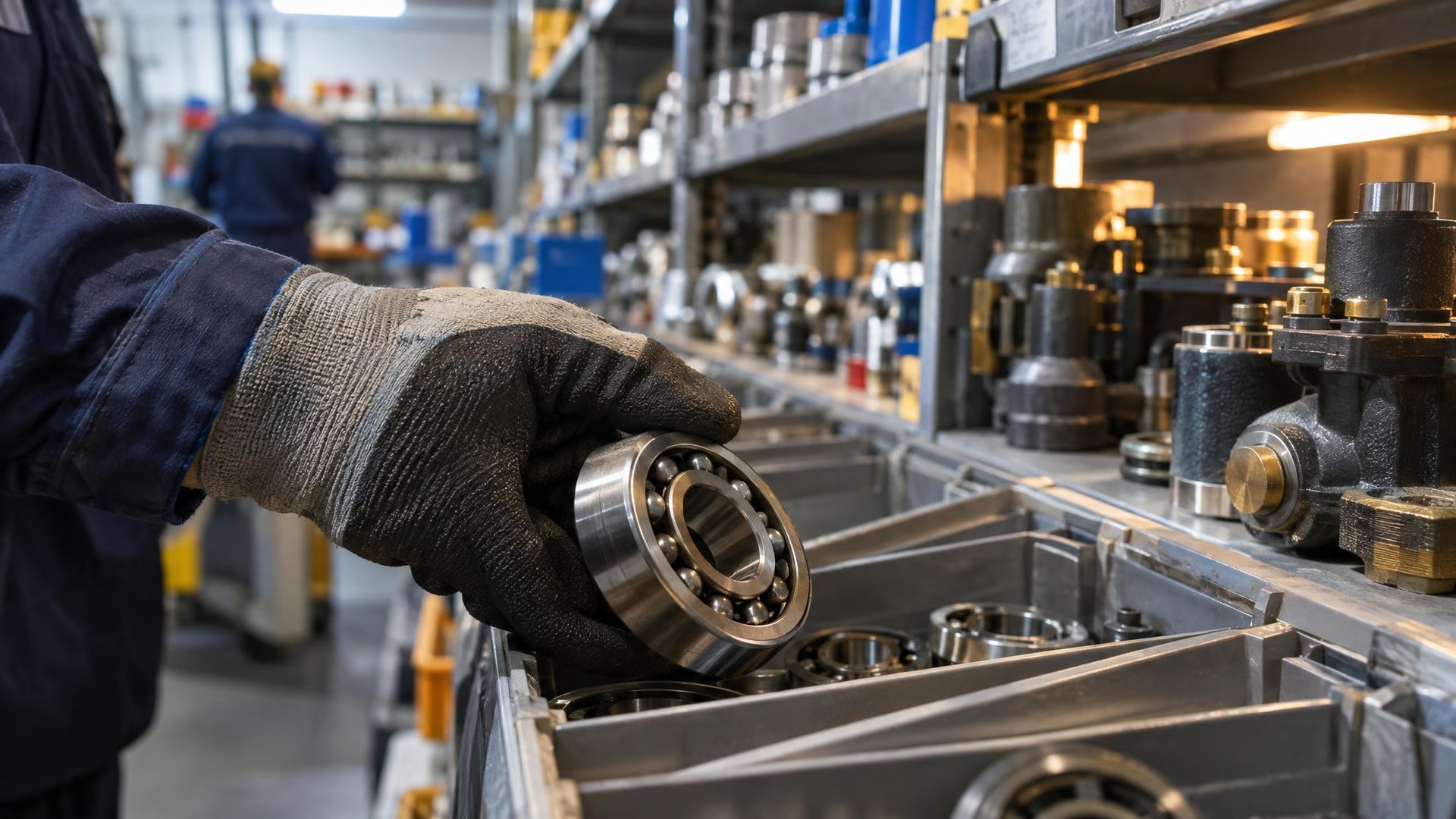
The inventory problem starts with downtime risk: a single stockout can halt production and idle an entire line, encouraging plants to hold extensive stocks as protection. Industrial automation adds to that burden because one new production line can introduce thousands of parts that someone has to stock.
SPARETECH’s existing enterprise software uses verified original-manufacturer data to standardize spare-parts records, set inventory levels across plants and support sourcing and surplus resale across its network. Its planned AI is intended to extend that model from visibility and recommendations to physical availability: a maintenance team should be able to rely on a required part even when it sits on another company’s shelf.
Chief executive and co-founder Martin Weber said the goal is “to cut spare parts inventory by 60% in the next three years, while securing the same uptime.” Chief operating officer and co-founder Lukas Biedermann said the approach is intended to put idle parts back into circulation, allowing cash tied up in stock to be used elsewhere in the business.
Reported Growth and Survey Findings
The company reported fivefold revenue growth since the start of 2024, a catalog exceeding 40 million verified parts and a network of 15,000 manufacturer and supplier partners. Its customer deployments include Nestlé’s global rollout, which brought 320 plants in 70 countries online in less than a year; Porsche, VW, Bosch and Sanofi also use the software.
SPARETECH’s 2026 benchmark report put average spare-parts inventory at $169 million per company. More than 50% of organizations lacked global visibility across operations, 18% of maintenance, repair and operations inventory remained unused after five years, and 45% had no standardized global data-enrichment process.
SPARETECH commissioned the underlying survey of 362 manufacturing executives across the United States, Canada, Germany, Austria, Switzerland, the Nordics and the Benelux countries. An independent research firm conducted the survey in March and April 2026, providing a defined respondent base for the inventory and operational findings.
The financing supports a shift from documenting idle stock to coordinating where parts are held and how they can be sourced. The central test is whether SPARETECH’s network can make another company’s surplus a reliable substitute for additional on-site inventory while preserving the production uptime that made large spare-parts buffers attractive in the first place.
Credit: Source link